Menu
FREE ART CONSULTATION

Museo de Santa Cruz

Quick Facts

  • Works on APS: 6
  • Mediums:
    • acrylic on canvas
    • oil on canvas
  • Location: Toledo, Spain
  • More…
  • Historical periods:
    • early modern
    • renaissance
  • Featured artists: El Greco
  • Art types: wallart

Art Quiz

There is only one correct answer for each question.

Question 1:
What is the Museo de Santa Cruz primarily known for?
Question 2:
When was the Museo de Santa Cruz originally established?
Question 3:
Who designed the Plateresque portal of Museo de Santa Cruz?
Question 4:
What architectural plan characterizes Museo de Santa Cruz?
Question 5:
Which artistic movement dominates the Museo’s Fine Arts collection?

Museo de Santa Cruz: A Toledo Treasure

The Museo de Santa Cruz stands as a testament to Toledo’s enduring artistic legacy, nestled within the heart of Spain's historic capital. More than just a repository of artworks, it embodies centuries of history—from its origins as a hospital founded by Pedro González de Mendoza in 1482-1495 to its current status as a Bien de Interés Cultural recognized for its national significance—offering visitors an unparalleled immersion into the region’s cultural heritage.

A Renaissance Marvel: Architectural Grandeur

The museum's building itself is undeniably remarkable, representing a pinnacle of Plateresque architecture. Designed by Alonso de Covarrubias, the monumental portal immediately captivates with its intricate ornamentation—a masterful display of sculpted foliage and geometric patterns reflecting the opulent tastes of the Renaissance era. Beyond the façade lies a Greek cross plan punctuated by unfinished courtyards, hinting at ambitious architectural aspirations that were ultimately curtailed due to budgetary constraints. Ribbed vaulted ceilings soar above these spaces, creating an atmosphere of solemn grandeur and transporting visitors back in time.

El Greco’s Toledo: A Singular Artistic Presence

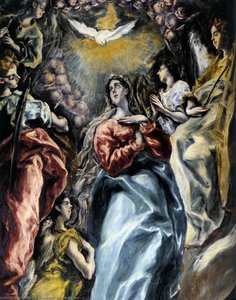
The Museo de Santa Cruz's fame rests primarily on its extraordinary collection of paintings by El Greco—Doménikos Theotokos Cretensis—who spent his final years in Toledo, profoundly influencing the artistic landscape of the city. Approximately fifty canvases bearing his signature adorn the walls, showcasing his distinctive style characterized by elongated figures, ethereal luminosity, and a masterful manipulation of color that imbues each piece with spiritual depth. Admire “The Virgin of the Immaculate Conception,” a breathtaking Baroque masterpiece capturing the Madonna’s serene beauty against a backdrop of vibrant hues—a quintessential example of El Greco's artistic vision. Similarly, "The Holy Family" presents an emotionally resonant portrayal of familial piety, demonstrating El Greco’s ability to convey profound spiritual themes through visual storytelling. Detailed studies of “The Virgin of the Immaculate Conception (detail)” reveal the artist’s meticulous technique and unwavering devotion to capturing divine grace.

Beyond Painting: Archaeological Treasures & Decorative Arts

However, Museo de Santa Cruz's artistic treasures extend far beyond El Greco’s oeuvre. The museum houses a comprehensive archaeological collection unearthed from sites across Toledo province—spanning Roman ruins to medieval settlements—providing invaluable insights into the region’s multifaceted past. Alongside these relics are exquisite specimens of Toledan decorative arts: intricately crafted metalwork featuring elaborate floral motifs and masterful embossing, alongside ceramics adorned with vibrant geometric patterns reflecting regional traditions. These objects illuminate the daily life and artistic sensibilities of Toledo’s inhabitants throughout history.

A Legacy Preserved Through Time

Established in 1844 as the Provincial Commission of Artistic Monuments, Museo de Santa Cruz began its journey collecting items seized during the Spanish Bourbon Reforms—a pivotal moment shaping Spain's cultural landscape. Subsequent additions included Cardinal Lorenzana’s personal archaeological collection and a dedicated Fine Arts section established in 1961. In 1984, management transitioned to Castile-La Mancha’s regional administration ensuring continued preservation and accessibility for future generations. Today, Museo de Santa Cruz continues to inspire visitors with its captivating blend of art history, archaeology, and cultural heritage—a true jewel of Toledo and Castile-La Mancha.