Menu
FREE ART CONSULTATION

Musei Reali Torino

Quick Facts

  • Historical periods: renaissance
  • Works on APS: 11
  • Location: Turin, Italy
  • Mediums:
    • acrylic
    • acrylic on canvas
    • ink on paper
    • oil on canvas
    • sanguine
  • More…
  • Featured artists: leonardo di ser piero da vinci & andrea del verrocchio
  • Art types:
    • other
    • wallart
  • Movements:
    • early renaissance
    • high renaissance
    • renaissance
    • renaissance sculpture

Art Quiz

There is only one correct answer for each question.

Question 1:
What is the primary focus of the Musei Reali Torino?
Question 2:
The Palazzo Reale serves as the historical heart of:
Question 3:
The Armeria Reale houses a remarkable display of:
Question 4:
Giovanni Michele Graneri's genre scenes depict:
Question 5:
The Holy Shroud is revered for its purported depiction of:

Musei Reali Torino: A Journey Through Savoy’s Artistic Legacy

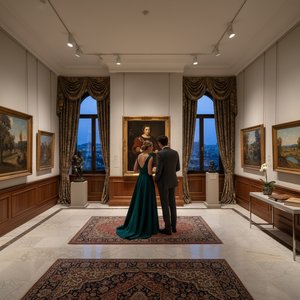
The Musei Reali Torino stand as a testament to the grandeur of the House of Savoy, transforming Turin into one of Italy's foremost cultural destinations. More than simply repositories of art; they represent centuries of royal patronage, architectural innovation, and the evolving tastes of European aristocracy—a captivating narrative unfolding within their opulent walls. Founded in 1768 by Carlo Alberto Savoia, the Musei Reali began as a private collection amassed by Savoy monarchs, steadily expanding through acquisitions and commissions to become one of Italy’s largest and most influential museums. Their architectural complex, encompassing Palazzo Reale, Armeria Reale, Biblioteca Reale and Cappella della Sindone, embodies the stylistic evolution from Baroque splendor to neoclassical elegance, reflecting Turin's transformation as a European capital.

Palazzo Reale: The Heartbeat of Savoy Power

Dominating Piazza Castello, Palazzo Reale is arguably Turin’s most iconic landmark—a magnificent Baroque masterpiece conceived by Ferdinando Brunelleschi and Giuseppe Piermarini. Its imposing façade commands attention with sculpted allegorical figures symbolizing monarchy and virtue, while its interior spaces are adorned with frescoes depicting scenes from Savoy history and mythology. Visitors traverse richly decorated halls furnished with sumptuous fabrics and gilt ornamentation, immersing themselves in the lavish lifestyle of the Savoy dynasty. The Royal Apartments showcase exquisite furnishings crafted by renowned artisans—furniture inlaid with ivory and ebony, tapestries woven with intricate floral motifs, and portraits capturing the likenesses of Savoy rulers throughout history. These spaces speak volumes about the ambition and artistic sensibilities of a royal family determined to establish its dominion over Piedmont and beyond.

Armeria Reale: Weapons of Majesty

Adjacent to Palazzo Reale lies Armeria Reale, showcasing an extraordinary assemblage of weaponry and armor accumulated by Savoy monarchs across centuries—a tangible chronicle of military prowess and dynastic defense. Each item is meticulously crafted from steel, bronze, ivory, and enamel, reflecting the technological advancements of its time and embodying the martial spirit of Savoy rulers. From ceremonial swords emblazoned with royal insignia to cuirasses adorned with heraldic emblems, the Armeria Reale offers a glimpse into the weaponry employed in battles fought for Savoy’s independence and expansion—a visual reminder of the challenges faced by the House of Savoy and their unwavering commitment to safeguarding its realm. The collection includes weapons from various eras—Medieval armor, Renaissance swordsmanship instruments, Baroque ceremonial arms—providing insight into the evolution of military technology and artistry.

Biblioteca Reale: Intellectual Legacy

The Biblioteca Reale houses an unparalleled collection of manuscripts, illuminated texts, and historical documents—a treasure trove of knowledge amassed by Savoy monarchs who championed scholarship and intellectual pursuits. Among its holdings are copies of ancient Greek classics, Renaissance treatises on philosophy and science, and musical scores penned by composers celebrated throughout Europe. Visitors can peruse handwritten volumes bound in leather and embellished with gilt tooling—testaments to the meticulous craftsmanship of scribes and illuminators—and examine maps charting Savoy’s territories during the Enlightenment era. The Biblioteca Reale underscores Turin's role as a center for intellectual exchange and artistic innovation, reflecting the Savoy dynasty’s dedication to preserving cultural heritage and fostering scholarly inquiry.

The Holy Shroud: A Mystical Icon

Perhaps the Musei Reali Torino’s most captivating attraction is the Holy Shroud—a linen cloth bearing an image believed to be that of Jesus Christ after his crucifixion—a relic venerated for centuries by Catholics worldwide. Its origins remain shrouded in mystery, fueling speculation about its authenticity and prompting ongoing scientific investigations. The Shroud's image—characterized by reddish-brown stains correlating with the wounds inflicted during Jesus’s Passion—has captivated theologians, historians, and artists alike—inspiring countless interpretations and artistic representations throughout history. Displayed within a specially designed Chapel of the Holy Shroud, the cloth emanates an aura of solemn reverence—inviting contemplation on faith, suffering, and the enduring enigma surrounding its miraculous image. Its preservation represents Turin’s spiritual heritage and continues to fascinate visitors from across the globe. ### Recent Exhibitions & Contemporary Perspectives In recent years, the Musei Reali Torino have embraced contemporary art, showcasing installations like “Urban Landscapes” by Botto & Bruno—a bold juxtaposition of traditional Savoy grandeur with reflections on modern urban life and social issues within Turin’s cityscape. These exhibitions underscore the museum's commitment to engaging dialogue between history and the present—demonstrating that the Musei Reali Torino remain relevant for generations to come as a beacon of cultural heritage and artistic innovation.