Menu
FREE ART CONSULTATION

Marshall M. Fredericks Sculpture Museum

Quick Facts

  • Works on APS: 49
  • Location: University Center, United States of America
  • Movements:
    • art deco
    • classical revival
    • contemporary realism
    • neoclassicism
  • Featured artists: marshall maynard fredericks
  • Alternate names:
    • Marshall M. Fredericks Sculpture Museum
    • Marshall Fredericks Museum
    • Fredericks Museum
    • Marshall M. Fredericks Sculpture Gallery
    • Fredericks Gallery

Art Quiz

There is only one correct answer for each question.

Question 1:
What is the Marshall M. Fredericks Sculpture Museum primarily known for?
Question 2:
Who founded the museum, driven by a former student's vision?
Question 3:
The museum’s outdoor sculpture garden prominently features pieces like ‘Christ and the Children,’ which blend what artistic style?
Question 4:
Marshall Fredericks gained fame for his ability to imbue monumental public art with:
Question 5:
The museum’s architectural design prioritizes natural light and open spaces, aiming to enhance the viewer's experience of the sculptures. What is this approach called?

A Legacy Cast in Bronze: Discovering the World of Marshall M. Fredericks Sculpture Museum

The American sculptural landscape is enriched by artists who transcend mere decoration, imbuing public spaces with profound narratives and spiritual resonance. Few have achieved this level of accomplishment with the consistent grace and monumental power of Marshall M. Fredericks, and no institution offers a more immersive exploration into his life’s work than the Marshall M. Fredericks Sculpture Museum in University Center, Michigan. More than simply preserving sculptures—over 200 meticulously crafted pieces—the museum stands as a testament to an artist who seamlessly blended Art Deco elegance with humanist ideals, creating works that speak to both grandeur and intimate emotion. Founded through the vision of Dorothy “Honey” Arbury, a former student of Fredericks, and nurtured by Saginaw Valley State University, this institution embodies a dedication to honoring an artist whose influence extends far beyond his Midwestern roots. From its initial establishment in 1988 as the Marshall M. Fredericks Sculpture Gallery, evolving into the expansive museum it is today, the museum has remained steadfast in its mission of safeguarding and celebrating Fredericks’ remarkable artistic journey.

The Sculptor's Journey: A Life Rendered in Form

Marshall M. Fredericks (1908-1998) wasn’t merely a sculptor; he was a storyteller who translated complex ideas into tangible form. His formative years were spent under the tutelage of Carl Milles, a celebrated sculptor known for his monumental works and masterful technique—an apprenticeship that instilled in Fredericks a deep appreciation for scale and artistic vision. Rapidly establishing himself as a prolific creator, Fredericks became renowned for his ability to infuse public art commissions with spiritual depth and emotional impact. Perhaps his most enduring symbol of Detroit’s resilience is “The Spirit of Detroit,” erected outside the Coleman A. Young Municipal Center—a breathtaking bronze sculpture that captures the city's spirit of perseverance amidst adversity. Yet Fredericks’ genius extended beyond these grand projects; the museum showcases an extraordinary collection encompassing over 200 sculptures, ranging from preliminary plaster models revealing his creative process to finished bronze masterpieces demonstrating his unparalleled skill. Visitors can trace the evolution of his style—from figurative representations capturing human emotion to explorations of abstract forms—always prioritizing the conveyance of essential ideas. Notable pieces include “Boy and Bear,” a charming depiction of youthful innocence, and an evocative interpretation of Rodin’s “The Thinker,” reflecting Fredericks' sensitivity to portraying profound contemplation. Furthermore, "American Eagle," perched atop Ann Arbor, serves as a majestic emblem of national pride—a testament to Fredericks’ ability to capture the essence of American identity.

A Sanctuary for Art: Architecture and Outdoor Spaces

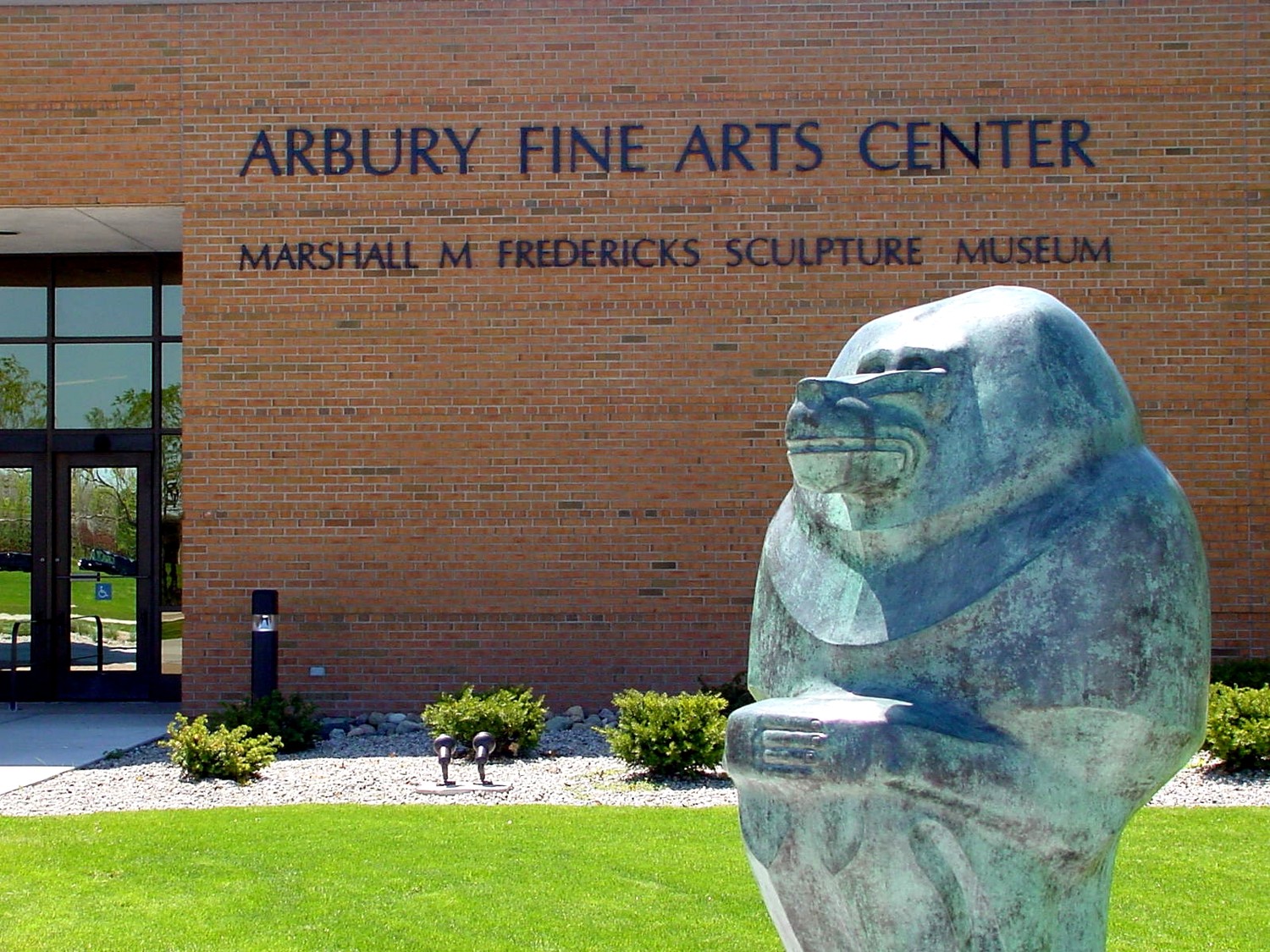
Recognizing the importance of context in appreciating art, the museum's design incorporates thoughtful architectural considerations. Situated within Saginaw Valley State University’s Arbury Fine Arts Center, the building prioritizes natural light and expansive open spaces—creating an environment conducive to contemplation and allowing visitors to fully immerse themselves in Fredericks’ sculptures from every vantage point. This deliberate aesthetic choice underscores the museum’s commitment to fostering a holistic experience that transcends visual observation. However, the artistic exploration doesn't conclude within the museum’s walls; it flourishes outdoors in a serene sculpture garden—a carefully curated space where Fredericks’ creations harmonize with the surrounding landscape. Here, visitors encounter “Christ and the Children,” a monumental bronze relief sculpture blending Renaissance artistry with themes of compassion and faith—a piece that exemplifies Fredericks' artistic versatility. Alongside this contemplative artwork are playful sculptures like “Lion and Mouse” and “Baboon, Female,” demonstrating Fredericks’ ability to convey emotion through whimsical forms.

Beyond the Bronze: Education and Community Engagement

The Marshall M. Fredericks Sculpture Museum distinguishes itself as a dynamic educational resource deeply interwoven with Saginaw Valley State University's academic pursuits. Students across disciplines benefit from access to Fredericks’ artwork, fostering art appreciation and cultivating cultural understanding—a commitment that extends beyond formal instruction. Recognizing the importance of accessibility, admission is free, ensuring that Fredericks’ legacy remains accessible to all members of the community. Moreover, ongoing archival research—initiated in 2005 with the acquisition of Fredericks’ personal records—provides invaluable insight into his life and artistic process, solidifying the museum's role as a vital center for scholarly investigation.

Notable Exhibitions & Ongoing Research

Throughout its history, the museum has hosted rotating exhibitions featuring both established and emerging artists, sparking dialogue and broadening perspectives on sculpture and artistic expression. These events serve as catalysts for creativity and encourage visitors to engage critically with contemporary art alongside Fredericks’ enduring masterpieces. The ongoing archival project continues to illuminate Fredericks' creative journey—revealing details about his inspirations, techniques, and artistic philosophy—further enriching our understanding of this influential sculptor.