


A Renaissance Stage: The Living Soul of Florence
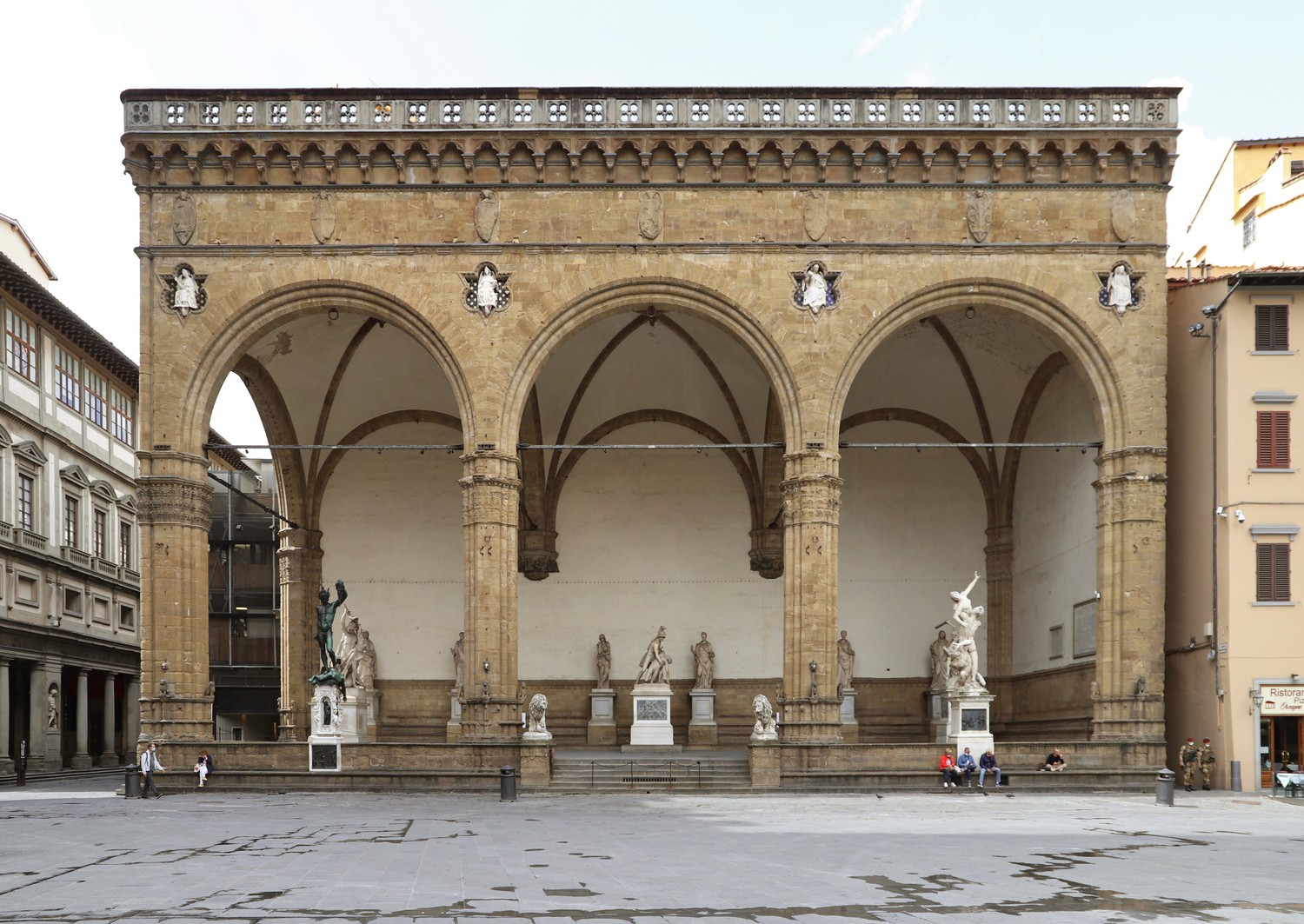
In the beating heart of Florence’s Piazza della Signoria, where the shadows of political drama and civic triumph have long intertwined, stands the Loggia dei Lanzi . More than a mere architectural relic, this open-air gallery serves as a profound stage where the silent narratives of marble and bronze meet the vibrant pulse of the city. Originally conceived in the late 14th century as a public forum for governmental functions and ceremonial grandeur, its elegant arches and Corinthian columns—attributed to the hands of Benci di Cione and Simone Talenti—offer a breathtaking transition from Gothic grace to the burgeoning ideals of the Renaissance. To walk beneath its soaring vaults is to step into a space where the very stones seem to whisper tales of ancient proclamations, the delivery of justice, and the enduring spirit of a republic finding its monumental form.
The architectural setting itself acts as a silent protagonist in this artistic drama. The Loggia’s design reflects the soaring ambitions of its patrons, particularly the Medici family, who utilized the space to project an image of intellectual leadership and cultural supremacy. Flanking the entrance, the legendary Medici Lions serve as eternal sentinels; one an ancient Roman relic anchoring the site in classical tradition, the other a 1598 creation by Vacchi representing the enduring prestige of the dynasty. This deliberate orchestration of sculpture and structure was designed to impress upon every visitor the might and sophistication of Florence, transforming a public walkway into a visual manifesto of authority.
A Dialogue of Masterpieces in the Open Air
The collection housed within this magnificent loggia is not defined by vast numbers, but by the immense weight each masterpiece carries. It is a curated dialogue between artistic genius and political identity. Dominating the space is Benvenuto Cellini’s Perseus with the Head of Medusa , a triumph of Mannerist virtuosity completed in 1554. This polished bronze work is far more than a mythological depiction; it serves as a potent symbol of Florentine strength under the rule of Cosimo I de’ Medici, a chillingly beautiful testament to power overcoming monstrous chaos. Nearby, Giambologna's Rape of the Sabine Women provides a dynamic, swirling counterpoint. This marble composition is a tour de force of anatomical precision and dramatic tension, capturing a moment of violent conflict with such fluid grace that the figures seem to writhe and struggle within the very grain of the stone.
What truly distinguishes the Loggia dei Lanzi from the hushed, climate-controlled corridors of traditional museums is its democratic accessibility and its relationship with the elements. Here, art breathes in the Tuscan air, bathed in a natural light that shifts with the passing hours, revealing subtle nuances in the musculature of marble and the luster of bronze. It is an experience that invites spontaneous contemplation amidst the bustle of urban life. For the art lover, the collector, or the designer seeking inspiration, the Loggia offers a rare glimpse into a world where masterpieces are not isolated from humanity, but remain an integral, living part of the city's vibrant fabric—a Renaissance jewel that continues to captivate and inspire all who wander through its arches.



