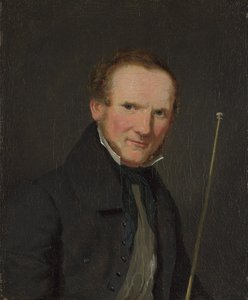


A Legacy of Danish Light: The Soul of the Hirschsprung Collection
In the heart of Copenhagen, nestled within the verdant embrace of Østre Anlæg park, lies a sanctuary that does more than merely display art; it breathes the very essence of Danish identity. The Hirschsprung Collection is an intimate dialogue with the past, a curated journey through the luminous eras of the 19th and early 20th centuries. This is not a cold, encyclopedic institution designed to overwhelm with scale, but rather a deeply personal testament to the vision of Heinrich Hirschsprung. A prosperous tobacco merchant turned devoted patron, Hirschsprung did not collect as a detached investor seeking prestige, but as a man profoundly connected to the creative pulse of his nation. His legacy allows us to step into a world where light is not just a physical phenomenon, but a spiritual presence that defines the Danish character.
The collection’s narrative arc begins with the exquisite refinement of the Danish Golden Age. Here, visitors encounter the meticulous elegance of Neoclassicism, where artists like Christen Schiellerup Købke masterfully captured the quiet dignity of their surroundings. His landscapes, characterized by an ethereal, diffused light, possess a clarity that transports the viewer to serene, timeless vistas. This era of meticulous detail and national pride is further enriched by the works of Peter Christian Skovgaard , whose sweeping depictions of the Danish countryside resonate with a palpable, rustic emotion, grounding the collection in the very soil of the nation.
The Radiance of Skagen and the Modern Breakthrough
As the narrative shifts from the structured grace of the Golden Age toward the revolutionary spirit of the Modern Breakthrough, the atmosphere within the gallery transforms. The museum’s true centerpiece is undoubtedly the Skagen Collection, a vibrant window into the windsweently shores of northern Denmark. It was here that a group of luminaries, known as the Skagen Painters, sought to capture the raw, unadulterated beauty of nature and the rhythmic pulse of coastal life. The works of Peder Severin Krøyer command attention with their psychological depth; his portraits are much more than mere likenesses, offering an introspective gaze into the human condition. Alongside him, Anna Ancher illuminates the domestic sphere, using a luminous, almost magical light to turn everyday interior scenes into moments of profound contemplation.
This movement toward modernity is further nuanced by the hauntingly beautiful presence of Vilhelm Hammershøj . His contribution introduces a different kind of light—a muted, minimalist palette that evokes a sense of profound stillness and introspection. Through his compositions, we see the influence of Symbolism and Impressionism merging into a uniquely Danish Modernism, where what is left unsaid or unseen becomes just as vital as the subject itself. For the collector or the designer, these works offer an unparalleled study in texture, tone, and the evocative power of restraint.
Architectural Harmony and the Art of Contemplation
The experience of the Hirschsprung Collection is inseparable from its architectural vessel. Completed in 1911, the museum was designed by architect Hermann Baagøe Storck with a philosophy of "sober" elegance. Storck’s brilliance lay in his ability to create a space that harmonizes with the art rather than competing for the spotlight. The building is a masterclass in utilizing natural light and spacious gallery layouts, ensuring that each canvas has the room to breathe and resonate within its surroundings. The understated grandeur of the façade reflects a commitment to classical proportions, mirroring the balance found within the paintings themselves.
What truly distinguishes this institution is its focused, singular narrative. By eschewing the vastness of global art history to delve deeply into the specific cultural forces of Denmark, the Hirschsprung Collection offers an emotional intimacy rarely found in larger museums. It remains a living institution, frequently hosting groundbreaking exhibitions that bridge the gap between historical heritage and contemporary dialogue. Whether one is drawn by the technical mastery of the Golden Age or the atmospheric brilliance of the Skagen painters, the museum stands as a timeless sanctuary for those who seek to understand the enduring power of light and national spirit.



