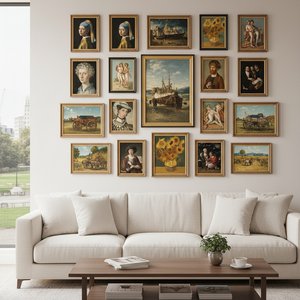
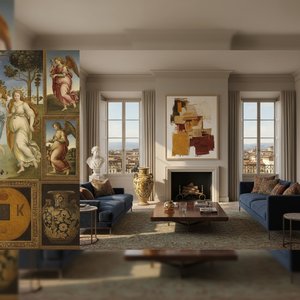
A Legacy Etched in Stone and Canvas
Nestled within the historic Palazzo dei Musei in Modena, Italy, the Galleria Estense stands as a profound testament to centuries of artistic patronage and cultural flourishing. More than a mere repository for relics, it is a living chronicle of the Este family—the visionary rulers who bequeathed upon Modena a breathtaking inheritance of masterpieces spanning from the Renaissance to the Baroque eras. The palazzo itself tells a story of transformation; once a humble poorhouse, it was reimagined as a beacon of artistic excellence, eventually finding its current prestigious location in 1894. To walk through its halls is to step into a dynastic vision where the boundaries between political power and aesthetic devotion blur, shaping the very identity of the city and attracting connoisseurs from across the globe.
The collection within these sixteen rooms offers a harmonious dialogue between different eras and movements, primarily showcasing the grandeur of Italian Renaissance and Baroque art. Visitors are invited to lose themselves in the works of masters such as Correggio , Parmigianino , and Cima da Conegliano , artists who possessed an unparalleled ability to capture both the idealized beauty and the profound human emotion of their time. Yet, the gallery’s scope is remarkably cosmopolitan; intriguing additions reveal deep connections with Northern Europe, featuring delicate pieces crafted in the workshops of van Eyck and Aelbrecht Bouts . This intersection of Italian grace and Northern precision reflects the Este family's sophisticated engagement with broader European artistic dialogues, making this space a vital crossroads of cultural history.
Masterpieces of Spirit and Form
Among the gallery’s most captivating treasures is the sculptural majesty of Gian Lorenzo Bernini’s marble portrait of Francesco I d’Este. This work is a remarkable feat of artistry; despite never having met his subject, Bernini utilized detailed portraits and descriptions to achieve an unparalleled likeness that embodies the Duke’s character and status with breathtaking precision. The Baroque mastery on display continues through the paintings, including the striking spiritual intensity of El Greco’s Modena Triptych and the captivating political glimpses found in Velázquez’s Portrait of Francesco I d’Este .
For those with an eye for decorative refinement, the collection offers much more than traditional canvas and stone. The museum houses an extraordinary array of diverse treasures:
- The Estense Harp , a double harp of Mannerist craftsmanship that once graced Italian currency, serving as a symbol of the family's exquisite taste.
- A curated selection of musical instruments and numismatic artifacts that reflect the Este family's boundless intellectual curiosity.
- Exotic objects from distant lands such as Sierra Leone and Iran, which blend fine art with global ethnography.
What truly distinguishes the Galleria Estense is this multifaceted heritage, where beauty, history, and exploration converge. Whether through regular scholarly exhibitions that delve into specific artistic themes or the architectural marvel of the palazzo itself, the institution remains an unforgettable destination for anyone seeking to connect with the profound soul of Modena’s cultural heritage.