Menu
FREE ART CONSULTATION

Fundación Colección Thyssen-Bornemisza

Quick Facts

  • Featured artists:
    • Titian
    • Jacopo Tintoretto
    • Paolo Veronese
    • Diego Velázquez
    • Fra Angelico
  • Historical periods:
    • late medieval
    • renaissance
  • Works on APS: 18
  • Movements:
    • baroque
    • baroque dramatic religious
    • baroque painting
    • early renaissance
    • late gothic / early renaissance
  • More…
  • Mediums:
    • acrylic
    • acrylic on canvas
    • oil on canvas
    • oil on panel
  • Art types:
    • other
    • wallart
  • Location: Barcelona, Spain

Art Quiz

There is only one correct answer for each question.

Question 1:
The Fundación Colección Thyssen-Bornemisza in Barcelona is best described as:
Question 2:
Who was instrumental in assembling the initial core of the Thyssen-Bornemisza collection?
Question 3:
What is a key characteristic of the Thyssen-Bornemisza collection's approach to art history?
Question 4:
The text mentions the 'Golden Triangle of Art' in Madrid. What other two museums comprise this triangle?
Question 5:
What distinguishes the Thyssen-Bornemisza museum from other major art institutions?

A Tapestry of European Vision: The Fundación Colección Thyssen-Bornemisza in Barcelona

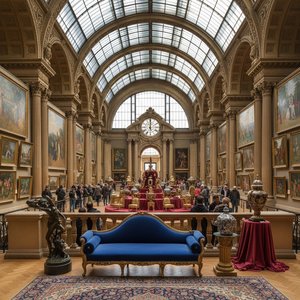
The Fundación Colección Thyssen-Bornemisza in Barcelona is not simply a gallery displaying paintings; it’s an unfolding story of artistic evolution across Europe, a testament to the passionate vision of the Thyssen-Bornemisza family. To step within its walls is to embark on a journey through centuries, witnessing the shifting sensibilities and technical innovations that have shaped Western art from the 13th century onward. Unlike institutions focused on singular movements or national schools, this Barcelona gem offers a remarkably comprehensive panorama, allowing visitors to trace connections and appreciate the subtle influences rippling across artistic periods – where the devotional intensity of early Renaissance masters finds resonance in the revolutionary brushstrokes of the Impressionists, and Baroque drama foreshadows the complexities of 20th-century abstraction.

From Private Passion to Public Treasure

The story begins with Baron Heinrich Thyssen-Bornemisza, a man whose dedication bordered on obsession. Starting in the 1920s, he meticulously assembled an extraordinary array of artworks, often acquiring pieces from American collections during times of economic hardship. This wasn’t merely about amassing beautiful objects; it was about constructing a visual encyclopedia of European painting, filling gaps left by other major museums and creating a uniquely holistic representation of art history. The Baron understood the importance of accessibility, and following decades of careful curation and expansion by successive generations, the collection was entrusted to foundations dedicated to its preservation and public display. The museum itself, nestled within Barcelona’s architecturally vibrant cityscape, serves as a refined backdrop for these masterpieces, prioritizing the art rather than imposing a strong architectural statement – allowing the works themselves to truly breathe and command attention.

A Journey Through Artistic Epochs

Within the Fundación's walls unfolds an astonishing diversity of styles and techniques. The journey begins with the ethereal beauty of Medieval and Renaissance paintings, imbued with religious symbolism and reflecting the burgeoning humanism of their time. The dramatic intensity of the Baroque period is powerfully represented by masters like Caravaggio, whose masterful use of light and shadow evokes profound emotional responses. Then comes the explosion of color and innovation that defines Impressionism and Post-Impressionism – here, one can lose oneself in Monet’s shimmering landscapes, Van Gogh's emotionally charged portraits, and the vibrant visions of Degas and Morisot. The collection doesn’t stop there; it extends into the 20th century, embracing movements that shattered traditional conventions and paved the way for modern art. From Kirchner’s expressionistic cityscapes to Mondrian’s geometric abstractions and O'Keeffe’s sensual floral forms, the museum offers a compelling overview of artistic experimentation during this transformative era. The breadth is truly remarkable; one encounters Duccio, Van Eyck, Dürer, Rembrandt, Canaletto – names that resonate through art history, each contributing to the rich tapestry on display.

What Sets Thyssen-Bornemisza Apart

The Fundación Colección Thyssen-Bornemisza distinguishes itself not through specialization but through its remarkable breadth. It is a place where one can truly appreciate the interconnectedness of art history, recognizing how each generation built upon the achievements and innovations of those who came before. This comprehensive approach makes it an ideal destination for both seasoned art enthusiasts seeking to deepen their understanding and newcomers eager to embark on a journey of artistic discovery. The museum’s commitment to showcasing this vast spectrum ensures that every visitor will find something to inspire, challenge, and captivate them. It is more than just a collection; it's an invitation to engage with the enduring power of art and its ability to reflect—and shape—our understanding of the world. It’s worth noting that while the majority of the Thyssen-Bornemisza holdings reside in Madrid at the Museo Nacional Thyssen-Bornemisza, the Barcelona location offers a carefully curated selection, providing a focused yet representative glimpse into this extraordinary legacy.