
The Legacy of a Private Eye: Exploring the Formerly Collection Bernhard Koehler
Berlin, a city steeped in layers of history – from Prussian grandeur to Cold War division – holds within its heart a remarkable secret: the former collection of Bernhard Koehler. More than just a repository of art, this dispersed legacy represents a poignant story of patronage, wartime displacement, and the enduring power of artistic vision. Once housed in a private residence, the collection’s journey through the 20th century offers a unique lens into the tastes and turbulent times that shaped German Expressionism and beyond.
Bernhard Koehler, an industrialist with a discerning eye and considerable wealth, began assembling his collection in the late 19th century. Driven by a deep appreciation for artistic innovation, he cultivated relationships with some of the most influential figures of the era – artists like Franz Marc and August Macke, whose vibrant canvases captured the spirit of a rapidly changing world. Koehler’s patronage wasn't merely financial; he actively fostered an environment where these groundbreaking artists could experiment and develop their distinctive styles. His home in Berlin became a haven for creative dialogue, a space where ideas flowed freely and artistic boundaries were constantly pushed.
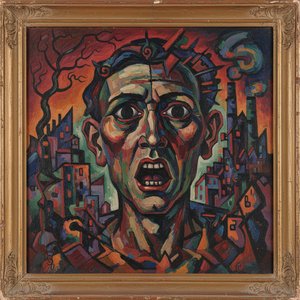
The collection’s core strength lies within its representation of German Expressionism. Works by Marc and Macke – masters of color and emotion – dominate the assemblage, offering intimate glimpses into their evolving philosophies. Consider, for example, Marc's *Der tote Spatz* (1905), a haunting depiction of mortality rendered in delicate washes of blue and grey; or Macke’s evocative landscapes, brimming with a sense of both joy and melancholy. Beyond these central figures, the collection also showcases lesser-known but equally compelling works by artists associated with the *Blaue Reiter* circle – a group that profoundly influenced the course of modern art. The National Gallery of Art in Washington D.C., for instance, holds several significant pieces originating from Koehler’s holdings, testament to their enduring value.
However, the story of the collection takes a dramatic turn with the outbreak of World War II. As Berlin faced relentless bombing raids, many artworks were lost or scattered. Following the war, a significant portion of the collection found its way to Russia’s Hermitage Museum and Munich’s Lenbachhaus – institutions that continue to safeguard these treasures today. This dispersal, while heartbreaking, also underscores the remarkable resilience of artistic heritage, demonstrating how even in times of upheaval, art could find new homes and continue to inspire.
Key Artists & Artistic Movements
- Franz Marc (1883-1916): A pivotal figure in the Blue Rider movement, Marc’s works are characterized by their symbolic language and vibrant color palettes. Koehler's support played a crucial role in his artistic development, particularly during his time in Tunisia.
- August Macke (1885-1914): Known for his luminous landscapes and portraits, Macke’s paintings capture the beauty of nature and the spirit of human connection. His works exemplify the optimistic yet melancholic mood prevalent in early Expressionism.
- German Expressionism: The collection serves as a vital window into this influential movement, showcasing its diverse styles and emotional range – from the raw intensity of Edvard Munch to the lyrical beauty of Kirchner and Kandinsky.
A Dispersed Narrative: Tracing Artistic Journeys
What truly distinguishes the former Bernhard Koehler Collection is not simply its artistic merit, but rather its fragmented history. Rather than a single, unified exhibition space, the collection’s legacy exists across multiple institutions – the Hermitage Museum in St. Petersburg and the Lenbachhaus in Munich being among the most prominent. This dispersal offers an extraordinary opportunity for visitors to trace the journeys of individual artworks, gaining a deeper understanding of their cultural significance and the forces that shaped their trajectory.
Visiting these museums is akin to piecing together a puzzle, reconstructing a lost narrative. Each painting holds echoes of Koehler’s patronage, his personal connections with the artists, and the broader artistic currents of the time. It's an immersive experience that transcends traditional museum viewing, inviting contemplation on themes of art, memory, and cultural exchange.
Architecture & Current Context
The collection itself no longer exists as a single architectural entity. Koehler’s former residence has long since been lost to the ravages of war and redevelopment. However, exploring the institutions that now house its artworks – the Hermitage Museum in St. Petersburg and the Lenbachhaus in Munich – provides invaluable insight into the context surrounding these pieces. The Hermitage, a sprawling imperial palace, offers a grand setting for Marc’s vibrant landscapes, while the Lenbachhaus, a former artist's residence, retains a more intimate atmosphere that complements Macke’s luminous paintings.
Furthermore, researching the history of these institutions – their architectural evolution and their own artistic collections – adds another layer to the narrative. The museums themselves are testaments to Germany’s rich cultural heritage, offering visitors a chance to engage with art in its broadest sense.
Exhibitions & Future Research
While a dedicated retrospective exhibition of the former Bernhard Koehler Collection remains elusive, scholars and curators continue to explore its legacy through focused research projects. The dispersed nature of the collection presents unique challenges but also exciting opportunities for interdisciplinary investigations – combining art historical analysis with archival research, social history, and cultural heritage studies.
The story of the Koehler Collection serves as a poignant reminder that art’s value extends far beyond its aesthetic qualities. It is a testament to human connection, artistic innovation, and the enduring power of memory—a legacy waiting to be rediscovered and reinterpreted for future generations.