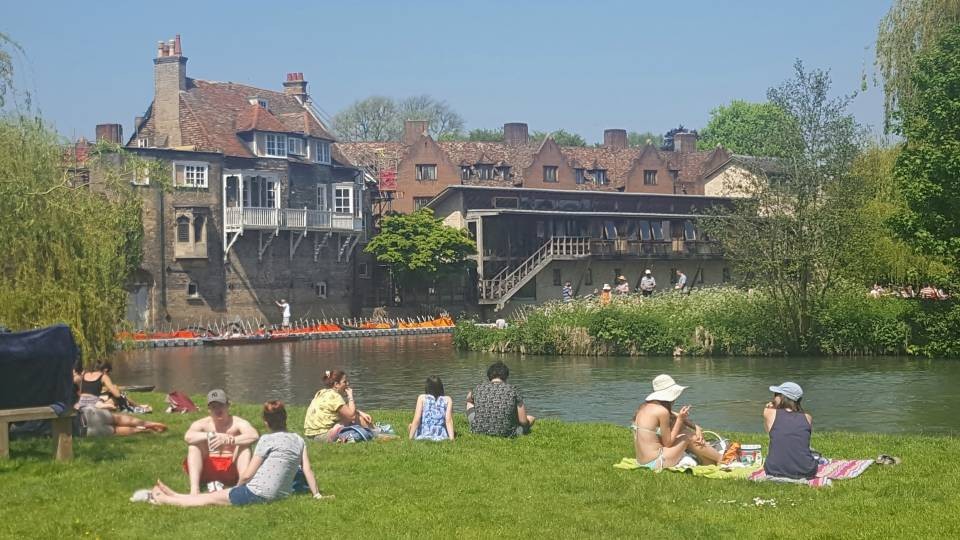
A Riverside Sanctuary of Science and Soul
Nestled along the tranquil, shimmering banks of the River Cam in Cambridge, Darwin College emerges not merely as an academic institution, but as a profound sanctuary where the rigors of scientific inquiry meet the grace of artistic reflection. To wander through its grounds is to step into a living tapestry of intellectual heritage, where the air seems thick with the echoes of groundbreaking discoveries and the quiet contemplation of the natural world. The college, established in 1964 as Britain’s pioneering graduate-only community, serves as a bridge between eras, seamlessly connecting the Victorian legacy of the Darwin family with the vibrant, interdisciplinary pulse of contemporary global scholarship.
The architecture of the college offers a breathtaking dialogue between different epochs of British design. Visitors are greeted by a harmonious blend of Georgian elegance and Victorian character, a structural symphony that mirrors the complexity of the minds nurtured within its walls. The iconic Darwin College Bridges, which gracefully span the islands of the campus, act as more than mere passageways; they are poetic metaphors for connection, linking the historic Newnham Grange—remodelled by George Darwin in the late nineteenth century—to the industrial charm of the Grade II listed Malting House. This architectural landscape, much like a fine oil painting, uses the serene backdrop of the river to anchor its historical weight, creating an atmosphere that is both stately and deeply intimate.
The Art of Legacy and Discovery
For the art lover and the discerning collector, the collection within Darwin College offers a curated glimpse into a lineage of brilliance. The halls are adorned with portraits that serve as windows into the past, commemorating generations of the Darwin family and celebrating the profound impact of Charles Darwin’s evolutionary theories on our collective consciousness. These works do more than document faces; they capture the spirit of an era defined by curiosity and the relentless pursuit of truth. Alongside these formal portraits, the college preserves a delicate array of landscapes and decorative arts that reflect the aesthetic sensibilities of the Victorian period and beyond, providing a rich, textured environment for those who appreciate the intersection of history and fine craftsmanship.
The college’s cultural life is further enriched by its commitment to dynamic exhibitions that challenge and inspire. Rather than remaining static, the collection breathes through rotating displays that explore themes ranging from the intricacies of scientific discovery to the weight of social responsibility. These exhibitions transform the college into a vibrant forum where art becomes a medium for discussing the very frontiers of human knowledge. For interior designers seeking inspiration, the college provides a masterclass in how historical artifacts and classical aesthetics can be integrated into a modern, functional space, creating an environment that feels both intellectually stimulating and aesthetically timeless.
What truly distinguishes Darwin College is its unique, soulful atmosphere—a rare equilibrium of academic intensity and pastoral peace. It is a place where the legacy of luminaries like Jane Goodall and Elizabeth Blackburn resides in the very shadows of the riverside trees. This sense of continuity, where the weight of scientific revolution meets the delicate beauty of the Cambridge landscape, makes Darwin College an unparalleled destination for those who seek to experience art not as a detached object, but as an essential component of the human story.