
The most famous artists with works in Wallraf-Richartz-Museum are Rembrandt, Vincent van Gogh, Claude Monet and Paul Cézanne.
Our catalogue lists 412 works of Wallraf-Richartz-Museum by 244 artists; the 25 best known are ranked below, each with the works the museum holds.
The masters of the originals
The 10 masters whose originals hang in Wallraf-Richartz-Museum
For each master: where and when they were born, their movement, how many originals the museum keeps in our catalogue, a note from their life, and the originals to see.
-
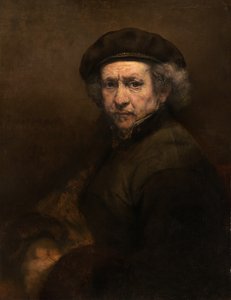
Baroque
1. Rembrandt 1606–1669
1606–1669 Born in Leiden, Netherlands Baroque 3 originals at Wallraf-Richartz-Museum
Born on 15 July 1606 in Leiden, in the Dutch Republic, Rembrandt van Rijn entered a world of modest means. By the time he died on 4 October 1669, he had left behind a vast legacy that includes about 300 paintings, 300 etchings, and several hundred drawings. By 1625, the young artist had moved beyond his apprenticeship and opened a studio in Leiden. A significant shift occurred in 1631 when he moved to Amsterdam.
Originals at Wallraf-Richartz-Museum
-
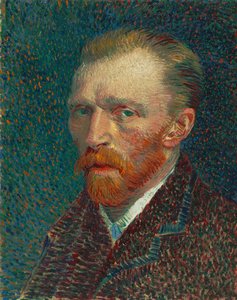
Post-Impressionism
2. Vincent van Gogh 1853–1890
1853–1890 Born in Zundert, Netherlands Post-Impressionism 3 originals at Wallraf-Richartz-Museum
Vincent Willem Van Gogh was born on March 30, 1853, in Zundert, Netherlands. His brother Theo was born on 1 May 1857, and their connection would remain a constant through the many letters they exchanged over the years. The quiet village of Zundert in the Brabant region was where Vincent Willem Van Gogh was born. In 1873, he moved to the London branch of Goupil & Cie, where he remained until May 1875.
Originals at Wallraf-Richartz-Museum
-
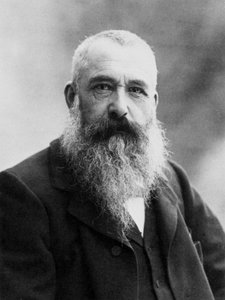
Impressionism
3. Claude Monet 1840–1926
1840–1926 Born in Paris, France Impressionism 5 originals at Wallraf-Richartz-Museum
Born in Paris, France, on 14 November 1840, Claude Monet entered a world of diverging expectations. Tragedy arrived in January 1857, when Monet was sixteen years old. In 1883, Monet moved to a house and property in Giverny, a village northwest of Paris. In 1892, he married Alice Hoschedé, a union that provided a sense of stability as he continued his obsessive study of light and atmosphere.
Originals at Wallraf-Richartz-Museum
-
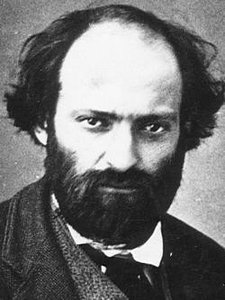
Post-Impressionism
4. Paul Cézanne 1839–1906
1839–1906 Born in Aix-en-Provence, France Post-Impressionism 2 originals at Wallraf-Richartz-Museum
Born on January 19, 1839, at 28 rue de l'Opéra in Aix-en-Provence, Paul Cézanne entered a world of established order. In 1860, he made the decisive choice to abandon his law studies, turning his focus entirely toward the pursuit of painting. By 1859, his technical proficiency was evident when he earned second prize in the school's figure studies course.
Originals at Wallraf-Richartz-Museum
-

Baroque
5. Peter Paul Rubens 1577–1640
1577–1640 Born in Siegen, Germany Baroque 5 originals at Wallraf-Richartz-Museum
Born on 28 June 1577 in Siegen, Germany, his early years were shaped by the religious instability of the era. By the time he began working with Otto van Veen between 1594 and 1598, Rubens had already acquired the technical vocabulary necessary to move beyond simple representation into the realm of sophisticated narrative art. In 1600, Rubens left the Low Countries for Italy, a move that fundamentally altered his visual language.
Originals at Wallraf-Richartz-Museum
-

Expressionism
6. Edvard Munch 1863–1944
1863–1944 Born in Ådalsbruk, Norway Expressionism 4 originals at Wallraf-Richartz-Museum
Edvard Munch was a Norwegian painter whose life was deeply tied to the landscapes and the heavy atmosphere of his homeland. Edvard Munch was born in 1863 amidst the stark landscapes of Norway. In 1868, his mother died from tuberculosis, a loss that left a heavy mark on the young boy.
Originals at Wallraf-Richartz-Museum
-
Post-Impressionism
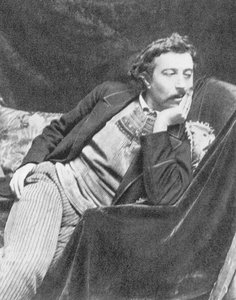
7. Paul Gauguin 1848–1903
1848–1903 Born in Paris, France Post-Impressionism 4 originals at Wallraf-Richartz-Museum
Born in Paris in 1848, Eugène Henri Paul Gauguin entered a world of shifting social and political currents. The boy spent his childhood in Peru until the age of six, a period that left an indelible mark on his memory. Before finding his footing in the art world, Gauguin’s life took a more rugged, maritime turn. Between 1879 and 1886, he was accepted into the Paris Salon, appearing in the prestigious exhibition annually.
Originals at Wallraf-Richartz-Museum
-

Realism
8. Gustave Courbet 1819–1877
1819–1877 Born in Ornans, France Realism 6 originals at Wallraf-Richartz-Museum
Jean Désiré Gustave Courbet was born on June 10, 1819, in Ornans, France. Growing up in the department of Doubs, his early years were shaped by the landscape of his home. In 1839, he moved to Paris. Later, Bruyas commissioned The Meeting, also known as Bonjour Monsieur Courbet, which reflected this established connection between patron and painter. In 1855, rather than retreating, Courbet took a more direct approach to his audience.
Originals at Wallraf-Richartz-Museum
-

Romanticism
9. Caspar David Friedrich 1774–1840
1774–1840 Born in Greifswald, Germany Romanticism 3 originals at Wallraf-Richartz-Museum
" Evening Landscape with Two Men " (1830), a quiet scene of twilight contemplation.
Originals at Wallraf-Richartz-Museum
-
Impressionism
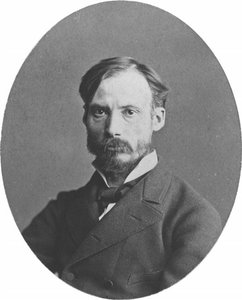
10. Pierre-Auguste Renoir 1841–1919
1841–1919 Born in Limoges, France Impressionism 4 originals at Wallraf-Richartz-Museum
Born on February 25, 1841, in Limoges, France, Pierre-Auguste Renoir entered a world of practical craftsmanship. In 1845, the family moved to Paris, seeking the opportunities offered by the capital. When the family moved to Paris in 1845, the necessity of supporting his kin dictated the direction of his youth. By the third exhibition in 1877, his commitment to this new way of seeing was evident as he presented twenty-one paintings to the public.
Originals at Wallraf-Richartz-Museum


The masters, continued
No. 11 to No. 25: more masters of Wallraf-Richartz-Museum
-

11. Jean-Baptiste-Camille Corot
Romanticism
1796–1875 · born in Paris, France · 2 originals at Wallraf-Richartz-Museum
French Realist of atmospheric landscapes and soft vegetation, using thin washes and loosely dabbed strokes to capture the play of light.
- Ville d'Avray (1865)
- Poetry
-

12. Frans Hals
Dutch Golden Age
1580–1666 · born in Antwerp, Belgium · 2 originals at Wallraf-Richartz-Museum
Dutch Golden Age painter of lively portraits and group scenes, known for a loose, spontaneous brushwork that captures fleeting expressions.
- Portrait of a Man (1640)
- Portrait of a Woman (1640)
-

13. Berthe Morisot
Impressionism
1841–1895 · born in Bourges, France · 3 originals at Wallraf-Richartz-Museum
French Impressionist of luminous domestic scenes and fluid, light-filled brushstrokes, capturing intimate moments with a delicate touch.
- Child among the Hollyhocks (1881)
- Child in the Rose Garden (1881)
- Boats on the Seine (1880)
-
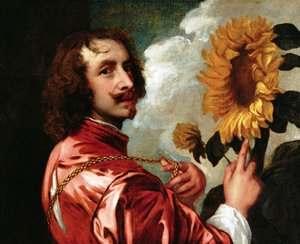
14. Anthony van Dyck
Baroque
1599–1641 · born in Antwerp, Belgium · 2 originals at Wallraf-Richartz-Museum
Flemish Baroque portraitist who defined the English court with effortless grace, capturing the dignity of royalty through refined oil and etching.
-

15. Camille Pissarro
Impressionism
1830–1903 · born in Charlotte Amalie, United States Virgin Islands · 4 originals at Wallraf-Richartz-Museum
Danish-French Impressionist who captured rural life and city streets through textured plein air landscapes and pointillist experiments.
- Orchard at Pontoise. Sunset (1878)
- Farm at Basincourt (1884)
- View of l'Heritage at Pontoise (1867)
-

16. Lucas Cranach the Elder
Northern Renaissance
1472–1553 · born in Kronach, Germany · 2 originals at Wallraf-Richartz-Museum
German Renaissance painter of elegant, elongated figures and authoritative portraits of reformers, known for his precise woodcuts and engravings.
- The Virgin and Child (1518)
- Mary Magdalene (1525)
-

17. Bartolomé Esteban Murillo
Baroque
1617–1682 · born in Seville, Spain · 2 originals at Wallraf-Richartz-Museum
Spanish Baroque painter of luminous Immaculate Conceptions and tender genre scenes of street urchins and flower girls in Seville.
-

18. Alfred Sisley
Impressionism
1839–1899 · born in former 4th arrondissement of Paris, France · 3 originals at Wallraf-Richartz-Museum
British-French Impressionist dedicated to en plein air landscapes, capturing the tranquil light of the Seine and the waters of Moret-sur-Loing.
- Langland Bay (1897)
- Near Louveciennes (1876)
- Bridge at Hampton Court
-

19. Jean-Honoré Fragonard
Rococo
1732–1806 · born in Grasse, France · 2 originals at Wallraf-Richartz-Museum
French Rococo painter of playful, sensual scenes rendered with luminous, rapid brushwork and a sense of exuberant, fleeting movement.
- The Party Cook (1775)
- The Angora Cat (1783)
-

20. Paul Signac
Neo-Impressionism
1863–1935 · born in Paris, France · 5 originals at Wallraf-Richartz-Museum
French Neo-Impressionist known for luminous seascapes and rhythmic Pointillist dots that blend color through the viewer's eye.
- Capo de Noli (1898)
- The Seine near Courbevoie - River Landscape (1883)
- Saint-Tropez, Calm (1895)
-

21. Jacob van Ruisdael
Dutch Golden Age
1628–1682 · born in Haarlem, Netherlands · 2 originals at Wallraf-Richartz-Museum
-
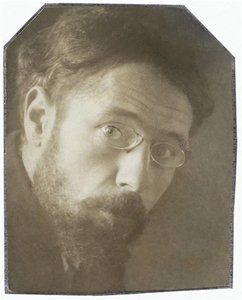
22. Pierre Bonnard
Post-Impressionism
1867–1947 · born in Fontenay-aux-Roses, France · 4 originals at Wallraf-Richartz-Museum
French Nabis artist of intimate domestic scenes and vibrant, memory-based color explorations, often featuring his muse Marthe in soft light.
- Nude in the mirror (1910)
- Pasture on the Banks of the Seine (1913)
- In a Rowboat (Vernon) (1912)
-

23. Émile Bernard
Post-Impressionism
1868–1941 · born in Lille, France · 3 originals at Wallraf-Richartz-Museum
French Post-Impressionist pioneer of Cloisonnism, known for bold, flat shapes and symbolic Breton landscapes inspired by rural life.
-

24. Jan Steen
Baroque
1626–1679 · born in Leiden, Netherlands · 2 originals at Wallraf-Richartz-Museum
Dutch Golden Age genre painter of boisterous, chaotic households and humorous scenes filled with psychological depth and vibrant color.
- Amnon and Tamar (1670)
- Samson and Delilah (1667)
-
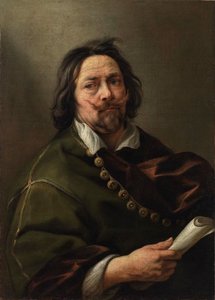
25. Jacob Jordaens
Baroque
1593–1678 · born in Antwerp, Belgium · 4 originals at Wallraf-Richartz-Museum
Flemish Baroque painter of boisterous tavern scenes and robust realism, known for expressive brushwork and crowded, lively banquets.
Famous artists in Wallraf-Richartz-Museum, No. 26 to 50
 Gustave Caillebotte1848–1894 · 6 originals at Wallraf-Richartz-Museum
 Pieter de Hooch1629–1684 · 2 originals at Wallraf-Richartz-Museum
 Eugène Louis Boudin1824–1898 · 3 originals at Wallraf-Richartz-Museum
 Francis Picabia1879–1953 · 2 originals at Wallraf-Richartz-Museum
 Maurice Denis1870–1943 · 2 originals at Wallraf-Richartz-Museum
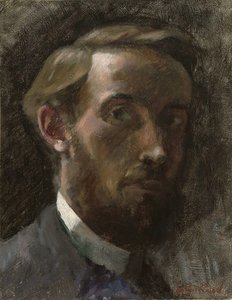 Édouard Vuillard1868–1940 · 3 originals at Wallraf-Richartz-Museum
 Charles-François Daubigny1817–1878 · 4 originals at Wallraf-Richartz-Museum
 Philipp Otto Runge1777–1810 · 2 originals at Wallraf-Richartz-Museum
 Stefan Lochner1410–1451 · 4 originals at Wallraf-Richartz-Museum
 Jan van Goyen1596–1656 · 2 originals at Wallraf-Richartz-Museum
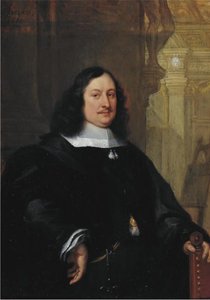 David Teniers the Younger1610–1690 · 4 originals at Wallraf-Richartz-Museum
 Frans Snyders1579–1657 · 3 originals at Wallraf-Richartz-Museum
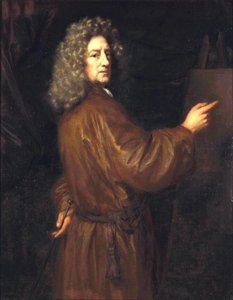 Nicolaes Maes1634–1693 · 2 originals at Wallraf-Richartz-Museum
 Max Liebermann1847–1935 · 6 originals at Wallraf-Richartz-Museum
 Lovis Corinth1858–1925 · 5 originals at Wallraf-Richartz-Museum
 Hendrick Avercamp1585–1634 · 2 originals at Wallraf-Richartz-Museum
 Gerrit Dou1613–1675 · 2 originals at Wallraf-Richartz-Museum
 Gerard ter Borch1617–1681 · 2 originals at Wallraf-Richartz-Museum
 Armand Guillaumin1841–1927 · 3 originals at Wallraf-Richartz-Museum
 Joos van Cleve1485–1540 · 4 originals at Wallraf-Richartz-Museum
 Henri Edmond Cross1856–1910 · 4 originals at Wallraf-Richartz-Museum
 Joseph Anton Koch1768–1839 · 2 originals at Wallraf-Richartz-Museum
 Maximilien Luce1858–1941 · 5 originals at Wallraf-Richartz-Museum
 Theo van Rysselberghe1862–1926 · 2 originals at Wallraf-Richartz-Museum
 Dirck Hals1591–1656 · 2 originals at Wallraf-Richartz-Museum
The house in figures
The masters of Wallraf-Richartz-Museum, in figures
The masters with the most originals at Wallraf-Richartz-Museum
Masters with two originals or more, by century of birth
Masters with two originals or more, by country of birth
Masters with two originals or more, by movement
Women masters
The women whose originals hang in Wallraf-Richartz-Museum
5 women masters, 7 originals, in our catalogue of Wallraf-Richartz-Museum.
-
Berthe Morisot
1841–1895 · born in Bourges, France · 3 originals at Wallraf-Richartz-Museum
- Child among the Hollyhocks (1881)
- Child in the Rose Garden (1881)
- Boats on the Seine (1880)
-

Mary Cassatt
1844–1926 · born in Allegheny, United States · 1 originals at Wallraf-Richartz-Museum
-
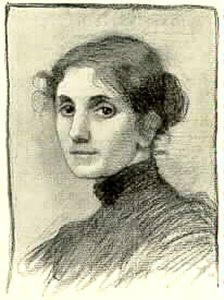
Marianne Stokes
1855–1927 · born in Graz, Austria · 1 originals at Wallraf-Richartz-Museum
- Melisande (1895)
-

Blanche Hoschedé-Monet
1865–1947 · born in 10ᵗʰ arrondissement of Paris, France · 1 originals at Wallraf-Richartz-Museum
-

Lucie Cousturier
1876–1925 · born in 2nd arrondissement of Paris, France · 1 originals at Wallraf-Richartz-Museum
- Bouquet of Flowers (1910)
Asked of us
Questions on the masters of Wallraf-Richartz-Museum
Open a question to read the answer.
Which artist in Wallraf-Richartz-Museum is the most famous?
Rembrandt (1606–1669): our catalogue holds 3 works by Rembrandt at Wallraf-Richartz-Museum, among them Portrait of a Scholar at his Desk (formerly called Lipsius), Christ at the Column and Selfportrait wallraf-richartz museum. Vincent van Gogh and Claude Monet follow.
How many Rembrandt paintings are in Wallraf-Richartz-Museum?
3 works by Rembrandt at Wallraf-Richartz-Museum are in our catalogue: Portrait of a Scholar at his Desk (formerly called Lipsius) (1645), Christ at the Column (1646) and Selfportrait wallraf-richartz museum (1665) among them.
How many Vincent van Gogh paintings are in Wallraf-Richartz-Museum?
3 works by Vincent van Gogh at Wallraf-Richartz-Museum are in our catalogue: The Langlois Bridge (1888), Langlois Bridge at Arles, The 2 and Cottage with Trees 4 among them.
What did Claude Monet paint that hangs in Wallraf-Richartz-Museum?
5 works by Claude Monet at Wallraf-Richartz-Museum are in our catalogue: Spring in Vetheuil (1880), Water Lilies (1915), The Seine at Asnieres (1873) and Fishing Boats on the Beach at Etretat (1884) among them.
Who are the top 10 artists in Wallraf-Richartz-Museum?
The ten best-known artists with works in Wallraf-Richartz-Museum are Rembrandt (3), Vincent van Gogh (3), Claude Monet (5), Paul Cézanne (2), Peter Paul Rubens (5), Edvard Munch (4), Paul Gauguin (4), Gustave Courbet (6), Caspar David Friedrich (3) and Pierre-Auguste Renoir (4).
Which artist has the most works in Wallraf-Richartz-Museum?
Our catalogue holds 7 works by Bartholomaeus Bruyn the Elder at Wallraf-Richartz-Museum; next come Gustave Courbet (6), Gustave Caillebotte (6) and Max Liebermann (6).
Does Wallraf-Richartz-Museum have any Pablo Picasso paintings?
No: Wallraf-Richartz-Museum holds no work by Pablo Picasso in our catalogue.
Is Michelangelo in Wallraf-Richartz-Museum?
No: Wallraf-Richartz-Museum holds no work by Michelangelo in our catalogue.
How many women artists are in Wallraf-Richartz-Museum?
5 women artists have works of Wallraf-Richartz-Museum in our catalogue, among them Berthe Morisot (3), Mary Cassatt (1), Marianne Stokes (1), Blanche Hoschedé-Monet (1) and Lucie Cousturier (1).
Where do the artists of Wallraf-Richartz-Museum come from?
Counting the artists with two works or more, Wallraf-Richartz-Museum holds painters born mostly in France (31), Netherlands (17), Germany (16), Belgium (8) and Norway (1).
Who is the earliest artist in Wallraf-Richartz-Museum?
The 19th century leads with 40 artists born then. In this ranking, Lucas Cranach the Elder (1472–1553) is the earliest born and Émile Bernard (1868–1941) the latest.
How many artists does the collection of Wallraf-Richartz-Museum cover?
244 artists have at least one work of Wallraf-Richartz-Museum in our catalogue; 83 have two or more. They were born between 1400 and 1879, in 8 countries.
The house
Wallraf-Richartz-Museum, Cologne, in a few lines
A Dialogue Between Eras
The Wallraf-Richartz Museum & Fondation Corboud occupies a space where the weight of history meets the clarity of modern design. Located in the heart of Cologne, Germany, the structure designed by Oswald Mathias Ungers creates a deliberate tension between the ancient and the contemporary. The building rests upon the foundations of a Roman temple dedicated to Mars, allowing the presence of antiquity to exist beneath the clean, geometric lines of the current edifice. This architectural synthesis creates an atmosphere where the starkness of the present complements the layers of the past, providing a quiet space for contemplation. The collection spans a continuous narrative of European art, moving from the spiritual intensity of the Middle Ages to the experimental spirit of the early twentieth century. It is a place where the evolution of style and emotion is laid bare, offering a window into how humanity has perceived beauty and the self through the centuries.
Gothic Devotion and Baroque Intensity
Within the galleries, the Gothic collection offers a sense of ethereal grace. As the gaze moves toward the Baroque era, the scale of artistic ambition shifts. This period is characterized by: The theatrical energy of large-scale compositions. The meticulous realism of Frans Hals, which captures human emotion with a sensitivity that remains moving.
The famous originals of Wallraf-Richartz-MuseumWallraf-Richartz-Museum: the full page, 421 originalsThe museums of Cologne
How the masters of the originals are ranked
The masters with two originals or more of Wallraf-Richartz-Museum in our catalogue are ranked by fame: the Wikipedia language editions that describe them, the visits to their OriginalUniqueArt.com page and our studio's ranking. Originals are counted in our catalogue — one entry per work, without details, studies or copies — not in the museum's inventory. Every date, birthplace and movement is the catalogue's; the notes are drawn from the master's biography.
Go on