Caspar David Friedrich is the best-known artist with works in Staatliche Museen; next come Frans Hals, Anthony van Dyck and Albrecht Altdorfer.
Below, the 18 best-known of the 37 artists with works of Staatliche Museen in our catalogue (62 works), each with what the museum holds of them.
The masters of the originals
The 10 masters whose originals hang in Staatliche Museen
For each master: where and when they were born, their movement, how many originals the museum keeps in our catalogue, a note from their life, and the originals to see.
-

Romanticism
1. Caspar David Friedrich 1774–1840
1774–1840 Born in Greifswald, Germany Romanticism 2 originals at Staatliche Museen
" Evening Landscape with Two Men " (1830), a quiet scene of twilight contemplation.
Originals at Staatliche Museen
-

Dutch Golden Age
2. Frans Hals 1580–1666
1580–1666 Born in Antwerp, Belgium Dutch Golden Age 3 originals at Staatliche Museen
Frans Hals I was a Dutch painter born in Antwerp, Belgium, around 1580. Though his early life remains somewhat shrouded in mystery, he rose to become one of the most important figures of the Dutch Golden Age, celebrated for his innovative portraiture and genre scenes. Details surrounding Hals’s formative years are scarce. It is believed he received initial artistic training in Antwerp, a prominent center for painting at the time.
Originals at Staatliche Museen
-
Baroque
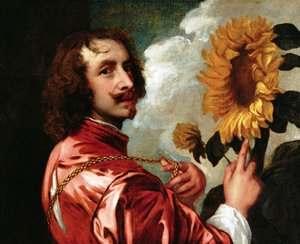
3. Anthony van Dyck 1599–1641
1599–1641 Born in Antwerp, Belgium Baroque 5 originals at Staatliche Museen
Born in Antwerp on 22 March 1599, Sir Anthony van Dyck entered a world of commerce and craft. Between 1621 and late 1627, he traveled through Italy, a period that would refine his ability to navigate the complex social hierarchies of European nobility. In 1620, he entered the service of King James I, a brief engagement that preceded his extensive travels through Italy and the Spanish Netherlands.
Originals at Staatliche Museen
-

Northern Renaissance
4. Albrecht Altdorfer 1480–1538
1480–1538 Born in Regensburg, Germany Northern Renaissance 2 originals at Staatliche Museen
Coming from a family deeply rooted in artistic tradition—his father, Ulrich Altdorfer, was a painter and miniaturist—the younger Altdorfer quickly distinguished himself not as a follower, but as an innovator. However, it was through his art—particularly his early engravings and drawings from around 1506, such as Stygmata of St. Francis and St. Jerome—that he first revealed a unique artistic voice, hinting at the emotional intensity and meticulous detail that would characterize his mature style.
Originals at Staatliche Museen
-

Dutch Golden Age
5. Paulus Potter 1625–1654
1625–1654 Born in Enkhuizen, Netherlands Dutch Golden Age 2 originals at Staatliche Museen
The family's relocation first to Leiden in 1628, and then to the bustling metropolis of Amsterdam in 1631, proved pivotal, providing him with access to a wider world of artistic influence and opportunity. However, it was his move to The Hague around 1649 that truly began to define his artistic path. In July 1650, he married Adriana van Balckeneynde, a union that opened doors to influential circles thanks to her father, a prominent building contractor.
Originals at Staatliche Museen
-

Baroque
6. Nicolas de Largillière 1656–1746
1656–1746 Born in Paris, France Baroque 2 originals at Staatliche Museen
Nicolas de Largillière, a name inextricably linked to the elegance and refinement of French Baroque portraiture, was born into a bustling commercial world in Paris in 1656. However, it was his acceptance into the prestigious French Academy in 1686 that truly cemented his position within the Parisian art world.
Originals at Staatliche Museen
-

Baroque
7. Adriaen van der Werff 1659–1722
1659–1722 Born in Kralingen, Netherlands Baroque 3 originals at Staatliche Museen
Born in The Hague in 1659, Van der Werff emerged from a lineage of artistic talent, the son of a painter, which provided him with an early and intimate introduction to the nuances of light and form.
Originals at Staatliche Museen
-

Baroque
8. Jan Lievens 1607–1674
1607–1674 Born in Leiden, Netherlands Baroque 3 originals at Staatliche Museen
The precocity of Jan Lievens was evident almost from the start. By the age of twelve, he had already established himself as an independent artist in Leiden, a remarkable feat for a child of such years.
Originals at Staatliche Museen
-

Northern Renaissance
9. Joachim Beuckelaer 1533–1573
1533–1573 Born in Antwerp, Belgium Northern Renaissance 2 originals at Staatliche Museen
Born around 1533 in Antwerp, a city then pulsing with artistic innovation, he emerged as a master of scenes depicting the bustling world of markets and kitchens. It was within his uncle’s workshop that he likely honed his skills, absorbing Aertsen's pioneering approach to market scenes before ultimately surpassing him in technical prowess and nuanced storytelling.
Originals at Staatliche Museen
-

Baroque
10. Willem van Aelst 1627–1683
1627–1683 Born in Delft, Netherlands Baroque 2 originals at Staatliche Museen
Born into a family of prominent city magistrates, his path toward the canvas was paved by lineage and mentorship. By 1643, Van Aelst had officially entered the Guild of Saint Luke in Delft, marking his transition from pupil to master. Between 1645 and 1649, he lived in France, and subsequently traveled to Italy, where his talents garnered international acclaim.
Originals at Staatliche Museen


The masters, continued
No. 11 to No. 18: more masters of Staatliche Museen
-
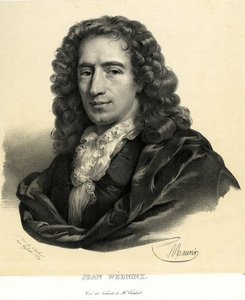
11. Jan Weenix
Baroque
1642–1719 · born in Amsterdam, Netherlands · 2 originals at Staatliche Museen
Dutch Baroque painter of detailed hunting scenes and game still lifes, celebrated for his realistic textures of feathers, fur, and claws.
- An Italian Seaport (1666)
-

12. Hendrick ter Brugghen
Baroque
1588–1629 · born in The Hague, Netherlands · 2 originals at Staatliche Museen
Dutch Caravaggist known for dramatic chiaroscuro and emotional religious scenes, capturing the interplay of candlelight and deep shadow.
- Boy Playing a Fife (1621)
- Boy Playing a Recorder (1621)
-
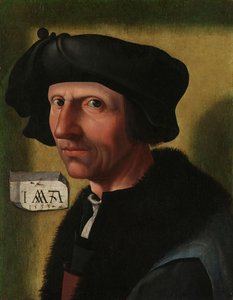
13. Jacob Cornelisz van Oostsanen
Northern Renaissance
1472–1533 · born in Oostzaan, Netherlands · 2 originals at Staatliche Museen
-

14. Jacob de Wit
Baroque
1695–1754 · born in Amsterdam, Netherlands · 2 originals at Staatliche Museen
Dutch Rococo painter famous for monochrome grisaille ceiling works and religious scenes that blend Baroque weight with airy elegance.
-

15. Martin Schaffner
1478–1548 · born in Ulm, Germany · 3 originals at Staatliche Museen
-

16. Antonio Bellucci
Baroque
1654–1726 · born in Pieve di Soligo, Italy · 2 originals at Staatliche Museen
- Antiochus and Stratonice (1700)
-

17. Pieter Stevens
1567–1624 · born in Mechelen, Belgium · 2 originals at Staatliche Museen
-

18. Giampietro Silvio
Renaissance
1495–1552 · born in Venice, Italy · 2 originals at Staatliche Museen
- Leda and her Children (1520)
The house in figures
The masters of Staatliche Museen, in figures
The masters with the most originals at Staatliche Museen
Masters with two originals or more, by century of birth
Masters with two originals or more, by country of birth
Masters with two originals or more, by movement
Women masters
The women whose originals hang in Staatliche Museen
1 women masters, 1 originals, in our catalogue of Staatliche Museen.
-

Rachel Ruysch
1664–1750 · born in The Hague, Netherlands · 1 originals at Staatliche Museen
Asked of us
Questions on the masters of Staatliche Museen
Open a question to read the answer.
Which artist in Staatliche Museen is the most famous?
Caspar David Friedrich (1774–1840): our catalogue holds 2 works by Caspar David Friedrich at Staatliche Museen, among them Mountainous River Landscape (Day Version). Frans Hals and Anthony van Dyck follow.
Which Caspar David Friedrich works are in Staatliche Museen?
Our catalogue lists 2 works by Caspar David Friedrich at Staatliche Museen, among them Mountainous River Landscape (Day Version) (1830).
What did Frans Hals paint that hangs in Staatliche Museen?
Our catalogue lists 3 works by Frans Hals at Staatliche Museen, among them Portrait of a Man in a Slouch Hat (1660) and Two Boys Singing (1625).
What did Anthony van Dyck paint that hangs in Staatliche Museen?
Our catalogue lists 5 works by Anthony van Dyck at Staatliche Museen, among them Portrait of Anna van Craesbecke (1635), Portrait of Isabella van Assche (1634), Portrait of Joost de Hertoghe (1635) and Portrait of Justus van Meerstraeten (1634).
Which ten artists should I look for in Staatliche Museen?
The ten best-known artists with works in Staatliche Museen are Caspar David Friedrich (2), Frans Hals (3), Anthony van Dyck (5), Albrecht Altdorfer (2), Paulus Potter (2), Nicolas de Largillière (2), Adriaen van der Werff (3), Jan Lievens (3), Joachim Beuckelaer (2) and Willem van Aelst (2).
Which artist has the most works in Staatliche Museen?
Our catalogue holds 5 works by Anthony van Dyck at Staatliche Museen; next come Frans Hals (3), Adriaen van der Werff (3) and Jan Lievens (3).
Is Pablo Picasso in Staatliche Museen?
Our catalogue lists no work by Pablo Picasso at Staatliche Museen.
Is Rembrandt in Staatliche Museen?
Our catalogue lists no work by Rembrandt at Staatliche Museen.
Are there any women painters in Staatliche Museen?
Our catalogue lists 1 women artists with works at Staatliche Museen: Rachel Ruysch (1).
Where do the artists of Staatliche Museen come from?
Counting the artists with two works or more, Staatliche Museen holds painters born mostly in Netherlands (8), Belgium (4), Germany (3), Italy (2) and France (1).
Who is the earliest artist in Staatliche Museen?
Most of the artists with two works or more at Staatliche Museen were born in the 17th century (8 artists); the earliest in this ranking is Jacob Cornelisz van Oostsanen (1472–1533), the latest Caspar David Friedrich (1774–1840).
How many painters are represented in Staatliche Museen?
37 artists have at least one work of Staatliche Museen in our catalogue; 18 have two or more. They were born between 1472 and 1774, in 5 countries.
The house
Staatliche Museen, Kassel, in a few lines
A Legacy of Artistic Excellence at Staatliche Museen
The history of Staatliche Museen is inextricably linked to the role of Kassel as a center for artistic innovation. Centuries of artistic patronage and scholarly pursuit have shaped this institution, creating a space where the weight of history is felt through the objects themselves. The collections underscore the interconnectedness of cultures throughout history, tracing the movement of ideas across geographical boundaries. Curators work to contextualize artworks within broader historical narratives, ensuring that each piece is understood as part of a larger human story. This approach allows for a deeper comprehension of how artistic movements and cultural transformations have unfolded over time. The presence of treasures from ancient Egypt, Greece, Rome, and Islam alongside Western traditions highlights a global perspective that spans many eras.
Architectural Identity and Diverse Building Styles
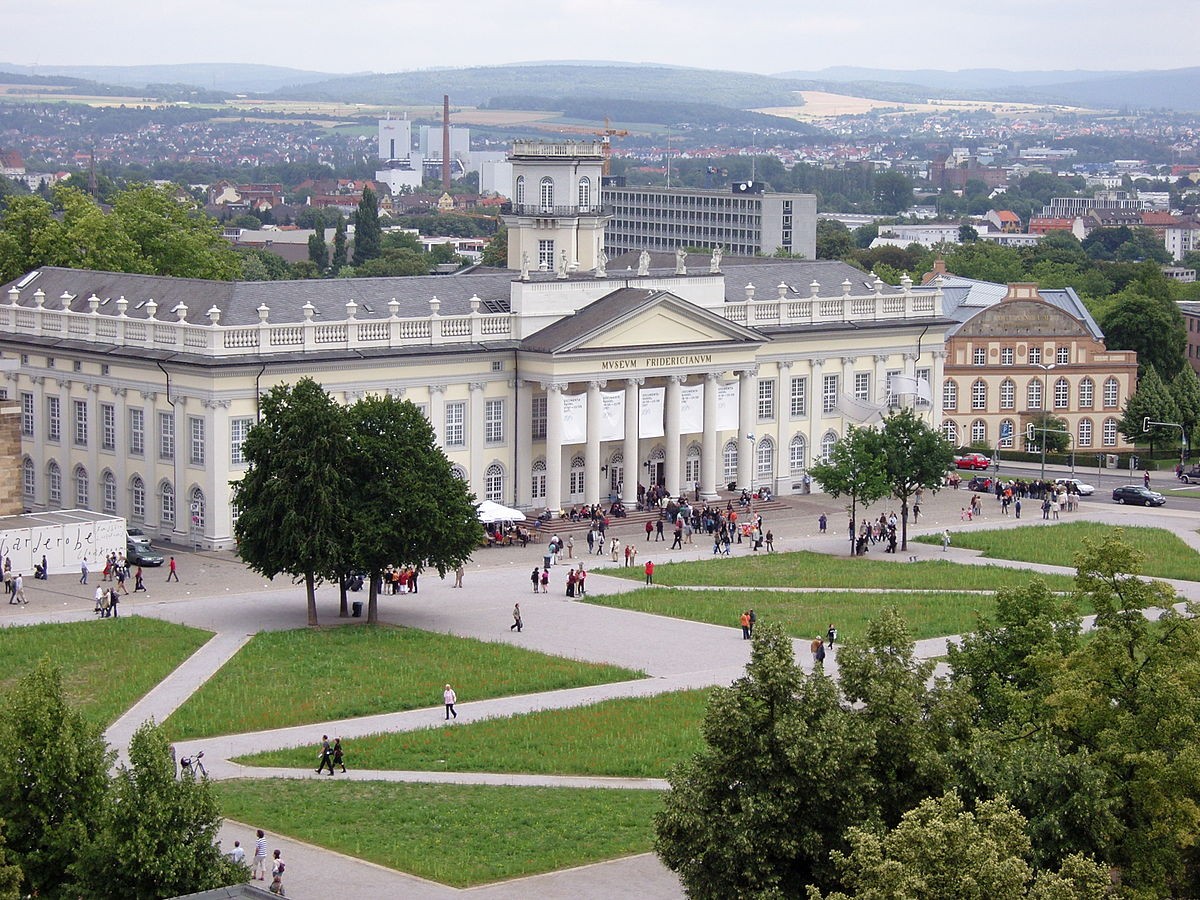
The architectural identity of the complex is defined by its constituent buildings, each representing a distinct era of design. The symmetry and proportions of this structure establish a sense of permanence within the Hessian landscape. In contrast, the Neue Galerie, constructed in 1895, reflects the stylistic influences of Art Nouveau. This building offers a departure from the rigid lines of the earlier neoclassical era, introducing the organic fluidity characteristic of the turn of the century. The transition from the structured Museum Fridericianum to the more decorative Neue Galerie allows for a physical progression through different aesthetic philosophies. the Documentz Zentrum Kassel, inaugurated in 2003, introduces a contemporary architectural aesthetic to the site. This structure provides a modern counterpoint to the older institutions, emphasizing the evolution of spatial design into the twenty-first century.
The famous originals of Staatliche MuseenStaatliche Museen: the full page, 66 originalsThe museums of Kassel
How the masters of the originals are ranked
The masters with two originals or more of Staatliche Museen in our catalogue are ranked by fame: the Wikipedia language editions that describe them, the visits to their OriginalUniqueArt.com page and our studio's ranking. Originals are counted in our catalogue — one entry per work, without details, studies or copies — not in the museum's inventory. Every date, birthplace and movement is the catalogue's; the notes are drawn from the master's biography.
Go on