A Master of the Dutch Golden Age
Willem van Aelst emerged from the storied streets of Delft as a preeminent figure of the Dutch Golden Age, a period defined by unparalleled prosperity and artistic refinement. Born into a family of prominent city magistrates, his path toward the canvas was paved by lineage and mentorship. He began his artistic journey under the watchful eye of his uncle, Evert van Aelst, a respected still-life painter who instilled in him the foundational techniques of the genre. By 1643, Van Aelst had officially entered the Guild of Saint Luke in Delft, marking his transition from pupil to master.
His early career was marked by an expansive, cosmopolitan spirit that took him far beyond the borders of the Netherlands. Between 1645 and 1649, he lived in France, and subsequently traveled to Italy, where his talents garnered international acclaim. In Florence, he served as a court painter to Ferdinando II de' Medici, the Grand Duke of Tuscany. During this illustrious period, he was known by the Italianized name Guillielmo d'Olanda, and his skill was so highly regarded that the Grand Duke publicly honored him with a gold chain and medal. This exposure to the Mediterranean light and the sophisticated tastes of the Medici court undoubtedly enriched his visual vocabulary.
The Art of Stillness and Symbolism
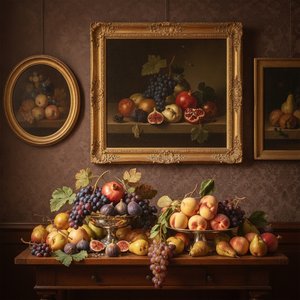
Van Aelst specialized in the exquisite realms of still-life painting, specifically focusing on floral arrangements and game. His work is celebrated for its ability to transform the mundane into the magnificent. Whether depicting a Breakfast Piece or a collection of hunting trophies, he possessed a singular ability to imbue inanimate objects with a palpable, breathing presence. His compositions often utilized chiaroscuro—the dramatic interplay of light and shadow—to create a profound illusion of depth and texture. In his hands, the rough skin of an onion, the delicate translucency of a glass vase, or the glistening feathers of a bird became subjects of intense psychological and sensory engagement.
Beyond mere technical virtuosity, Van Aelst’s paintings served as complex tapestries of meaning. His works often explored the tension between beauty and decay, reflecting the 17th-century fascination with vanitas—the fleeting nature of life. In pieces such as his Still-Life of Dead Birds and Hunting Weapons, he captured a haunting beauty that spoke to themes of honor, death, and the precarious balance of the natural world. His ability to weave together prosperity and mortality allowed his art to resonate deeply with the social and cultural values of the Dutch Republic.
Legacy and Artistic Influence
Upon returning to the Netherlands, Van Aelst settled in Amsterdam, where he became one of the most prominent still-life painters of his generation. His success allowed him to reside in the prestigious Prinsengracht district, a testament to his standing in the art world. His influence extended far beyond his own brushstrokes, as he became a teacher to several notable artists who would carry forward the traditions of Dutch still life, including:
The historical significance of Willem van Aelst lies not only in his individual mastery but in his role as a bridge between the local traditions of Delft and the grander European courts. His works remain preserved in some of the world's most esteemed institutions, including the National Gallery of Art and the Staatliche Museen zu Berlin, ensuring that his meticulous observations of life, light, and shadow continue to captivate viewers centuries after his passing.