
The most famous artists with works in National Trust are Joshua Reynolds, George Romney, Melchior d'Hondecoeter and Johann Closterman.
Below, the 11 best-known of the 28 artists with works of National Trust in our catalogue (50 works), each with what the museum holds of them.
The masters of the originals
The 10 masters whose originals hang in National Trust
For each master: where and when they were born, their movement, how many originals the museum keeps in our catalogue, a note from their life, and the originals to see.
-
Neoclassicism
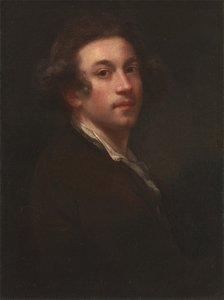
1. Joshua Reynolds 1723–1792
1723–1792 Born in Plympton, United Kingdom Neoclassicism 3 originals at National Trust
Sir Joshua Reynolds was born on 16 July 1723 in Plympton, Devon. The household was one of learning and intellectual pursuit, a setting that shaped the young boy's early years in the quiet town. In 1740, he moved to London to begin an apprenticeship under the portrait painter Thomas Hudson. By 1768, the landscape of British art was ready for a formal structure, and Reynolds was at the center of its creation.
Originals at National Trust
-

Neoclassicism
2. George Romney 1734–1802
1734–1802 Born in Dalton-in-Furness, United Kingdom Neoclassicism 3 originals at National Trust
Born on 26 December 1734 in Beckside, Dalton-in-Furness, Lancashire, George Romney entered a world of practical craftsmanship. Under Steele, Romney began to transition from a craftsman's apprentice to a student of the human form. By 1762, Romney had left the northern landscapes of Lancashire for the competitive atmosphere of London. In 1794, illness began to seriously curtail his portrait practice, slowing the prolific output that had defined his peak years.
Originals at National Trust
-

Baroque
3. Melchior d'Hondecoeter 1636–1695
1636–1695 Born in Utrecht, Netherlands Baroque 3 originals at National Trust
Dutch Baroque animalier known for dramatic, lifelike depictions of exotic birds and poultry set within lush, atmospheric park landscapes. The foundation of his extraordinary talent was laid through rigorous discipline and an unwavering commitment to anatomical truth.
Originals at National Trust
-

Baroque
4. Johann Closterman 1660–1711
1660–1711 Baroque 5 originals at National Trust
However, fortune proved fickle when Charles Seymour, 6th Duke of Somerset—a patron who had initially commissioned Closterman—expressed dissatisfaction with a portrait of Guercino that the painter had undertaken for him.
Originals at National Trust
-
Neoclassicism
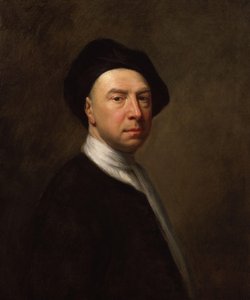
5. Jonathan Richardson the Elder 1667–1745
1667–1745 Neoclassicism 2 originals at National Trust
His influence can be traced through several key pillars of his legacy: The Development of Portraiture: He moved the genre away from static documentation toward a more nuanced, psychological exploration of the sitter.
Originals at National Trust
-

Neoclassicism
6. Sir Martin Archer Shee 1769–1850
1769–1850 Born in Dublin, Ireland Neoclassicism 2 originals at National Trust
Born in the vibrant city of Dublin on December 23rd, 1769, Sir Martin Archer Shee emerged as a pivotal figure in 19th-century British art. A crucial introduction by Edmund Burke in 1788 to Joshua Reynolds opened doors to the Royal Academy Schools, marking a turning point in Shee’s artistic development.
Originals at National Trust
-

7. Elizabeth Cust 1726–1770
1726–1770 4 originals at National Trust
Elizabeth Cust, born Eleanor Elizabeth Cust on November 23rd, 1776, was a British artist who achieved considerable renown during her lifetime for her exquisitely rendered portraits of aristocratic families—particularly those connected to the influential Cust lineage.
Originals at National Trust
-

Baroque
8. Michael Dahl 1659–1743
1659–1743 Born in Stockholm, Sweden Baroque 3 originals at National Trust
Born in Stockholm around 1659 – sources vary slightly between 1658 and 1659 – Dahl’s trajectory wasn't one confined by national borders but rather defined by an ambitious pursuit of artistic mastery that led him across Europe and ultimately established him as a leading portraitist in England.
Originals at National Trust
-

9. Giuseppe Bartolomeo Chiari 1654–1727
1654–1727 Born in Rome, Italy 2 originals at National Trust
Chiari eventually entered the studio of Carlo Maratta, training alongside Giuseppe Passeri and Andrea Procaccini. By the age of 22, he had already contributed to the Marcaccioni chapel in the church of Santa Maria del Suffragio, where he painted the lateral lunettes depicting the Birth of the Virgin and the Adoration of the Magi.
Originals at National Trust
-

Contemporary Realism
10. Frank O. Salisbury 1874–1962
1874–1962 Born in Harpenden, United Kingdom Contemporary Realism 4 originals at National Trust
Harpenden, United Kingdom (December 18, 1874) Died: August 31, 1962 Known as "Britain's Painter Laureate" Salisbury’s early life was marked by delicate health, leading to a home-based education primarily overseen by his sister, Emilie. At the age of 15, he was apprenticed to his brother, Henry James Salisbury, who managed a stained glass company in St Albans.
Originals at National Trust


The masters, continued
No. 11 to No. 11: more masters of National Trust

The house in figures
The masters of National Trust, in figures
The masters with the most originals at National Trust
Masters with two originals or more, by century of birth
Masters with two originals or more, by country of birth
Masters with two originals or more, by movement
Women masters
The women whose originals hang in National Trust
3 women masters, 3 originals, in our catalogue of National Trust.
-

Princess Patricia of Connaught
1886–1974 · born in Buckingham Palace, United Kingdom · 1 originals at National Trust
-
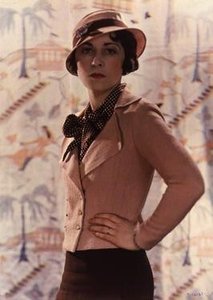
Cathleen Sabine Mann
1896–1959 · born in Newcastle upon Tyne, United Kingdom · 1 originals at National Trust
-

Susan Ryder
born 1944 · born in United Kingdom · 1 originals at National Trust
Asked of us
Questions on the masters of National Trust
Open a question to read the answer.
Who is the best-known artist of National Trust?
Joshua Reynolds, with 3 works at National Trust in our catalogue (The Honourable Sir John Cust (1718–1770), Amelia Anne Egerton (1751–1809), Lady Hume and Sir Abraham Hume (1749–1838), 2nd Bt, FRS); then George Romney and Melchior d'Hondecoeter.
How many Joshua Reynolds paintings are in National Trust?
3 works by Joshua Reynolds at National Trust are in our catalogue: The Honourable Sir John Cust (1718–1770) (1761), Amelia Anne Egerton (1751–1809), Lady Hume (1785) and Sir Abraham Hume (1749–1838), 2nd Bt, FRS (1783) among them.
How many George Romney paintings are in National Trust?
3 works by George Romney at National Trust are in our catalogue: Frances Bankes (1756–1847) (1783), Peregrine Cust (1723–1785), MP (1779) and Sir Brownlow Cust (1744–1807), 1st Baron Brownlow among them.
Which Melchior d'Hondecoeter works are in National Trust?
3 works by Melchior d'Hondecoeter at National Trust are in our catalogue: Open Landscape with Poultry and Waterfowl (1680), View of a Park with Swans and Ducks (1680) and View of a Terrace with a Page Descending (1680) among them.
Who are the top 10 artists in National Trust?
By fame: Joshua Reynolds (3), George Romney (3), Melchior d'Hondecoeter (3), Johann Closterman (5), Jonathan Richardson the Elder (2), Sir Martin Archer Shee (2), Elizabeth Cust (4), Michael Dahl (3), Giuseppe Bartolomeo Chiari (2) and Frank O. Salisbury (4).
Which painter is most represented in National Trust?
Our catalogue holds 5 works by Johann Closterman at National Trust; next come Elizabeth Cust (4), Frank O. Salisbury (4) and Joshua Reynolds (3).
Is Leonardo da Vinci in National Trust?
Our catalogue lists no work by Leonardo da Vinci at National Trust.
Is Pablo Picasso in National Trust?
Our catalogue lists no work by Pablo Picasso at National Trust.
Are there any women painters in National Trust?
3 women artists have works of National Trust in our catalogue, among them Princess Patricia of Connaught (1), Cathleen Sabine Mann (1) and Susan Ryder (1).
Are the artists in National Trust mostly French, Italian or Dutch?
By country of birth, the artists with two works or more at National Trust are mostly from United Kingdom (3), Netherlands (1), Ireland (1), Sweden (1) and Italy (1).
From which period are the artists of National Trust?
The 17th century leads with 6 artists born then. In this ranking, Jacob Huysmans (1633–1696) is the earliest born and Frank O. Salisbury (1874–1962) the latest.
How many artists have works in National Trust?
28 artists have at least one work of National Trust in our catalogue; 11 have two or more. They were born between 1633 and 1874, in 6 countries.
The house
National Trust, Grantham, in a few lines
A Tapestry of Time: the Timeless Allure of Grantham House
Originally conceived in 1380 by the influential Hall family—prosperous wool merchants whose commercial success helped shape the economic landscape of the region—the house has evolved through centuries of transformation. What distinguishes Grantham House from more sterile environments is its commitment to historical continuity and atmospheric authenticity. Visitors find themselves wandering through meticulously recreated rooms, adorned with period antiques that breathe life into the surrounding canvases.
A Legacy of Landscape and Patronage
Beyond its walls, the estate offers a broader context for the study of English aristocratic patronage, particularly through its proximity to the Belton Estate. This allows for a comparative exploration of how art and landscape were utilized to project power and prestige during the Tudor and Georgian periods.
The famous originals of National TrustNational Trust: the full page, 51 originalsThe museums of Grantham
How the masters of the originals are ranked
The masters with two originals or more of National Trust in our catalogue are ranked by fame: the Wikipedia language editions that describe them, the visits to their OriginalUniqueArt.com page and our studio's ranking. Originals are counted in our catalogue — one entry per work, without details, studies or copies — not in the museum's inventory. Every date, birthplace and movement is the catalogue's; the notes are drawn from the master's biography.
Go on