
Odilon Redon is the best-known artist with works in the Museum Gouda; next come Jan Steen, Charles-François Daubigny and Henri Fantin-Latour.
Our catalogue lists 498 works of the Museum Gouda by 189 artists; the 25 best known are ranked below, each with the works the museum holds.
The masters of the originals
The 10 masters whose originals hang in the Museum Gouda
For each master: where and when they were born, their movement, how many originals the museum keeps in our catalogue, a note from their life, and the originals to see.
-

Symbolism
1. Odilon Redon 1840–1916
1840–1916 Born in Bordeaux, France Symbolism 2 originals at the Museum Gouda
Born Bertrand-Jean Redon on 20 April 1840 in Bordeaux, Aquitaine, France, the boy who would become known as Odilon Redon entered a world shaped by his family's origins. Though he began formal study of drawing at fifteen, his father’s wishes initially pulled him toward the structured world of architecture. After failing to pass the entrance exams for the École des Beaux-Arts, he returned to his native Bordeaux to seek a different way of seeing.
Originals at the Museum Gouda
-

Baroque
2. Jan Steen 1626–1679
1626–1679 Born in Leiden, Netherlands Baroque 2 originals at the Museum Gouda
Jan Havickszoon Steen was born in Leiden around 1626 into a family that understood the mechanics of social gathering. As the eldest of at least eight children, his upbringing was shaped by the commercial realities of his father, Havick Steen. Steen was registered at Leiden University in 1646. By 1648, he had achieved the status of a master painter through his registration in the Leiden Guild of Saint Luke.
Originals at the Museum Gouda
-

Barbizon School
3. Charles-François Daubigny 1817–1878
1817–1878 Born in Paris, France Barbizon School 6 originals at the Museum Gouda
Charles-François Daubigny was born in Paris in 1817. In 1860, he moved to Auvers-sur-Oise, a change that allowed him to settle deeper into this way of seeing. In 1857, Daubigny made a practical choice to change how he approached the landscape. In 1852, a meeting with Camille Corot began a friendship that would shape much of his middle years. The influence of his work traveled far beyond his immediate circle.
Originals at the Museum Gouda
-

Realism
4. Henri Fantin-Latour 1836–1904
1836–1904 Born in Grenoble, France Realism 3 originals at the Museum Gouda
By 1850, Henri Fantin-Latour moved to Paris, seeking to expand his skills beyond the lessons of his childhood. During these formative years, he studied under Louis-Alexandre Péron and Horace Lecoq de Boisbaudran. Fantin-Latour moved through the most influential social circles of his time, though he often walked a path separate from the radical shifts occurring in Paris.
Originals at the Museum Gouda
-

Baroque
5. Ferdinand Bol 1616–1680
1616–1680 Born in Dordrecht, Netherlands Baroque 3 originals at the Museum Gouda
However, as Bol matured, he began to refine his technique, moving towards a greater emphasis on clarity, elegance, and refined detail. Bol’s oeuvre is remarkably diverse, encompassing historical subjects, portraits, tronies (character studies), and even some landscape elements. However, it was perhaps in the realm of portraiture that Bol truly excelled.
Originals at the Museum Gouda
-

Barbizon School
6. Felix Ziem 1821–1911
1821–1911 Born in Beaune, France Barbizon School 2 originals at the Museum Gouda
Ziem’s versatility allowed him to move seamlessly between different environments, from the serene, pine-filled landscapes of Martigues in works like Midi, étude de pins to the tranquil river scenes of Northern Europe, such as his depiction of the Amstel River.
Originals at the Museum Gouda
-

Rococo
7. Jean-Étienne Liotard 1702–1789
1702–1789 Born in Geneva, Switzerland Rococo 2 originals at the Museum Gouda
Jean-Étienne Liotard entered the world on December 22, 1702, in Geneva, Switzerland. In 1725, the young artist moved to Paris to further his development. Liotard’s residency in Constantinople, which began in 1738 and lasted for four years, fundamentally altered the trajectory of his career. The final decade of Liotard's life was marked by a transition from the observational precision of his earlier years toward a more theoretical engagement with his craft.
Originals at the Museum Gouda
-

Northern Renaissance
8. Pieter Pourbus 1523–1584
1523–1584 Born in Gouda, Netherlands Northern Renaissance 5 originals at the Museum Gouda
Joachim Patinir, a name often whispered in the halls of art history, remains an enigmatic figure despite his undeniable impact on the development of landscape painting. Born sometime between 1480 and 1485 – the exact date lost to time – Patinir’s life unfolded primarily within the vibrant artistic hub of Antwerp, Belgium, a city that served as a crucial crossroads for European art during the early 16th century.
Originals at the Museum Gouda
-

Realism
9. Jean-François Raffaelli 1850–1924
1850–1924 Born in Paris, France Realism 2 originals at the Museum Gouda
Born on April 20, 1850, in Paris, France, Jean-François Raffaëlli was a pivotal figure bridging Realism and Impressionism. He began his painting career in 1870, quickly gaining recognition with an exhibited landscape at the Salon that same year.
Originals at the Museum Gouda
-

Romanticism
10. Alexandre Gabriel Decamps 1803–1860
1803–1860 Born in Paris, France Romanticism 2 originals at the Museum Gouda
Beyond the canvas, Decamps was a man deeply connected to nature, finding solace and inspiration in the countryside surrounding Paris, where he indulged his passion for animals and field sports—a fondness that would subtly permeate much of his artistic output.
Originals at the Museum Gouda


The masters, continued
No. 11 to No. 25: more masters of the Museum Gouda
-

- The Lute Player (1867)
- Still-life (1874)
- The road from Bourg-la-Reine near Fontenay aux Roses (1874)
-

12. Willem Roelofs
1822–1897 · born in Amsterdam, Netherlands · 2 originals at the Museum Gouda
Dutch Hague School pioneer of atmospheric landscapes, capturing moody skies and rural life with the spirit of the Barbizon movement.
- Near Doesborgh (Landscape) (1889)
- Cloudburst near Gouda (1887)
-

13. Pieter Pietersz
1540–1603 · born in Antwerp, Belgium · 2 originals at the Museum Gouda
Dutch Renaissance painter of luminous market scenes and psychological portraits, known for capturing the vibrant energy of 16th-century life.
-

14. Isaac Israëls
Impressionism
1865–1934 · born in Amsterdam, Netherlands · 3 originals at the Museum Gouda
Dutch Amsterdam Impressionist known for vibrant city scenes, bustling cafes, and loose brushwork capturing the energy of everyday life.
- Café Interior (1894)
- Hyde Park (1915)
- Girl Reading on a Divan
-

15. Johan Hendrik Weissenbruch
Hague School
1824–1903 · born in The Hague, Netherlands · 4 originals at the Museum Gouda
Dutch Hague School painter of atmospheric polders and cloudy skies, known for delicate watercolors and expressive, loose brushstrokes.
- Farmhouse in polder landscape (1892)
- A Windmill in the Dunes (1895)
- The white cloud (1901)
-

16. Jacob Maris
Hague School
1837–1899 · born in The Hague, Netherlands · 3 originals at the Museum Gouda
Dutch Hague School leader known for atmospheric landscapes of rivers and beach scenes, rendered with broad brushstrokes and luminous clouds.
- Lady in the Forest (1860)
- The Dawn (1865)
- Lady on a Bench in the Park (1870)
-
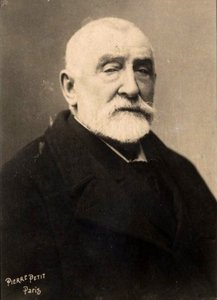
17. Henri Harpignies
Barbizon School
1819–1916 · born in Valenciennes, France · 3 originals at the Museum Gouda
French Barbizon School painter of serene landscapes and the Loire Valley, known for his precise draughtsmanship and atmospheric light.
- Open Clearing in the Forest (1870)
- Landscape (1880)
- Evening Landscape (1880)
-

French Realist known for intimate still lifes and domestic scenes, using Dutch-inspired chiaroscuro to capture the texture of everyday life.
- The Embroideress (La Brodeuse) (1857)
- Landscape with Barn (1869)
- Still Life with Clogs (1875)
-

19. Wouter Crabeth II
1594–1644 · born in Gouda, Netherlands · 4 originals at the Museum Gouda
Dutch Golden Age painter of Caravaggisti style, known for dramatic biblical scenes and genre works like The Adoration of the Magi.
- Adoration of the kings (1631)
- The assumption of the Virgin (1628)
- Conversion of William X (1641)
-

French landscape painter and precursor to the Barbizon School, known for serene rural scenes and Dutch-inspired compositions of light and form.
- Landscape with Figures and Cattle (1795)
- Landscape with Sand Road (1805)
- Landscape with Heavy Shower (1820)
-

21. Augustin Théodule Ribot
Realism
1823–1891 · born in Saint-Nicolas-d'Attez, France · 3 originals at the Museum Gouda
French Realist known for dramatic chiaroscuro and intimate scenes of working-class life, capturing the quiet dignity of ordinary people.
-

22. Philippe Rousseau
1816–1887 · born in Paris, France · 2 originals at the Museum Gouda
French painter of detailed still lifes and animal subjects, renowned for trompe-l'œil textures and narrative scenes of domestic life.
- Still Life with Blue Plums (1851)
- Still Life with Dead Hare (1883)
-

23. Paul Joseph Constantin Gabriël
Impressionism
1828–1903 · born in Amsterdam, Netherlands · 4 originals at the Museum Gouda
Hague School landscape painter known for vibrant colors and the luminous, atmospheric light of the Dutch polders and windmills.
- Polder Landscape (1882)
- Landscape with Water (1882)
- Two Barns by a Path (1883)
-

24. Johannes Bosboom
Hague School
1817–1891 · born in The Hague, Netherlands · 2 originals at the Museum Gouda
-

25. Ludolf de Jongh
1616–1679 · born in Rotterdam, Netherlands · 2 originals at the Museum Gouda
Ludolf de Jongh: Dutch Golden Age painter known for Caravaggio-inspired portraits & scenes. Rotterdam artist, skilled in light & space, a major figure of his time.
Famous artists in the Museum Gouda, No. 26 to 50
 Willem Bastiaan Tholen1860–1931 · 19 originals at the Museum Gouda
 Anthonie Blocklandt van Montfoort1533–1583 · 2 originals at the Museum Gouda
 Pierre Frédéric de La Croix1709–1782 · 5 originals at the Museum Gouda
 Floris Arntzenius1864–1925 · 3 originals at the Museum Gouda
 Hendrik Haverman1857–1928 · 2 originals at the Museum Gouda
 Jan Damesz de Veth1595–1625 · 4 originals at the Museum Gouda
 Jan Willem van Borselen1825–1892 · 3 originals at the Museum Gouda
 Jacob Willemsz Delff the Younger1619–1661 · 2 originals at the Museum Gouda
 Christoffel Pierson1631–1714 · 2 originals at the Museum Gouda
 Hendrik Pothoven1725–1807 · 2 originals at the Museum Gouda
 Cornelia de Rijck1656–1726 · 2 originals at the Museum Gouda
 Nelly Goedewaagen1880–1953 · 6 originals at the Museum Gouda
 Piet Meiners1857–1903 · 4 originals at the Museum Gouda
 Jan Franse Verzijl1599–1647 · 4 originals at the Museum Gouda
 Jan Ariens Duif1617–1649 · 3 originals at the Museum Gouda
 Johannes Jacobus Bertelman1821–1899 · 40 originals at the Museum Gouda
 Daniel Harkink1862–1953 · 24 originals at the Museum Gouda
 Johannes Huygens1833–1911 · 19 originals at the Museum Gouda
 Simon Klapmuts1734–1780 · 2 originals at the Museum Gouda
 Marjolijn van den Assemborn 1947 · 16 originals at the Museum Gouda
 Elie Neuburger1891–1972 · 8 originals at the Museum Gouda
 Koos de Bruin1941–1992 · 3 originals at the Museum Gouda
 Paul Arntzenius1883–1965 · 4 originals at the Museum Gouda
 Petrus Theodorus van Wijngaerdt1816–1893 · 2 originals at the Museum Gouda
 Gijsbert Johannes Verspuy1823–1862 · 5 originals at the Museum Gouda
The house in figures
The masters of the Museum Gouda, in figures
The masters with the most originals at the Museum Gouda
Masters with two originals or more, by century of birth
Masters with two originals or more, by country of birth
Masters with two originals or more, by movement
Women masters
The women whose originals hang in the Museum Gouda
24 women masters, 67 originals, in our catalogue of the Museum Gouda.
-
Marjolijn van den Assem
born 1947 · born in Rotterdam, Netherlands · 16 originals at the Museum Gouda
- Because (9). (1997)
- Place/Insight, 1986. (1986)
- Sky/water. (1989)
-

Elizabeth de Vaal
born 1950 · born in Rotterdam, Netherlands · 10 originals at the Museum Gouda
- Orange with blue lid (1984)
- Man, Crocodile and Palm Tree (1980)
- Torso (1982)
-
Nelly Goedewaagen
1880–1953 · born in Gouda, Netherlands · 6 originals at the Museum Gouda
- Almshouse in Gouda (1949)
- Anemones (1916)
- Cityscape (Gouda) (1922)
-

Gabriëlle van de Laak
born 1958 · born in Vught, Netherlands · 6 originals at the Museum Gouda
- Untitled (1992). (1992)
-

Carla Rodenberg
born 1941 · born in Gouda, Netherlands · 5 originals at the Museum Gouda
- Little Bride (1999)
- Picked Itself. (2011)
- Portrait of Piet van Mook (1970)
-
Cornelia de Rijck
1656–1726 · born in Amsterdam, Netherlands · 2 originals at the Museum Gouda
- Poultry Yard (1680)
- Goose and Ducks in Landscape (1680)
-

Josche Roverts
1936–2002 · born in Utrecht, Netherlands · 2 originals at the Museum Gouda
- Mixed Feelings (1972)
- The Butterfly Catcher (1977)
-

Agnus Gastmans
born 1939 · born in Schoten, Belgium · 2 originals at the Museum Gouda
- The Four Lawyers (1976)
Asked of us
Questions on the masters of the Museum Gouda
Open a question to read the answer.
Which artist in the Museum Gouda is the most famous?
Odilon Redon (1840–1916): our catalogue holds 2 works by Odilon Redon at the Museum Gouda, among them The Road at Bièvres and Untitled. Jan Steen and Charles-François Daubigny follow.
What did Odilon Redon paint that hangs in the Museum Gouda?
Our catalogue lists 2 works by Odilon Redon at the Museum Gouda, among them The Road at Bièvres (1890) and Untitled.
What did Jan Steen paint that hangs in the Museum Gouda?
Our catalogue lists 2 works by Jan Steen at the Museum Gouda, among them The Quack (1652) and The Doctor's Visit (1652).
Which Charles-François Daubigny works are in the Museum Gouda?
Our catalogue lists 6 works by Charles-François Daubigny at the Museum Gouda, among them The Grape Picker (le Vigneron) (1863), Landscape with Ships on a River in the Evening (1866), Sunset (Coucher du soleil) (1875) and The Harvesters (Paysage aux Moissonneurs) (1875).
Which famous artists are displayed in the Museum Gouda?
The ten best-known artists with works in the Museum Gouda are Odilon Redon (2), Jan Steen (2), Charles-François Daubigny (6), Henri Fantin-Latour (3), Ferdinand Bol (3), Felix Ziem (2), Jean-Étienne Liotard (2), Pieter Pourbus (5), Jean-François Raffaelli (2) and Alexandre Gabriel Decamps (2).
Who has the most paintings in the collection of the Museum Gouda?
Johannes Jacobus Bertelman (—), with 40 works in our catalogue of the Museum Gouda, ahead of Frederik Lodewijk Huygens (36), Daniel Harkink (24) and Willem Bastiaan Tholen (19).
Does the Museum Gouda have any Leonardo da Vinci paintings?
No: the Museum Gouda holds no work by Leonardo da Vinci in our catalogue.
Does the Museum Gouda have any Pablo Picasso paintings?
No: the Museum Gouda holds no work by Pablo Picasso in our catalogue.
How many women artists are in the Museum Gouda?
24 women artists have works of the Museum Gouda in our catalogue, among them Marjolijn van den Assem (16), Elizabeth de Vaal (10), Nelly Goedewaagen (6), Gabriëlle van de Laak (6), Carla Rodenberg (5) and Cornelia de Rijck (2).
Are the artists in the Museum Gouda mostly French, Italian or Dutch?
By country of birth, the artists with two works or more at the Museum Gouda are mostly from Netherlands (51), France (13), Belgium (3), Switzerland (1) and Indonesia (1).
From which period are the artists of the Museum Gouda?
The 19th century leads with 37 artists born then. In this ranking, Pieter Pourbus (1523–1584) is the earliest born and Isaac Israëls (1865–1934) the latest.
How many artists does the collection of the Museum Gouda cover?
Our catalogue lists 189 artists with at least one work at the Museum Gouda, 70 of them with two or more, born between 1523 and 1962 in 6 countries.
The house
The Museum Gouda, Gouda, in a few lines
The History and Location of Museum Gouda
The institution occupies a centuries-old guest house located in the heart of the city center. This site is specifically found at Achter de Kerk 14, situated directly behind the St Janskerk. The museum is housed within the former Catharina Gasthuis, a building that dates back partly to the 14th century. This former hospice provides a sense of continuity to the urban fabric of Gouda.
The Historic Building and Architecture
The museum occupies a structure with deep roots in the urban fabric of Gouda, situated in the heart of the city center. This building was once the Catharina Gasthuis, a former hospice that provided care within the community. Parts of this edifice date back to about the 14th century, lending a sense of continuity to the surrounding streets. The architecture reflects its long history as a place of refuge and healing. Positioned across the alley from the St Janskerk, the building sits in close proximity to the city's religious center. The physical presence of the former hospital provides a quiet, heavy atmosphere that complements the historical objects housed within its walls. Its location ensures a direct connection to the medieval layout of the city.
The famous originals of the Museum GoudaThe Museum Gouda: the full page, 521 originalsThe museums of Gouda
How the masters of the originals are ranked
The masters with two originals or more of the Museum Gouda in our catalogue are ranked by fame: the Wikipedia language editions that describe them, the visits to their OriginalUniqueArt.com page and our studio's ranking. Originals are counted in our catalogue — one entry per work, without details, studies or copies — not in the museum's inventory. Every date, birthplace and movement is the catalogue's; the notes are drawn from the master's biography.
Go on