
The most famous artists with works in the Museum der bildenden Künste are Rembrandt, Caspar David Friedrich, Rogier van der Weyden and Lucas Cranach the Elder.
Below, the 25 best-known of the 92 artists with works of the Museum der bildenden Künste in our catalogue (143 works), each with what the museum holds of them.
The masters of the originals
The 10 masters whose originals hang in the Museum der bildenden Künste
For each master: where and when they were born, their movement, how many originals the museum keeps in our catalogue, a note from their life, and the originals to see.
-
Baroque
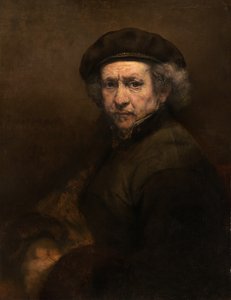
1. Rembrandt 1606–1669
1606–1669 Born in Leiden, Netherlands Baroque 2 originals at the Museum der bildenden Künste
Born on 15 July 1606 in Leiden, in the Dutch Republic, Rembrandt van Rijn entered a world of modest means. By the time he died on 4 October 1669, he had left behind a vast legacy that includes about 300 paintings, 300 etchings, and several hundred drawings. By 1625, the young artist had moved beyond his apprenticeship and opened a studio in Leiden. A significant shift occurred in 1631 when he moved to Amsterdam.
Originals at the Museum der bildenden Künste
-

Romanticism
2. Caspar David Friedrich 1774–1840
1774–1840 Born in Greifswald, Germany Romanticism 4 originals at the Museum der bildenden Künste
" Evening Landscape with Two Men " (1830), a quiet scene of twilight contemplation.
Originals at the Museum der bildenden Künste
-
Early Netherlandish
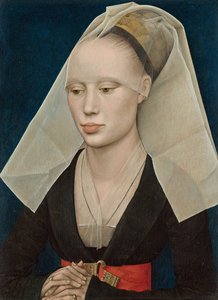
3. Rogier van der Weyden 1400–1464
1400–1464 Born in Tournai, Belgium Early Netherlandish 2 originals at the Museum der bildenden Künste
Born in Tournai, a Bishopric that is now part of Belgium, around 1399 or 1400, he moved through a world of evolving identities. On 5 March 1427, Rogier entered the workshop of Robert Campin as an apprentice. He married Elisabeth Goffaert between 1426 and 1427. On 2 March 1436, he holds the prestigious title of painter to the town of Brussels.
Originals at the Museum der bildenden Künste
-

Northern Renaissance
4. Lucas Cranach the Elder 1472–1553
1472–1553 Born in Kronach, Germany Northern Renaissance 13 originals at the Museum der bildenden Künste
German Renaissance painter of elegant, elongated figures and authoritative portraits of reformers, known for his precise woodcuts and engravings. Whether he was painting a high-ranking official or a mythological figure like Venus, Cranach maintained a consistent focus on psychological depth.
Originals at the Museum der bildenden Künste
-

Dutch Golden Age
5. Jacob van Ruisdael 1628–1682
1628–1682 Born in Haarlem, Netherlands Dutch Golden Age 3 originals at the Museum der bildenden Künste
Born in Haarlem, Netherlands, in 1628, Jacob Isaackszoon Van Ruisdael entered a world where art was a family trade. It is widely believed that Jacob Isaackszoon Van Ruisdael received his formal training under the guidance of his uncle, absorbing the nuances of the Dutch landscape through direct apprenticeship. By 1648, his professional standing was formalized when he became a member of the Haarlem painters' guild.
Originals at the Museum der bildenden Künste
-
Symbolism
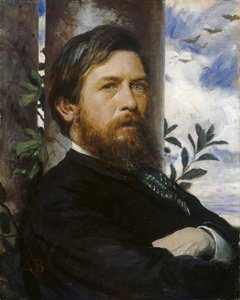
6. Arnold Böcklin 1827–1901
1827–1901 Born in Basel, Switzerland Symbolism 2 originals at the Museum der bildenden Künste
Born on October 16, 1827, to Christian Frederick Böcklin and Ursula Lippe, the young man would eventually move beyond the silk trade of his father to the rigorous halls of the Düsseldorf Academy. Under the guidance of Schirmer, he began to absorb the language of landscape, a skill that would later be used to map the geography of the human soul.
Originals at the Museum der bildenden Künste
-

Dutch Golden Age
7. Pieter de Hooch 1629–1684
1629–1684 Born in Rotterdam, Netherlands Dutch Golden Age 2 originals at the Museum der bildenden Künste
Pieter de Hooch was born on December 20, 1629, in Rotterdam, Netherlands. While the specific details of his childhood remain somewhat elusive, his roots in a working-class household in a bustling port city shaped the foundation of his later life. During these formative years, de Hooch was a pupil of Claes Berchem. The artist's professional path moved through the major urban centers of the Netherlands, tracing a trajectory from his origins to his later years.
Originals at the Museum der bildenden Künste
-

Baroque
8. Gerard van Honthorst 1592–1656
1592–1656 Born in Utrecht, Netherlands Baroque 3 originals at the Museum der bildenden Künste
The dramatic use of tenebrism, a technique employing stark contrasts between light and dark, became Honthorst’s hallmark, imbuing his canvases with a palpable sense of drama and emotional intensity. Honthorst's time in Rome was marked by considerable success and patronage. While some collaborative works, like “The Taking of Christ,” were initially attributed solely to Honthorst, modern scholarship has revealed the contributions of other artists, highlighting the complex dynamics of artistic production during this period.
Originals at the Museum der bildenden Künste
-

Barbizon School
9. Charles-François Daubigny 1817–1878
1817–1878 Born in Paris, France Barbizon School 2 originals at the Museum der bildenden Künste
Charles-François Daubigny was born in Paris in 1817. In 1860, he moved to Auvers-sur-Oise, a change that allowed him to settle deeper into this way of seeing. In 1857, Daubigny made a practical choice to change how he approached the landscape. In 1852, a meeting with Camille Corot began a friendship that would shape much of his middle years. The influence of his work traveled far beyond his immediate circle.
Originals at the Museum der bildenden Künste
-

Realism
10. Henri Fantin-Latour 1836–1904
1836–1904 Born in Grenoble, France Realism 2 originals at the Museum der bildenden Künste
By 1850, Henri Fantin-Latour moved to Paris, seeking to expand his skills beyond the lessons of his childhood. During these formative years, he studied under Louis-Alexandre Péron and Horace Lecoq de Boisbaudran. Fantin-Latour moved through the most influential social circles of his time, though he often walked a path separate from the radical shifts occurring in Paris.
Originals at the Museum der bildenden Künste


The masters, continued
No. 11 to No. 25: more masters of the Museum der bildenden Künste
-

11. Jan van Goyen
Dutch Golden Age
1596–1656 · born in Leiden, Netherlands · 6 originals at the Museum der bildenden Künste
Dutch Golden Age landscape painter of serene river scenes and expansive skies, rendered with a subtle, tonal palette of grays and greens.
-
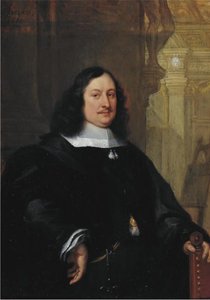
12. David Teniers the Younger
Flemish Baroque
1610–1690 · born in Antwerp, Belgium · 2 originals at the Museum der bildenden Künste
Flemish Baroque painter of lively peasant festivals, tavern interiors, and detailed singerie scenes featuring monkeys in human attire.
- The Quack (1660)
- The Inn under the Linden Tree (1645)
-

13. Willem Kalf
Baroque
1619–1693 · born in Rotterdam, Netherlands · 2 originals at the Museum der bildenden Künste
Dutch Golden Age painter of opulent pronkstilleven, featuring silver vessels, exotic fruits, and shimmering glassware in dramatic light.
-

14. Lovis Corinth
Expressionism
1858–1925 · born in Gvardeysk, Russia · 3 originals at the Museum der bildenden Künste
German painter bridging Impressionism and Expressionism through bold portraits and raw landscapes, often characterized by vibrant, gestural brushwork.
- Portrait of Frau Douglas (1909)
- The Deposition (1906)
- Salome, Second Version (1900)
-

15. Gerard ter Borch
Dutch Golden Age
1617–1681 · born in Zwolle, Netherlands · 2 originals at the Museum der bildenden Künste
-

16. Jan Davidsz de Heem
Baroque
1606–1684 · born in Utrecht, Netherlands · 2 originals at the Museum der bildenden Künste
Dutch Golden Age painter of opulent pronkstillevens, featuring luminous fruits, delicate flowers, and symbolic vanitas motifs.
- Flowers in a Vase in a Niche (1650)
- Vanitas (1628)
-

17. Ludolf Bakhuizen
Dutch Golden Age
1630–1708 · born in Emden, Germany · 2 originals at the Museum der bildenden Künste
Dutch Golden Age maritime painter of realistic stormy seas and intense naval battles, known for studying waves from open boats.
- Ships at a coming storm (1658)
- Ships on Choppy Seas (1670)
-

18. Aert van der Neer
Dutch Golden Age
1604–1677 · born in Gorinchem, Netherlands · 2 originals at the Museum der bildenden Künste
Dutch Golden Age painter of ethereal moonlight and tranquil winter scenes on frozen canals, capturing the silvered glow of a midnight sky.
-

19. Andreas Achenbach
Romanticism
1815–1910 · born in Kassel, Germany · 2 originals at the Museum der bildenden Künste
German Realist known for dramatic seascapes and turbulent, atmospheric coastal landscapes, from the sun-drenched coasts of Sicily to Norway.
-

20. Adriaen van Ostade
Baroque
1610–1685 · born in Haarlem, Netherlands · 2 originals at the Museum der bildenden Künste
Dutch Golden Age painter of lively tavern scenes and peasant interiors, using light and shadow to capture the charm of everyday rural life.
-

21. Philips Wouwerman
Dutch Golden Age
1619–1668 · born in Haarlem, Netherlands · 2 originals at the Museum der bildenden Künste
Dutch Golden Age painter of dynamic horse scenes, hunting expeditions, and detailed battlescapes with a cool, subdued atmosphere.
- Horseman resting with his dog (1646)
- Feeding the beggars (1660)
-

22. Jan Lievens
Baroque
1607–1674 · born in Leiden, Netherlands · 2 originals at the Museum der bildenden Künste
Dutch Golden Age painter known for dramatic chiaroscuro and life-size compositions, once a close collaborator of Rembrandt van Rijn.
- Portrait of a Girl (1660)
- Bust of an Old Man (1650)
-
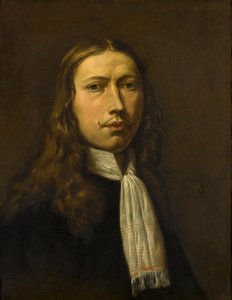
23. Adriaen van de Velde
Baroque
1636–1672 · born in Amsterdam, Netherlands · 2 originals at the Museum der bildenden Künste
Dutch Golden Age painter of idyllic Italianate landscapes, featuring cattle in meadows and soft, atmospheric light.
- Maternal Occupation (1667)
- The River Mouth (1658)
-

24. Ludwig Richter
Romanticism
1803–1884 · born in Friedrichstadt, Germany · 2 originals at the Museum der bildenden Künste
-

25. Fritz von Uhde
Impressionism
1848–1911 · born in Wolkenburg, Germany · 2 originals at the Museum der bildenden Künste
German Impressionist and realist who brought plein-air light to religious scenes and the everyday lives of peasants and fishermen.
- Suffer the little children to come unto me (1884)
- Boy playing (1890)
Famous artists in the Museum der bildenden Künste, No. 26 to 31
 Max Slevogt1868–1932 · 2 originals at the Museum der bildenden Künste
 Nicolaes Molenaer1627–1676 · 2 originals at the Museum der bildenden Künste
 Caspar Netscher1639–1684 · 2 originals at the Museum der bildenden Künste
 Domenico Quaglio the Younger1787–1837 · 2 originals at the Museum der bildenden Künste
 Jacob Ochtervelt1634–1682 · 2 originals at the Museum der bildenden Künste
 Ernst Ferdinand Oehme1797–1855 · 2 originals at the Museum der bildenden Künste
The house in figures
The masters of the Museum der bildenden Künste, in figures
The masters with the most originals at the Museum der bildenden Künste
Masters with two originals or more, by century of birth
Masters with two originals or more, by country of birth
Masters with two originals or more, by movement
Women masters
The women whose originals hang in the Museum der bildenden Künste
1 women masters, 1 originals, in our catalogue of the Museum der bildenden Künste.
-

Rachel Ruysch
1664–1750 · born in The Hague, Netherlands · 1 originals at the Museum der bildenden Künste
Asked of us
Questions on the masters of the Museum der bildenden Künste
Open a question to read the answer.
Which artist in the Museum der bildenden Künste is the most famous?
Rembrandt, with 2 works at the Museum der bildenden Künste in our catalogue (Bust of a Young Woman); then Caspar David Friedrich and Rogier van der Weyden.
Which Rembrandt works are in the Museum der bildenden Künste?
2 works by Rembrandt at the Museum der bildenden Künste are in our catalogue: Bust of a Young Woman (1632) among them.
What did Caspar David Friedrich paint that hangs in the Museum der bildenden Künste?
4 works by Caspar David Friedrich at the Museum der bildenden Künste are in our catalogue: The stages of life (1835), Seapiece by Moonlight (1827), Chalk Cliffs at Ruegen (1820) and Under Snow (1825) among them.
How many Rogier van der Weyden paintings are in the Museum der bildenden Künste?
2 works by Rogier van der Weyden at the Museum der bildenden Künste are in our catalogue: Visitation (1445) and Visitation of Mary (1445) among them.
Who are the top 10 artists in the Museum der bildenden Künste?
By fame: Rembrandt (2), Caspar David Friedrich (4), Rogier van der Weyden (2), Lucas Cranach the Elder (13), Jacob van Ruisdael (3), Arnold Böcklin (2), Pieter de Hooch (2), Gerard van Honthorst (3), Charles-François Daubigny (2) and Henri Fantin-Latour (2).
Which painter is most represented in the Museum der bildenden Künste?
Lucas Cranach the Elder (1472–1553), with 13 works in our catalogue of the Museum der bildenden Künste, ahead of Jan van Goyen (6), Caspar David Friedrich (4) and Jacob van Ruisdael (3).
Is Leonardo da Vinci in the Museum der bildenden Künste?
Our catalogue lists no work by Leonardo da Vinci at the Museum der bildenden Künste.
Are there Pablo Picasso works in the Museum der bildenden Künste?
Our catalogue lists no work by Pablo Picasso at the Museum der bildenden Künste.
Are there any women painters in the Museum der bildenden Künste?
Our catalogue lists 1 women artists with works at the Museum der bildenden Künste: Rachel Ruysch (1).
Which countries are the painters of the Museum der bildenden Künste from?
By country of birth, the artists with two works or more at the Museum der bildenden Künste are mostly from Netherlands (15), Germany (10), Belgium (2), France (2) and Switzerland (1).
Who is the earliest artist in the Museum der bildenden Künste?
Most of the artists with two works or more at the Museum der bildenden Künste were born in the 17th century (16 artists); the earliest in this ranking is Rogier van der Weyden (1400–1464), the latest Lovis Corinth (1858–1925).
How many artists have works in the Museum der bildenden Künste?
Our catalogue lists 92 artists with at least one work at the Museum der bildenden Künste, 31 of them with two or more, born between 1400 and 1868 in 6 countries.
The house
The Museum der bildenden Künste, Leipzig, in a few lines
A Legacy Forged in Time: the Soul of Leipzig’s Artistic Heart
The Museum der bildenden Künste (MdbK) in Leipzig encapsulates seven centuries of artistic endeavor, weaving a narrative that spans from the late Middle Ages to the cutting edge of contemporary practice. The original structure, once a grand symbol of civic pride, succumbed to the devastation of World War II bombings in 1943, forcing the collection into a nomadic existence for over sixty years. This period of displacement only deepened the museum's resolve, eventually leading to its triumphant homecoming in 2004 within a modern architectural marvel that bridges the gap between Leipzig’s industrial past and its luminous future. Rising with a striking yet harmonious presence above the urban streets, the building utilizes a sophisticated interplay of concrete and glass to create a dialogue between modernity and historical context.
A Tapestry of Eras: From Old Masters to the Leipzig School
These works provide a foundational depth that makes the museum's later collections feel even more revolutionary. What truly distinguishes the MdbK, however, is its unparalleled dedication to the Leipzig School. This distinctive movement, which flourished during the GDR period, offers a unique window into life within a divided Germany. Through the works of artists such as Werner Tübke, Bernhard Heisig, and Wolfgang Mattheuer, the museum showcases a style characterized by a powerful "closed factory look" and socialist realism —a raw, honest celebration of collective effort and labor that remains intellectually provocative today.
The famous originals of the Museum der bildenden KünsteThe Museum der bildenden Künste: the full page, 146 originalsThe museums of Leipzig
How the masters of the originals are ranked
The masters with two originals or more of the Museum der bildenden Künste in our catalogue are ranked by fame: the Wikipedia language editions that describe them, the visits to their OriginalUniqueArt.com page and our studio's ranking. Originals are counted in our catalogue — one entry per work, without details, studies or copies — not in the museum's inventory. Every date, birthplace and movement is the catalogue's; the notes are drawn from the master's biography.
Go on