
The most famous artists with works in the Ibrahimi Collection are Madiha Omar, Hassan Al-Abadi, Ala'A Bashir and Shakir Hassan Al-Said.
Our catalogue lists 154 works of the Ibrahimi Collection by 62 artists; the 25 best known are ranked below, each with the works the museum holds.
The masters of the originals
The 10 masters whose originals hang in the Ibrahimi Collection
For each master: where and when they were born, their movement, how many originals the museum keeps in our catalogue, a note from their life, and the originals to see.
-

1. Madiha Omar 1908–2005
1908–2005 Born in Aleppo, Syrian Arab Republic 7 originals at the Ibrahimi Collection
From the Sultaniyya School in Istanbul to the Maria Grey Training College in London, Omar’s training was rigorous and international. Madiha Omar is most celebrated for her revolutionary approach to the canvas, specifically her role as a precursor to the Hurufiyya movement.
Originals at the Ibrahimi Collection
-

2. Hassan Al-Abadi born 1952
born 1952 Born in Baghdad, Iraq 2 originals at the Ibrahimi Collection
Born in Baghdad, Iraq, in 1952, Hassan Al-Abadi’s life has been deeply intertwined with the political landscape of his nation. Upon returning to Iraq, Al-Abadi worked closely with the Multi-National Force (MNF–I) during and after the American-led occupation. Despite attempts to abolish it, Al-Abadi was elected as one of Iraq’s three Vice Presidents in September 2014, holding the position concurrently with his prime ministership.
Originals at the Ibrahimi Collection
-

3. Ala'A Bashir 1939–2015
1939–2015 Born in Baghdad, Iraq 2 originals at the Ibrahimi Collection
Bashir's contributions to the visual arts are preserved through important institutional holdings.
Originals at the Ibrahimi Collection
-

Modernism
4. Shakir Hassan Al-Said 1925–2004
1925–2004 Born in Baghdad, Iraq Modernism 7 originals at the Ibrahimi Collection
Shakir Hassan Al Said was a multifaceted artist – painter, sculptor, writer, philosopher, art critic, and historian. Jama'et Baghdad lil Fann al-Hadith (The Baghdad Modern Art Group) – Co-founded in 1951, this group aimed to synthesize modern artistic approaches with Iraq’s rich cultural heritage.
Originals at the Ibrahimi Collection
-

5. Asim Hafidh 1886–1978
1886–1978 Born in Mosul, Iraq 2 originals at the Ibrahimi Collection
A pioneer of the Ottoman artists group and Iraqi classical realism, Asim Hafidh brought European easel painting to Iraq through works like Still Life (Fruits) and his foundational book on fine art techniques. Immersed in the heart of the European art world, Hafidh spent four years studying under Professor Antoine Reynold, a period that concluded in 1931.
Originals at the Ibrahimi Collection
-

6. Hafidh Al Droubi 1914–1991
1914–1991 Born in Baghdad, Iraq 2 originals at the Ibrahimi Collection
hafidh al droubi, a pivotal figure in iraqi art, was born in baghdad, iraq in 1914. this period marked the beginning of a transformative era for modernism in iraq, with al droubi at its forefront.
Originals at the Ibrahimi Collection
-
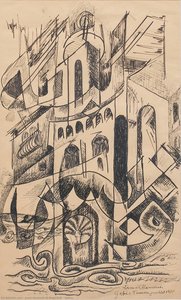
7. Jamil Hamoudi Al-Baghdadi 1924–2003
1924–2003 Born in Baghdad, Iraq 2 originals at the Ibrahimi Collection
In this capacity, he was not just an artist but a champion for the entire creative community, fostering environments where artistic dialogue could flourish and ensuring that the burgeoning modern Iraqi art scene received the recognition it deserved.
Originals at the Ibrahimi Collection
-

8. Mohammed Ghani Hikmat 1929–2011
1929–2011 Born in Baghdad, Iraq 2 originals at the Ibrahimi Collection
Born in the historic Kadhimiya district, a neighborhood steeped in the spiritual and cultural echoes of Islamic history, Hikmat’s relationship with art began with the earth itself.
Originals at the Ibrahimi Collection
-

9. Ismail Fattah Al Turk 1934–2004
1934–2004 Born in Basra, Iraq 7 originals at the Ibrahimi Collection
The foundation of al Turk’s aesthetic prowess was laid at Baghdad’s Institute of Fine Arts, but his artistic consciousness was truly expanded by his travels through Europe.
Originals at the Ibrahimi Collection
-

10. Khaleel Al-Ward 1925–1995
1925–1995 Born in Najaf, Iraq 4 originals at the Ibrahimi Collection
Al-Ward’s artistic output is most powerfully defined by his monumental sculptures, where he skillfully manipulated materials such as bronze and wood to convey complex narratives about space, form, and cultural symbolism. Throughout his career, Al-Ward’s meticulous attention to detail—visible in the rugged surfaces of his bronzes and the smooth, deliberate planes of his wood carvings—has left an indelible mark on the medium of sculpture.
Originals at the Ibrahimi Collection


The masters, continued
No. 11 to No. 25: more masters of the Ibrahimi Collection
-

11. Widad Al-Orfali
born 1954 · born in Baghdad, Iraq · 3 originals at the Ibrahimi Collection
- View from Abbasid Baghdad (2014)
- Rosy Dream (1991)
- Oriental Island (2005)
-

12. Lisa Thomas-Laury
1941–1992 · born in Berlin, Germany · 2 originals at the Ibrahimi Collection
- Portrait of Artist’s Daughter (1978)
- Self Portrait (1984)
-

13. Saad Shakir Al-Shakir
born 1952 · born in Southampton, United Kingdom · 3 originals at the Ibrahimi Collection
- Baghdad City (1974)
- Dialogue of Shape and Color (1998)
- Garment on a Wall (2001)
-

14. Fakher Mohamed Al-Masri
born 1962 · born in Gaza, Palestine · 2 originals at the Ibrahimi Collection
- Baghdadi Window (2000)
- Peacock (2003)
-

15. Nazar Yahya Al-Saadi
born 1960 · born in Baghdad, Iraq · 2 originals at the Ibrahimi Collection
- Family of Two (Meteoroid) (2019)
- Untitled Books (2021)
-

16. Abdul Ameer Alwan
1960–2019 · born in Baghdad, Iraq · 3 originals at the Ibrahimi Collection
- Shape of the Moon (2016)
- Saint (2009)
- Lamentations (2015)
-

17. Haythem Noor Hassan
born 1980 · born in Cairo, Egypt · 2 originals at the Ibrahimi Collection
- Fence & Nude (2000)
- Ox & Rock
-

18. Waleed Al Qaisi
born 1979 · born in Irbid, Jordan · 3 originals at the Ibrahimi Collection
- Relation (2002)
- Organic (2010)
- Deconstruction (2019)
-

19. Muhraddin Abdul-Hussain
1940–2014 · born in Baghdad, Iraq · 2 originals at the Ibrahimi Collection
- Behind Bars (2011)
- The New Mongolian Occupation of Iraq (2011)
-

20. Amer Al-Obaidi
born 1943 · born in Al-Najaf, Iraq · 2 originals at the Ibrahimi Collection
- Two Horses (1976)
- Horses (2001)
-

21. Dia al-Azzawi
Cubism
born 1939 · born in Baghdad, Iraq · 14 originals at the Ibrahimi Collection
Dia al-Azzawi (b. 1939) is a pioneering Iraqi artist renowned for his fusion of Arabic calligraphy, bold colors & exploration of Arab identity, conflict & heritage. Founder of the New Vision group.
- Fishermen (1963)
- Relationship (1983)
- Mesopotamia (1979)
-

22. Ali Talib Al-Saffar
Contemporary Realism
born 1983 · born in Kuwait City, Kuwait · 15 originals at the Ibrahimi Collection
- Citizen (1977)
- View (2003)
- The Martyr (1984)
-

23. Maxim Vorobiev
Romanticism
1787–1855 · born in Pskov, Russia · 5 originals at the Ibrahimi Collection
- The Summit (2009)
- Shadows of Flowers (2011)
- The Treasure of Life (2007)
-

24. Saad Abdel Qader Al-Kaabi
Hurufiyya
1932–2014 · born in Kufa, Iraq · 14 originals at the Ibrahimi Collection
- Indignant (1962)
- Coffin (1992)
- Coming Back to the Spirit (1997)
-

25. Amar Dawod Al-Jawahiri
born 1961 · born in Baghdad, Iraq · 2 originals at the Ibrahimi Collection
Famous artists in the Ibrahimi Collection, No. 26 to 29


The house in figures
The masters of the Ibrahimi Collection, in figures
The masters with the most originals at the Ibrahimi Collection
Masters with two originals or more, by century of birth
Masters with two originals or more, by country of birth
Masters with two originals or more, by movement
Asked of us
Questions on the masters of the Ibrahimi Collection
Open a question to read the answer.
Which artist in the Ibrahimi Collection is the most famous?
Madiha Omar (1908–2005): our catalogue holds 7 works by Madiha Omar at the Ibrahimi Collection, among them Letters Tell, Fountain of Tears and Colours at Sea. Hassan Al-Abadi and Ala'A Bashir follow.
Which Madiha Omar works are in the Ibrahimi Collection?
7 works by Madiha Omar at the Ibrahimi Collection are in our catalogue: Letters Tell (1950), Fountain of Tears (1979), Colours at Sea and View of a Holy Place among them.
How many Hassan Al-Abadi paintings are in the Ibrahimi Collection?
2 works by Hassan Al-Abadi at the Ibrahimi Collection are in our catalogue: Sinbad (2015) and Mother (2015) among them.
How many Ala'A Bashir paintings are in the Ibrahimi Collection?
2 works by Ala'A Bashir at the Ibrahimi Collection are in our catalogue: The Human and Destiny (1987) and Man & Woman (1992) among them.
Which ten artists should I look for in the Ibrahimi Collection?
By fame: Madiha Omar (7), Hassan Al-Abadi (2), Ala'A Bashir (2), Shakir Hassan Al-Said (7), Asim Hafidh (2), Hafidh Al Droubi (2), Jamil Hamoudi Al-Baghdadi (2), Mohammed Ghani Hikmat (2), Ismail Fattah Al Turk (7) and Khaleel Al-Ward (4).
Who has the most paintings in the collection of the Ibrahimi Collection?
Our catalogue holds 15 works by Ali Talib Al-Saffar at the Ibrahimi Collection; next come Dia al-Azzawi (14), Saad Abdel Qader Al-Kaabi (14) and Madiha Omar (7).
Does the Ibrahimi Collection have any Leonardo da Vinci paintings?
Our catalogue lists no work by Leonardo da Vinci at the Ibrahimi Collection.
Does the Ibrahimi Collection have any Pablo Picasso paintings?
Our catalogue lists no work by Pablo Picasso at the Ibrahimi Collection.
Are the artists in the Ibrahimi Collection mostly French, Italian or Dutch?
Counting the artists with two works or more, the Ibrahimi Collection holds painters born mostly in Iraq (19), Syrian Arab Republic (1), Germany (1), United Kingdom (1) and Palestine (1).
Which centuries do the painters of the Ibrahimi Collection belong to?
The 20th century leads with 26 artists born then. In this ranking, Maxim Vorobiev (1787–1855) is the earliest born and Ali Talib Al-Saffar (born 1983) the latest.
How many artists does the collection of the Ibrahimi Collection cover?
62 artists have at least one work of the Ibrahimi Collection in our catalogue; 29 have two or more. They were born between 1787 and 1983, in 8 countries.
How were the artists of the Ibrahimi Collection ranked?
By recognition — Wikipedia articles in the most languages, page visits and our manual ranking — over the artists with two works or more of the Ibrahimi Collection in our catalogue. One entry per work; details, studies and copies are left out.
The house
The Ibrahimi Collection, Amman, in a few lines
A Sanctuary of Iraqi Resilience
Founded by Hasanain Al-Ibrahimy, this private institution acts as a vital bridge between the storied past of Baghdad and the global art community. While many institutions attempt to capture the breadth of human history, the Ibrahimi Collection possesses the rare courage of singular focus, concentrating its immense energy on the evolution of Iraqi art from the early twentieth century onward. The architectural essence of the museum is as intentional as the art it houses. Designed to harmonize seamlessly with its precious contents, the building prioritizes clean, modern lines and an abundance of natural light, creating an atmosphere of contemplative serenity.
Masterworks and Artistic Legacies
Her evocative paintings are imbued with powerful social commentary. By providing access to these archives, the museum fosters a continuous dialogue between Iraqi heritage and international art discourse. Whether one is visiting during its dedicated Monday and Wednesday afternoon hours or delving into its digital presence, the collection offers an encounter with a culture that refuses to be silenced.
The famous originals of the Ibrahimi CollectionThe Ibrahimi Collection: the full page, 159 originalsThe museums of Amman
How the masters of the originals are ranked
The masters with two originals or more of the Ibrahimi Collection in our catalogue are ranked by fame: the Wikipedia language editions that describe them, the visits to their OriginalUniqueArt.com page and our studio's ranking. Originals are counted in our catalogue — one entry per work, without details, studies or copies — not in the museum's inventory. Every date, birthplace and movement is the catalogue's; the notes are drawn from the master's biography.
Go on