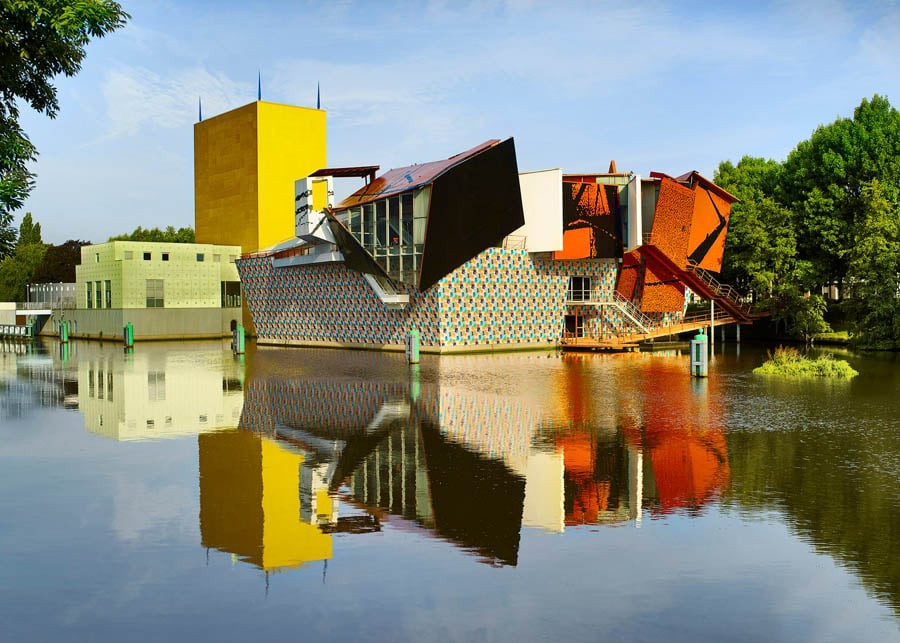
The most famous artists with works in the Groninger Museum are Rembrandt, Vincent van Gogh, Ernst Ludwig Kirchner and Paula Modersohn-Becker.
Our catalogue lists 607 works of the Groninger Museum by 258 artists; the 25 best known are ranked below, each with the works the museum holds.
The masters of the originals
The 10 masters whose originals hang in the Groninger Museum
For each master: where and when they were born, their movement, how many originals the museum keeps in our catalogue, a note from their life, and the originals to see.
-
Baroque
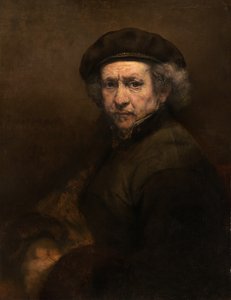
1. Rembrandt 1606–1669
1606–1669 Born in Leiden, Netherlands Baroque 3 originals at the Groninger Museum
Born on 15 July 1606 in Leiden, in the Dutch Republic, Rembrandt van Rijn entered a world of modest means. By the time he died on 4 October 1669, he had left behind a vast legacy that includes about 300 paintings, 300 etchings, and several hundred drawings. By 1625, the young artist had moved beyond his apprenticeship and opened a studio in Leiden. A significant shift occurred in 1631 when he moved to Amsterdam.
Originals at the Groninger Museum
-
Post-Impressionism
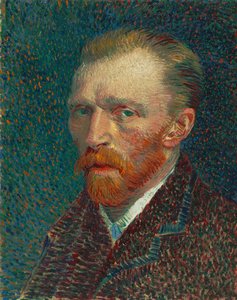
2. Vincent van Gogh 1853–1890
1853–1890 Born in Zundert, Netherlands Post-Impressionism 2 originals at the Groninger Museum
Vincent Willem Van Gogh was born on March 30, 1853, in Zundert, Netherlands. His brother Theo was born on 1 May 1857, and their connection would remain a constant through the many letters they exchanged over the years. The quiet village of Zundert in the Brabant region was where Vincent Willem Van Gogh was born. In 1873, he moved to the London branch of Goupil & Cie, where he remained until May 1875.
Originals at the Groninger Museum
-

Expressionism
3. Ernst Ludwig Kirchner 1880–1938
1880–1938 Born in Aschaffenburg, Germany Expressionism 2 originals at the Groninger Museum
Ernst Ludwig Kirchner was born on 6 May 1880 in Aschaffenburg, Germany. This transient existence saw the family living in Frankfurt/Main from 1886, following a period spent in Perlen near Lucerne, Switzerland, between 1887 and 1889. In 1937, the Nazi regime branded his work as "degenerate." This designation led to a systematic campaign against his output; more than 600 of his works were either sold or destroyed by the state.
Originals at the Groninger Museum
-

Expressionism
4. Paula Modersohn-Becker 1876–1907
1876–1907 Born in Dresden, Germany Expressionism 2 originals at the Groninger Museum
Born Minna Hermine Paula Becker on February 8, 1876, in Dresden, Germany, her life was tragically short – she passed away November 30, 1907, in Worpswede – yet within those three decades, she forged a path of remarkable artistic innovation and personal courage. Perhaps the most groundbreaking aspect of Modersohn-Becker’s oeuvre is her series of self-portraits, particularly those depicting herself nude or pregnant.
Originals at the Groninger Museum
-

Baroque
5. Carel Fabritius 1622–1654
1622–1654 Born in Middenbeemster, Netherlands Baroque 2 originals at the Groninger Museum
Following his time with Rembrandt, Fabritius settled in Delft, becoming a member of the local painters’ guild in 1652. Today, Carel Fabritius is recognized as a pivotal figure in the Dutch Golden Age, a painter whose brief but brilliant career left an indelible mark on the history of art.
Originals at the Groninger Museum
-

Dutch Golden Age
6. Jan van Goyen 1596–1656
1596–1656 Born in Leiden, Netherlands Dutch Golden Age 3 originals at the Groninger Museum
Born on January 13, 1596, in Leiden, Netherlands, Jan Josephszoon van Goyen emerged as a pivotal figure in Dutch Golden Age painting. At the time of his death on April 27, 1656, in The Hague, he was reportedly 18,000 guilders in debt. Van Goyen’s work is considered a cornerstone of Dutch Golden Age painting and a significant contribution to the development of landscape art.
Originals at the Groninger Museum
-
Flemish Baroque
7. David Teniers the Younger 1610–1690
1610–1690 Born in Antwerp, Belgium Flemish Baroque 2 originals at the Groninger Museum
The family is deeply rooted in the Flemish tradition, a lineage of painters that extends to his brothers, Juliaan III, Theodoor, and Abraham. In Brussels, Gillis van Tilborgh is believed to have trained under him.
Originals at the Groninger Museum
-

Impressionism
8. Johan Jongkind 1819–1891
1819–1891 Born in Lattrop, Netherlands Impressionism 3 originals at the Groninger Museum
Though initially employed as a clerk, his inherent artistic inclinations led him to The Hague in 1837, where he began formal training under Andreas Schelfhout, a respected landscape painter steeped in the Dutch tradition. Jongkind entered the studios of Eugène Isabey and François-Édouard Picot, immersing himself in the French art scene. Jongkind's return to the Netherlands in 1855 was temporary.
Originals at the Groninger Museum
-

Dutch Golden Age
9. Willem van de Velde the Younger 1633–1707
1633–1707 Born in Leiden, Netherlands Dutch Golden Age 2 originals at the Groninger Museum
Dutch Golden Age marine painter of precise naval vessels and atmospheric sea and sky scenes, known for his technical accuracy and rigging. He is born into a family of artists, the son of the painter Willem van de Velde the Elder.
Originals at the Groninger Museum
-

Baroque
10. Abraham van Beijeren 1620–1690
1620–1690 Born in The Hague, Netherlands Baroque 3 originals at the Groninger Museum
Born in The Hague around 1620, van Beyeren emerged during a period of unparalleled artistic flourishing known as the Dutch Golden Age. While much of his early biography remains shrouded in the soft shadows of history, his artistic lineage suggests a connection to the masters of his era, with some accounts even attributing his foundational training to the legendary Johannes Vermeer.
Originals at the Groninger Museum


The masters, continued
No. 11 to No. 25: more masters of the Groninger Museum
-

11. Aert van der Neer
Dutch Golden Age
1604–1677 · born in Gorinchem, Netherlands · 3 originals at the Groninger Museum
Dutch Golden Age painter of ethereal moonlight and tranquil winter scenes on frozen canals, capturing the silvered glow of a midnight sky.
-

12. Jan Toorop
Symbolism
1858–1928 · born in Purworejo, Indonesia · 3 originals at the Groninger Museum
- Turning Home (1885)
- Dune and Sea (1899)
- Landscape in the Ardennes (1902)
-

13. Anton Mauve
1838–1888 · born in Zaandam, Netherlands · 3 originals at the Groninger Museum
Dutch Hague School painter of silvery landscapes and pastoral sheep flocks, known for a delicate palette and mentoring Vincent van Gogh.
- The milking corner (1870)
- On the field (1870)
- Milking Time (1870)
-

14. Jozef Israëls
Realism
1824–1911 · born in Groningen, Netherlands · 39 originals at the Groninger Museum
-

15. Hendrik Willem Mesdag
Impressionism
1831–1915 · born in Groningen, Netherlands · 12 originals at the Groninger Museum
Dutch Hague School marine painter of powerful North Sea tides and the monumental, immersive Panorama Mesdag of the Scheveningen coast.
-

16. George Hendrik Breitner
Impressionism
1857–1923 · born in Rotterdam, Netherlands · 2 originals at the Groninger Museum
Dutch Amsterdam Impressionist known for gritty street scenes and cinematic compositions captured through a spontaneous, photographic eye.
- Sitting Nude with Red Cloth (1888)
- The Cannon Shot (1887)
-

17. Jan Mostaert
Northern Renaissance
1475–1555 · born in Haarlem, Netherlands · 2 originals at the Groninger Museum
Dutch Renaissance painter of refined portraits and imaginative landscapes, including a rare depiction of the New World and its inhabitants.
-

18. Willem Roelofs
1822–1897 · born in Amsterdam, Netherlands · 4 originals at the Groninger Museum
Dutch Hague School pioneer of atmospheric landscapes, capturing moody skies and rural life with the spirit of the Barbizon movement.
- Waterfall in the Dussel near Erkrath (1842)
- Forest Landscape (1867)
- View of the heath near Kalmthout (1867)
-

19. Isaac Israëls
Impressionism
1865–1934 · born in Amsterdam, Netherlands · 11 originals at the Groninger Museum
Dutch Amsterdam Impressionist known for vibrant city scenes, bustling cafes, and loose brushwork capturing the energy of everyday life.
-

20. Nicolaes Molenaer
1627–1676 · born in Haarlem, Netherlands · 3 originals at the Groninger Museum
Dutch Golden Age landscape painter of atmospheric winter scenes and lively frozen rivers teeming with skaters and sledges.
-

21. Johan Hendrik Weissenbruch
Hague School
1824–1903 · born in The Hague, Netherlands · 2 originals at the Groninger Museum
Dutch Hague School painter of atmospheric polders and cloudy skies, known for delicate watercolors and expressive, loose brushstrokes.
-

22. Jacob Maris
Hague School
1837–1899 · born in The Hague, Netherlands · 2 originals at the Groninger Museum
Dutch Hague School leader known for atmospheric landscapes of rivers and beach scenes, rendered with broad brushstrokes and luminous clouds.
- The Violist (Son of the Painter) (1887)
- Landscape with windmills (1890)
-

23. Cornelis Gerritsz Decker
Dutch Golden Age
1618–1678 · born in Haarlem, Netherlands · 2 originals at the Groninger Museum
Dutch Golden Age landscape painter of atmospheric rural scenes and river vistas, often featuring lively staffage in the style of Ruisdael.
-

24. Hendrik Voogd
1768–1839 · born in Amsterdam, Netherlands · 2 originals at the Groninger Museum
Dutch landscape painter of the Roman Campagna, known for luminous lighting and serene scenes of grazing cattle and lush foliage.
- Italianizing Landscape (1811)
- Italian Landscape (1819)
-

25. Willem Maris
Hague School
1844–1910 · born in The Hague, Netherlands · 2 originals at the Groninger Museum
Dutch Hague School painter of luminous meadows and cattle, using impasto to capture the shimmering effects of light through misty landscapes.
- Bulls on a Rocky Coast (1864)
- Meadow Landscape (1884)
Famous artists in the Groninger Museum, No. 26 to 50
 Jan Abrahamsz Beerstraaten1622–1666 · 2 originals at the Groninger Museum
 Jacob Duck1600–1667 · 2 originals at the Groninger Museum
 Leo Gestel1881–1941 · 2 originals at the Groninger Museum
 Otto Erelman1839–1926 · 12 originals at the Groninger Museum
 Paul Joseph Constantin Gabriël1828–1903 · 6 originals at the Groninger Museum
 Johannes Bosboom1817–1891 · 2 originals at the Groninger Museum
 Matthijs Maris1839–1917 · 2 originals at the Groninger Museum
 Willem Bastiaan Tholen1860–1931 · 11 originals at the Groninger Museum
 Philip van Dijk1683–1753 · 4 originals at the Groninger Museum
 Sina Mesdag-van Houten1834–1909 · 10 originals at the Groninger Museum
 Floris Verster1861–1927 · 8 originals at the Groninger Museum
 Suze Robertson1855–1922 · 6 originals at the Groninger Museum
 Jan Vonck1631–1664 · 2 originals at the Groninger Museum
 Johannes Hinderikus Egenberger1822–1897 · 8 originals at the Groninger Museum
 Hans Goderis1600–1659 · 2 originals at the Groninger Museum
 Elisabeth Geertruida Wassenbergh1729–1781 · 8 originals at the Groninger Museum
 Taco Mesdag1829–1902 · 6 originals at the Groninger Museum
 Hendrik Nicolaas Werkman1882–1945 · 8 originals at the Groninger Museum
 Jan Abel Wassenbergh1689–1750 · 29 originals at the Groninger Museum
 Jan Voerman1857–1941 · 2 originals at the Groninger Museum
 Geesje Mesdag-van Calcar1850–1936 · 2 originals at the Groninger Museum
 Hermannus Collenius1650–1723 · 36 originals at the Groninger Museum
 Jan de Stomme1615–1658 · 23 originals at the Groninger Museum
 Jan Willem van Borselen1825–1892 · 3 originals at the Groninger Museum
 Hermanus Numan1744–1820 · 2 originals at the Groninger Museum
The house in figures
The masters of the Groninger Museum, in figures
The masters with the most originals at the Groninger Museum
Masters with two originals or more, by century of birth
Masters with two originals or more, by country of birth
Masters with two originals or more, by movement
Women masters
The women whose originals hang in the Groninger Museum
15 women masters, 47 originals, in our catalogue of the Groninger Museum.
-
Sina Mesdag-van Houten
1834–1909 · born in Groningen, Netherlands · 10 originals at the Groninger Museum
- Jolie (1873)
- Still life with flowers and fruit (1878)
- Still life with fruit (1878)
-
Elisabeth Geertruida Wassenbergh
1729–1781 · born in Groningen, Netherlands · 8 originals at the Groninger Museum
-

Albarta ten Oever
1772–1854 · born in Groningen, Netherlands · 7 originals at the Groninger Museum
-
Suze Robertson
1855–1922 · born in The Hague, Netherlands · 6 originals at the Groninger Museum
- Old mother (1896)
- The artist's studio with mantelpiece (1896)
- Corner of the artist's studio (1905)
-
Paula Modersohn-Becker
1876–1907 · born in Dresden, Germany · 2 originals at the Groninger Museum
- East Frisian girl in the dunes (1903)
- Cow in the meadow (1904)
-
Geesje Mesdag-van Calcar
1850–1936 · born in Hoogezand, Netherlands · 2 originals at the Groninger Museum
- Still life with flowers (1900)
- Garden (1900)
-

Alida Jantina Pott
1888–1931 · born in Groningen, Netherlands · 2 originals at the Groninger Museum
- Little Blue Castle, Cast Shadow (1920)
- Orchard Bluebell (1920)
-

Clara Bruins
1859–1922 · born in Assen, Netherlands · 2 originals at the Groninger Museum
- Little Tea Time (1885)
- Family Group at Tea Table (1896)
Asked of us
Questions on the masters of the Groninger Museum
Open a question to read the answer.
Which artist in the Groninger Museum is the most famous?
Rembrandt (1606–1669): our catalogue holds 3 works by Rembrandt at the Groninger Museum, among them Male Tronie, Rabbi, Bust of a Girl and Portrait of an Old Man with a Beard and Red Hat. Vincent van Gogh and Ernst Ludwig Kirchner follow.
Which Rembrandt works are in the Groninger Museum?
Our catalogue lists 3 works by Rembrandt at the Groninger Museum, among them Male Tronie, Rabbi (1650), Bust of a Girl (1630) and Portrait of an Old Man with a Beard and Red Hat (1654).
Which Vincent van Gogh works are in the Groninger Museum?
Our catalogue lists 2 works by Vincent van Gogh at the Groninger Museum, among them Nuenen presbytery garden in Spring (1884) and Basket of Potatoes (1885).
Which Ernst Ludwig Kirchner works are in the Groninger Museum?
Our catalogue lists 2 works by Ernst Ludwig Kirchner at the Groninger Museum, among them Still Life with Sculpture (1912) and Girl with baby.
Who are the top 10 artists in the Groninger Museum?
By fame: Rembrandt (3), Vincent van Gogh (2), Ernst Ludwig Kirchner (2), Paula Modersohn-Becker (2), Carel Fabritius (2), Jan van Goyen (3), David Teniers the Younger (2), Johan Jongkind (3), Willem van de Velde the Younger (2) and Abraham van Beijeren (3).
Who has the most paintings in the collection of the Groninger Museum?
Our catalogue holds 39 works by Jozef Israëls at the Groninger Museum; next come Hermannus Collenius (36), Jan Abel Wassenbergh (29) and Jan de Stomme (23).
Are there Leonardo da Vinci works in the Groninger Museum?
No: the Groninger Museum holds no work by Leonardo da Vinci in our catalogue.
Are there Pablo Picasso works in the Groninger Museum?
No: the Groninger Museum holds no work by Pablo Picasso in our catalogue.
Which women artists are in the Groninger Museum?
15 women artists have works of the Groninger Museum in our catalogue, among them Sina Mesdag-van Houten (10), Elisabeth Geertruida Wassenbergh (8), Albarta ten Oever (7), Suze Robertson (6), Paula Modersohn-Becker (2) and Geesje Mesdag-van Calcar (2).
Which countries are the painters of the Groninger Museum from?
By country of birth, the artists with two works or more at the Groninger Museum are mostly from Netherlands (73), Germany (5), Belgium (2), Indonesia (1) and Poland (1).
Who is the earliest artist in the Groninger Museum?
Most of the artists with two works or more at the Groninger Museum were born in the 19th century (51 artists); the earliest in this ranking is Jan Mostaert (1475–1555), the latest Ernst Ludwig Kirchner (1880–1938).
How many artists have works in the Groninger Museum?
258 artists have at least one work of the Groninger Museum in our catalogue; 88 have two or more. They were born between 1475 and 1888, in 7 countries.
The house
The Groninger Museum, Groningen, in a few lines
A Bold Vision for Groningen’s Artistic Soul
In the heart of the Netherlands, where the pulse of the city meets the quiet contemplation of the gallery, stands the Groninger Museum—a structure that is less a building and more a deliberate provocation. To approach this institution is to encounter an architectural manifesto that defies the traditional boundaries of museum design. The museum’s physical presence is an extraordinary dialogue between three distinct architectural voices, creating a tripartite pavilion structure that feels like a living sculpture. The sleek, silver cylindrical edifice designed by Philippe Starck offers a glimpse into the polished elegance of industrial postmodernism, its metallic skin reflecting the shifting Dutch skies. In stark, playful contrast, Alessandro Mendini’s towering yellow pavilion rises as an exuberant tribute to the Memphis Group, bursting with color and a rebellious spirit that rejects rigid classical conventions. Completing this avant-garde trio is the pale blue pavilion by Coop Himmelb(l)au, a masterclass in deconstructivism where fragmentation and asymmetry create a space of intellectual tension and movement.
A Kaleidoscope of Artistic Expression
Beyond its striking exterior, the Groninger Museum houses a collection that acts as a vibrant kaleidoscope of modern and contemporary expression. Visitors may find themselves standing before the sweeping, emotive canvases of Ilya Repin, whose mastery captures the very essence of 19th-century Russian spirit, only to be transported into the electric, pop-culture legacy of David Bowie through specially curated exhibitions that bridge the gap between fine art and cultural iconography. What truly distinguishes this institution is its unwavering commitment to the unconventional. The museum’s rotating exhibitions are renowned for their courage, frequently delving into the realms of Surrealism, Conceptual Art, and the provocative works of the contemporary avant-garde. It is a destination where controversy is welcomed as a catalyst for dialogue, and where the curation seeks out pieces that force the observer to question established narratives.
The famous originals of the Groninger MuseumThe Groninger Museum: the full page, 610 originalsThe museums of Groningen
How the masters of the originals are ranked
The masters with two originals or more of the Groninger Museum in our catalogue are ranked by fame: the Wikipedia language editions that describe them, the visits to their OriginalUniqueArt.com page and our studio's ranking. Originals are counted in our catalogue — one entry per work, without details, studies or copies — not in the museum's inventory. Every date, birthplace and movement is the catalogue's; the notes are drawn from the master's biography.
Go on