
Ask for the famous artists of Fitzwilliam College and you will hear of Georges Seurat, Simone Martini, Dante Gabriel Rossetti and Anthony van Dyck.
Our catalogue lists 388 works of Fitzwilliam College by 232 artists; the 25 best known are ranked below, each with the works the museum holds.
The masters of the originals
The 10 masters whose originals hang in Fitzwilliam College
For each master: where and when they were born, their movement, how many originals the museum keeps in our catalogue, a note from their life, and the originals to see.
-

Neo-Impressionism
1. Georges Seurat 1859–1891
1859–1891 Born in former 5th arrondissement of Paris, France Neo-Impressionism 2 originals at Fitzwilliam College
Born in Paris, France, on December 2, 1859, he was the son of Ernestine Faivre and Antoine Chrysostome Seurat, a man who had transitioned from a legal official to a property speculator in Champagne. The trajectory of Georges Seurat began in Paris, where his family moved to Boulevard de Magenta shortly after his birth. By 1878, he had moved into the upper echelons of French art education, enrolling at the prestigious École des Beaux-Arts.
Originals at Fitzwilliam College
-

International Gothic
2. Simone Martini 1284–1344
1284–1344 Born in Siena, Italy International Gothic 3 originals at Fitzwilliam College
Born in Siena, Italy, around 1284, Simone Martini lived a life that mirrored the shifting tides of his era. Born in Siena, Italy, around 1284, Simone Martini grew up in a city where art was the language of both faith and civic pride. By 1315, Simone Martini was already making his mark on the civic life of Siena.
Originals at Fitzwilliam College
-

Pre-Raphaelite
3. Dante Gabriel Rossetti 1828–1882
1828–1882 Born in London, United Kingdom Pre-Raphaelite 2 originals at Fitzwilliam College
Dante Gabriel Rossetti was a multi-faceted creator whose influence persists because he refused to separate the written word from the visual image. Born in London, United Kingdom, on 12 May 1828, he operated at the intersection of poetry and painting. Rossetti’s artistic foundation was built on a specific, scholarly lineage. Growing up in a household of intellectuals, he was raised alongside his siblings: Maria Francesca, William Michael, and Christina Georgina Rossetti.
Originals at Fitzwilliam College
-
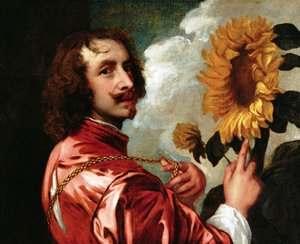
Baroque
4. Anthony van Dyck 1599–1641
1599–1641 Born in Antwerp, Belgium Baroque 4 originals at Fitzwilliam College
Born in Antwerp on 22 March 1599, Sir Anthony van Dyck entered a world of commerce and craft. Between 1621 and late 1627, he traveled through Italy, a period that would refine his ability to navigate the complex social hierarchies of European nobility. In 1620, he entered the service of King James I, a brief engagement that preceded his extensive travels through Italy and the Spanish Netherlands.
Originals at Fitzwilliam College
-
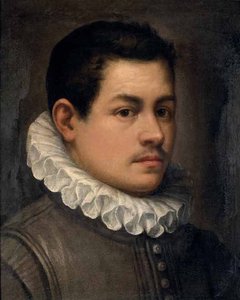
Baroque
5. Annibale Carracci 1560–1609
1560–1609 Born in Bologna, Italy Baroque 2 originals at Fitzwilliam College
Annibale Carracci, born in Bologna on November 3, 1560, emerged from a family deeply entrenched in artistic tradition. Bologna at this time was a vibrant hub of intellectual and artistic ferment, yet it felt somewhat distant from the dominant currents emanating from Rome and Venice.
Originals at Fitzwilliam College
-
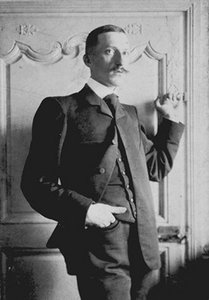
Fauvism
6. André Derain 1880–1954
1880–1954 Born in Chatou, France Fauvism 2 originals at Fitzwilliam College
In the year 1880, André Derain entered the world in Chatou, a village nestled within the Yvelines region of France. By 1895, he had already commenced studying on his own, seeking to understand the visual world through his own eyes rather than through formal instruction. The path of a painter was not his only consideration.
Originals at Fitzwilliam College
-

Rococo
7. Thomas Gainsborough 1727–1788
1727–1788 Born in Sudbury, United Kingdom Rococo 6 originals at Fitzwilliam College
In the quiet market town of Sudbury, United Kingdom, the story of Thomas Gainsborough began on 14 May 1727. By the age of thirteen, the pull of the capital became too strong to ignore, and he left the familiarity of Suffolk for the bustling streets of London in 1740. After leaving the familiarity of his childhood home, Gainsborough moved to Ipswich following 1748. In 1759, a significant change arrived when he moved to Bath.
Originals at Fitzwilliam College
-
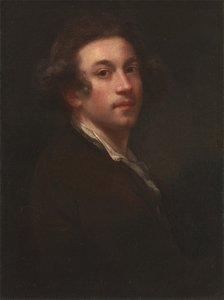
Neoclassicism
8. Joshua Reynolds 1723–1792
1723–1792 Born in Plympton, United Kingdom Neoclassicism 4 originals at Fitzwilliam College
Sir Joshua Reynolds was born on 16 July 1723 in Plympton, Devon. The household was one of learning and intellectual pursuit, a setting that shaped the young boy's early years in the quiet town. In 1740, he moved to London to begin an apprenticeship under the portrait painter Thomas Hudson. By 1768, the landscape of British art was ready for a formal structure, and Reynolds was at the center of its creation.
Originals at Fitzwilliam College
-

Academic Art
9. Lawrence Alma-Tadema 1836–1912
1836–1912 Born in Dronryp, Netherlands Academic Art 5 originals at Fitzwilliam College
Lourens Alma Tadema was born in Dronryp, Friesland, Netherlands, on January 8, 1836. Life took an unexpected turn for the young man in 1851. In 1852, he entered The Royal Academy of Antwerp. By the end of 1855, Lourens Alma Tadema had moved from student to assistant, working under the painter Louis Jan de Taeye. The peak of his social and professional recognition arrived in 1899, when he was awarded a knighthood.
Originals at Fitzwilliam College
-
Post-Impressionism
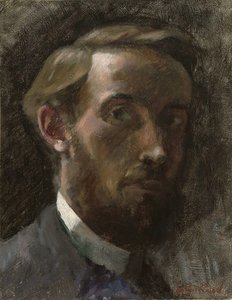
10. Édouard Vuillard 1868–1940
1868–1940 Born in Cuiseaux, France Post-Impressionism 4 originals at Fitzwilliam College
Jean-Édouard Vuillard was born on 11 November 1868 in Cuiseaux, France. The path to professional artistry was not a sudden realization but a series of persistent efforts. In 1885, he began taking courses at the Académie Julian, and he frequently frequented the studios of William-Adolphe Bouguereau and Robert-Fleury to refine his technique.
Originals at Fitzwilliam College


The masters, continued
No. 11 to No. 25: more masters of Fitzwilliam College
-

11. Charles-François Daubigny
Barbizon School
1817–1878 · born in Paris, France · 3 originals at Fitzwilliam College
French Barbizon School painter of river landscapes, often captured from a floating studio boat to study shifting light and atmosphere.
-

Venetian Rococo vedutista known for shimmering pittura di tocco brushwork and atmospheric cityscapes of Venice under dramatic, cloudy skies.
-

13. Jan van Goyen
Dutch Golden Age
1596–1656 · born in Leiden, Netherlands · 4 originals at Fitzwilliam College
Dutch Golden Age landscape painter of serene river scenes and expansive skies, rendered with a subtle, tonal palette of grays and greens.
- Landscape with Figures (1628)
- An Estuary (1643)
- A Watergate by an Estuary (1644)
-
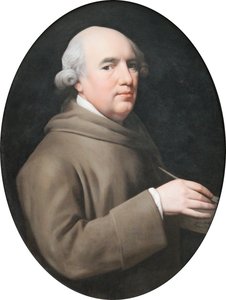
14. George Stubbs
Romanticism
1724–1806 · born in Liverpool, United Kingdom · 3 originals at Fitzwilliam College
English Romanticist known for anatomical precision in equine portraits and visceral scenes of lions attacking horses.
-

French Rococo painter of lively social gatherings, village weddings, and elegant fêtes galantes that capture the charm of Parisian life.
-

16. Giovanni Paolo Panini
Baroque
1691–1765 · born in Piacenza, Italy · 4 originals at Fitzwilliam College
Italian Baroque vedutista of dramatic Roman ruins and architectural capriccios, known for precise perspective and the Panini Projection.
-

-

18. Jan Asselijn
Dutch Golden Age
1610–1652 · born in Dieppe, France · 2 originals at Fitzwilliam College
Dutch Golden Age painter of Italianate landscapes and dramatic animal scenes, known for the symbolic and fierce threatened swan.
-

19. Walter Sickert
Post-Impressionism
1860–1942 · born in Munich, Germany · 4 originals at Fitzwilliam College
- Mrs Swinton (1906)
- The Bar Parlour (1922)
- The Old Bedford Music Hall (1895)
-
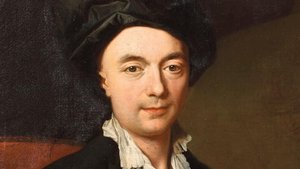
20. Jean-Baptiste Pater
Rococo
1695–1736 · born in Valenciennes, France · 2 originals at Fitzwilliam College
French Rococo painter and sole pupil of Watteau, known for elegant fête galante scenes and a distinctive technique of shimmering lines.
-

21. Karel Dujardin
Dutch Golden Age
1626–1678 · born in Amsterdam, Netherlands · 2 originals at Fitzwilliam College
Dutch Golden Age painter of Italianate landscapes, featuring pastoral scenes with animals and peasants rendered with meticulous detail.
-

22. Simon de Vlieger
Dutch Golden Age
1601–1653 · born in Rotterdam, Netherlands · 3 originals at Fitzwilliam College
Dutch Golden Age marine painter known for realistic ship rigging, luminous seawater, and dramatic scenes of storms and naval battles.
- Storm with a Wreck (1635)
- Sea Piece
- Shipping before Dordrecht (1651)
-

23. Hendrick van Balen the Elder
Flemish Baroque
1575–1632 · born in Antwerp, Belgium · 2 originals at Fitzwilliam College
-

24. Francesco Zuccarelli
Rococo
1702–1788 · born in Pitigliano, Italy · 2 originals at Fitzwilliam College
Italian Rococo painter of idyllic Arcadian landscapes and luminous scenes, known for a mellow palette and airy, decorative compositions.
-

25. Jan van Kessel the Elder
Flemish Baroque
1626–1679 · born in Antwerp, Belgium · 4 originals at Fitzwilliam College
Flemish Baroque painter of meticulous insect studies and floral still lifes, rendered with scientific precision on luminous copper panels.
Famous artists in Fitzwilliam College, No. 26 to 50
 William Orpen1878–1931 · 2 originals at Fitzwilliam College
 Paul Nash1889–1946 · 3 originals at Fitzwilliam College
 Aert de Gelder1645–1645 · 2 originals at Fitzwilliam College
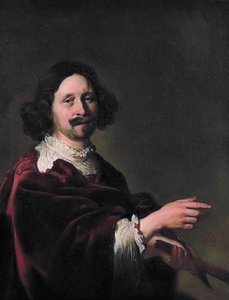 Bartholomeus Breenbergh1598–1657 · 2 originals at Fitzwilliam College
 Cornelis Saftleven1607–1681 · 2 originals at Fitzwilliam College
 Biagio d'Antonio Tucci1446–1516 · 2 originals at Fitzwilliam College
 Willem van Mieris1662–1747 · 2 originals at Fitzwilliam College
 Cornelius van Poelenburgh1594–1667 · 3 originals at Fitzwilliam College
 Michele Giovanni Marieschi1710–1743 · 2 originals at Fitzwilliam College
 Herman van Swanevelt1603–1655 · 2 originals at Fitzwilliam College
 Theodule Augustine Ribot1823–1891 · 2 originals at Fitzwilliam College
 Adriaen Ysenbrandt1480–1551 · 2 originals at Fitzwilliam College
 Narcisso Díaz de La Peña1807–1876 · 3 originals at Fitzwilliam College
 David Cox the Elder1783–1859 · 3 originals at Fitzwilliam College
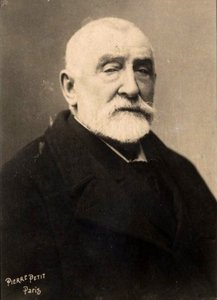 Henri Harpignies1819–1916 · 4 originals at Fitzwilliam College
 Adolphe Félix Cals1810–1880 · 4 originals at Fitzwilliam College
 Bartolomeo Veneto1502–1555 · 2 originals at Fitzwilliam College
 Hendrik Martenszoon Sorgh1610–1670 · 2 originals at Fitzwilliam College
 Jan Wijnants1632–1684 · 4 originals at Fitzwilliam College
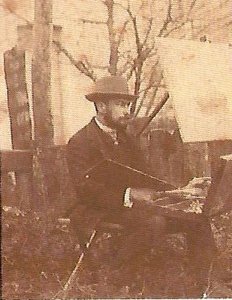 Henri Le Sidaner1862–1939 · 2 originals at Fitzwilliam College
 Jean Baptiste Monnoyer1636–1699 · 2 originals at Fitzwilliam College
 Augustus Edwin John1878–1961 · 18 originals at Fitzwilliam College
 Frederick Sandys1829–1904 · 3 originals at Fitzwilliam College
 Wilhelm Bendz1804–1832 · 2 originals at Fitzwilliam College
 Richard Brakenburgh1650–1702 · 2 originals at Fitzwilliam College
The house in figures
The masters of Fitzwilliam College, in figures
The masters with the most originals at Fitzwilliam College
Masters with two originals or more, by century of birth
Masters with two originals or more, by country of birth
Masters with two originals or more, by movement
Women masters
The women whose originals hang in Fitzwilliam College
6 women masters, 8 originals, in our catalogue of Fitzwilliam College.
-
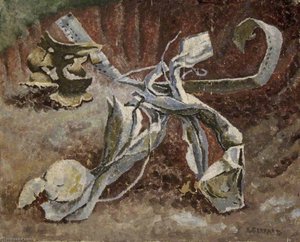
Kaff Gerrard
1894–1970 · born in United Kingdom · 3 originals at Fitzwilliam College
-

Bridget Riley
born 1931 · born in South Norwood, United Kingdom · 1 originals at Fitzwilliam College
- Shadow Play (1990)
-

Marie Louise Von Motesiczky
1906–1996 · born in Vienna, Austria · 1 originals at Fitzwilliam College
- At the Dressmaker's (1930)
-

Ethel Walker
1861–1951 · born in Edinburgh, United Kingdom · 1 originals at Fitzwilliam College
- Girl's Head (1920)
-

Sylvia Gosse
1881–1968 · born in London, United Kingdom · 1 originals at Fitzwilliam College
-

Stanisława de Karłowska
1876–1952 · born in Wszeliwy, Poland · 1 originals at Fitzwilliam College
- Lock on the Canal (1913)
Asked of us
Questions on the masters of Fitzwilliam College
Open a question to read the answer.
Which artist in Fitzwilliam College is the most famous?
Georges Seurat (1859–1891): our catalogue holds 2 works by Georges Seurat at Fitzwilliam College, among them The Rue St Vincent, Paris in Spring. Simone Martini and Dante Gabriel Rossetti follow.
How many Georges Seurat paintings are in Fitzwilliam College?
2 works by Georges Seurat at Fitzwilliam College are in our catalogue: The Rue St Vincent, Paris in Spring (1884) among them.
How many Simone Martini paintings are in Fitzwilliam College?
3 works by Simone Martini at Fitzwilliam College are in our catalogue: Polyptych (1320) among them.
How many Dante Gabriel Rossetti paintings are in Fitzwilliam College?
2 works by Dante Gabriel Rossetti at Fitzwilliam College are in our catalogue: The Bower Meadow (1872) and Joan of Arc (1882) among them.
Who are the top 10 artists in Fitzwilliam College?
The ten best-known artists with works in Fitzwilliam College are Georges Seurat (2), Simone Martini (3), Dante Gabriel Rossetti (2), Anthony van Dyck (4), Annibale Carracci (2), André Derain (2), Thomas Gainsborough (6), Joshua Reynolds (4), Lawrence Alma-Tadema (5) and Édouard Vuillard (4).
Which painter is most represented in Fitzwilliam College?
Our catalogue holds 18 works by Augustus Edwin John at Fitzwilliam College; next come Jacob van Huysum (8), William Nicholson (7) and Thomas Gainsborough (6).
Is Leonardo da Vinci in Fitzwilliam College?
No: Fitzwilliam College holds no work by Leonardo da Vinci in our catalogue.
Is Pablo Picasso in Fitzwilliam College?
No: Fitzwilliam College holds no work by Pablo Picasso in our catalogue.
Are there any women painters in Fitzwilliam College?
Our catalogue lists 6 women artists with works at Fitzwilliam College: Kaff Gerrard (3), Bridget Riley (1), Marie Louise Von Motesiczky (1), Ethel Walker (1), Sylvia Gosse (1) and Stanisława de Karłowska (1).
Which countries are the painters of Fitzwilliam College from?
By country of birth, the artists with two works or more at Fitzwilliam College are mostly from Netherlands (17), United Kingdom (15), France (12), Italy (11) and Belgium (4).
From which period are the artists of Fitzwilliam College?
The 19th century leads with 26 artists born then. In this ranking, Simone Martini (1284–1344) is the earliest born and André Derain (1880–1954) the latest.
How many painters are represented in Fitzwilliam College?
Our catalogue lists 232 artists with at least one work at Fitzwilliam College, 74 of them with two or more, born between 1284 and 1942 in 8 countries.
The house
Fitzwilliam College, Cambridge, in a few lines
The Origins and History of Fitzwilliam College
Fitzwilliam College is a constituent college of the University of Cambridge, England. Its origins date back to 1869, when it was established as the Non-Collegiate Students Board. This venture was created to provide academically excellent students from all backgrounds the opportunity to study at the university. At its inception, the institution was based at Fitzwilliam House, located opposite the Fitzwilliam Museum in south-west Cambridge. The institution attained full collegiate status in 1966. Since then, the college has grown to accommodate a diverse academic community. It is currently home to approximately 500 undergraduates, 400 graduate students, and 90 fellows. The college maintains a tradition of accessibility, supporting students through various grants and admissions processes to ensure a wide range of perspectives within the university structure.
The Architecture and Buildings of the College
Situated in the north of Cambridge between Huntingdon Road and Storeys Way, the college buildings represent a reinterpretation of the traditional Cambridge college. The site's architectural evolution is marked by several distinct phases of development. the Central Hall Building was designed by Sir Denys Lasdun as part of a 1960s masterplan. The architectural landscape continued to develop through the late twentieth century. In the 1980s, architects MacCormac, Jamieson and Prichard (MJP) created New Court, which features a distinctive stepped design where each floor presents a different appearance both inside and out. Following this, the college commissioned Richard MacCormac to design the Chapel, which was completed in the early 1990s. This building was imagined as a ship at the heart of the college, with windows that look out onto the natural world. Recent years have seen continued improvements to the college estate. The current buildings reflect an optimistic, forward-looking approach to academic and social life, moving away from older institutional models to create a more democratic space for its members.
The famous originals of Fitzwilliam CollegeFitzwilliam College: the full page, 397 originalsThe museums of Cambridge
How the masters of the originals are ranked
The masters with two originals or more of Fitzwilliam College in our catalogue are ranked by fame: the Wikipedia language editions that describe them, the visits to their OriginalUniqueArt.com page and our studio's ranking. Originals are counted in our catalogue — one entry per work, without details, studies or copies — not in the museum's inventory. Every date, birthplace and movement is the catalogue's; the notes are drawn from the master's biography.
Go on