
Ask for the famous artists of Durham University and you will hear of Terence Bennett, Edward Hastings, Judith Carola Shackleton and Lizzie Rowe.
Below, the 9 best-known of the 28 artists with works of Durham University in our catalogue (53 works), each with what the museum holds of them.
The masters of the originals
The 9 masters whose originals hang in Durham University
For each master: where and when they were born, their movement, how many originals the museum keeps in our catalogue, a note from their life, and the originals to see.
-

1. Terence Bennett born 1935
born 1935 2 originals at Durham University
Terence Bennett, born in Doncaster, Yorkshire, in 1935, is a British artist whose quietly evocative landscapes have earned him a devoted following and a place as a significant figure in contemporary rural art. After serving his National Service, he found employment as a teacher, a profession he continued until 1971 when he made the pivotal decision to dedicate himself entirely to painting.
Originals at Durham University
-

2. Edward Hastings 1781–1861
1781–1861 3 originals at Durham University
British Romanticist known for panoramic watercolors of the Northumberland coast and intimate portraits of local figures in Durham. Edward Hastings was born in Alnwick in 1781. Under this guidance, Hastings began to refine the technical abilities he had cultivated on his own.
Originals at Durham University
-

3. Judith Carola Shackleton born 1945
born 1945 4 originals at Durham University
Shackleton’s early influences are rooted in the British Isles, specifically the rugged coastlines of Cornwall where she spent much of her childhood.
Originals at Durham University
-

4. Lizzie Rowe born 1955
born 1955 2 originals at Durham University
While initially navigating a conventional path – marriage, fatherhood, and a career as an art lecturer – a burgeoning awareness of gender fluidity began to surface, ultimately leading to a high-profile sex change in 1996, documented with sensitivity by Channel 4. Lizzie Rowe's contribution extends beyond the realm of aesthetics; she was a pioneer who fearlessly explored themes that were often marginalized or taboo during her time.
Originals at Durham University
-

5. Chris Gollon 1953–2017
1953–2017 4 originals at Durham University
In 2000, he received an unusual request from the Church of England: to create fourteen Stations of the Cross paintings for St John on Bethnal Green, a Grade I listed church designed by Sir John Soane. The commission was controversial given Gollon’s lack of formal religious practice, but it also presented a unique opportunity.
Originals at Durham University
-

Neoclassicism
6. Richard Evans 1784–1871
1784–1871 Born in Shrewsbury, United Kingdom Neoclassicism 9 originals at Durham University
Richard Evans (1784-1871) occupies a fascinating, if often overlooked, position in the landscape of 19th-century British portraiture. While never achieving the household name recognition of contemporaries like Lawrence or Raeburn, Evans’s life story is one of consistent professional success, international travel, and a dedication to mastering the art of capturing human likeness. Evans’s artistic education began in London, a bustling center for art and commerce.
Originals at Durham University
-

7. Leslie Arthur Wilcox 1904–1982
1904–1982 Born in Fulham, United Kingdom 2 originals at Durham University
Wilcox’s early life was far removed from the world of fine art. Wilcox's transition into a professional marine artist was marked by a series of significant milestones.
Originals at Durham University
-

8. Clement Burlison 1815–1899
1815–1899 4 originals at Durham University
Born in Hartlepool, England, Burlison's early artistic training was largely self-directed. Burlison’s religious works, though less numerous than his portraits or genre scenes, are equally noteworthy.
Originals at Durham University
-
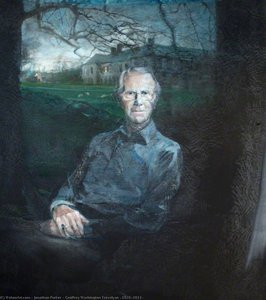
9. Jonathan Parker born 1968
born 1968 Born in United Kingdom 4 originals at Durham University
Parker’s technical evolution is marked by an extraordinary ability to blend traditional mastery with experimental textures.
Originals at Durham University


The house in figures
The masters of Durham University, in figures
The masters with the most originals at Durham University
Masters with two originals or more, by century of birth
Masters with two originals or more, by country of birth
Masters with two originals or more, by movement
Women masters
The women whose originals hang in Durham University
1 women masters, 1 originals, in our catalogue of Durham University.
-

Margaret Sarah Carpenter
1793–1872 · born in Salisbury, United Kingdom · 1 originals at Durham University
Asked of us
Questions on the masters of Durham University
Open a question to read the answer.
Which artist in Durham University is the most famous?
Terence Bennett, with 2 works at Durham University in our catalogue (Whitby from St Mary's Church, North Yorkshire and Disused Mine, Stanhope, County Durham); then Edward Hastings and Judith Carola Shackleton.
What did Terence Bennett paint that hangs in Durham University?
Our catalogue lists 2 works by Terence Bennett at Durham University, among them Whitby from St Mary's Church, North Yorkshire (1998) and Disused Mine, Stanhope, County Durham.
What did Edward Hastings paint that hangs in Durham University?
Our catalogue lists 3 works by Edward Hastings at Durham University, among them Durham Castle and Framwellgate Bridge, Looking East (1840), An Informal Procession of Boats on the River Wear to Celebrate the Victory of Waterloo and Canon George Townsend (1788–1857).
How many Judith Carola Shackleton paintings are in Durham University?
Our catalogue lists 4 works by Judith Carola Shackleton at Durham University, among them Sea Bed, Abstract Landscape, Abstract and Landscape with Moon.
Which painter is most represented in Durham University?
Our catalogue holds 9 works by Richard Evans at Durham University; next come Judith Carola Shackleton (4), Chris Gollon (4) and Clement Burlison (4).
Are there Leonardo da Vinci works in Durham University?
No: Durham University holds no work by Leonardo da Vinci in our catalogue.
Is Pablo Picasso in Durham University?
No: Durham University holds no work by Pablo Picasso in our catalogue.
How many women artists are in Durham University?
Our catalogue lists 1 women artists with works at Durham University: Margaret Sarah Carpenter (1).
Which countries are the painters of Durham University from?
Counting the artists with two works or more, Durham University holds painters born mostly in United Kingdom (3).
From which period are the artists of Durham University?
The 20th century leads with 6 artists born then. In this ranking, Edward Hastings (1781–1861) is the earliest born and Jonathan Parker (born 1968) the latest.
How many artists does the collection of Durham University cover?
28 artists have at least one work of Durham University in our catalogue; 9 have two or more. They were born between 1781 and 1968, in 1 countries.
How were the artists of Durham University ranked?
The artists with at least two works of Durham University in our catalogue are ranked by how widely each one is known: the number of Wikipedia language editions with an article on the artist, the visits to their page and our editors' manual ranking. Works are counted in our catalogue, one entry per work, without details, studies or copies.
The house
Durham University, Durham, in a few lines
A Sanctuary of Light and Shadow: Exploring Durham University’s Hidden Artistic Heart
While not formally designated as an art museum in the traditional sense, Durham’s unique institutional history and commitment to knowledge have organically cultivated a space brimming with visual and intellectual richness. The core of this collection resides within the University Library system, a labyrinthine network of reading rooms and archives. Here, one can stumble upon fragments of medieval tapestries, intricately carved wooden panels salvaged from university buildings, and a remarkable assemblage of ephemera – letters, diaries, and student artwork – that offer intimate glimpses into the lives of those who shaped Durham’s intellectual landscape.
Echoes of the Collegiate Past: Architectural Narratives
Durham University’s story is inextricably linked to its architectural heritage. Founded on land gifted by Bartlett S. The castle’s imposing presence subtly informs the design of University College, imbuing it with a sense of gravitas and historical weight. Beyond the grand facades, however, lie countless details – intricately carved stonework, delicate tracery in the windows, and meticulously crafted wooden panels – that reveal the skill and artistry of generations of craftsmen. The university’s collection includes detailed architectural drawings dating back to the 18th and 19th centuries, offering invaluable insights into the evolution of its buildings. These drawings, often rendered with remarkable precision, showcase not only the structural elements but also the decorative details that contribute to the overall aesthetic appeal. Furthermore, a selection of photographs – some remarkably early examples of photographic technology – document the university’s physical transformation over time, providing a visual record of its growth and development.
The famous originals of Durham UniversityDurham University: the full page, 57 originalsThe museums of Durham
How the masters of the originals are ranked
The masters with two originals or more of Durham University in our catalogue are ranked by fame: the Wikipedia language editions that describe them, the visits to their OriginalUniqueArt.com page and our studio's ranking. Originals are counted in our catalogue — one entry per work, without details, studies or copies — not in the museum's inventory. Every date, birthplace and movement is the catalogue's; the notes are drawn from the master's biography.
Go on