
Ask for the famous artists of Bodleian Libraries and you will hear of Jonathan Richardson the Elder, John Wollaston, Wilhelm Sonmans and Michael Dahl.
Below, the 9 best-known of the 32 artists with works of Bodleian Libraries in our catalogue (71 works), each with what the museum holds of them.
The masters of the originals
The 9 masters whose originals hang in Bodleian Libraries
For each master: where and when they were born, their movement, how many originals the museum keeps in our catalogue, a note from their life, and the originals to see.
-
Neoclassicism
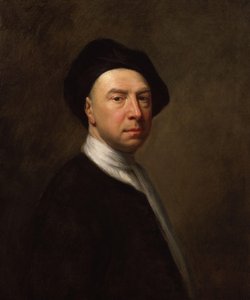
1. Jonathan Richardson the Elder 1667–1745
1667–1745 Neoclassicism 2 originals at Bodleian Libraries
His influence can be traced through several key pillars of his legacy: The Development of Portraiture: He moved the genre away from static documentation toward a more nuanced, psychological exploration of the sitter.
Originals at Bodleian Libraries
-

Rococo
2. John Wollaston 1742–1775
1742–1775 Rococo 7 originals at Bodleian Libraries
Wollaston’s artistic identity was deeply rooted in the English Rococo, a style characterized by its lightness, grace, and an almost tactile obsession with texture. Settling initially in New York City, Wollaston began a nomadic period of intense creativity, traveling along the Atlantic seaboard to bring the latest London fashions to American patrons.
Originals at Bodleian Libraries
-

Baroque
3. Wilhelm Sonmans 1650–1708
1650–1708 Baroque 20 originals at Bodleian Libraries
German Baroque painter of dramatic religious themes and luminous portraits, known for atmospheric landscapes of the Rhine valley. A preeminent example is his 1705 depiction of Bishop Welbore Ellis.
Originals at Bodleian Libraries
-

Baroque
4. Michael Dahl 1659–1743
1659–1743 Born in Stockholm, Sweden Baroque 4 originals at Bodleian Libraries
Born in Stockholm around 1659 – sources vary slightly between 1658 and 1659 – Dahl’s trajectory wasn't one confined by national borders but rather defined by an ambitious pursuit of artistic mastery that led him across Europe and ultimately established him as a leading portraitist in England.
Originals at Bodleian Libraries
-

5. John Michael Williams 1710–1780
1710–1780 2 originals at Bodleian Libraries
However, Williams's portraits are not simply superficial representations of wealth and status; they also reveal a keen awareness of social dynamics and power relations. However, Williams's portraits are not entirely devoid of spontaneity—there’s often a sense of relaxed intimacy that suggests he was able to forge genuine connections with his sitters.
Originals at Bodleian Libraries
-

6. Thomas Gibson born 1962
born 1962 2 originals at Bodleian Libraries
Thomas Gibson, born July 3, 1962, is an American actor and director who has garnered considerable acclaim for his roles in television series like ‘Criminal Minds’ and ‘Dharma & Greg,’ cementing his place as a beloved figure in popular culture. Gibson's artistic interests began early in life, nurtured by a family that valued cultural enrichment.
Originals at Bodleian Libraries
-

Neoclassicism
7. George Clint 1770–1854
1770–1854 Born in Covent Garden, United Kingdom Neoclassicism 2 originals at Bodleian Libraries
Born in the vibrant heart of Covent Garden, London, he emerged from humble beginnings to become an Associate Member of the Royal Academy, cementing his place amongst the artistic elite of his era. The essence of Clint’s artistry was deeply intertwined with the pulse of London's cultural life.
Originals at Bodleian Libraries
-

Contemporary Realism
8. Paul Brason born 1952
born 1952 Born in United Kingdom Contemporary Realism 2 originals at Bodleian Libraries
Paul Brason (born 1952) is a British portrait artist celebrated for his meticulous approach to figurative painting and his ability to capture the essence of his subjects with remarkable sensitivity. Brason’s formative years were shaped by exposure to the artistic traditions of Kent countryside, fostering a deep appreciation for observation and craftsmanship. Furthermore, Brason received the Ondaatje Award for Portraiture in 1998, acknowledging his contribution to the art world.
Originals at Bodleian Libraries
-

7 originals at Bodleian Libraries
Unlike many artists working at the time who hailed directly from European academies, Ram's origins remain somewhat shrouded in mystery, adding to the intrigue surrounding his oeuvre. Details regarding Jivan Ram’s early life are scarce, a common situation for artists of Indian descent working within the colonial system. Ram's ability to seamlessly integrate these influences suggests he may have received formal training from an established artist or workshop, though concrete evidence remains elusive.
Originals at Bodleian Libraries


The house in figures
The masters of Bodleian Libraries, in figures
The masters with the most originals at Bodleian Libraries
Masters with two originals or more, by century of birth
Masters with two originals or more, by country of birth
Masters with two originals or more, by movement
Women masters
The women whose originals hang in Bodleian Libraries
1 women masters, 1 originals, in our catalogue of Bodleian Libraries.
-

Frances Reynolds
1729–1807 · born in Kingdom of Great Britain · 1 originals at Bodleian Libraries
Asked of us
Questions on the masters of Bodleian Libraries
Open a question to read the answer.
Which artist in Bodleian Libraries is the most famous?
Jonathan Richardson the Elder, with 2 works at Bodleian Libraries in our catalogue (Matthew Prior (1664–1721) and Richard Hale (1670–1728)); then John Wollaston and Wilhelm Sonmans.
Which Jonathan Richardson the Elder works are in Bodleian Libraries?
Our catalogue lists 2 works by Jonathan Richardson the Elder at Bodleian Libraries, among them Matthew Prior (1664–1721) (1719) and Richard Hale (1670–1728).
Which John Wollaston works are in Bodleian Libraries?
Our catalogue lists 7 works by John Wollaston at Bodleian Libraries, among them Sir Theodore Turquet de Mayerne (1573–1655) (1734), Walter Charleton (1619–1707), Thomas Sydenham (1624–1689) and Sir Thomas Browne (1605–1682).
Which Wilhelm Sonmans works are in Bodleian Libraries?
Our catalogue lists 20 works by Wilhelm Sonmans at Bodleian Libraries, among them Dervorguilla of Galloway (d.1290), Lady of Balliol (1670), John de Balliol (d.1269) (1670), Walter de Stapledon (1261–1326) (1670) and William of Waynflete (1398–1486) (1670).
Which painter is most represented in Bodleian Libraries?
Our catalogue holds 20 works by Wilhelm Sonmans at Bodleian Libraries; next come John Wollaston (7), Jivan Ram (7) and Michael Dahl (4).
Does Bodleian Libraries have any Leonardo da Vinci paintings?
Our catalogue lists no work by Leonardo da Vinci at Bodleian Libraries.
Is Pablo Picasso in Bodleian Libraries?
Our catalogue lists no work by Pablo Picasso at Bodleian Libraries.
How many women artists are in Bodleian Libraries?
Our catalogue lists 1 women artists with works at Bodleian Libraries: Frances Reynolds (1).
Where do the artists of Bodleian Libraries come from?
Counting the artists with two works or more, Bodleian Libraries holds painters born mostly in United Kingdom (2) and Sweden (1).
From which period are the artists of Bodleian Libraries?
The 17th century leads with 3 artists born then. In this ranking, Wilhelm Sonmans (1650–1708) is the earliest born and Thomas Gibson (born 1962) the latest.
How many artists does the collection of Bodleian Libraries cover?
32 artists have at least one work of Bodleian Libraries in our catalogue; 9 have two or more. They were born between 1650 and 1962, in 2 countries.
How were the artists of Bodleian Libraries ranked?
By recognition — Wikipedia articles in the most languages, page visits and our manual ranking — over the artists with two works or more of Bodleian Libraries in our catalogue. One entry per work; details, studies and copies are left out.
The house
Bodleian Libraries, Oxford, in a few lines
The Origins and History of Bodleian Libraries
The Bodleian Libraries represent the largest academic library system in the United Kingdom. Founded in 1602 by Sir Thomas Bodley, the institution is one of the oldest libraries in Europe. It functions as the principal research library for the University of Oxford. The collection has grown through centuries of scholarship to become the second-largest library in Britain, following only the British Library. The institution holds a significant position within the United Kingdom's literary landscape. It is one of six legal deposit libraries, a status that allows it to receive a copy of every work published in the country. This mandate ensures the preservation of a vast record of British and Irish intellectual output. The library's history is tied to the evolution of the university itself, maintaining a continuous presence in Oxford for over four hundred years.
The Architecture of the Historic Buildings
The Bodleian Libraries occupy five buildings situated near Broad Street in Oxford, United Kingdom. This collection of structures reflects centuries of architectural development. These older structures provide a foundation for the later additions that define the university's academic landscape. The 17th-century Schools Quadrangle represents a shift toward accessibility and practical use, incorporating classical influences into its design. This area features colonnades and open spaces intended for collaborative study. In contrast, the Radcliffe Camera, a circular building completed in 1683, exemplifies Baroque elegance. The architectural evolution of the site moves from the Gothic ideals found in the earlier libraries to the more structured, classical arrangements of the later centuries. This progression is visible in the transition from the enclosed, contemplative spaces of the medieval period to the more open, light-filled environments of the 17th and 18th centuries. The current layout maintains these distinct styles through the continued use of the various buildings.
The famous originals of Bodleian LibrariesBodleian Libraries: the full page, 71 originalsThe museums of Oxford
How the masters of the originals are ranked
The masters with two originals or more of Bodleian Libraries in our catalogue are ranked by fame: the Wikipedia language editions that describe them, the visits to their OriginalUniqueArt.com page and our studio's ranking. Originals are counted in our catalogue — one entry per work, without details, studies or copies — not in the museum's inventory. Every date, birthplace and movement is the catalogue's; the notes are drawn from the master's biography.
Go on