
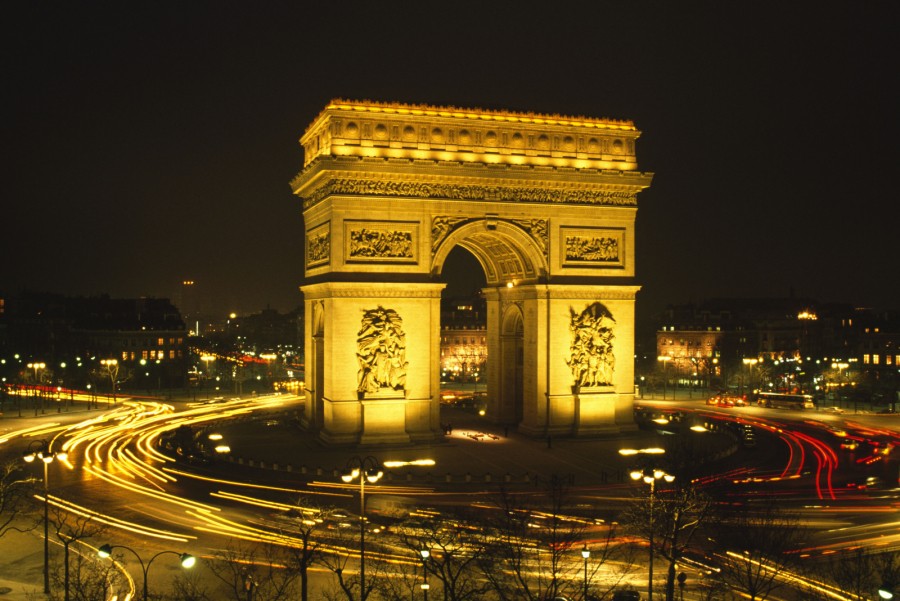

## Arc de Triomphe: A Monumental Embrace
Rising proudly at the heart of Paris, the Arc de Triomphe de l’Étoile is more than just a monument; it’s an embodiment of French history, ambition, and enduring national pride. This colossal archway, dominating the western end of the Champs-Élysées, stands as a powerful testament to Napoleon Bonaparte's military triumphs and the subsequent evolution of France itself. Its sheer scale – 50 meters in height and 45 meters wide – immediately commands attention, drawing the eye upwards towards its intricate sculptures and panoramic views. But beyond its imposing presence lies a complex narrative woven through centuries of political upheaval, artistic endeavor, and poignant remembrance. Commissioned by Napoleon I in 1806 as a symbol of his victories across Europe, the Arc’s design was deeply rooted in Roman triumphal arches – structures intended to celebrate military successes. Jean Chalgrin meticulously translated this ancient model into a neoclassical masterpiece, incorporating elements that spoke directly to French identity: the laurel wreaths, the depictions of battles, and the overall sense of triumphant grandeur. Construction spanned decades, interrupted by political shifts and ultimately completed during the reign of King Louis Philippe I in 1836. This protracted process speaks volumes about the monument’s significance – it wasn’t merely a building; it was an ongoing declaration of France’s power and legacy.
### Historical Significance: Echoes of Glory and Remembrance
The Arc de Triomphe is inextricably linked to pivotal moments in French history, from Napoleon’s rise to his defeat at Waterloo. It witnessed the return of his remains in 1840, a deeply emotional event that underscored the nation’s enduring respect for its former emperor. Later, in 1885, the body of Victor Hugo, France’s most celebrated poet, was laid in state beneath the arch, further cementing its role as a site of national mourning and celebration. The monument serves as a solemn reminder of countless sacrifices made in defense of liberty and nationhood—a tangible connection to France’s formative years and its struggles for independence. Its enduring presence continues to inspire awe and contemplation, prompting visitors to reflect on the passage of time and the legacy of heroism.
### Architectural Marvel: Engineering Triumph and Sculptural Detail
The structure itself is a remarkable feat of engineering. Its four massive supporting columns, inspired by Roman design, are constructed from over 350,000 blocks of stone—a testament to the ambition and skill of French artisans during the Napoleonic era. The intricate bas-reliefs adorning the interior walls depict key battles – Austerlitz, Marengo, and the surrender of Ulm – offering a visual chronicle of Napoleon’s campaigns. Artists like Jean Chalgrin and Alexandre Duport excelled in portraying the movements of soldiers, the chaos of combat, and the strategic brilliance of military leaders. Close examination reveals a profound understanding of anatomy and composition, transforming historical events into compelling visual narratives. The decorative sculptures that adorn the arch are equally impressive. Figures representing various military units – cavalrymen, infantrymen, artillerymen – stand guard along the façade, each rendered with meticulous attention to detail. Allegorical figures, such as Justice and Victory, further enhance the monument’s symbolic richness. The sheer volume of sculpted ornamentation speaks to the immense resources invested in this ambitious project and the desire to create a truly awe-inspiring spectacle.
### A Treasury of Sculptural Detail: Celebrating Military Valor
Stepping inside the Arc de Triomphe reveals a world of exquisite detail, meticulously crafted by some of France’s most celebrated sculptors. The bas-reliefs are particularly noteworthy, capturing the drama and intensity of battle with remarkable realism. Artists like Jean Chalgrin and Alexandre Duport excel in portraying the movements of soldiers, the chaos of combat, and the strategic brilliance of military leaders. Close examination reveals a profound understanding of anatomy and composition, transforming historical events into compelling visual narratives. The sculptures depict scenes from Napoleon’s campaigns—victories over Austria, Prussia, Russia, and England—and honor the bravery and dedication of French soldiers throughout history. Each figure is rendered with painstaking accuracy, conveying not only physical appearance but also emotion and determination.
### Panoramic Views and Parisian Grandeur: A Vista into History
Ascending to the top of the Arc de Triomphe offers an unparalleled perspective on Paris. The panoramic views are simply breathtaking, encompassing the Champs-Élysées, the Louvre Museum, the Eiffel Tower, and countless other iconic landmarks. This vantage point provides a unique opportunity to appreciate the city’s architectural diversity and its sprawling urban landscape—a vista that has captivated visitors for centuries. Standing atop this monumental structure allows one to contemplate the grandeur of French history and culture, solidifying its place as an enduring symbol of Parisian identity.
### Useful Links: Arc de Triomphe Official Website
#### Wikipedia Search: Arc de Triomphe - Wikipedia
Quick Facts
- Art types: sculpture
- Historical periods: 19th century
- Location: Paris, France
- Mediums: sculpture
- More…
- Movements:
- neoclassical romanticism
- romantic neoclassicism
- romanticism
- Works on APS: 4
- Featured artists: françois rude
- Alternate names:
- Arc de Triomphe
- lÉtoile
- Triumphal Arch
Art Quiz
There is only one correct answer for each question.
Question 1:
What is the Arc de Triomphe primarily known for?
Question 2:
The Arc de Triomphe was inspired by which ancient architectural structure?
Question 3:
Jean Chalgrin meticulously translated what ancient model into a neoclassical masterpiece?
Question 4:
Approximately how tall is the Arc de Triomphe?
Question 5:
What does the Tomb of the Unknown Soldier symbolize?
Exhibited Artists

françois rude
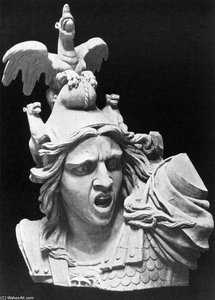
François Rude (1784-1855) was a French sculptor bridging Neoclassicism & Romanticism. Famous for 'La Marseillaise' on the Arc de Triomphe, his patriotic monuments and dynamic style captured a pivotal era in France.
Related Articles
The Enduring Legacy of Architecture in Art: A Historical Survey of Representation & Meaning
Explore the rich history of architecture in art, from Renaissance theory to 19th-century reconstructions. Discover key artists & movements shaping visual representation – a guide for discerning collectors.
François Boucher: Rococo Master of Myth, Sensuality, and the French Court
Explore the captivating world of François Boucher, master of Rococo painting! Discover his iconic works, aristocratic patronage, and lasting influence on French art history. Learn more at OriginalUniqueArt.

Jacques Barraband: A Botanical Legacy – Art, Science, and the Pursuit of Floral Precision
Explore the exquisite botanical illustrations of Jacques Barraband (1767-1809). Discover his stunningly accurate bird paintings, commissioned by Napoleon, and learn about his lasting legacy in art & science. Shop museum-quality reproductions at OriginalUniqueArt.
List of Artworks


Subscribe to Our Newsletter
Stay updated with the latest art news, exclusive offers, and decoration ideas.
Get 3 Free Art Suggestions
Tell us about your project and our art experts will provide you with 3 personalized art suggestions.
Not Sure Where to Start?
Let Us Curate 3 Options Just for You - Free!