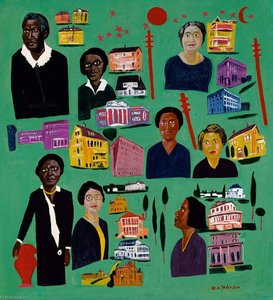
Portrait of William H. Johnson

The 100 Most Famous William H. Johnson Paintings, Each One of a Kind

Updated November 2026 · ranked by our popularity score (searches, visits and orders for each work) · 564 works by William H. Johnson in our catalogue

In short

Lincoln at Gettysburg III (1942) is the William H. Johnson painting that draws the most eyes. After it, the eye goes to Street Life, Harlem (1940) and Going to Church (1941). Among the 564 works of William H. Johnson in our catalog, these 100 are the most famous, each a unique original presented with its year, its museum and the reason it endures.

1901 – 1970, Florence Harlem renaissance Most works: National Portrait Gallery

Top 10 paintings by William H. Johnson, through the gallery's eye

1
Lincoln at Gettysburg III (1942) by William H. Johnson

Lincoln at Gettysburg III

1942 · Oil On Canvas

In this 1942 work, Lincoln at Gettysburg III, the artist William H. Johnson presents a stylized tableau of a significant historical moment. The composition avoids the literalism of traditional portraiture, opting instead for a theatrical arrangement that reimagines the gravity of the American consciousness. It is a quiet, deliberate staging of memory.

2
Street Life, Harlem (1940) by William H. Johnson

Street Life, Harlem

1940

The scene unfolds in 1940, captured through the hands of William H. Johnson. In this work, titled Street Life, Harlem, the artist uses oil on plywood to fix a specific moment in time. The texture of the wood provides a sturdy foundation for the figures and the urban environment they inhabit. It is a piece that belongs to the Smithsonian American Art Museum collection in Washington, D.C.

3
Going to Church (1941) by William H. Johnson

Going to Church

1941 · Oil

is a painting by the artist William H. Johnson. Created in 1941, the work depicts African-American life within the rural South during the 1940s. The composition focuses on a procession of figures moving through a landscape. A man is positioned at the front, guiding a mule, while other individuals follow behind in a wagon.

4
Marian Anderson (1945) by William H. Johnson

Marian Anderson

1945 · Oil On Canvas

In this evocative portrait of the legendary contralto Marian Anderson, the master of the Harlem Renaissance, William H. Johnson weaves a visual tapestry that transcends mere likeness to capture the very soul of an icon. Painted in 1945, the work serves as a profound tribute to a woman whose voice broke through the barriers of racial injustice to enchant the world. Johnson does not merely depict a singer; he constructs…

5
Harriet Tubman (1945) by William H. Johnson

Harriet Tubman

1945 · Oil On Paper

In this evocative portrait from 1945, the legendary William H. Johnson invites us into a dreamlike landscape where history and myth converge. The painting presents a striking composition featuring two figures standing resolutely upon a dusty, earthen road. While the title pays homage to the indomitable Harriet Tubman, the visual narrative expands into a symbolic tableau of companionship and vigilance. A man stands prominently in the foreground, his hand gripping…

8
Come Unto Me, Little Children (1944) by William H. Johnson

Come Unto Me, Little Children

1944 · Watercolor

This arresting piece, "Come Unto Me, Little Children," immediately draws the viewer into a scene steeped in profound spiritual resonance. It is not merely an illustration; it feels like a captured moment of communal grace, rendered with an almost visceral immediacy. The composition centers around an elevated figure whose outstretched arms suggest both blessing and welcoming embrace. Surrounding this focal point are figures depicted in postures of deep reverence—kneeling, attentive,…

9
Army Training (1944) by William H. Johnson

Army Training

1944 · Oil

In 1944, William H. Johnson produced Army Training, a work characterized by a flattened perspective and a rhythmic, horizontal arrangement of figures. A group of men is positioned in a single line across the canvas, their bodies rendered with geometric simplicity. The composition relies on strong, dark outlines to define the silhouettes of the soldiers against a background of warm, earthy tones. Deep yellows, rich browns, and resonant reds dominate…
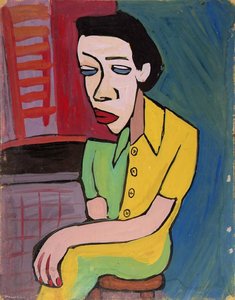
William H. Johnson's famous paintings, numbers 11 to 100

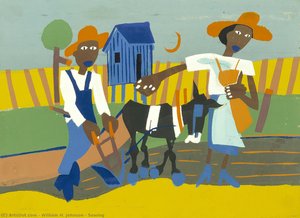
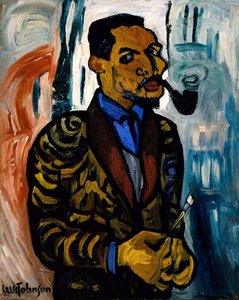
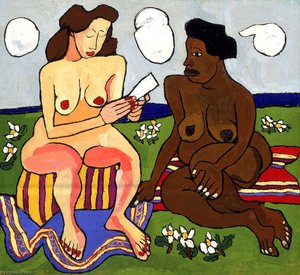
11Volda Fjord, Norway (1937) by William H. JohnsonVolda Fjord, Norway1937 12Jitterbugs (II) (1941) by William H. JohnsonJitterbugs (II)1941 13City Street Scene (1940) by William H. JohnsonCity Street Scene1940 14Jitterbugs (IV) (1941) by William H. JohnsonJitterbugs (IV)1941 15Mine Scene (1944) by William H. JohnsonMine Scene1944 16Sowing (III) (1941) by William H. JohnsonSowing (III)1941 17Off to Market (1941) by William H. JohnsonOff to Market1941 18Taj, Agra (1880) by William H. JohnsonTaj, Agra1880 19Art Class Three Men (1940) by William H. JohnsonArt Class Three Men1940 20Danish Street with Houses and Tree (1934) by William H. JohnsonDanish Street with Houses and Tree1934 21African Woman Study in Tunis (1932) by William H. JohnsonAfrican Woman Study in Tunis1932 22Portrait (Danish Boy) (1932) by William H. JohnsonPortrait (Danish Boy)1932 23City Gates, Kairouan (1932) by William H. JohnsonCity Gates, Kairouan1932 24Danish Seaman (1932) by William H. JohnsonDanish Seaman1932 25Tunisian Street Scene with Figures and Mosque (1932) by William H. JohnsonTunisian Street Scene with Figures and Mosque1932 26Portrait of a Little Boy (1934) by William H. JohnsonPortrait of a Little Boy1934 27Mother and Child (1945) by William H. JohnsonMother and Child1945 28Road in Mountains (1938) by William H. JohnsonRoad in Mountains1938 29Fright (1942) by William H. JohnsonFright1942 · Smithsonian American Art Museum 30Male Nude Portrait Bust (1940) by William H. JohnsonMale Nude Portrait Bust1940 31Seated Female Nude in Profile (1940) by William H. JohnsonSeated Female Nude in Profile1940 32Seated Male Model with Blue Turban (1940) by William H. JohnsonSeated Male Model with Blue Turban1940 33Female Nude Seated on Chair (1940) by William H. JohnsonFemale Nude Seated on Chair1940 34Blind Musicians (1940) by William H. JohnsonBlind Musicians1940 35Jitterbugs (I) (1941) by William H. JohnsonJitterbugs (I)1941 36Young Farmers (1940) by William H. JohnsonYoung Farmers1940 37Standing Woman in Red Bathing Suit (1940) by William H. JohnsonStanding Woman in Red Bathing Suit1940 38Killed in Action (1942) by William H. JohnsonKilled in Action1942 39Seated Woman in Blue and Red Dress and Hat (1940) by William H. JohnsonSeated Woman in Blue and Red Dress and Hat1940 40Woman in Green Sweater on Red Bench (1940) by William H. JohnsonWoman in Green Sweater on Red Bench1940 41Three Dancers (1940) by William H. JohnsonThree Dancers1940 42Bearded Male Nude Standing in Supplication Pose (1940) by William H. JohnsonBearded Male Nude Standing in Supplication Pose1940 43Paul Robeson's Relations (1945) by William H. JohnsonPaul Robeson's Relations1945 44Three Great Abolitionists A. Lincoln, F. Douglass, J. Brown (1945) by William H. JohnsonThree Great Abolitionists A. Lincoln, F. Douglass, J. Brown1945 45Ezekiel Saw the Wheel (1944) by William H. JohnsonEzekiel Saw the Wheel1944 46Marcus Garvey (1945) by William H. JohnsonMarcus Garvey1945 47Maternal (1944) by William H. JohnsonMaternal1944 48Lift Up Thy Voice and Sing (1944) by William H. JohnsonLift Up Thy Voice and Sing1944 49Children's Dance (1941) by William H. JohnsonChildren's Dance1941 50Teheran Conference (1945) by William H. JohnsonTeheran Conference1945 51Swing Low, Sweet Chariot (1944) by William H. JohnsonSwing Low, Sweet Chariot1944 52Toussaint l'Ouverture, Haiti (1945) by William H. JohnsonToussaint l'Ouverture, Haiti1945 53Abraham Lincoln (1945) by William H. JohnsonAbraham Lincoln1945 54Lamentation by William H. JohnsonLamentation 55Barefoot Seated Woman in Green Jacket (1940) by William H. JohnsonBarefoot Seated Woman in Green Jacket1940 56Volunteer Workers (1944) by William H. JohnsonVolunteer Workers1944 57Farm Couple at Work (1944) by William H. JohnsonFarm Couple at Work1944 58Nat Turner (1945) by William H. JohnsonNat Turner1945 59Folk Scene Man with Banjo (1944) by William H. JohnsonFolk Scene Man with Banjo1944 60Still Life Fruit, Bottles (1939) by William H. JohnsonStill Life Fruit, Bottles1939 61Sowing (1942) by William H. JohnsonSowing1942 · Gibbes Museum of Art 62Bust of Man in Blue Jacket and Red Tie (1940) by William H. JohnsonBust of Man in Blue Jacket and Red Tie1940 63Study for Sun Setting, Denmark (1930) by William H. JohnsonStudy for Sun Setting, Denmark1930 64John Brown Legend (1945) by William H. JohnsonJohn Brown Legend1945 65Folk Family (1940) by William H. JohnsonFolk Family1940 66Bearded Kneeling Male Nude (1940) by William H. JohnsonBearded Kneeling Male Nude1940 67Bust of Woman with Blue Hair and Green and Red Scarf (1940) by William H. JohnsonBust of Woman with Blue Hair and Green and Red Scarf1940 68Early Morning Work (1940) by William H. JohnsonEarly Morning Work1940 69Trees, Fjord and Mountains, Norway (1938) by William H. JohnsonTrees, Fjord and Mountains, Norway1938 70Henry Lawson (1915) by William H. JohnsonHenry Lawson1915 · National Portrait Gallery 71Self Portrait with Pipe (1937) by William H. JohnsonSelf Portrait with Pipe1937 72Jim (1930) by William H. JohnsonJim1930 73Apple Blossoms, Norheimsund, Hardanger (1938) by William H. JohnsonApple Blossoms, Norheimsund, Hardanger1938 74Any Person May Kill and Destroy Said Slaves (1798) by William H. JohnsonAny Person May Kill and Destroy Said Slaves1798 · The Kinsey African American Art - History Collection 75Family Portrait (1944) by William H. JohnsonFamily Portrait1944 76Historical Scene (1945) by William H. JohnsonHistorical Scene1945 77Kerteminde Landscape (1932) by William H. JohnsonKerteminde Landscape1932 78Portrait of a Boy (1938) by William H. JohnsonPortrait of a Boy1938 79Farm Couple (1940) by William H. JohnsonFarm Couple1940 80Seated Female Nude in Landscape (1940) by William H. JohnsonSeated Female Nude in Landscape1940 81Standing Woman in Red Bathing Suit with Hands on Head (1940) by William H. JohnsonStanding Woman in Red Bathing Suit with Hands on Head1940 82Crispus Attucks (1945) by William H. JohnsonCrispus Attucks1945 83Farewell (1942) by William H. JohnsonFarewell1942 84Seated Man in Green Chair (1940) by William H. JohnsonSeated Man in Green Chair1940 85Seated Semi Nude Woman in Purple Playsuit (1940) by William H. JohnsonSeated Semi Nude Woman in Purple Playsuit1940 86Going to Market (1940) by William H. JohnsonGoing to Market1940 87Woman Ironing (1944) by William H. JohnsonWoman Ironing1944 88Henry Lawson (1915) by William H. JohnsonHenry Lawson1915 · National Portrait Gallery 89Henry Lawson (1915) by William H. JohnsonHenry Lawson1915 · National Portrait Gallery 90Seated Female Nude on Brown Chair (1940) by William H. JohnsonSeated Female Nude on Brown Chair1940 91Portrait of Ilya Bolotowsky (1930) by William H. JohnsonPortrait of Ilya Bolotowsky1930 92Bazaars behind Church, Oslo (1935) by William H. JohnsonBazaars behind Church, Oslo1935 93Under Fire (1942) by William H. JohnsonUnder Fire1942 94Seated Woman in Green and Yellow Dress (1940) by William H. JohnsonSeated Woman in Green and Yellow Dress1940 95Seated Woman in Red Playsuit (1940) by William H. JohnsonSeated Woman in Red Playsuit1940 96Peace (1940) by William H. JohnsonPeace1940 97Midnight Sun, Lofoten (1937) by William H. JohnsonMidnight Sun, Lofoten1937 98Jolster (1936) by William H. JohnsonJolster1936 99Women Builders (1945) by William H. JohnsonWomen Builders1945 100Off to War (1944) by William H. JohnsonOff to War1944

The subjects that held William H. Johnson's eye

The four subjects that come back most often in these originals, each with its finest example.

The museums that keep William H. Johnson's originals

The 4 museums that hold the most of the paintings on this page.

Museum City Works by William H. Johnson Paintings from this list
National Portrait Gallery, CanberraNational Portrait Gallery Canberra 3 Henry Lawson, Henry Lawson, Henry Lawson
Smithsonian American Art Museum, Washington, D.C.Smithsonian American Art Museum Washington, D.C. 3 Fright
The Kinsey African American Art - History Collection, Los AngelesThe Kinsey African American Art - History Collection Los Angeles 2 Any Person May Kill and Destroy Said Slaves
Gibbes Museum of Art, CharlestonGibbes Museum of Art Charleston 1 Sowing

William H. Johnson across the decades: one unique original for each

Works per decade

Pick a decade to see the original that defines it.

William H. Johnson's paintings: questions for the gallery

What is the single most famous work of William H. Johnson?Reveal the answer

Lincoln at Gettysburg III (1942). Street Life, Harlem (1940) and Going to Church (1941) come next.

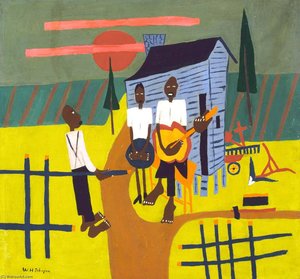
At what age did William H. Johnson create Lincoln at Gettysburg III?Reveal the answer

41 years old: Lincoln at Gettysburg III dates from 1942, and William H. Johnson was born in 1901.

Which ten paintings by William H. Johnson are the most famous?Reveal the answer

Lincoln at Gettysburg III, Street Life, Harlem, Going to Church, Marian Anderson, Harriet Tubman, The Red Road, Kerteminde Harbor, Come Unto Me, Little Children, Army Training and Kerteminde, Denmark. The ranking above gives each one's year and museum.

How many works by William H. Johnson are known?Reveal the answer

Our catalog holds 564 works by William H. Johnson, dated from 1915 to 1945.

Where can the most famous William H. Johnson originals be seen?Reveal the answer

Mostly in National Portrait Gallery (Canberra), Smithsonian American Art Museum (Washington, D.C.) and The Kinsey African American Art - History Collection (Los Angeles). The museum table above lists them all.

During which period did William H. Johnson create the best-known paintings?Reveal the answer

In 1940s: 70 of the 100 works on this page were made then, Lincoln at Gettysburg III among them.

Which famous William H. Johnson painting is the earliest, and which the latest?Reveal the answer

On this page, the earliest is Henry Lawson (1915) and the latest Marian Anderson (1945).

What subjects did William H. Johnson favour?Reveal the answer

Portrait (16), African american (15) and Folk art (11), across the 100 works on this page.

What materials did William H. Johnson paint with most?Reveal the answer

Oil On Canvas, for 31 of the 100 works on this page.

Which movement does the work of William H. Johnson belong to?Reveal the answer

Harlem renaissance and Modernism, judging by the originals on this page.

What William H. Johnson originals can I see at the National Portrait Gallery?Reveal the answer

Henry Lawson, Henry Lawson and Henry Lawson: the National Portrait Gallery, Canberra holds 3 of the works on this page.

William H. Johnson: a portrait of the artist

A Tapestry of Resilience: The Soulful Vision of William H. Johnson

The story of William Henry Johnson is one of profound transformation, a journey that began in the humble landscapes of Florence, South Carolina, and ascended to the heights of the international modernist stage. Born in 1901 into a poor African American family during the era of Jim Crow, Johnson’s early life was shaped by the rhythms of the American South—the spiritual echoes of gospel music, the richness of oral storytelling, and the deep-seated traditions of his heritage. This foundational connection to Black culture would later serve as the heartbeat of his most enduring works, providing a wellspring of imagery that transcended mere representation to reach the realm of the universal.

His path toward artistic mastery was paved with immense personal determination. Moving to New York at the age of seventeen, Johnson worked tirelessly to fund his education at the prestigious National Academy of Design. In the halls of the academy, he mastered the rigorous, classical standards of European tradition, yet his spirit remained tethered to the vibrant textures of his roots. This tension between formal academic training and a yearning for cultural authenticity would become the defining characteristic of his evolving style.

From European Modernism to Folk Art Mastery

The late 1920s marked a pivotal departure in Johnson’s career as he traveled to Europe, immersing himself in the avant-garde movements of France. It was during this period of wandering and discovery that his brushwork began to shed its classical constraints, embracing the emotional intensity of Expressionism. His time in Scandinavia, particularly his marriage to the Danish artist Holcha Krake, introduced him to the aesthetics of primitivism and folk art. These influences acted as a catalyst, prompting him to simplify forms and utilize bold, unadorned colors to convey deeper psychological truths.

Upon returning to the United States in 1938, Johnson emerged as a vital voice of the Harlem Renaissance. He did not merely observe African American life; he celebrated it through a unique visual language that blended modernist abstraction with a soulful, folk-inspired aesthetic. His canvases became windows into the dignity of the Black experience, utilizing techniques such as impasto to create palpable textures that mirrored the grit and grace of his subjects. Whether depicting the rhythmic energy of dancers in works like Jitterbugs (III) or the serene stillness of a seated figure, Johnson’s work possessed an unmistakable emotional clarity.

A Legacy of Cultural Significance

The significance of William H. Johnson lies in his ability to weave together disparate worlds—the spiritual and the secular, the local and the global, the classical and the primitive. His oeuvre is a monumental archive of African American identity, featuring subjects that range from historical icons like Harriet Tubman to the everyday beauty of rural landscapes and social gatherings. Notable masterpieces such as The Black Christ demonstrate his profound use of Yoruba symbolism, bridging the gap between ancestral spirituality and contemporary struggle.

Though he faced periods of being overlooked by the mainstream art establishment during his lifetime, Johnson’s legacy has undergone a powerful reclamation. Today, he is recognized not just as a painter of his era, but as a visionary who transformed the language of modernism to honor the resilience of his people. His life remains a testament to the power of art to preserve history, celebrate identity, and find beauty within the most complex human experiences.