Portrait of Richard Gerstl

The 68 Most Famous Richard Gerstl Paintings, Each One of a Kind

Updated November 2026 · ranked by our popularity score (searches, visits and orders for each work) · 68 works by Richard Gerstl in our catalogue

In short

Self-Portrait Laughing (1907) is the Richard Gerstl painting that draws the most eyes. After it, the eye goes to Grinzing (1906) and Mathilde Schoenberg in Garden (1908). Among the 68 works of Richard Gerstl in our catalog, these 68 are the most famous, each a unique original presented with its year, its museum and the reason it endures.

1883 – 1908, Vienna Expressionism Most works: Leopold Museum

Top 10 paintings by Richard Gerstl, through the gallery's eye

1
Self-Portrait Laughing (1907) by Richard Gerstl

Self-Portrait Laughing

1907 · Oil On Canvas

The canvas holds a moment of intense, unbridled emotion in Richard Gerstl's 1907 work, Self-Portrait Laughing. This oil on canvas captures the artist himself, presenting a face that seems to break free from the constraints of traditional likeness. It is a piece that belongs firmly to the Expressionism movement, where the internal state of the individual takes precedence over the mere imitation of the physical world. The man stares out,…

2
Grinzing (1906) by Richard Gerstl

Grinzing

1906 · Oil

The painting presents a rural landscape characterized by rolling hills covered in dense green vegetation. In the foreground, trees bearing white blossoms suggest a springtime setting. A dirt road winds through the lower portion of the composition, leading the eye toward a small village situated in a valley. This settlement contains several structures, including a building with a prominent steeple. The color palette is dominated by various shades of green…

3
Mathilde Schoenberg in Garden (1908) by Richard Gerstl

Mathilde Schoenberg in Garden

1908 · Oil On Canvas

The scene unfolds in Mathilde Schoenberg in Garden, a work that captures a fleeting moment of presence within a lush, sun-drenched setting. Painted by Richard Gerstl, the image places Mathilde Schoenberg at the center of a quiet, outdoor world. She exists here in a moment of stillness, her figure turned away from the viewer as she stands near a bright yellow wall. The air feels heavy with the weight of…

4
Small Self-Portrait (1906) by Richard Gerstl

Small Self-Portrait

1906 · Oil On Canvas · Kunsthaus Zug, Zug

Small Self-Portrait by Richard Gerstl, created about 1906, presents a close-up study of a single male figure. The subject is positioned slightly off-center, focusing the viewer's attention on the head and upper shoulders. He looks directly toward the viewer, his gaze meeting the observer with a melancholic and introspective expression.

5
Self-Portrait with Palette (1907) by Richard Gerstl

Self-Portrait with Palette

1907 · Oil On Canvas

Created in 1907, this portrait emerged during a period of significant shift in Austrian art. The artist, Richard Gerstl, moved away from the academic traditions of the Vienna Academy of Fine Arts, opting instead for a raw and psychological approach to portraiture. The composition conveys a somber and melancholic tone. The combination of the dark, muted tones and the heavy, agitated texture of the paint contributes to an introspective atmosphere.…

6
Self-Portrait (1907) by Richard Gerstl

Self-Portrait

1907 · Charcoal

The artwork titled Self-Portrait is a work by the artist Richard Gerstl. Created in 1907, this piece presents a close-up view of the artist's own face. The subject matter is a self-portrait, focusing on the head and shoulders of the man. The composition is cropped tightly, centering the gaze of the subject within the frame.

7
Self-Portrait (1908) by Richard Gerstl

Self-Portrait

1908 · Charcoal

Self-Portrait is a work by the Austrian artist Richard Gerstl. Created in 1908, this piece represents a moment in the final year of the artist's life. Gerstl was born in Vienna, Austria, in 1883 and remained in Vienna until his death in 1908.

8
Self-Portrait (1907) by Richard Gerstl

Self-Portrait

1907 · Charcoal

In this 1907 self-portrait, we are invited into a space of profound psychological immediacy. The work is a monochromatic study, rendered in what appears to be charcoal or graphite on paper, where the artist confronts the viewer through a tightly cropped, intense gaze. There is a certain agitation in the way the face is constructed; rather than smooth transitions of light and shadow, we see a dense, chaotic layering of…

9
Self-Portrait (1908) by Richard Gerstl

Self-Portrait

1908 · Charcoal

The Self-Portrait by Richard Gerstl captures a moment of intense, singular focus. This work, dated about 1908, presents a close-up study of the artist's own features. The subject's gaze is fixed and heavy, pressing against the surface of the paper. It is a quiet confrontation between the creator and the charcoal.

10
Self-Portrait (1907) by Richard Gerstl

Self-Portrait

1907 · Charcoal

is a work by the Austrian painter Richard Gerstl. Created in 1907, the piece captures the artist during a period of intense stylistic development in Vienna, Austria. Gerstl, born in Vienna in 1883, was a central figure in the early development of Expressionism, a movement that prioritized the subjective experience of the individual over traditional representation.

Richard Gerstl's famous paintings, numbers 11 to 68

11Fragment of a Self-Portrait (1908) by Richard GerstlFragment of a Self-Portrait1908 12Self-Portrait (1908) by Richard GerstlSelf-Portrait1908 13Alexander von Zemlinsky (1908) by Richard GerstlAlexander von Zemlinsky1908 · Kunsthaus Zug 14Self-Portrait with Palette (1907) by Richard GerstlSelf-Portrait with Palette1907 15Seated Woman in green dress (1908) by Richard GerstlSeated Woman in green dress1908 16Portrait of a Gentleman (1907) by Richard GerstlPortrait of a Gentleman1907 17Portrait of Mother, Maria Gerstl, unfinished (1908) by Richard GerstlPortrait of Mother, Maria Gerstl, unfinished1908 · Kunsthaus Zug 18Small street (Nußdorferstraße) (1908) by Richard GerstlSmall street (Nußdorferstraße)1908 19Anna Baumer (1902) by Richard GerstlAnna Baumer1902 20Fragment of a smiling self-portrait at full length (1904) by Richard GerstlFragment of a smiling self-portrait at full length1904 21The Fey Sisters (Karoline ^ Pauline) (1905) by Richard GerstlThe Fey Sisters (Karoline ^ Pauline)1905 22Waldemar Unger I (1903) by Richard GerstlWaldemar Unger I1903 23Fragment of a smiling self-portrait at full length, detail (1904) by Richard GerstlFragment of a smiling self-portrait at full length, detail1904 24Self-portrait in front of blue background (1905) by Richard GerstlSelf-portrait in front of blue background1905 · Leopold Museum 25Waldemar Unger II (1903) by Richard GerstlWaldemar Unger II1903 26Carl Zentzytzki (1902) by Richard GerstlCarl Zentzytzki1902 27Lakeside Road near Gmunden (1907) by Richard GerstlLakeside Road near Gmunden1907 · Leopold Museum 28Flower Meadow with Trees (1907) by Richard GerstlFlower Meadow with Trees1907 · Kunsthaus Zug 29Room (1908) by Richard GerstlRoom1908 30Mathilde in the studio (1908) by Richard GerstlMathilde in the studio1908 31Liechtenstein Palace (1907) by Richard GerstlLiechtenstein Palace1907 32Ernst Diez I (1906) by Richard GerstlErnst Diez I1906 33Tree on Lake Traun (1907) by Richard GerstlTree on Lake Traun1907 · Kunsthaus Zug 34Seated Female Nude (1908) by Richard GerstlSeated Female Nude1908 35View of the park (1908) by Richard GerstlView of the park1908 · Leopold Museum 36Portrait of Arnold Schonberg (1906) by Richard GerstlPortrait of Arnold Schonberg1906 37Tree with Ladder (1907) by Richard GerstlTree with Ladder1907 · Kunsthaus Zug 38Smaragda Berg (1907) by Richard GerstlSmaragda Berg1907 39Portrait of Henryka Cohn (1908) by Richard GerstlPortrait of Henryka Cohn1908 · Leopold Museum 40Fruit Tree (1907) by Richard GerstlFruit Tree1907 41Portrait of a Young Woman with Feather Hat (1906) by Richard GerstlPortrait of a Young Woman with Feather Hat1906 42Mathilde Schoenberg II (1907) by Richard GerstlMathilde Schoenberg II1907 43The road (theme from Nussdorf) (1907) by Richard GerstlThe road (theme from Nussdorf)1907 44Small Traunsee Landscape (1907) by Richard GerstlSmall Traunsee Landscape1907 45Meadow with Houses in Background (1907) by Richard GerstlMeadow with Houses in Background1907 46Half-length portrait of Mathilde Schoenberg (1908) by Richard GerstlHalf-length portrait of Mathilde Schoenberg1908 47Woman with Feathered Hat (1907) by Richard GerstlWoman with Feathered Hat1907 48Emile Gerstl (father) (1906) by Richard GerstlEmile Gerstl (father)1906 · Leopold Museum 49Self-portrait with Blue Spotted Background (1907) by Richard GerstlSelf-portrait with Blue Spotted Background1907 50Tree in the garden (1907) by Richard GerstlTree in the garden1907 51Mother and Daughter (1906) by Richard GerstlMother and Daughter1906 52On the Danube Canal (1907) by Richard GerstlOn the Danube Canal1907 · Leopold Museum 53Portrait of a seated man (1908) by Richard GerstlPortrait of a seated man1908 54Study of tree (1907) by Richard GerstlStudy of tree1907 · Leopold Museum 55Orchard (1907) by Richard GerstlOrchard1907 56Double Portrait (green background) (1908) by Richard GerstlDouble Portrait (green background)1908 57Portrait of a Lieutenant (Alois Gerstl) (1906) by Richard GerstlPortrait of a Lieutenant (Alois Gerstl)1906 · Leopold Museum 58Double portrait of Matilda and Gertrude Schonberg (1906) by Richard GerstlDouble portrait of Matilda and Gertrude Schonberg1906 59Nude in Garden (1908) by Richard GerstlNude in Garden1908 60Railway to the Kahlenberg (1907) by Richard GerstlRailway to the Kahlenberg1907 61Portrait of a gentleman (green background) (1908) by Richard GerstlPortrait of a gentleman (green background)1908 62Landscape study (1907) by Richard GerstlLandscape study1907 63Group portrait with Schönberg (1908) by Richard GerstlGroup portrait with Schönberg1908 · Kunsthaus Zug 64Flowering Meadow with Trees (1907) by Richard GerstlFlowering Meadow with Trees1907 65Sunny meadow with fruit trees (1908) by Richard GerstlSunny meadow with fruit trees1908 · Leopold Museum 66Lake Traunsee with the Schlafende Griechin mountain (1907) by Richard GerstlLake Traunsee with the Schlafende Griechin mountain1907 · Leopold Museum 67Self Portrait (Nude in a full figure) by Richard GerstlSelf Portrait (Nude in a full figure)Leopold Museum 68Schonberg Family (1908) by Richard GerstlSchonberg Family1908

Richard Gerstl's famous paintings, period by period

The subjects that held Richard Gerstl's eye

The four subjects that come back most often in these originals, each with its finest example.

The museums that keep Richard Gerstl's originals

The 2 museums that hold the most of the paintings on this page.

Museum City Works by Richard Gerstl Paintings from this list
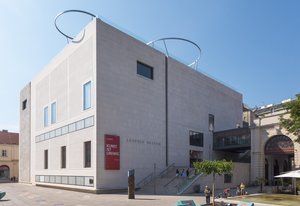
Leopold Museum, ViennaLeopold Museum Vienna 11 Self-portrait in front of blue background, Lakeside Road near Gmunden, View of the park
Kunsthaus Zug, ZugKunsthaus Zug Zug 7 Small Self-Portrait, Alexander von Zemlinsky, Portrait of Mother, Maria Gerstl, unfinished

Richard Gerstl across the years: the unique originals of each

Between 1902 and 1908, 7 years in all, Richard Gerstl made every dated original shown here: a short span, followed year by year.

Works per year

Pick a year to see its originals.

Richard Gerstl's paintings: questions for the gallery

What is the single most famous work of Richard Gerstl?Reveal the answer

Self-Portrait Laughing (1907). Grinzing (1906) and Mathilde Schoenberg in Garden (1908) come next.

At what age did Richard Gerstl create Self-Portrait Laughing?Reveal the answer

24 years old: Self-Portrait Laughing dates from 1907, and Richard Gerstl was born in 1883.

Which ten paintings by Richard Gerstl are the most famous?Reveal the answer

Self-Portrait Laughing, Grinzing, Mathilde Schoenberg in Garden, Small Self-Portrait, Self-Portrait with Palette, Self-Portrait, Self-Portrait, Self-Portrait, Self-Portrait and Self-Portrait. The ranking above gives each one's year and museum.

How many works by Richard Gerstl are known?Reveal the answer

Our catalog holds 68 works by Richard Gerstl, dated from 1902 to 1908.

Where can the most famous Richard Gerstl originals be seen?Reveal the answer

Mostly in Leopold Museum (Vienna) and Kunsthaus Zug (Zug). The museum table above lists them all.

During which period did Richard Gerstl create the best-known paintings?Reveal the answer

In 1907: 28 of the 68 works on this page were made then, Self-Portrait Laughing among them.

Which famous Richard Gerstl painting is the earliest, and which the latest?Reveal the answer

On this page, the earliest is Anna Baumer (1902) and the latest Mathilde Schoenberg in Garden (1908).

What subjects did Richard Gerstl favour?Reveal the answer

Portraits (14), Man (11) and Forests (9), across the 68 works on this page.

What materials did Richard Gerstl paint with most?Reveal the answer

Oil On Canvas, for 10 of the 68 works on this page.

Which movement does the work of Richard Gerstl belong to?Reveal the answer

Expressionism, judging by the originals on this page.

What Richard Gerstl originals can I see at the Leopold Museum?Reveal the answer

Self-portrait in front of blue background, Lakeside Road near Gmunden and View of the park: the Leopold Museum, Vienna holds 11 of the works on this page.

Richard Gerstl: a portrait of the artist

Richard Gerstl: A Tragic Pioneer of Expressionism

  • Born: Vienna, Austria (1883)
  • Died: Vienna, Austria (1908)

Richard Gerstl was an Austrian painter and draughtsman whose brief but intense career placed him at the forefront of early Expressionism. Despite achieving little recognition during his lifetime, he is now considered a pivotal figure in Viennese modern art, known for his psychologically insightful portraits and landscapes that anticipated later developments in German Expressionism. His life was tragically cut short by suicide following a scandalous affair, an event which profoundly impacted his contemporary Arnold Schoenberg.

Early Life and Artistic Development

Born into a prosperous Jewish merchant family, Gerstl’s early life took an unexpected turn when he declared his intention to become an artist. This decision was met with disapproval from his father, leading to a degree of familial tension. After struggling in the traditional Viennese Piaristengymnasium and being expelled for disciplinary issues, Gerstl received private tutoring while pursuing his artistic ambitions. In 1898, at fifteen, he entered the Academy of Fine Arts Vienna under the demanding Christian Griepenkerl. Gerstl quickly grew disillusioned with the academic style and the prevailing trends of the Vienna Secession, famously provoking a harsh rebuke from Griepenkerl.

Artistic Influences and Style

Following his departure from the Academy, Gerstl embarked on a period of self-directed study. Summers spent under Simon Hollósy in Nagybánya exposed him to more liberal artistic approaches. However, further clashes with authority, including a refusal to participate in an imperial procession, led to his expulsion from Hollósy’s studio as well. Gerstl's style was characterized by a raw intensity and psychological depth that set him apart. He rejected the decorative aesthetic of the Secession, opting instead for bold colors, distorted forms, and expressive brushwork. His portraits, in particular, reveal a keen understanding of human psychology, capturing not just physical likeness but also underlying emotional states. Influences can be seen in earlier masters, but Gerstl developed a uniquely personal style that foreshadowed Expressionism’s focus on subjective experience.

Relationships with Schoenberg and the Tragic End

Around 1907, Gerstl became associated with composers Arnold Schoenberg and Alexander von Zemlinsky, who lived in the same building. A close friendship developed between Gerstl and Schoenberg, with Gerstl reportedly instructing Schoenberg in art. This period saw Gerstl produce a series of portraits of Schoenberg, his family, and friends, including several striking depictions of Schoenberg’s wife, Mathilde. A passionate affair ensued between Gerstl and Mathilde, culminating in her departure from Schoenberg in the summer of 1908. Devastated by this loss and facing isolation and a lack of artistic recognition, Gerstl destroyed most of his personal papers and artwork in a desperate act. He subsequently hanged himself in front of a mirror, also inflicting a stab wound upon himself.

Legacy and Historical Significance

Gerstl’s suicide had a profound impact on Schoenberg, inspiring his “drama with music,” Die glückliche Hand (The Lucky Hand). For many years after his death, Gerstl's work remained largely unknown. It was not until 1930 or 1931 that art dealer Otto Kallir organized a posthumous exhibition of his paintings at the Neue Galerie in Vienna. Despite facing challenges from the rising Nazi presence in Austria, Gerstl’s reputation gradually grew, and his importance as a precursor to Expressionism became increasingly recognized. Today, approximately sixty-six paintings and eight drawings are attributed to him. His work is now celebrated for its innovative approach to portraiture and landscape painting, and his tragic life continues to fascinate art historians and enthusiasts alike. Gerstl's legacy lies in his pioneering spirit and his contribution to the development of a new artistic language that prioritized emotional expression over traditional aesthetic conventions.