Portrait of Michael Parkes

The 56 Most Famous Michael Parkes Paintings, Each One of a Kind

Updated October 2026 · ranked by our popularity score (searches, visits and orders for each work) · 56 works by Michael Parkes in our catalogue

In short

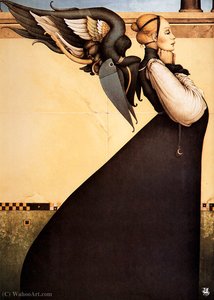
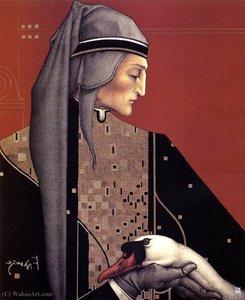
Tuesday's Child - Michael Parkes (2026) is the Michael Parkes painting that draws the most eyes. After it, the eye goes to Night and Day and Almost fallen angelsI. Among the 56 works of Michael Parkes in our catalog, these 56 are the most famous, each a unique original presented with its year, its museum and the reason it endures.

born 1944, Sikeston Surrealism

Top 10 paintings by Michael Parkes, through the gallery's eye

Michael Parkes's famous paintings, numbers 11 to 56

Michael Parkes's famous paintings, period by period

The subjects that held Michael Parkes's eye

The four subjects that come back most often in these originals, each with its finest example.

Michael Parkes across the years: the unique originals of each

All the dated Michael Parkes originals shown here belong to a single year, 2026: they appear in order of fame.

Works per year

Pick a year to see its originals.

Michael Parkes's paintings: questions for the gallery

What is the single most famous work of Michael Parkes?Reveal the answer

Tuesday's Child - Michael Parkes (2026). Night and Day and Almost fallen angelsI come next.

At what age did Michael Parkes create Tuesday's Child - Michael Parkes?Reveal the answer

82 years old: Tuesday's Child - Michael Parkes dates from 2026, and Michael Parkes was born in 1944.

Which ten paintings by Michael Parkes are the most famous?Reveal the answer

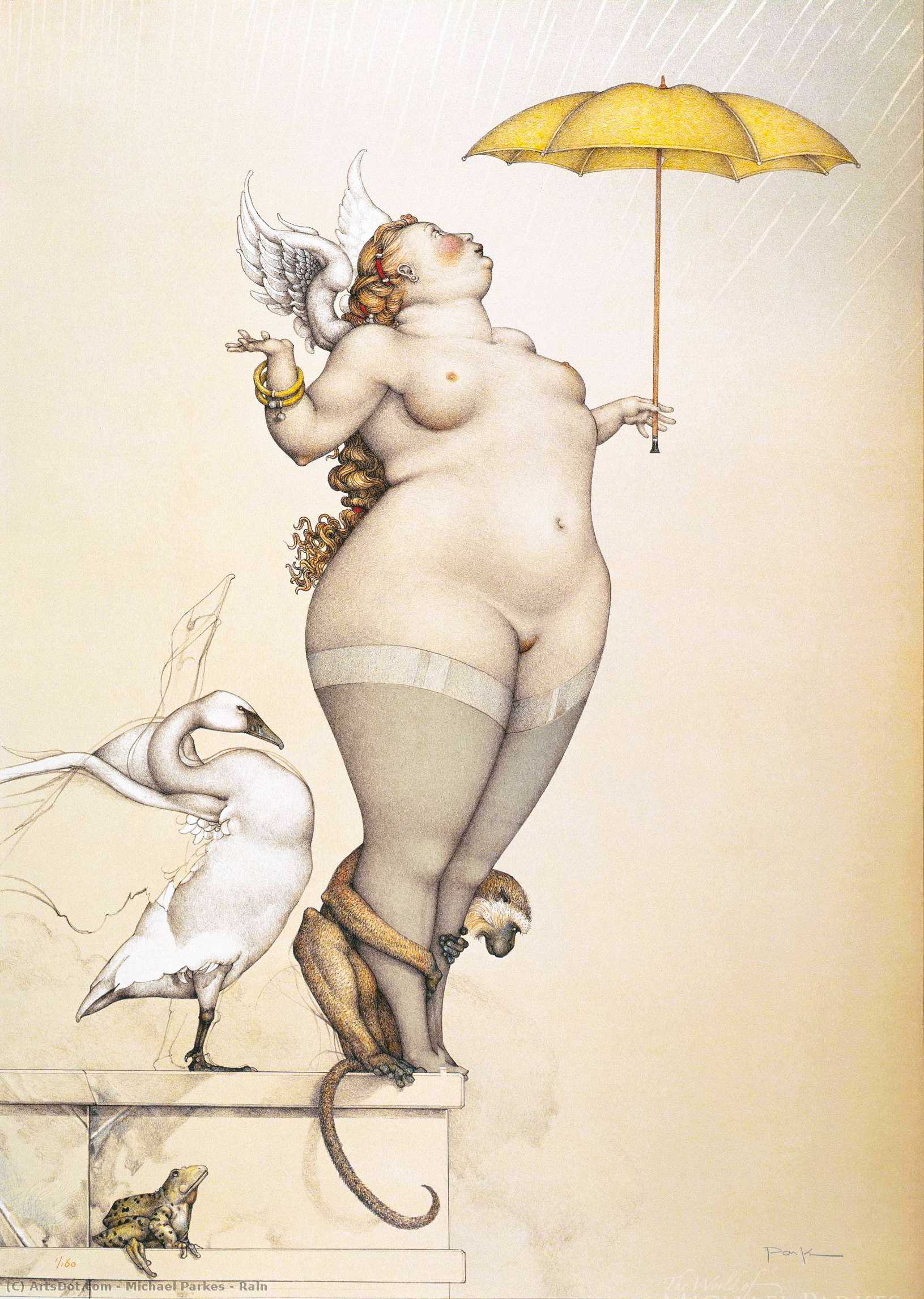
Tuesday's Child - Michael Parkes, Night and Day, Almost fallen angelsI, Broken Promises, Khensu, Returning the sphere, Rain, Concerti Vivaldi, An angels touch and Ballet mistress. The ranking above gives each one's year and museum.

How many works by Michael Parkes are known?Reveal the answer

Our catalog holds 56 works by Michael Parkes.

What subjects did Michael Parkes favour?Reveal the answer

Fantasy (8), Angels (4) and Symbolic imagery (4), across the 56 works on this page.

Which movement does the work of Michael Parkes belong to?Reveal the answer

Surrealism and Contemporary realism, judging by the originals on this page.

Michael Parkes: a portrait of the artist

A Journey into the Realms of Imagination

Born in 1944 in Sikeston, Missouri, Michael Parkes emerged as a truly unique and visionary voice in contemporary art—a master seamlessly blending fantasy, spirituality, and technical brilliance. From his earliest years, Parkes displayed an exceptional aptitude for artistic expression, excelling in drawing, painting, and sculpture; a foundation built upon formal training at the University of Kansas and later refined at the University of California, Berkeley. However, his path wasn’t one of immediate stylistic certainty. Initially drawn to the prevailing Abstract Expressionism of his teachers, Parkes soon embarked on a profound personal journey that would irrevocably shape his artistic vision. This pivotal moment involved a deliberate stepping away from art itself—a quest for philosophical enlightenment undertaken in India. It was within this ancient and spiritually rich landscape that he discovered the wellspring of inspiration that would define his life’s work, a connection he continues to nurture with annual visits alongside his wife, drawing constant renewal from its traditions.

The Alchemy of Influences and Magical Realism

Parkes' artistic development wasn’t solely a product of personal introspection; it was deeply informed by a diverse range of historical and cultural influences. He reveres the Renaissance masters—Leonardo da Vinci and Michelangelo—for their anatomical precision and masterful compositions, while acknowledging the surrealist provocations of Salvador Dalí. Yet, his work transcends mere imitation, forging its own distinct identity within the genre of Magical Realism. This style, characterized by a meticulous depiction of reality interwoven with fantastical or dreamlike elements, became Parkes’ signature. His imagery is steeped in symbolism drawn from esoteric traditions—Cabalistic and Tantric philosophies—adding layers of meaning that invite contemplation on deeper spiritual concepts. The artist himself describes consciousness as “a laboratory to explore the physicality of evolution,” a sentiment profoundly reflected in his art's exploration of transformation and interconnectedness. This philosophical underpinning elevates his work beyond mere aesthetic appeal, inviting viewers into a realm where the boundaries between the seen and unseen blur. He doesn’t simply paint what *is*, but what *could be*, what lies just beneath the surface of our perceived reality.

Metamorphosis and Symbolism: The Language of Parkes' Art

At the heart of Michael Parkes’ artistic universe lies the theme of metamorphosis—the transformation of forms. His paintings are populated by ethereal beings, hybrid creatures, and scenes that defy conventional reality, creating a world where anything seems possible. These aren’t simply flights of fancy; they are carefully constructed visual narratives laden with symbolic meaning. Winged figures represent aspiration and transcendence, while animalistic forms embody primal instincts and hidden energies. The interplay between light and shadow, often dramatic and theatrical, further enhances the sense of mystery and intrigue. Parkes doesn't merely depict these subjects; he imbues them with a palpable sense of life and emotion. He works across multiple mediums—painting, stone lithography, and sculpture—but is particularly renowned for his skill in creating limited-edition Giclée prints, known as Aurographics, which capture the intricate detail and luminous quality of his original work. His style is characterized by precision, a harmonious blend of classical techniques with contemporary sensibilities, and an unwavering commitment to exploring the depths of human consciousness. The Three Graces, for example—a painting prominently featured in Dan Brown’s *The Lost Symbol*—is not merely a beautiful depiction of mythological figures but a complex allegory inviting layers of interpretation.

Recognition and Enduring Legacy

Michael Parkes’ artistic vision has resonated far beyond the confines of the art world. He has exhibited extensively throughout Europe and the United States, with solo exhibitions in major cities like Amsterdam, Basel, New York, and Denmark. His work has garnered critical acclaim and a dedicated following among collectors and enthusiasts alike. A sculpture titled Angel Affair graced the cover of a Dutch Fine Arts Magazine, while his paintings have served as inspiration for contemporary dance choreography by Lisa Starry of Scorpius Dance Theater—a testament to the power of his imagery to transcend artistic boundaries. Perhaps most notably, *The Three Graces* sparked widespread public interest and prompted an interview with Parkes regarding the painting's symbolism. Even the world of fashion has acknowledged his influence; milliner Justin Smith cited Parkes’ lithographs as inspiration for a headpiece worn by Angelina Jolie in the 2014 film Maleficent. These instances demonstrate that Parkes is not simply an artist, but a cultural touchstone—a visionary whose work continues to inspire and captivate audiences across diverse fields. He stands as a leading figure in magical realism, inviting viewers to explore the boundless realms of imagination and contemplate the mysteries of existence. His enduring legacy lies in his ability to remind us that within the ordinary, extraordinary possibilities reside, waiting to be unveiled through the power of art.

A Continued Exploration

Parkes’ continued dedication to his craft, coupled with his ongoing exploration of philosophical and spiritual themes, ensures his place as a significant figure in contemporary art. He has received awards from the Association of Science Fiction & Fantasy Artists (ASFA), recognizing his exceptional cover illustrations. His work continues to be exhibited internationally, attracting new admirers and solidifying his reputation as a master of magical realism.
  • His paintings are held in numerous private collections worldwide.
  • He remains actively engaged in creating new works across various mediums.
  • Parkes’ influence can be seen in the work of contemporary artists exploring similar themes of fantasy and spirituality.
Michael Parkes is more than an artist; he is a storyteller, a philosopher, and a visionary who invites us to question our perceptions and embrace the magic that lies within ourselves and the world around us.