Portrait of John Wollaston

The 30 Most Famous John Wollaston Paintings, a Gallery Selection

Updated November 2026 · ranked by our popularity score (searches, visits and orders for each work) · 32 works by John Wollaston in our catalogue

In short

Of all the originals John Wollaston left, the most famous is Alderman David Wharam, Mayor of Rochester (1744) (1740), in the collection of the Guildhall Museum, Rochester. Close behind it come Captain Jacob Elton (1712–1745), RN (1741) and Ryland Randolph (1756). Our catalog holds 32 works by John Wollaston; the gallery has kept the 30 the world admires most, each shown with its date, its museum and its story.

1742 – 1775 Rococo Most works: Bodleian Libraries

John Wollaston's top 10 paintings: the gallery's choice

1
Alderman David Wharam, Mayor of Rochester (1744) (1740) by John Wollaston

Alderman David Wharam, Mayor of Rochester (1744)

1740 · Oil · Guildhall Museum, Rochester

The subject is presented in a formal, centered composition, gazing directly at the viewer from a dark, indeterminate background. He wears a red coat accented with white trim, a garment that signals both status and official capacity. A black hat and a white shirt complete the attire of a gentleman of the mid-eighteenth century. His long hair and beard frame a face marked by age, suggesting a life of experience…

3
Ryland Randolph (1756) by John Wollaston

Ryland Randolph

1756 · Oil · Wilton House Museum, Richmond

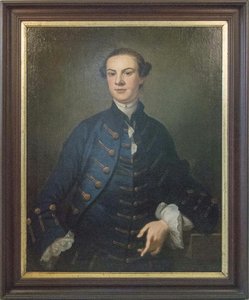
The year is 1756, and the air in the room feels heavy with the quiet dignity of a bygone era. Ryland Randolph sits in a poised profile, his gaze directed outward with a serious, contemplative expression that demands immediate respect. He exists in a moment of stillness, a man of high-ranking status and military prestige caught in a permanent state of readiness. His midnight blue coat, deep and commanding, catches…

4
Mrs. Cadwallader Colden (1749) by John Wollaston

Mrs. Cadwallader Colden

1749 · Oil On Canvas · Metropolitan Museum of Art, New York

In this oil painting on canvas, John Wollaston presents a formal study of Mrs. Cadwallader Colden. Created about 1749, the work captures a woman of significant social standing through a quiet, dignified presence. The portrait measures 76 x 64 cm, a scale that allows for an intimate encounter with the sitter's likeness and the intricate details of her period attire.

5
John Stevens (?) (1752) by John Wollaston

John Stevens (?)

1752 · Oil On Canvas · National Gallery of Art, Washington

This oil on canvas portrait depicts a man identified as John Stevens (?). Executed by the artist John Wollaston, the work dates to 1752. The subject is presented in a formal, Neoclassical style, focusing on the head and shoulders of the sitter against a dark, indistinct background. This composition directs the viewer's attention toward the facial features and the specific textures of the subject's attire.

6
A Gentleman of the Morris Family (1752) by John Wollaston

A Gentleman of the Morris Family

1752 · Oil On Canvas · National Gallery of Art, Washington

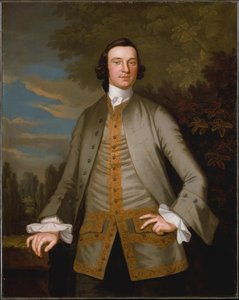
A Gentleman of the Morris Family is a portrait painting of a gentleman, executed by the artist John Wollaston. The work dates to 1752. The sitter is identified as Lewis Morris, a man of significant political weight who served as a statesman and a signer of the Declaration of Independence.

7
Portrait of Lucy Parry, Wife of Admiral Parry (1749) by John Wollaston

Portrait of Lucy Parry, Wife of Admiral Parry

1749 · Oil On Canvas · Smithsonian American Art Museum, Washington, D.C.

The Portrait of Lucy Parry, Wife of Admiral Parry by John Wollaston presents a seated woman positioned centrally within the frame. The composition follows a balanced arrangement that directs the viewer's gaze toward the subject's face and her detailed attire. She is set against a dark, somewhat blurred background where elements of foliage and sky are visible. This arrangement creates a sense of depth through atmospheric perspective, as the distant…

8
Joseph Reade (1749) by John Wollaston

Joseph Reade

1749 · Oil On Canvas · Metropolitan Museum of Art, New York

The gaze of Joseph Reade meets yours with an unwavering clarity, pulling you into a moment frozen in 1749. He sits with a quiet authority, his posture upright and composed, as if the weight of his political and social responsibilities in New York City rests lightly upon his shoulders. A deep crimson velvet backdrop wraps around him, its heavy texture providing a dark, dramatic stage that pushes his figure forward…

9
Portrait of General Staats Long Morris by John Wollaston

Portrait of General Staats Long Morris

Oil On Canvas · New Orleans Museum of Art, New Orleans

The portrait presents a man in formal military attire, his posture commanding and his arms outstretched to claim the space. He is positioned centrally, dominating the frame against a backdrop of soft foliage and a heavy, clouded sky. The lighting is deliberate, casting strong highlights across his face and upper body to define the sharp contours of his features. Every detail of his presence is rendered with meticulous precision, from…

The John Wollaston selection continues, 11 to 30

The subjects that held John Wollaston's eye

The four subjects that come back most often in these originals, each with its finest example.

The museums that keep John Wollaston's originals

The 8 museums that hold the most of the paintings on this page.

Museum City Works by John Wollaston Paintings from this list
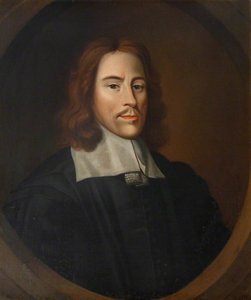
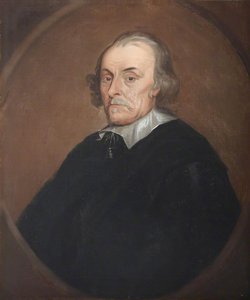
Bodleian Libraries, OxfordBodleian Libraries Oxford 7 Sir Theodore Turquet de Mayerne (1573–1655), Walter Charleton (1619–1707), Thomas Willis (1621–1675)
Metropolitan Museum of Art, New YorkMetropolitan Museum of Art New York 5 Mrs. Cadwallader Colden, Joseph Reade, Cadwallader Colden
National Gallery of Art, WashingtonNational Gallery of Art Washington 4 John Stevens (?), A Gentleman of the Morris Family, Mary Walton Morris
National Portrait Gallery, LondonNational Portrait Gallery London 2 Thomas Britton, George Whitefield
Guildhall Museum, RochesterGuildhall Museum Rochester 1 Alderman David Wharam, Mayor of Rochester (1744)
National Trust, ClevedonNational Trust Clevedon 1 Captain Jacob Elton (1712–1745), RN
Wilton House Museum, RichmondWilton House Museum Richmond 1 Ryland Randolph
Smithsonian American Art Museum, Washington, D.C.Smithsonian American Art Museum Washington, D.C. 1 Portrait of Lucy Parry, Wife of Admiral Parry

John Wollaston year by year: the originals that define each

From 1752 to 1767, John Wollaston worked for 16 years: the selection follows that long career year by year, through its finest originals.

Works per year

Pick a year to see its originals.

Collectors' questions about John Wollaston's paintings

Which work is John Wollaston most famous for?Reveal the answer

Alderman David Wharam, Mayor of Rochester (1744) (1740), Guildhall Museum, Rochester. Captain Jacob Elton (1712–1745), RN (1741) and Ryland Randolph (1756) come next.

What are the ten most famous John Wollaston paintings?Reveal the answer

Alderman David Wharam, Mayor of Rochester (1744), Captain Jacob Elton (1712–1745), RN, Ryland Randolph, Mrs. Cadwallader Colden, John Stevens (?), A Gentleman of the Morris Family, Portrait of Lucy Parry, Wife of Admiral Parry, Joseph Reade, Portrait of General Staats Long Morris and Thomas Britton. The ranking above gives each one's year and museum.

How many paintings did John Wollaston leave?Reveal the answer

Our catalog holds 32 works by John Wollaston, dated from 1752 to 1767.

In which museums do John Wollaston's masterpieces hang?Reveal the answer

Mostly in Bodleian Libraries (Oxford), Metropolitan Museum of Art (New York) and National Gallery of Art (Washington). The museum table above lists them all.

In which years did John Wollaston paint the most famous works?Reveal the answer

In 1752: 4 of the 30 works on this page were made then, John Stevens (?) among them.

What are the first and the last famous originals of John Wollaston?Reveal the answer

On this page, the earliest is John Stevens (?) (1752) and the latest Judith Smith (Mrs. James Ladson) (1767).

Which subjects did John Wollaston choose most often?Reveal the answer

Portrait (7), Portraiture (6) and 18th century (5), across the 30 works on this page.

Which technique did John Wollaston use most?Reveal the answer

Oil On Canvas, for 8 of the 30 works on this page.

To which art movement does John Wollaston belong?Reveal the answer

Rococo, judging by the originals on this page.

Which John Wollaston works hang at the Bodleian Libraries?Reveal the answer

Sir Theodore Turquet de Mayerne (1573–1655), Walter Charleton (1619–1707) and Thomas Willis (1621–1675): the Bodleian Libraries, Oxford holds 7 of the works on this page.

John Wollaston: life and work

The Elegance of the Atlantic: The Life and Legacy of John Wollaston

In the mid-eighteenth century, as the American colonies began to stir with a burgeoning sense of identity, a sophisticated breeze from London arrived on their shores, carried by the brush of John Wollaston. A painter of profound grace and technical finesse, Wollaston stands as a singular figure in the annals of American art history—a British master who irrevocably shaped the aesthetic landscape of the colonies. While later giants like Benjamin West and Gilbert Stuart would command the spotlight of American portraiture, Wollaston’s true contribution lies in his role as a pioneer, introducing the delicate elegance and shimmering sophistication of the Rococo style to North America. He was more than a mere chronicler of faces; he was an ambassador of European refinement, marking one of the first instances where a truly continental artistic movement flourished across the Atlantic.

The early life of Wollaston remains shrouded in the soft mists of history, leaving much to the imagination of scholars. Born in London, he was likely the scion of a painter, though the records of his lineage are famously contested. Some accounts identify his father as John Wollaston, while others, drawing from the witty anecdotes of Horace Walpole, suggest the name was originally Woolston—a change made to mirror the era's aristocratic trend of adopting more prestigious titles. While his formal training is not documented in detail, the evidence of his skill is undeniable. The letters of Charles Willson Peale hint that Wollaston studied the intricate art of drapery with a London master, a specialty that would become his hallmark. Whether he was mentored by his father or influenced by the celebrated drapery painter Joseph van Aken, Wollaston emerged with a command over fabric and light that mirrored the finest talents of the British Rococo tradition.

A Vision of Rococo Splendor

Wollaston’s artistic identity was deeply rooted in the English Rococo, a style characterized by its lightness, grace, and an almost tactile obsession with texture. His work bears an unmistakable resemblance to the portraits of Thomas Hudson and Allan Ramsay, capturing not just the likeness of his subjects but the very essence of their social standing. He possessed a remarkable ability to render the heavy sheen of silk, the delicate lace of a collar, and the complex folds of velvet, creating a visual language of luxury that captivated the colonial elite. This mastery of drapery was not merely decorative; it served to imbue his subjects with a sense of movement and vitality, making the static medium of portraiture feel alive and breathing.

His journey across the Atlantic in 1749 marked a transformative chapter for both the artist and the colonies. Settling initially in New York City, Wollaston began a nomadic period of intense creativity, traveling along the Atlantic seaboard to bring the latest London fashions to American patrons. His presence fostered a burgeoning artistic dialogue between Britain and its colonies, establishing a precedent for stylistic experimentation that would resonate through subsequent generations. Despite his travels, Wollaston remained profoundly connected to his English roots. This steadfast identity is poignantly captured in the inscription on the back of his portrait of William Smith, Jr., where he identified himself as "Johnannes Wollaston Londoniensis," a proud declaration of his London origins amidst the American wilderness.

Historical Significance and Lasting Impact

Though his life was tragically short, ending in 1775, the impact of John Wollaston’s career remains etched in the history of early American art. He provided the colonial upper class with a visual mirror that reflected their aspirations toward European sophistication. His ability to translate the high fashion of London into the colonial context allowed for a shared cultural vocabulary between the Old and New Worlds. The following elements define his enduring historical footprint:

  • Introduction of Rococo: He was instrumental in transplanting the light, ornamental, and fabric-rich Rococo style from Europe to the American colonies.
  • Technical Mastery: His specialized skill in rendering drapery set a new standard for portraiture in North America, influencing the way texture and light were perceived by future generations of painters.
  • Cultural Bridge: Through his travels from New York through the southern colonies, he acted as a vital link in the transmission of European aesthetic values to the burgeoning American landscape.
  • Foundational Influence: By establishing a precedent for high-style portraiture, he paved the way for the later development of a distinctively American school of painting.

Today, when we look upon the works attributed to Wollaston, we see more than just portraits of the colonial past; we see the arrival of an era of elegance. His brush captured a moment in time when the colonies were beginning to dream of grandeur, and through his art, that dream was rendered in silk, lace, and light.