Portrait of John Atkinson Grimshaw

John Atkinson Grimshaw Paintings: The 100 Most Famous, Through a Gallery's Eye

Updated October 2026 · ranked by our popularity score (searches, visits and orders for each work) · 260 works by John Atkinson Grimshaw in our catalogue

In short

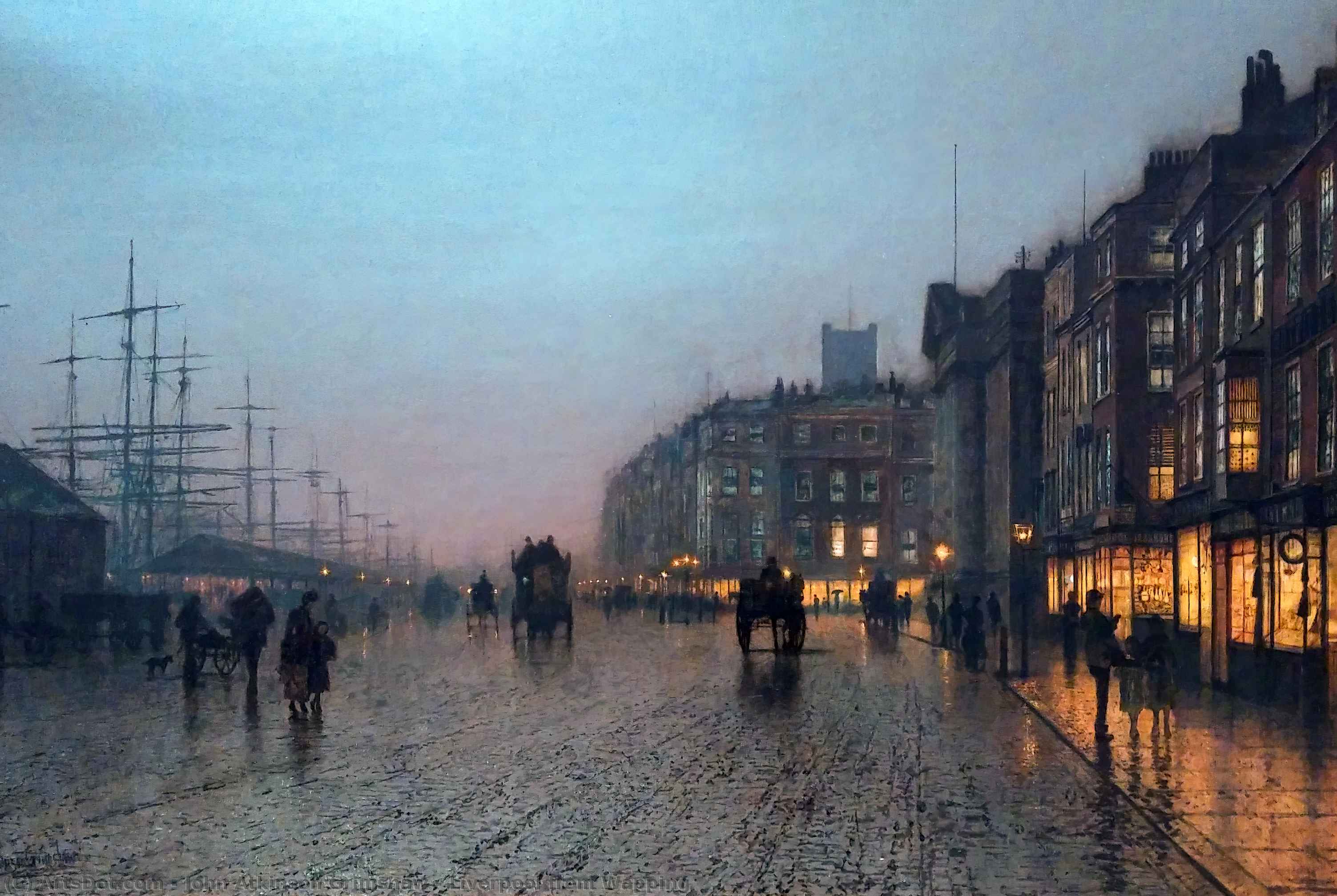
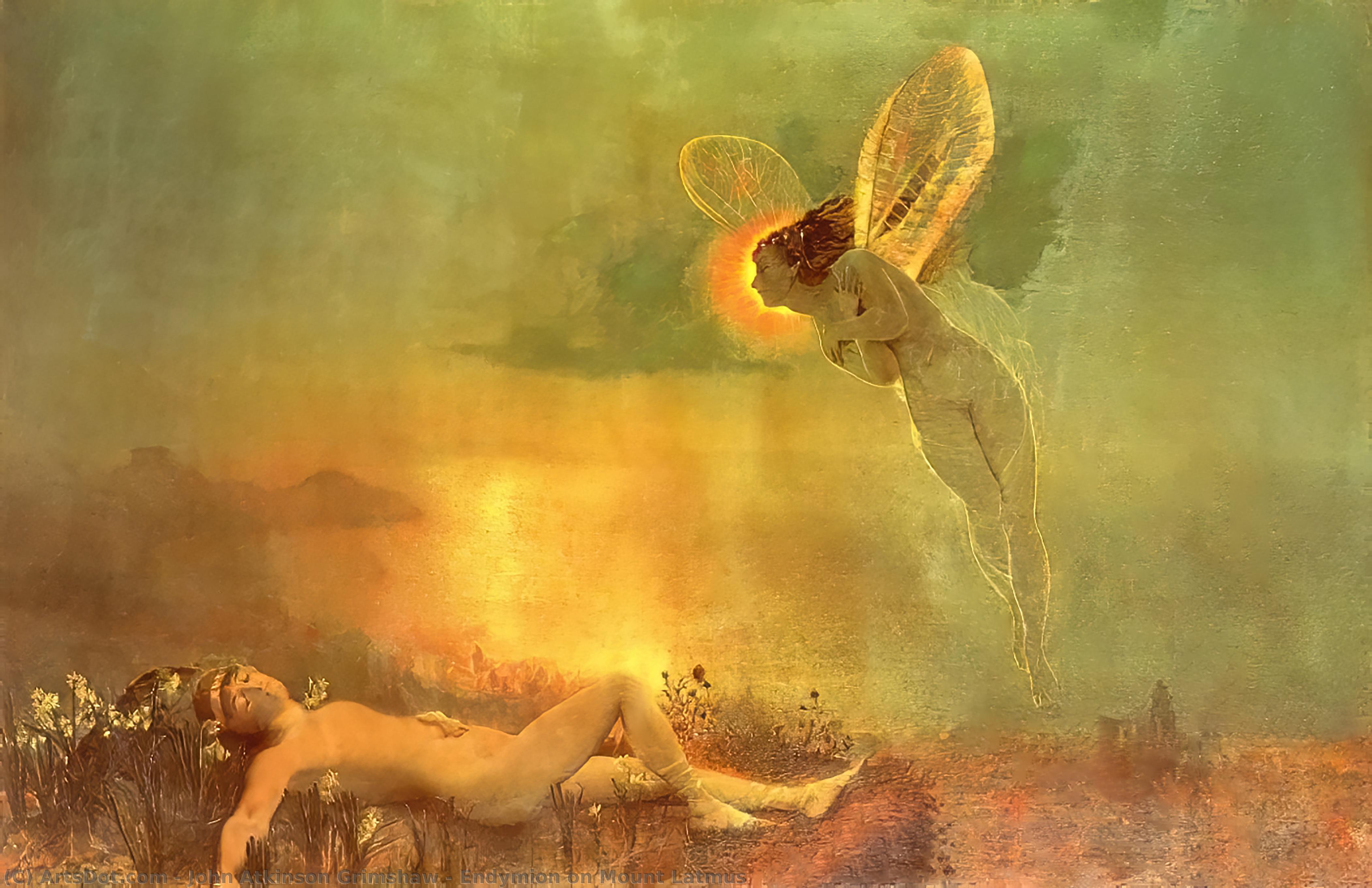
To the gallery's eye, John Atkinson Grimshaw's most famous painting is Liverpool from Wapping (1875), whose original hangs in the Philadelphia Museum of Art, Philadelphia. Endymion on Mount Latmus (1879) and Canny Glasgow (1887) complete the trio every eye recognises. Of the 260 works by John Atkinson Grimshaw in our catalog, the gallery presents the 100 most famous below, each original with its year, its museum and what makes it unique.

1836 – 1893, Leeds Romanticism Most works: Yale Center for British Art

The gallery's top 10 John Atkinson Grimshaw paintings

3
Canny Glasgow (1887) by John Atkinson Grimshaw

Canny Glasgow

1887 · Oil On Canvas · Thyssen-Bornemisza Museum, Madrid

Captivating Maritime Scene at Dusk Immerse yourself in the evocative atmosphere of this exquisite Victorian waterfront painting, created by the renowned artist John Atkinson Grimshaw in 1887. This captivating scene depicts a tranquil harbor at twilight, where the fading light of sunset blends seamlessly with the approaching night. The composition masterfully balances maritime activity with architectural charm, inviting viewers to explore a moment frozen in time. The scene’s quietude and…

4
London, Pall Mall, and Saint James Street (1880) by John Atkinson Grimshaw

London, Pall Mall, and Saint James Street

1880 · Oil On Canvas

Created in 1880, London, Pall Mall, and Saint James Street by John Atkinson Grimshaw captures a nocturnal urban landscape in oil on canvas. The scene portrays a bustling London street at night, populated by numerous individuals scattered throughout the cityscape. Pedestrians move along the sidewalks and cross the thoroughfare, contributing to the lively atmosphere of the city after dark.

6
Reflections on the Thames, Westminster (1880) by John Atkinson Grimshaw

Reflections on the Thames, Westminster

1880 · Oil On Canvas

In the quietude of 1880, John Atkinson Grimshaw captures a nocturnal moment along the banks of the Thames. Reflections on the Thames, Westminster presents a view from the Embankment, where the city of London stretches out under a heavy, dark sky. The river flows through the center of the scene, acting as a mirror for the scattered lights that define the urban landscape. It is a world of deep shadows…

7
An Idyll of Old Chelsea (1893) by John Atkinson Grimshaw

An Idyll of Old Chelsea

1893 · Oil

In this 1893 work, we find ourselves standing on a damp street in London's bohemian quarter. The scene is set in the evening, looking westwards along Lordship Place toward the tower of Chelsea Old Church. There is a certain stillness here, a moment of solitude captured as the light begins to fade. A man walks alone along the wet pavement, his figure a quiet presence amidst the architecture of the…

8
Lovers in a wood (1873) by John Atkinson Grimshaw

Lovers in a wood

1873 · Oil

Lovers in a Wood is an oil painting that depicts a serene woodland path. The scene features two figures, presumably lovers, strolling along a trail. They are surrounded by trees with intertwining branches that create a sense of depth and texture. The composition includes additional figures, such as one person standing near the left edge and another person positioned closer to the right side of the image.

10
Lights in the Harbour, Scarborough (1879) by John Atkinson Grimshaw

Lights in the Harbour, Scarborough

1879 · Oil

There is a specific stillness that settles over a harbor once the day's industry has retreated. In this 1879 work, we find ourselves observing the Scarborough coast during those liminal hours when the moonlight begins to claim the landscape. The scene is composed of several vessels adrift upon calm, dark waters, their forms silhouetted against a sky heavy with clouds. A large boat rests toward the right, while smaller vessels…

John Atkinson Grimshaw paintings, ranked 11 to 100

11London, Piccadilly at NIght (1885) by John Atkinson GrimshawLondon, Piccadilly at NIght1885 12Sand, Sea and Sky: A Summer Fantasy (1892) by John Atkinson GrimshawSand, Sea and Sky: A Summer Fantasy1892 13Briggate, Leeds (1891) by John Atkinson GrimshawBriggate, Leeds1891 14Moonlight After Rain by John Atkinson GrimshawMoonlight After Rain 15Old Chelsea by John Atkinson GrimshawOld Chelsea 16November Moonlight by John Atkinson GrimshawNovember Moonlight 17Saint Cecilia (1862) by John Atkinson GrimshawSaint Cecilia1862 18Leeds Bridge (1880) by John Atkinson GrimshawLeeds Bridge1880 19Moonlight (1882) by John Atkinson GrimshawMoonlight1882 20Scarborough by Moonlight (1876) by John Atkinson GrimshawScarborough by Moonlight1876 21October Gold (1889) by John Atkinson GrimshawOctober Gold1889 22A Golden Beam by John Atkinson GrimshawA Golden Beam 23Moonlight on Lake by John Atkinson GrimshawMoonlight on Lake 24Humber Docks, Hull (1884) by John Atkinson GrimshawHumber Docks, Hull1884 25Battersea Bridge (1885) by John Atkinson GrimshawBattersea Bridge1885 26Snow and Mist: Caprice in Yellow Minor (1892) by John Atkinson GrimshawSnow and Mist: Caprice in Yellow Minor1892 27Dame Autumn hath a mournful face (1871) by John Atkinson GrimshawDame Autumn hath a mournful face1871 28On the Tees, near Barnard Castle (1868) by John Atkinson GrimshawOn the Tees, near Barnard Castle1868 29Stapleton Park near Pontefract Sun (1877) by John Atkinson GrimshawStapleton Park near Pontefract Sun1877 30Park Row, Leeds (1882) by John Atkinson GrimshawPark Row, Leeds1882 31Scarborough Lights (1877) by John Atkinson GrimshawScarborough Lights1877 32A moonlit lane (1874) by John Atkinson GrimshawA moonlit lane1874 33Sic transit gloria mundi (The Burning of the Spa Saloon) (1876) by John Atkinson GrimshawSic transit gloria mundi (The Burning of the Spa Saloon)1876 34Snowbound (1883) by John Atkinson GrimshawSnowbound1883 35The Lighthouse at Scarborough by John Atkinson GrimshawThe Lighthouse at Scarborough 36a mountain road flood time honister by John Atkinson Grimshawa mountain road flood time honister 37Golden Autumn by John Atkinson GrimshawGolden Autumn 38Autumn Gold by John Atkinson GrimshawAutumn Gold 39Yew Court, Scalby, near Scarborough (1875) by John Atkinson GrimshawYew Court, Scalby, near Scarborough1875 40Iris (1886) by John Atkinson GrimshawIris1886 41Whitby (1878) by John Atkinson GrimshawWhitby1878 · Yale Center for British Art 42A Lane In Headingley, Leeds (1881) by John Atkinson GrimshawA Lane In Headingley, Leeds1881 43View of Southwark Bridge at Night (1882) by John Atkinson GrimshawView of Southwark Bridge at Night1882 · The Ashmolean Museum of Art And Archaeology 44Barden Tower by John Atkinson GrimshawBarden Tower 45untitled (3394) by John Atkinson Grimshawuntitled (3394) 46Roundhay Lake, Leeds by John Atkinson GrimshawRoundhay Lake, Leeds 47Spirit of the Night AMK by John Atkinson GrimshawSpirit of the Night AMK 48The Seven Arches Adel Woods by John Atkinson GrimshawThe Seven Arches Adel Woods 49The Old Hall Under Moonlight by John Atkinson GrimshawThe Old Hall Under Moonlight 50autumn morning by John Atkinson Grimshawautumn morning 51A Manor House in Autumn by John Atkinson GrimshawA Manor House in Autumn 52Luxury by John Atkinson GrimshawLuxury 53In the Golden Gloaming (1881) by John Atkinson GrimshawIn the Golden Gloaming1881 54Two Thousand Years Ago (1878) by John Atkinson GrimshawTwo Thousand Years Ago1878 55Spirit of the Night by John Atkinson GrimshawSpirit of the Night 56Twilight, The Vegetable Garden (1869) by John Atkinson GrimshawTwilight, The Vegetable Garden1869 57On the Esk, Whitby by John Atkinson GrimshawOn the Esk, Whitby 58Landscape in the Lake District by John Atkinson GrimshawLandscape in the Lake District 59Gloucester Docks (1890) by John Atkinson GrimshawGloucester Docks1890 · Museum of Gloucester 60Windermere (1863) by John Atkinson GrimshawWindermere1863 · Yale University Art Gallery 61Portrait of the artist's wife, Theodosia, as Ophelia (1863) by John Atkinson GrimshawPortrait of the artist's wife, Theodosia, as Ophelia1863 62A Dead Linnet (1862) by John Atkinson GrimshawA Dead Linnet1862 63Newlay Wood, Horsforth, Leeds (1861) by John Atkinson GrimshawNewlay Wood, Horsforth, Leeds1861 64A House in a Clearing (1870) by John Atkinson GrimshawA House in a Clearing1870 · Minneapolis Institute of Art 65Knostrop Old Hall at Dusk (1870) by John Atkinson GrimshawKnostrop Old Hall at Dusk1870 66'The Ironbound Shore' (1869) by John Atkinson Grimshaw'The Ironbound Shore'1869 67Bowder Stone, Borrowdale (1870) by John Atkinson GrimshawBowder Stone, Borrowdale1870 68Ghyll Beck, Barden, Yorkshire (1867) by John Atkinson GrimshawGhyll Beck, Barden, Yorkshire1867 69Colwith Force (1869) by John Atkinson GrimshawColwith Force1869 70Poachers (1871) by John Atkinson GrimshawPoachers1871 71The Seal of the Covenant (1868) by John Atkinson GrimshawThe Seal of the Covenant1868 72Evening, Knostrop Old Hall (1870) by John Atkinson GrimshawEvening, Knostrop Old Hall1870 73Nab Scar, The Lake District (1864) by John Atkinson GrimshawNab Scar, The Lake District1864 74Landscape with a winding river (1868) by John Atkinson GrimshawLandscape with a winding river1868 75Whitby Harbor (1874) by John Atkinson GrimshawWhitby Harbor1874 · Yale Center for British Art 76Home Again (1877) by John Atkinson GrimshawHome Again1877 77The Heron's Haunt (1874) by John Atkinson GrimshawThe Heron's Haunt1874 78Arriving in the hall (1878) by John Atkinson GrimshawArriving in the hall1878 79Whitby Docks (1876) by John Atkinson GrimshawWhitby Docks1876 80Figure Overlooking Waterloo Lake, Rounday Park, Leeds (1872) by John Atkinson GrimshawFigure Overlooking Waterloo Lake, Rounday Park, Leeds1872 81Under The Harvest Moon (1872) by John Atkinson GrimshawUnder The Harvest Moon1872 82Full Moon behind Cirrus Cloud from the Rounday Park Castle Battlements (1872) by John Atkinson GrimshawFull Moon behind Cirrus Cloud from the Rounday Park Castle Battlements1872 83The Chorale (1878) by John Atkinson GrimshawThe Chorale1878 84Elaine (1877) by John Atkinson GrimshawElaine1877 85The Lady of Shalott (1875) by John Atkinson GrimshawThe Lady of Shalott1875 86The lotus gatherers (1874) by John Atkinson GrimshawThe lotus gatherers1874 87'Burning Off', a Fishing Boat at Scarborough (1877) by John Atkinson Grimshaw'Burning Off', a Fishing Boat at Scarborough1877 88Evening Glow (1884) by John Atkinson GrimshawEvening Glow1884 · Yale Center for British Art 89A Moonlit Evening (1880) by John Atkinson GrimshawA Moonlit Evening1880 · Thyssen-Bornemisza Museum 90Spirit of the Night (1879) by John Atkinson GrimshawSpirit of the Night1879 91Fiametta (1883) by John Atkinson GrimshawFiametta1883 92An Autumn Idyll (1885) by John Atkinson GrimshawAn Autumn Idyll1885 93Liverpool from Wapping (1885) by John Atkinson GrimshawLiverpool from Wapping1885 94A Vestal (1885) by John Atkinson GrimshawA Vestal1885 95In Peril (1879) by John Atkinson GrimshawIn Peril1879 96Silver Moonlight (1880) by John Atkinson GrimshawSilver Moonlight1880 97Reflections on the Thames (1880) by John Atkinson GrimshawReflections on the Thames1880 · Leeds Art Gallery 98Ye Ladye Bountifulle (1883) by John Atkinson GrimshawYe Ladye Bountifulle1883 99Spirit of the night (1879) by John Atkinson GrimshawSpirit of the night1879 100Westminster Bridge by Moonlight (1880) by John Atkinson GrimshawWestminster Bridge by Moonlight1880

John Atkinson Grimshaw's famous paintings, period by period

The subjects that held John Atkinson Grimshaw's eye

The four subjects that come back most often in these originals, each with its finest example.

The museums that keep John Atkinson Grimshaw's originals

The 8 museums that hold the most of the paintings on this page.

Museum City Works by John Atkinson Grimshaw Paintings from this list
Yale Center for British Art, New HavenYale Center for British Art New Haven 4 Whitby, Whitby Harbor, Evening Glow
Thyssen-Bornemisza Museum, MadridThyssen-Bornemisza Museum Madrid 3 Canny Glasgow, A Moonlit Evening
Walker Art Gallery, LiverpoolWalker Art Gallery Liverpool 4 The Custom House, Liverpool, Looking North
Museum of Gloucester, GloucesterMuseum of Gloucester Gloucester 2 Gloucester Docks
Leeds Art Gallery, LeedsLeeds Art Gallery Leeds 2 Reflections on the Thames
Philadelphia Museum of Art, PhiladelphiaPhiladelphia Museum of Art Philadelphia 1 Liverpool from Wapping
The Ashmolean Museum of Art And Archaeology, OxfordThe Ashmolean Museum of Art And Archaeology Oxford 1 View of Southwark Bridge at Night
Yale University Art Gallery, New HavenYale University Art Gallery New Haven 1 Windermere

John Atkinson Grimshaw, one signature painting per decade

Works per decade

Pick a decade to see the original that defines it.

John Atkinson Grimshaw's paintings: the gallery answers

Which John Atkinson Grimshaw painting is the most famous of all?Reveal the answer

Liverpool from Wapping (1875), Philadelphia Museum of Art, Philadelphia. Endymion on Mount Latmus (1879) and Canny Glasgow (1887) come next.

How old was John Atkinson Grimshaw on completing Liverpool from Wapping?Reveal the answer

39 years old: Liverpool from Wapping dates from 1875, and John Atkinson Grimshaw was born in 1836.

Which are John Atkinson Grimshaw's top 10 paintings?Reveal the answer

Liverpool from Wapping, Endymion on Mount Latmus, Canny Glasgow, London, Pall Mall, and Saint James Street, The Custom House, Liverpool, Looking North, Reflections on the Thames, Westminster, An Idyll of Old Chelsea, Lovers in a wood, Tree Shadows on the Park Wall, Roundhay Park, Leeds and Lights in the Harbour, Scarborough. The ranking above gives each one's year and museum.

How many works did John Atkinson Grimshaw create?Reveal the answer

Our catalog holds 260 works by John Atkinson Grimshaw, dated from 1861 to 1893.

Where do John Atkinson Grimshaw's most famous originals hang?Reveal the answer

Mostly in Yale Center for British Art (New Haven), Thyssen-Bornemisza Museum (Madrid) and Walker Art Gallery (Liverpool). The museum table above lists them all.

When did John Atkinson Grimshaw create the most famous paintings?Reveal the answer

In 1870s: 34 of the 100 works on this page were made then, Liverpool from Wapping among them.

Which are John Atkinson Grimshaw's earliest and latest famous works?Reveal the answer

On this page, the earliest is Newlay Wood, Horsforth, Leeds (1861) and the latest An Idyll of Old Chelsea (1893).

Which subjects did John Atkinson Grimshaw return to most?Reveal the answer

Buildings (11), People (10) and Night (10), across the 100 works on this page.

Which medium did John Atkinson Grimshaw work in most?Reveal the answer

Oil On Canvas, for 13 of the 100 works on this page.

Which movement is John Atkinson Grimshaw associated with?Reveal the answer

Romanticism, judging by the originals on this page.

Which John Atkinson Grimshaw originals does the Yale Center for British Art hold?Reveal the answer

Whitby, Whitby Harbor and Evening Glow: the Yale Center for British Art, New Haven holds 3 of the works on this page.

Can I have a John Atkinson Grimshaw painting reproduced by hand?Reveal the answer

Yes, as a reproduction: the original stays in its museum, but any painting on this page can be painted by hand for you, made to order one at a time, from the painting's own page.

John Atkinson Grimshaw: the artist

The Life of John Atkinson Grimshaw

John Atkinson Grimshaw entered the world on 6 September 1836, born into a back-to-back house on Park Street in Leeds. He was the eldest of six children born to Mary and David Grimshaw. His upbringing was shaped by a strict Baptist household, where his parents provided a religious foundation for the family. Life in Leeds was industrious, and his early years were defined by the steady, predictable rhythms of a working-class northern city.

He did not follow the path of formal art education. Instead, he was a self-taught artist who relied on his own observations and a natural sense of light. Before he found his way into painting, he worked as a clerk for the Great Northern Railway. In 1856, he married his cousin, Frances Theodosia Hubbard. This period of his life was marked by the quiet tension between the stability of his clerical job and the pull of his creative interests.

His path was not an easy one. He eventually left his position at the railway to pursue his art, a decision that caused concern for his family. Despite the lack of professional training, he developed a way of seeing the world that would eventually define his reputation. He moved between Leeds and Scarborough as his life changed, eventually finding a home at Knostrop Old Hall.

Early Life and Family Background

Born in West Yorkshire, England, John Atkinson Grimshaw grew up in a household shaped by steady, practical labor. His father, David, spent his working life in service to the community, serving as a policeman and working for Pickfords. This was a life of routine and duty, far removed from the quiet, moonlit scenes that would later define his name. The family lived in a back-to-back house on Park Street in Leeds, a setting that provided a grounded beginning for a boy who would eventually seek to capture the shifting light of the night.

Life moved quickly for him. He left school at the age of sixteen, entering the workforce as a clerk for the Great Northern Railway. It was a stable, predictable existence, yet his interests were already pulling him toward something else. In 1856, he married his cousin, Frances Theodosia Hubbard, known to many as Fanny. Their union marked a significant chapter in his personal life as he navigated the responsibilities of adulthood while his true inclinations began to take root.

Career Transition and Early Success

Life in Leeds was steady but predictable for a young man working as a clerk for the Great Northern Railway. It was a stable existence, yet the pull of a different calling proved too strong to ignore. At the age of twenty-four, Grimshaw made the difficult choice to leave his office job behind. He walked away from the security of his clerical position to devote himself entirely to the life of a painter, a decision that likely caused much concern for his family.

His entry into the professional art world began in 1862. Under the patronage of the Leeds Philosophical and Literary Society, he held his first exhibitions. These early works were quite different from the moonlit cityscapes that would later define his name. Instead, he focused on the quiet, small details of the natural world. He spent his time painting modest still lifes, capturing the delicate forms of birds, fruit, and blossoms.

These early years were a period of finding his footing. He was a self-taught artist, building his skills through observation rather than formal training. While his initial subjects were simple, they provided the foundation for the technical precision he would later apply to much larger, more complex scenes. He was establishing himself, one small, carefully rendered object at a time.

Technique and Artistic Style

Grimshaw’s approach to the canvas was a careful balance of precision and atmosphere. He was particularly drawn to the way light behaves in the dark, focusing his efforts on nocturnal scenes of urban landscapes. To achieve a level of accuracy that felt almost photographic, he famously employed a camera obscura. By using a projector or lens to cast scenes onto his canvas, he could capture the exact perspective and intricate details of a street or a dockyard. This method allowed him to map out the complex interplay of light and shadow with a clarity that many of his contemporaries found striking.

His method for handling color was equally deliberate. He often used a scumbling technique, a process where he would drag yellow paint over a dark underpainting. This created a soft, diffused glow that mimicked the appearance of gaslight or moonlight hitting a damp surface. This technique was essential for his ability to render the specific textures of his subjects, from the wet cobblestones of a city lane to the misty air of a harbor. His work relied on this meticulous attention to detail to build a sense of mood without relying on heavy-handed strokes.

The Mastery of Nocturnal Landscapes

Grimshaw found his true calling in the quiet hours of the night. He became so associated with these dark, moonlit scenes that he was often called the "inventor of nocturnes." While many painters of his era focused on the bright clarity of daylight, he turned his attention to the shifting shadows of the evening. He had a particular knack for portraying urban scenes bathed in moonlight, finding a sense of stillness in the way light hit the streets of a city after dark.

There was a physical presence to his nightscapes. He did not simply paint a dark sky; he captured the very moisture in the air, making the mist and dampness feel tangible to anyone looking at his canvas. In his maritime works, he often rendered the spiky outlines of ships' masts rearing up against a darkening sky. This attention to the atmosphere allowed him to move beyond simple representation, capturing the heavy, humid feeling of a harbor at twilight or the cool, damp air of a coastal town.

Key Works and Notable Paintings

Grimshaw’s ability to capture the quiet pulse of a city is perhaps most visible in Liverpool from Wapping, completed in 1875. This work looks out over the industrial energy of the port, using a blend of realism and impressionistic brushwork to show the constant motion of the docks. He managed to paint not just the physical structures of the buildings, but the very atmosphere of the water and the bustling activity of the era. It is a scene that feels lived-in and heavy with the damp air of the Mersey.

His interest in the way light interacts with interior spaces led to works like Dulce Domum, painted in 1885. In this piece, he invites a sense of quiet intimacy, drawing the viewer into a richly decorated room where light and shadow define the mood. He was equally skilled at capturing the transition of light in the open air. On Hampstead Hill is often regarded as one of his finest works, specifically for how it handles the shifting light as twilight fades into night. He had a way of making the passing of time feel visible on the canvas.

In 1887, he produced Canny Glasgow, a painting that finds a certain serenity within the shadows of a maritime street. The work focuses on the interplay between the dark, overcast sky and the warm, amber glow of gas lamps reflecting off wet cobblestones. It captures a specific, quiet moment of solitude in a busy urban setting. His later years also saw him experimenting with different subjects, including scenes of fairies and more varied landscapes.

Later Years and Death

By 1870, Grimshaw had moved his life and work to Knostrop Old Hall. This move marked a significant chapter in his later years, as he established himself within this rambling, baronial setting. While his career had seen much success, the final years of his life were marked by personal hardship. He faced financial struggles around 1880, a period that added a layer of difficulty to his existence as a professional artist.

The end came in October 1893. He died at Knostrop Old Hall from cancer, which was recorded at the time as an abscess. His passing left a void for his family, who were left to manage the affairs of his estate. To provide for them, his house and his studio were sold. He was laid to rest in Woodhouse Cemetery in Leeds.

Legacy and Historical Influence

The impact of his work was felt even by those who considered themselves masters of the night. One prominent painter once admitted that he believed himself the inventor of nocturnes until he encountered the moonlit scenes produced by this Leeds-born artist. This recognition speaks to a skill in capturing the specific, fleeting quality of light that few others could replicate. His ability to render the damp, dark atmosphere of a city street or the quiet of a harbor has led many to consider him one of the most accomplished nightscape artists of all time.

While his fame fluctuated after his death, a significant revival of interest occurred during the latter half of the twentieth century. This resurgence brought his quiet, moody landscapes back into the public eye, allowing a new generation to appreciate his technical precision. His approach to light and shadow influenced later artists who sought to move beyond mere physical representation to capture a specific mood or emotion within a scene.

His influence remains visible in the way artists handle the interplay between artificial light and natural moonlight. By using tools like the camera obscura to achieve such sharp focus, he helped bridge the gap between traditional painting and the emerging photographic eye. His work continues to offer a window into the textures of the Victorian era, from the wet cobblestones of a London lane to the silhouetted masts of ships in a dockyard.

Where to See His Works Today

Finding his paintings in person allows for a closer look at the way he handled light on wet cobblestones and the subtle textures of a moonlit sky. Many of his works remain in the care of significant institutions across the United Kingdom and abroad. In Liverpool, the Walker Art Gallery holds several pieces, including his depiction of the docks. His presence in the art world is also felt in the United States, where the Philadelphia Museum of Art keeps one of his works.

For those traveling through Europe, his influence can be found in Madrid at the Thyssen-Bornemisza Museum. His ability to capture the atmosphere of a city at night is also preserved at the Ashmolean Museum of Art and Archaeology in Oxford. These collections ensure that his specific way of seeing the world remains accessible to those who wish to study his technique and the quiet moods he sought to record.

All 260 works by John Atkinson Grimshaw →