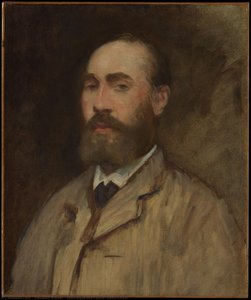
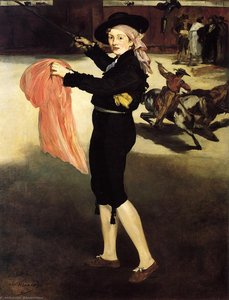
Portrait of Édouard Manet

The 100 Most Famous Édouard Manet Paintings, Each One of a Kind

Updated November 2026 · ranked by our popularity score (searches, visits and orders for each work) · 587 works by Édouard Manet in our catalogue

In short

The Luncheon on the Grass (1863) is the Édouard Manet painting that draws the most eyes; the original belongs to the Musée d'Orsay, Paris. After it, the eye goes to Olympia (1863) and A Bar at the Folies-Bergere (1882). Among the 587 works of Édouard Manet in our catalog, these 100 are the most famous, each a unique original presented with its year, its museum and the reason it endures.

1832 – 1883, former 10th arrondissement of Paris Impressionism Most works: Musée d'Orsay

Top 10 paintings by Édouard Manet, through the gallery's eye

1
The Luncheon on the Grass (1863) by Édouard Manet

The Luncheon on the Grass

1863 · Oil On Canvas · Musée d'Orsay, Paris

Painted in 1863, this monumental work irrevocably altered the course of art history, serving as a pivotal bridge between Realism and Impressionism. It depicts a seemingly simple scene – a leisurely picnic in a woodland setting – yet its radical departure from academic convention sparked immediate controversy and enduring fascination.

2
Olympia (1863) by Édouard Manet

Olympia

1863 · Oil On Canvas · Musée d'Orsay, Paris

To stand before this canvas is to meet a gaze that refuses to look away. In 1863, when Édouard Manet presented this scene, the reaction in Paris was one of profound discomfort. We see a woman, identified as Olympia, reclining upon a bed with an unapologetic directness. She is not a distant goddess from antiquity, but a contemporary figure, likely a courtesan, stripped of mythological pretension. Her pale skin creates…

3
A Bar at the Folies-Bergere (1882) by Édouard Manet

A Bar at the Folies-Bergere

1882 · Oil On Canvas · Courtauld Gallery, London

Édouard Manet’s 1882 masterpiece offers an intimate and strikingly modern portrayal of Parisian nightlife. More than just a depiction of a barmaid serving drinks, this painting is a complex meditation on urban life, social interaction, and the burgeoning modernity of late 19th-century France. It invites viewers to step into the bustling atmosphere of the Folies-Bergère, one of Paris’s most famous entertainment venues, and contemplate its subtle complexities.

4
The Fifer (1866) by Édouard Manet

The Fifer

1866 · Oil On Canvas · Musée d'Orsay, Paris

Created in 1866, The Fifer by Édouard Manet presents a singular presence on a large scale. This oil on canvas work measures 161 x 97 cm. It captures a moment of quietude through its subject, an anonymous regimental fifer of the Spanish Army. There is a certain stillness in the way the figure is presented, stripped of the usual ornamental clutter found in formal portraiture of the era.

5
The Suicide (1880) by Édouard Manet

The Suicide

1880 · Oil On Canvas · Foundation E.G. Bührle Collection, Zurich

The Suicide is a small, heavy presence on canvas. Painted by Édouard Manet and completed in 1880, the work measures 38 x 46 cm. It captures a man slumped upon a bed, his head resting against a pillow in the stillness of a final, desperate moment. A pistol lies near him, a cold weight against the fabric of the sheets. The scene is a quiet, brutal confrontation with mortality.

6
The Balcony (1869) by Édouard Manet

The Balcony

1869 · Acrylic On Canvas

A Moment Suspended: Unveiling Manet’s *The Balcony* Edouard Manet's *The Balcony*, painted in 1868-69, is more than just a depiction of figures on a Parisian balcony; it’s a pivotal work bridging Realism and Impressionism, capturing a fleeting moment steeped in ambiguity and modern life. Measuring 170 x 124 cm, this oil on canvas resides within the esteemed collection of the Musée d'Orsay in Paris, continuing to captivate viewers with its…

7
Music in the Tuileries Garden (1862) by Édouard Manet

Music in the Tuileries Garden

1862 · Oil On Canvas · The Hugh Lane, Dublin

A Vivid Snapshot of Parisian Life Edouard Manet's "Music in the Tuileries Garden" captures the essence of 19th-century Parisian society with unparalleled vibrancy and dynamism. This iconic painting transports viewers to the bustling Tuileries Garden, a popular gathering spot for Parisians enjoying leisurely afternoons filled with music, conversation, and social interaction. Impressionist Mastery Manet's innovative approach to composition and technique sets this artwork apart as an early example of his…

8
The Absinthe Drinker by Édouard Manet

The Absinthe Drinker

Acrylic On Canvas · Ny Carlsberg Glyptotek, Copenhagen

In the dimly lit corners of late 19th-century Paris, where the scent of turpentine mingled with the bitter aroma of wormwood, Édouard Manet captured a moment of profound isolation. The Absinthe Drinker is not merely a painting; it is a haunting window into the soul of the Belle Époque, a period often romanticized but here revealed in its raw, unvarnished truth. The central figure, a man draped in a heavy…

9
Berthe Morisot with a bouquet of violets (1872) by Édouard Manet

Berthe Morisot with a bouquet of violets

1872 · Oil On Canvas · Musée d'Orsay, Paris

An Intimate Encounter in Light and ShadowIn the quietude of a sun-drenched interior, Édouard Manet captures more than just a likeness; he captures a fleeting moment of profound intimacy. Berthe Morisot with a Bouquet of Violets is not merely a portrait of a woman, but a poetic distillation of the Impressionist spirit. As we gaze upon Morisot, seated with a quiet, contemplative grace, we are invited into a private world…

10
Portrait of Emile Zola (1868) by Édouard Manet

Portrait of Emile Zola

1868 · Oil On Canvas · Musée d'Orsay, Paris

The Portrait of Emile Zola is an oil on canvas created by Édouard Manet in 1868. The subject is the French novelist Emile Zola, a man of letters and an art critic. This portrait was submitted to the Salon of 1868 in Paris. It emerged as an act of gratitude from the artist toward the writer, who had defended his work in the pages of La Revue du XXe siècle…

Édouard Manet's famous paintings, numbers 11 to 100

11Nana (1877) by Édouard ManetNana1877 · Hamburger Kunsthalle 12Chez Tortoni (1875) by Édouard ManetChez Tortoni1875 · Isabella Stewart Gardner Museum 13Jeanne (Spring) (1881) by Édouard ManetJeanne (Spring)1881 · J. Paul Getty Museum 14The Railway by Édouard ManetThe Railway 15Rue Mosnier with Flags, J. Paul Getty Museum, Ma (1878) by Édouard ManetRue Mosnier with Flags, J. Paul Getty Museum, Ma1878 16Spring (Study of Jeanne Demarsy) (1882) by Édouard ManetSpring (Study of Jeanne Demarsy)1882 17Boating, Metropolitan Museum of Art, New York (1874) by Édouard ManetBoating, Metropolitan Museum of Art, New York1874 · Metropolitan Museum of Art 18Isabelle Lemonier, Woman with golden hairpin (1879) by Édouard ManetIsabelle Lemonier, Woman with golden hairpin1879 19The Execution of the Emperor Maximilian of Mexico (1867) by Édouard ManetThe Execution of the Emperor Maximilian of Mexico1867 · Museum of Fine Arts 20Olympia by Édouard ManetOlympiaMusée d'Orsay 21Portrait of Stéphane Mallarmé, Musée d'Orsay, Pa (1876) by Édouard ManetPortrait of Stéphane Mallarmé, Musée d'Orsay, Pa1876 22The balcony, Musee d'Orsay, Paris (1869) by Édouard ManetThe balcony, Musee d'Orsay, Paris1869 · Musée d'Orsay 23The Monet Family in the Garden (1874) by Édouard ManetThe Monet Family in the Garden1874 · Metropolitan Museum of Art 24Monk at Prayer (1865) by Édouard ManetMonk at Prayer1865 · Museum of Fine Arts 25Masked Ball at the Opera (1873) by Édouard ManetMasked Ball at the Opera1873 · National Gallery of Art 26Monet in his Studio Boat (1874) by Édouard ManetMonet in his Studio Boat1874 27The Horsewoman (1882) by Édouard ManetThe Horsewoman1882 28Plum (1878) by Édouard ManetPlum1878 · National Gallery of Art 29The Promenade (1880) by Édouard ManetThe Promenade1880 · Tokyo Fuji Art Museum 30Lilac in a glass (1882) by Édouard ManetLilac in a glass1882 31Portrait of M. Antonin Proust (1880) by Édouard ManetPortrait of M. Antonin Proust1880 · Toledo Museum of Art 32Boy with a Sword (1861) by Édouard ManetBoy with a Sword1861 · Metropolitan Museum of Art 33Copy after Delacroix's "Bark of Dante" (1859) by Édouard ManetCopy after Delacroix's "Bark of Dante"1859 · Metropolitan Museum of Art 34Olympia, (Detalj) Musee d'Orsay, P (1863) by Édouard ManetOlympia, (Detalj) Musee d'Orsay, P1863 35Guerre Civile by Édouard ManetGuerre CivileDetroit Institute of Arts 36The Picnic (Le Déjeuner sur l'Herbe) by Édouard ManetThe Picnic (Le Déjeuner sur l'Herbe) 37A bar at Folies-Bergeres, Courtaul (1882) by Édouard ManetA bar at Folies-Bergeres, Courtaul1882 38The Waitress by Édouard ManetThe Waitress 39The Waitress by Édouard ManetThe Waitress 40The Old Musician, canvas, National Gallery of Ar (1862) by Édouard ManetThe Old Musician, canvas, National Gallery of Ar1862 41The Execution of the Emperor Maximilian (1867) by Édouard ManetThe Execution of the Emperor Maximilian1867 · Museum of Fine Arts 42Bouquet of violets (1872) by Édouard ManetBouquet of violets1872 43Monet in his Studio (1874) by Édouard ManetMonet in his Studio1874 · Staatsgalerie Stuttgart 44The Croquet Party (La partie de croquet) (1871) by Édouard ManetThe Croquet Party (La partie de croquet)1871 · Nelson-Atkins Museum of Art 45Self-portrait with skull-cap (1878) by Édouard ManetSelf-portrait with skull-cap1878 · Artizon Museum 46The Escape of Rochefort (1880) by Édouard ManetThe Escape of Rochefort1880 · Kunsthaus Zürich 47Masquerade at the Opera (1873) by Édouard ManetMasquerade at the Opera1873 48Portrait of Victorine Meurent, Museum of Fine Ar (1862) by Édouard ManetPortrait of Victorine Meurent, Museum of Fine Ar1862 49Jean-Baptiste Faure (1830–1914) (1882) by Édouard ManetJean-Baptiste Faure (1830–1914)1882 · Metropolitan Museum of Art 50The Bench (aka My Garden) by Édouard ManetThe Bench (aka My Garden) 51The Old Musician (1862) by Édouard ManetThe Old Musician1862 · National Gallery of Art 52The railway, (Detalj 2) Nation (1873) by Édouard ManetThe railway, (Detalj 2) Nation1873 53Mlle V...in the Costume of an Espada (1862) by Édouard ManetMlle V...in the Costume of an Espada1862 · Metropolitan Museum of Art 54Still Life: Fruits on a Table (1864) by Édouard ManetStill Life: Fruits on a Table1864 55Nana, kunsthalle, hamburg. (1877) by Édouard ManetNana, kunsthalle, hamburg.1877 56The Street Singer (1862) by Édouard ManetThe Street Singer1862 · Museum of Fine Arts 57Young Woman among the Flowers (1879) by Édouard ManetYoung Woman among the Flowers1879 58The Waitress (also known as The Beer Serving Girl) (1878) by Édouard ManetThe Waitress (also known as The Beer Serving Girl)1878 · The Louvre 59The Dead Toreador (also known as The Dead Man) (1864) by Édouard ManetThe Dead Toreador (also known as The Dead Man)1864 · National Gallery of Art 60Masked Ball at the Opera (1873) by Édouard ManetMasked Ball at the Opera1873 · National Gallery of Art 61Basket of Fruits (1864) by Édouard ManetBasket of Fruits1864 · Museum of Fine Arts 62The conservatory (1879) by Édouard ManetThe conservatory1879 63Portrait of Monsieur Brun (1879) by Édouard ManetPortrait of Monsieur Brun1879 · National Museum of Western Art 64Study for Le Déjeuner sur l'herbe (1865) by Édouard ManetStudy for Le Déjeuner sur l'herbe1865 · Courtauld Gallery 65Self Portrait with a Palette (1879) by Édouard ManetSelf Portrait with a Palette1879 66The Seine at Argenteuil (1874) by Édouard ManetThe Seine at Argenteuil1874 · Courtauld Gallery 67In the bar ''Le Bouchon'' (1879) by Édouard ManetIn the bar ''Le Bouchon''1879 · Pushkin State Museum 68The ragpicker (1869) by Édouard ManetThe ragpicker1869 69Vase of Peonies on a Small Pedestal (1864) by Édouard ManetVase of Peonies on a Small Pedestal1864 70The absinthe drinker, ny carlsberg glyptotek, co (1859) by Édouard ManetThe absinthe drinker, ny carlsberg glyptotek, co1859 71Jeanne Martin in pink dress (1881) by Édouard ManetJeanne Martin in pink dress1881 · Staatliche Kunstsammlungen Dresden 72Young Woman in the Garden (1880) by Édouard ManetYoung Woman in the Garden1880 73Oysters (1862) by Édouard ManetOysters1862 · National Gallery of Art 74Bathers on the Seine, unfinished by Édouard ManetBathers on the Seine, unfinishedMuseu de Arte de São Paulo Assis Chateaubriand 75The Port of Bordeaux (1871) by Édouard ManetThe Port of Bordeaux1871 76Villa at Rueil by Édouard ManetVilla at Rueil 77Seascape (1873) by Édouard ManetSeascape1873 78Rochefort's Escape (1881) by Édouard ManetRochefort's Escape1881 · Musée d'Orsay 79Portrait of Faure as Hamlet (1877) by Édouard ManetPortrait of Faure as Hamlet1877 · Hamburger Kunsthalle 80A woman pouring water (Study of Suzanne Leenhoff) (1858) by Édouard ManetA woman pouring water (Study of Suzanne Leenhoff)1858 81Peony Stems and Pruning Shears (1864) by Édouard ManetPeony Stems and Pruning Shears1864 · Musée d'Orsay 82Boating (1874) by Édouard ManetBoating1874 83Isabelle Lemonnier with Muff (1879) by Édouard ManetIsabelle Lemonnier with Muff1879 · Dallas Museum of Art 84Woman with a Cat, Portrait of Madame Manet (1882) by Édouard ManetWoman with a Cat, Portrait of Madame Manet1882 · Tate Gallery 85The Escape of Rocherfort by Édouard ManetThe Escape of Rocherfort 86The Banks of the Seine at Argenteuil (1874) by Édouard ManetThe Banks of the Seine at Argenteuil1874 87Rue Mosnier with Road Menders (1878) by Édouard ManetRue Mosnier with Road Menders1878 88The spanish ballet (1862) by Édouard ManetThe spanish ballet1862 89The Boy with Cherries (1859) by Édouard ManetThe Boy with Cherries1859 · Calouste Gulbenkian Museum 90At the Café (Au café) (1869) by Édouard ManetAt the Café (Au café)1869 91Antonin Proust (1880) by Édouard ManetAntonin Proust1880 · Toledo Museum of Art 92Beach at Boulogne (1869) by Édouard ManetBeach at Boulogne1869 93The Beach at Sainte-Adresse, oil on canvas, Art (1867) by Édouard ManetThe Beach at Sainte-Adresse, oil on canvas, Art1867 94Boats at Berck-sur-Mer (1873) by Édouard ManetBoats at Berck-sur-Mer1873 · Cleveland Museum of Art 95The stroll (1880) by Édouard ManetThe stroll1880 96The Barricade (Civil War) (1871) by Édouard ManetThe Barricade (Civil War)1871 97The head of Christ (1864) by Édouard ManetThe head of Christ1864 · Fine Arts Museums of San Francisco 98On the Beach (1873) by Édouard ManetOn the Beach1873 · Musée d'Orsay 99The Spanish Singer (also known as Guitarrero) (1860) by Édouard ManetThe Spanish Singer (also known as Guitarrero)1860 · Metropolitan Museum of Art 100Portrait of Mademoiselle Isabelle Lemonnier (1879) by Édouard ManetPortrait of Mademoiselle Isabelle Lemonnier1879 · Hermitage Museum

Édouard Manet's famous paintings, period by period

The subjects that held Édouard Manet's eye

The four subjects that come back most often in these originals, each with its finest example.

The museums that keep Édouard Manet's originals

The 8 museums that hold the most of the paintings on this page.

Museum City Works by Édouard Manet Paintings from this list
Musée d'Orsay, ParisMusée d'Orsay Paris 34 The Luncheon on the Grass, Olympia, The Fifer
Metropolitan Museum of Art, New YorkMetropolitan Museum of Art New York 28 Boating, Metropolitan Museum of Art, New York, The Monet Family in the Garden, Boy with a Sword
National Gallery of Art, WashingtonNational Gallery of Art Washington 18 Masked Ball at the Opera, Plum, The Old Musician
Museum of Fine Arts, BostonMuseum of Fine Arts Boston 9 The Execution of the Emperor Maximilian of Mexico, Monk at Prayer, The Execution of the Emperor Maximilian
Courtauld Gallery, LondonCourtauld Gallery London 5 A Bar at the Folies-Bergere, Study for Le Déjeuner sur l'herbe, The Seine at Argenteuil
Hamburger Kunsthalle, HamburgHamburger Kunsthalle Hamburg 3 Nana, Portrait of Faure as Hamlet
Toledo Museum of Art, ToledoToledo Museum of Art Toledo 2 Portrait of M. Antonin Proust, Antonin Proust
Detroit Institute of Arts, DetroitDetroit Institute of Arts Detroit 14 Guerre Civile

Édouard Manet across the decades: one unique original for each

Works per decade

Pick a decade to see the original that defines it.

Édouard Manet's paintings: questions for the gallery

What is the single most famous work of Édouard Manet?Reveal the answer

The Luncheon on the Grass (1863), Musée d'Orsay, Paris. Olympia (1863) and A Bar at the Folies-Bergere (1882) come next.

At what age did Édouard Manet create The Luncheon on the Grass?Reveal the answer

31 years old: The Luncheon on the Grass dates from 1863, and Édouard Manet was born in 1832.

Which ten paintings by Édouard Manet are the most famous?Reveal the answer

The Luncheon on the Grass, Olympia, A Bar at the Folies-Bergere, The Fifer, The Suicide, The Balcony, Music in the Tuileries Garden, The Absinthe Drinker, Berthe Morisot with a bouquet of violets and Portrait of Emile Zola. The ranking above gives each one's year and museum.

How many works by Édouard Manet are known?Reveal the answer

Our catalog holds 587 works by Édouard Manet, dated from 1858 to 1882.

Where can the most famous Édouard Manet originals be seen?Reveal the answer

Mostly in Musée d'Orsay (Paris), Metropolitan Museum of Art (New York) and National Gallery of Art (Washington). The museum table above lists them all.

During which period did Édouard Manet create the best-known paintings?Reveal the answer

In 1870s: 37 of the 100 works on this page were made then, Berthe Morisot with a bouquet of violets among them.

Which famous Édouard Manet painting is the earliest, and which the latest?Reveal the answer

On this page, the earliest is A woman pouring water (Study of Suzanne Leenhoff) (1858) and the latest A Bar at the Folies-Bergere (1882).

What subjects did Édouard Manet favour?Reveal the answer

Portrait (16), Woman (13) and Leisure (13), across the 100 works on this page.

What materials did Édouard Manet paint with most?Reveal the answer

Oil On Canvas, for 74 of the 100 works on this page.

Which movement does the work of Édouard Manet belong to?Reveal the answer

Impressionism, judging by the originals on this page.

What Édouard Manet originals can I see at the Musée d'Orsay?Reveal the answer

The Luncheon on the Grass, Olympia and The Fifer: the Musée d'Orsay, Paris holds 10 of the works on this page.

Édouard Manet: a portrait of the artist

Early Life, Family and Training

Édouard Manet was born in Paris on January 23, 1832. He grew up in an affluent household, the eldest son of a man who held a position in the French Ministry of Justice. His father had envisioned a different path for him, one involving the navy or the law. The boy attempted to follow this direction, but he failed the entrance exams for the naval academy twice. This failure redirected his focus toward the studio. He eventually presented his father with a portfolio of paintings to prove his commitment to the arts, finally gaining the permission needed to study formally.

From 1850 to 1856, he trained in the studio of Thomas Couture. While he learned the technical foundations of academic painting there, his eyes often wandered toward the Louvre. He spent much of his time in those galleries, standing before the canvases of the Old Masters and copying their methods. He studied the way they handled light and form, absorbing the lessons of the past while preparing to find his own way. This period of intense study provided the technical grounding that would support his later departures from tradition.

Technique and Artistic Style

The surface of a canvas reveals a deliberate departure from the polished, invisible finish required by the Salon. Instead of smoothing away the evidence of the brush, there is a visible, energetic application of pigment known as facture. This approach prioritizes the physical reality of the paint itself. By using the alla prima or wet-on-wet technique, the colors are laid down while still fresh, capturing an immediate quality that avoids the slow, layered buildup of traditional academic methods. This method allows for a certain spontaneity in how light and atmosphere are recorded.

There is a noticeable flatness in the way forms are constructed. A loose handling of the paintbrush avoids the heavy modeling used to create deep, three-dimensional illusions. Instead, the pictorial space often feels compressed. This effect is heightened by the use of strong, contrasting tones. Rather than relying on gradual color scales to define shape, the work often uses stark shifts in value to suggest the fragmented, modern light of the city. This rejection of mathematical perspective and seamless blending creates a sense of immediacy, as if the image is being assembled directly before the eye.

The Scandal of Modern Subjects

The mid-1860s brought a series of confrontations with the public eye. In 1863, the Salon des Refusés provided a stage for works that the official juries had rejected. Among these was Le Déjeuner sur l'herbe, a painting that caused an immediate stir. It did not rely on the usual mythological or biblical excuses to present nudity; instead, it placed a nude woman in a picnic setting alongside two fully clothed men. This refusal to provide a historical or divine context left the viewer with nothing but the raw presence of contemporary life.

The tension only increased in 1865 with the exhibition of Olympia. This work was considered the most shocking piece in the Salon. It took the composition of Titian’s Venus of Urbino and stripped away the protective layer of myth, replacing a goddess with a contemporary prostitute. She did not look away or invite a gaze of admiration; she stared back with a directness that many found unsettling. Critics focused their anger on this lack of idealization and the bluntness of the subject matter.

Beyond the choice of subjects, the way the paint was applied drew heavy criticism. Many observers attacked the visible, energetic brushwork and the lack of a polished, seamless finish. They saw errors in perspective and a failure to follow the traditional rules of decorum. What some called incompetence, others recognized as a deliberate choice to show the reality of the paint on the canvas rather than a window into a dream.

Key Works and Major Paintings

In 1861, he produced The Spanish Singer, a work that earned him an honorable mention at the Salon. The painting shows a model in Andalusian costume, holding a guitar in a way that suggests the chords are being pressed by a left-handed player, even though the instrument is strung for a right-handed one. This small, deliberate error sits alongside a stereotypical Spanish still life placed near the model's feet.

His brushwork often addressed the immediate and the political. In 1867, he painted The Execution of the Emperor Maximilian of Mexico. Later, as his health began to decline in the late 1870s, his focus shifted toward smaller, more intimate subjects. By 1882, he had completed A Bar at the Folies-Bergère, a painting that captures the atmosphere of a modern café with a sense of psychological ambiguity. Near the end of his life, around 1883, he turned his attention to still lifes, such as Two roses on a tablecloth.

Circle, Rivals and Influences

His brushwork carries the weight of the masters he studied in the Louvre. He looked toward the dramatic light of Caravaggio and the fluid, dark tones of Velázquez to find a way forward. From Goya, he took a certain directness that bypassed the need for polished, academic finishes. These were not mere studies; they were the tools he used to dismantle the expectations of the Salon. He preferred the presence of a single, strong color over the gradual blending of tones.

In the cafes and intellectual circles of Paris, he moved among the very people who would redefine the era. He shared spaces and ideas with Claude Monet and Edgar Degas, men who were also pushing against the boundaries of what a painting could be. His personal life was equally intertwined with the avant-garde; his sister-in-law was the artist Berthe Morisot. While he often sought the approval of the official institutions, his true peers were those working in the shadows of the established academies.

He found an early, vocal defender in a writer who saw the future in his controversial canvases. This supporter published a glowing account of his work, helping to frame his place in a changing art world. Even when the public reacted with hostility to his modern subjects, this support provided a necessary counterweight to the critics who found his style unfinished or his themes improper. He remained a figure caught between the old world of the Academy and the new, restless energy of the streets.