


1


Updated October 2026 · ranked by our popularity score (searches, visits and orders for each work) · 185 works by Albin Egger-Lienz in our catalogue
In short
Good Friday (1892) is the Albin Egger-Lienz painting that draws the most eyes. After it, the eye goes to From Him (1887) and Saint Sebastian (1887). Among the 185 works of Albin Egger-Lienz in our catalog, these 100 are the most famous, each a unique original presented with its year, its museum and the reason it endures.


 Life
12
 The Grace Before Meals
13
 A Farewell in Tirol in the Year 1809Schloss Bruck
14
 The mower
15
 MothersTiroler Landesmuseum Ferdinandeum
16
 Feldsegen
17
 Studies Of A Baby
18
 Head-study For The Work
19
 The Hail Mary After The Kamp On Mount Isel
20
 The Artists Daughter Ila -
21
 Study To The War-women -
22
 Studies To The Spring
23
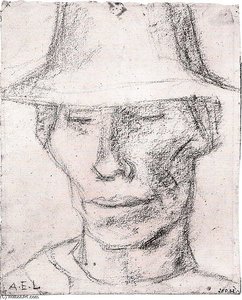 Study To The Resurrection
24
 The Artists Mother Maria Trojer
25
 Study To The War-women
26
 After the peace agreementSchloss Bruck
27
 The Nameless -
28
 Saint sebastian
29
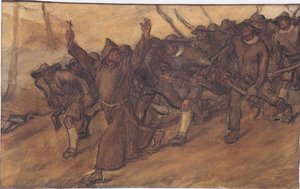 Haspinger 18091908
30
 The Farmer
31
 Early self-portrait
32
 Farm village in CountSchloss Bruck
33
 The venison dealerSchloss Bruck
34
 Field blessing
35
 The Sandpergerin Rottin and his wife
36
 The dead christSchloss Bruck
37
 Entry of King Etzel in Vienna
38
 Madonna -
39
 Christnacht
40
 German princes with dagger
41
 Ideal female head
42
 Man's headSchloss Bruck
43
 PietaLeopold Museum
44
 Aspinger Anno Nine
45
 Sower and the Devil
46
 The Artists Son Fred
47
 Christoph Rott, Ein Bauer1910
48
 Totentanz, Vierte Fassung1915
49
 Die Alten1914
50
 Vorfrühling1917
51
 At Calvary Hill in Bozen1922
52
 Dead Hares1925
53
 Sturm1925
54
 Sturm1925
55
 Sturm1925
56
 Sturm1925
57
 Ila, die jüngere Tochter des Künstlers1920 · Lentos Kunstmuseum Linz
58
 Holy-Night
59
 Study To The Men Without Names
60
 Lumberjack, Charcoal
61
 Head Of A Young Man
62
 Field Of Corpses IiHeeresgeschichtliches Museum
63
 The procession I
64
 Storm. the nameless
65
 The Nameless
66
 The ReaperLeopold Museum
67
 The risen lord
68
 Final
69
 The sea, KatwijkSchloss Bruck
70
 Sketch of a gun
71
 Toter Soldat Der Mass Bird EroicaHeeresgeschichtliches Museum
72
 Husband And Wife
73
 Oriental pathetic stretching out his arm
74
 Ruhende Hirten
75
 Three studies Eyes
76
 Head of a Woman
77
 The Sea
78
 Ornamentales übungsblatt
79
 Boy At The Spring
80
 The ancients
81
 Sketch of two feet
82
 On the stairs
83
 Mary the sister of the artist
84
 Baroque church interior
85
 The War
86
 The loggersSchloss Bruck
87
 Self potrait
88
 Of cruciferous man's head
89
 The Risen Christ
90
 Danse Macabre
91
 Entry of King Etzel in Vienna - maid of honor
92
 Studies of a putto
93
 Portrait of a woman in Tyrolean costume
94
 Father and son
95
 Christoph Rott, a farmer
96
 Purple mallows, holy island
97
 The Tyrolean waitressSchloss Bruck
98
 Portrait lorli
99
 Kaiserschutze
100
 Watch dolomites
The four subjects that come back most often in these originals, each with its finest example.
The 5 museums that hold the most of the paintings on this page.
| Museum | City | Works by Albin Egger-Lienz | Paintings from this list |
|---|---|---|---|
 Schloss Bruck |
Lienz | 20 | Saint Sebastian, On the Church Choir of the Lienzer Pfarrkirche St. Andrä, Hulda |
 Leopold Museum |
Vienna | 3 | Pieta, The Reaper |
 Heeresgeschichtliches Museum |
Vienna | 3 | Field Of Corpses Ii, Toter Soldat Der Mass Bird Eroica |
 Tiroler Landesmuseum Ferdinandeum |
Innsbruck | 1 | Mothers |
 Lentos Kunstmuseum Linz |
Linz | 1 | Ila, die jüngere Tochter des Künstlers |
Pick a decade to see the original that defines it.


Good Friday (1892). From Him (1887) and Saint Sebastian (1887) come next.
24 years old: Good Friday dates from 1892, and Albin Egger-Lienz was born in 1868.
Good Friday, From Him, Saint Sebastian, On the Church Choir of the Lienzer Pfarrkirche St. Andrä, Madonna, Hulda, The Man Behind the Crucifer (The Cross), Cesurrection Of Christ, The Sower - and Carpenters working in a mountain Village. The ranking above gives each one's year and museum.
Our catalog holds 185 works by Albin Egger-Lienz, dated from 1887 to 1925.
Mostly in Schloss Bruck (Lienz), Leopold Museum (Vienna) and Heeresgeschichtliches Museum (Vienna). The museum table above lists them all.
In 1920s: 7 of the 100 works on this page were made then, At Calvary Hill in Bozen among them.
On this page, the earliest is From Him (1887) and the latest Dead Hares (1925).
Austrian art (9), Women (5) and Melancholy (5), across the 100 works on this page.
Expressionism, judging by the originals on this page.
Saint Sebastian, On the Church Choir of the Lienzer Pfarrkirche St. Andrä and Hulda: the Schloss Bruck, Lienz holds 13 of the works on this page.
Yes, as a reproduction: the original stays in its museum, but any painting on this page can be painted by hand for you, made to order one at a time, from the painting's own page.