Portrait of Thomas Creswick

Thomas Creswick Paintings: The 70 Most Famous, Through a Gallery's Eye

Updated October 2026 · ranked by our popularity score (searches, visits and orders for each work) · 71 works by Thomas Creswick in our catalogue

In short

To the gallery's eye, Thomas Creswick's most famous painting is English Landscape (1829), whose original hangs in the Birmingham Museums And Art Gallery, Birmingham. View Of The Thames At Battersea (1834) and Figures on a Balcony, probably at Westpoint (1843) complete the trio every eye recognises. Of the 71 works by Thomas Creswick in our catalog, the gallery presents the 70 most famous below, each original with its year, its museum and what makes it unique.

1811 – 1869, Sheffield Romanticism Most works: Yale Center for British Art

The gallery's top 10 Thomas Creswick paintings

1
English Landscape (1829) by Thomas Creswick

English Landscape

1829 · Oil On Canvas · Birmingham Museums And Art Gallery, Birmingham

In English Landscape by Thomas Creswick, a serene rural scene unfolds through a quiet, pastoral lens. The work centers on a peaceful natural setting, anchored by a large, mature tree that dominates the central foreground. Beneath the heavy canopy of this tree, human figures sit in repose near the edge of a stream. The presence of these figures integrates a sense of human scale into the vastness of the countryside.

Thomas Creswick paintings, ranked 11 to 70

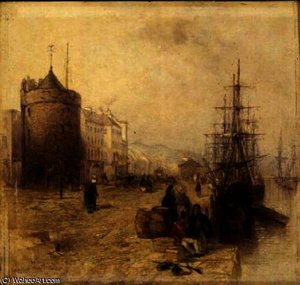
11A Distant View of Birmingham (1830) by Thomas CreswickA Distant View of Birmingham1830 · Birmingham Museums And Art Gallery 12A Landscape with Classical Ruins (1830) by Thomas CreswickA Landscape with Classical Ruins1830 13The Stile (1839) by Thomas CreswickThe Stile1839 14The Summer Bower, Derwent Water (1838) by Thomas CreswickThe Summer Bower, Derwent Water1838 · Yale Center for British Art 15The Well of St. Keyne (1838) by Thomas CreswickThe Well of St. Keyne1838 · Yale Center for British Art 16Waterloo (1838) by Thomas CreswickWaterloo1838 · Yale Center for British Art 17Dolwyddelan (1838) by Thomas CreswickDolwyddelan1838 · Yale Center for British Art 18St. Michael's Mount, Cornwall (1838) by Thomas CreswickSt. Michael's Mount, Cornwall1838 · Yale Center for British Art 19View from Mr. Southey's House, Keswick (1838) by Thomas CreswickView from Mr. Southey's House, Keswick1838 · Yale Center for British Art 20The Road through the Wood (1839) by Thomas CreswickThe Road through the Wood1839 21Kilkenny Castle (1836) by Thomas CreswickKilkenny Castle1836 22The Gap of Dunloe (1836) by Thomas CreswickThe Gap of Dunloe1836 23The Lower Lough Erne, from the Road near Ballyshannon (1836) by Thomas CreswickThe Lower Lough Erne, from the Road near Ballyshannon1836 24Glengarriff, County Cork, Ireland (1837) by Thomas CreswickGlengarriff, County Cork, Ireland1837 · Sheffield City Art Galleries 25England (1847) by Thomas CreswickEngland1847 · Auckland Art Gallery Toi o Tāmaki 26View on the Hudson River (1843) by Thomas CreswickView on the Hudson River1843 · Yale Center for British Art 27Moorland Scenery (1842) by Thomas CreswickMoorland Scenery1842 28Moorland Landscape (1840) by Thomas CreswickMoorland Landscape1840 · Amgueddfa Cymru 29High Tor, Matlock, Derbyshire (1841) by Thomas CreswickHigh Tor, Matlock, Derbyshire1841 · Sheffield City Art Galleries 30Street Scene, Llangollen, Wales (1849) by Thomas CreswickStreet Scene, Llangollen, Wales1849 31Crossing the stream (1849) (1849) by Thomas CreswickCrossing the stream (1849)1849 · Fitzwilliam Museum 32Genre scene with a flock of sheep (1850) by Thomas CreswickGenre scene with a flock of sheep1850 · National Museum in Warsaw 33The First Glimpse of the Sea (1850) by Thomas CreswickThe First Glimpse of the Sea1850 34Glendalough (1850) by Thomas CreswickGlendalough1850 35Evening, 'The west still glimmers with some streaks of day' (1850) by Thomas CreswickEvening, 'The west still glimmers with some streaks of day'1850 36The Mouth of a River (1855) by Thomas CreswickThe Mouth of a River1855 · Manchester Art Gallery 37The Valley Of Llangollen, North Wales (1856) by Thomas CreswickThe Valley Of Llangollen, North Wales1856 · Birmingham Museum and Art Gallery 38Landscape, Morning (also known as Crossing the Stream) (1860) by Thomas CreswickLandscape, Morning (also known as Crossing the Stream)1860 39Landscape, River Scene (1860) by Thomas CreswickLandscape, River Scene1860 · Sheffield City Art Galleries 40A Breezy Day on the English Coast, St Michael's Mount, Cornwall (1866) by Thomas CreswickA Breezy Day on the English Coast, St Michael's Mount, Cornwall1866 · Tyntesfield 41Dorothy Vernon's Doorway, Haddon Hall (1865) by Thomas CreswickDorothy Vernon's Doorway, Haddon Hall1865 42A drover and his herd crossing a ford by Thomas CreswickA drover and his herd crossing a ford 43Rest by the Way by Thomas CreswickRest by the WayDetroit Institute of Arts 44The Ford by Thomas CreswickThe Ford 45The Temple Of Jupiter Olympius, Athens by Thomas CreswickThe Temple Of Jupiter Olympius, Athens 46Land's End, Cornwall by Thomas CreswickLand's End, Cornwall 47Ballymahon by Thomas CreswickBallymahon 48Barnard castle on the tees by Thomas CreswickBarnard castle on the tees 49Carrickfergus by Thomas CreswickCarrickfergus 50The Ferry by Thomas CreswickThe FerrySheffield City Art Galleries 51Young Girl Bathing Her Feet by Thomas CreswickYoung Girl Bathing Her Feet 52Loch Eck by Thomas CreswickLoch EckWolverhampton Art Gallery 53Shallow streams by Thomas CreswickShallow streams 54A view of windsor castle by Thomas CreswickA view of windsor castle 55Over the Hills and Far Away by Thomas CreswickOver the Hills and Far Away 56Near Barmouth by Thomas CreswickNear BarmouthSheffield City Art Galleries 57The Millstream by Thomas CreswickThe MillstreamSheffield City Art Galleries 58Figures Resting Above a Cove, Cork by Thomas CreswickFigures Resting Above a Cove, Cork 59Landscape with Cattle by Thomas CreswickLandscape with CattleSheffield City Art Galleries 60The Ford by Thomas CreswickThe FordSheffield City Art Galleries 61Hillsborough, Sheffield by Thomas CreswickHillsborough, SheffieldSheffield City Art Galleries 62Figures on a Quay, Waterford by Thomas CreswickFigures on a Quay, Waterford 63The pedlars's visit by Thomas CreswickThe pedlars's visit 64Figures in an Italianate Landscape by Thomas CreswickFigures in an Italianate Landscape 65Landscape with Figures by Thomas CreswickLandscape with FiguresWolverhampton Art Gallery 66Landscape by Thomas CreswickLandscapeBolton Museum And Art Gallery 67Morecambe Bay by Thomas CreswickMorecambe BayBolton Museum And Art Gallery 68Haddon Hall Steps, Derbyshire by Thomas CreswickHaddon Hall Steps, Derbyshire 69Evening by Thomas CreswickEveningGuildhall Art Gallery 70The Nearest Way in Summer by Thomas CreswickThe Nearest Way in Summer

Thomas Creswick's famous paintings, period by period

The subjects that held Thomas Creswick's eye

The four subjects that come back most often in these originals, each with its finest example.

The museums that keep Thomas Creswick's originals

The 8 museums that hold the most of the paintings on this page.

Museum City Works by Thomas Creswick Paintings from this list
Yale Center for British Art, New HavenYale Center for British Art New Haven 9 Figures on a Balcony, probably at Westpoint, On the Terrace at Haddon Hall, Derbyshire, The Summer Bower, Derwent Water
Sheffield City Art Galleries, SheffieldSheffield City Art Galleries Sheffield 9 Glengarriff, County Cork, Ireland, High Tor, Matlock, Derbyshire, Landscape, River Scene
Birmingham Museums And Art Gallery, BirminghamBirmingham Museums And Art Gallery Birmingham 2 English Landscape, A Distant View of Birmingham
Birmingham Museum and Art Gallery, BirminghamBirmingham Museum and Art Gallery Birmingham 2 View Of The Thames At Battersea, The Valley Of Llangollen, North Wales
TyntesfieldTyntesfield 2 View of Putney Bridge, A Breezy Day on the English Coast, St Michael's Mount, Cornwall
Wolverhampton Art Gallery, WolverhamptonWolverhampton Art Gallery Wolverhampton 2 Loch Eck, Landscape with Figures
Bolton Museum And Art Gallery, BoltonBolton Museum And Art Gallery Bolton 2 Landscape, Morecambe Bay
Government Art Collection, LondonGovernment Art Collection London 1 Distant View of Dover Castle

Thomas Creswick, one signature painting per decade

Works per decade

Pick a decade to see the original that defines it.

Thomas Creswick's paintings: the gallery answers

Which Thomas Creswick painting is the most famous of all?Reveal the answer

English Landscape (1829), Birmingham Museums And Art Gallery, Birmingham. View Of The Thames At Battersea (1834) and Figures on a Balcony, probably at Westpoint (1843) come next.

How old was Thomas Creswick on completing English Landscape?Reveal the answer

18 years old: English Landscape dates from 1829, and Thomas Creswick was born in 1811.

Which are Thomas Creswick's top 10 paintings?Reveal the answer

English Landscape, View Of The Thames At Battersea, Figures on a Balcony, probably at Westpoint, Mount Tom, Massachusetts, USA, Distant View of Dover Castle, View of Belfast, The village smithy, Landscape with Harrow in the Distance, On the Terrace at Haddon Hall, Derbyshire and View of Putney Bridge. The ranking above gives each one's year and museum.

How many works did Thomas Creswick create?Reveal the answer

Our catalog holds 71 works by Thomas Creswick, dated from 1829 to 1866.

Where do Thomas Creswick's most famous originals hang?Reveal the answer

Mostly in Yale Center for British Art (New Haven), Sheffield City Art Galleries (Sheffield) and Birmingham Museums And Art Gallery (Birmingham). The museum table above lists them all.

When did Thomas Creswick create the most famous paintings?Reveal the answer

In 1830s: 16 of the 70 works on this page were made then, View Of The Thames At Battersea among them.

Which are Thomas Creswick's earliest and latest famous works?Reveal the answer

On this page, the earliest is English Landscape (1829) and the latest A Breezy Day on the English Coast, St Michael's Mount, Cornwall (1866).

Which subjects did Thomas Creswick return to most?Reveal the answer

British countryside (4), Landscape (3) and Rural scene (3), across the 70 works on this page.

Which movement is Thomas Creswick associated with?Reveal the answer

Romanticism and Birmingham school, judging by the originals on this page.

Which Thomas Creswick originals does the Yale Center for British Art hold?Reveal the answer

Figures on a Balcony, probably at Westpoint, On the Terrace at Haddon Hall, Derbyshire and The Summer Bower, Derwent Water: the Yale Center for British Art, New Haven holds 9 of the works on this page.

Thomas Creswick: the artist

The Quiet Master of British Landscape: The Life and Legacy of Thomas Creswick

In the annals of nineteenth-century British art, few names evoke the tranquil, mist-laden beauty of the English countryside as poignantly as Thomas Creswick Seddon. Born in 1811 amidst the rugged, industrial landscapes of Sheffield, Creswick emerged as a defining figure of the Birmingham School, an artistic movement that prioritized meticulous observation and a profound, tonal sensitivity. His journey from the heartland of Derbyshire to the prestigious halls of the Royal Academy is a testament to a life dedicated to the pursuit of atmospheric truth. Through his eyes, the rolling hills, ancient castles, and quiet waterways of Britain were transformed into poetic meditations on light and shadow.

Creswick’s artistic development was rooted in a deep, almost spiritual engagement with the natural world. Unlike many of his contemporaries who relied heavily on studio-bound imagination, Creswick embraced the Romantic ideal of direct communion with nature. He spent countless hours sketching outdoors, capturing the fleeting nuances of weather and light before ever touching a canvas in his studio. This practice allowed him to imbue his works with an unparalleled sense of authenticity. His early exhibitions at the Society of British Artists in 1827 signaled the arrival of a significant talent, but it was his 1836 presentation of ambitious works like “Llyn Gwynant, Morning” and “Carnarvon Castle” to the Royal Academy that truly cemented his reputation as a master of the landscape genre.

A Mastery of Tone and Atmosphere

What distinguishes a Creswick landscape from the broader sea of Victorian pastoral art is his extraordinary command over a muted, sophisticated palette. While the era often saw a trend toward vibrant, almost theatrical colors, Creswick found his greatest strength in the subtle interplay of greys, soft greens, and earthy ochres. He was a painter of atmosphere, specializing in the "quiet" moments of the day—the silver light of dawn, the heavy stillness of an overcast afternoon, or the melancholic twilight that softens the edges of the world. This restraint created a sense of profound tranquility, inviting the viewer into a state of contemplative repose.

His technical prowess was equally remarkable, characterized by a painstaking method of layering glazes to achieve a luminous depth. By building up thin, transparent layers of pigment, he could replicate the way light filters through mist or reflects off the surface of a still pond. This meticulous technique allowed him to capture the tactile qualities of the British landscape—the dampness of moss-covered stones, the weight of low-hanging clouds, and the delicate shimmer of water. His ability to manipulate light and shadow with such precision gave his paintings a three-dimensional presence that felt both incredibly real and dreamlike.

Historical Significance and Enduring Influence

The significance of Thomas Creswick extends far beyond his technical skill; he was a bridge between the traditional landscape traditions of the early nineteenth century and the more evocative, atmospheric approaches that would follow. His work resonates with the spirit of the Pre-Raphaelite movement in its devotion to detail, yet it maintains a distinctively British restraint that avoids the often jarring intensity of that group. His influence can be seen in the way subsequent generations of landscape painters approached the concept of "mood" through tonal control rather than mere color.

Throughout his prolific career, Creswick’s oeuvre remained vast and varied, ranging from:

  • Expansive Panoramas: Grand vistas that captured the sweeping majesty of Welsh mountains and English valleys.
  • Intimate Studies: Small-scale, detailed depictions of woodland clearings and quiet riverbanks that focused on the micro-details of nature.
  • Architectural Landscapes: The integration of historical ruins and castles into the natural environment, emphasizing the passage of time.
Today, the works of Thomas Creswick remain cherished by collectors and institutions alike, such as Tate Britain, serving as a window into a vanished era of pastoral serenity. He remains a cornerstone of British art history, remembered not for loud or dramatic gestures, but for his ability to find the extraordinary within the quietest corners of the natural world.