Taro Yamamoto: A Life in Abstract Expressionism
Early Life and Education
Taro Yamamoto (born October 29, 1919, in Hollywood, California – died 1994) was a significant figure within the New York School of Abstract Expressionist artists. His early life was marked by a unique cultural experience; he lived in Japan from the age of six to nineteen, an upbringing that would profoundly influence his artistic vision.
- Born in California but deeply connected to Japanese culture.
- Served in the U.S. Army during World War II (November 7, 1941 – February 23, 1946).
Artistic Development and Influences
Following his military service, Yamamoto dedicated himself to formal artistic training. He studied at several prestigious institutions:
- Santa Monica City College (1949).
- The Art Students League of New York (1950-1952), under the guidance of Yasuo Kuniyoshi, Morris Kantor, Byron Browne, and Vaclav Vytlacil.
- Hans Hofmann School of Fine Arts in New York City (1951-1953).
The teachings of Hans Hofmann were particularly influential, shaping Yamamoto’s understanding of color and form. His exposure to the vibrant art scene of post-war New York further solidified his commitment to abstract expressionism.
Key Achievements and Recognition
- Won the John Sloan Memorial Fellowship at The Art Students League of New York in 1952.
- Received the Edward G. McDowell Traveling Fellowship in 1953, allowing him to study art in Europe.
Yamamoto’s work gained recognition within the burgeoning Abstract Expressionist movement, exhibiting alongside prominent artists like Jackson Pollock and Willem de Kooning.
Artistic Style and Themes
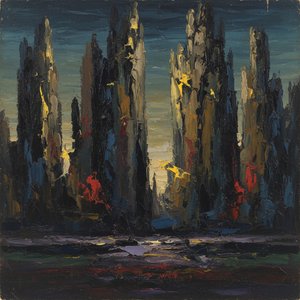
Yamamoto's paintings are characterized by a dynamic interplay of abstract forms, bold colors, and layered textures. While rooted in the principles of Abstract Expressionism, his work often reveals subtle references to Japanese aesthetics and cultural motifs.
His pieces frequently explore themes of memory, identity, and the intersection of Eastern and Western artistic traditions.Historical Significance
Taro Yamamoto played a vital role in bridging the gap between American Abstract Expressionism and Japanese artistic sensibilities. As part of the New York School, he contributed to the movement’s international acclaim during the post-World War II era. His work demonstrates the power of art to transcend cultural boundaries and express universal human experiences.
Though not as widely celebrated as some of his contemporaries, Yamamoto's contributions remain significant in understanding the diversity and complexity of Abstract Expressionism.
Questions & Answers
Where are Taro Yamamoto's artworks grouped by palette?
To find works by Taro Yamamoto in a specific palette, use the artist's By Palettes page.
What are the birth city and country of Taro Yamamoto?
Taro Yamamoto was born in Hollywood, in United States.
In which historical period did Taro Yamamoto work?
Taro Yamamoto worked in the Modern period. The period situates the artist's activity in history.