Portrait of Pietro Bernini

The 5 Most Famous Pietro Bernini Paintings, Each One of a Kind

Updated November 2026 · ranked by our popularity score (searches, visits and orders for each work) · 5 works by Pietro Bernini in our catalogue

In short

The Assumption (1607) is the Pietro Bernini painting that draws the most eyes; the original belongs to the Santa Maria Maggiore, Rome. After it, the eye goes to Bust of Antonio Coppola (1612) and The Charity of St Martin (1610). Among the 5 works of Pietro Bernini in our catalog, these 5 are the most famous, each a unique original presented with its year, its museum and the reason it endures.

1562 – 1629, Sesto Fiorentino Most works: Santa Maria Maggiore

Top 10 paintings by Pietro Bernini, through the gallery's eye

1
The Assumption (1607) by Pietro Bernini

The Assumption

1607 · Marble · Santa Maria Maggiore, Rome

In the heart of Rome, within the sacred walls of the Santa Maria Maggiore Basilica, a marble relief titled The Assumption unfolds. Created by the sculptor Pietro Bernini, this work captures a moment of celestial movement. The sculpture resides in the baptistery of the basilica, having been commissioned specifically for the sacristy of this historic site. It exists as a physical manifestation of devotion, carved into stone to occupy a…

3
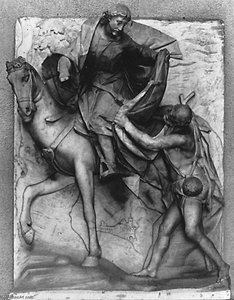
The Charity of St Martin (1610) by Pietro Bernini

The Charity of St Martin

1610 · Marble · Certosa di San Martino, Naples

The sculpture is titled The Charity of St Martin. It was created by the Italian sculptor Pietro Bernini, a figure whose work helped define the transition into the Baroque style. This particular piece is a significant example of that era's emphasis on movement and emotional expression. You can find it today within the Certosa di San Martino in Naples, Italy.

4
St John the Baptist (1612) by Pietro Bernini

St John the Baptist

1612 · Marble · Sant'Andrea della Valle, Rome

The marble figure of St John the Baptist emerges from the shadows, a silent presence carved by the hands of the Italian sculptor Pietro Bernini. Created about 1612, this work captures the saint in a moment of profound stillness. The sculpture carries the weight of a man who has lived a life of devotion, his form rendered with a precision that makes the stone feel alive under the gaze of…

5
Satyr with Panther (1615) by Pietro Bernini

Satyr with Panther

1615 · Marble

The sculpture titled Satyr with Panther is a work by the artist Pietro Bernini. It emerged from the stone about 1615. This figure captures a moment of primal hunger, a frozen gesture of desire caught in marble. The subject is a mythological creature, a satyr, defined by his pointed ears and short tail.

The subjects that held Pietro Bernini's eye

The four subjects that come back most often in these originals, each with its finest example.

The museums that keep Pietro Bernini's originals

The 4 museums that hold the most of the paintings on this page.

Museum City Works by Pietro Bernini Paintings from this list
Santa Maria Maggiore, RomeSanta Maria Maggiore Rome 1 The Assumption
San Giovannini dei Fiorentini, RomeSan Giovannini dei Fiorentini Rome 1 Bust of Antonio Coppola
Certosa di San Martino, NaplesCertosa di San Martino Naples 1 The Charity of St Martin
Sant'Andrea della Valle, RomeSant'Andrea della Valle Rome 1 St John the Baptist

Pietro Bernini across the years: the unique originals of each

Pietro Bernini's dated originals shown here fit into about ten years, 1607 to 1615: the eye follows them year by year.

Works per year

Pick a year to see its originals.

Pietro Bernini's paintings: questions for the gallery

What is the single most famous work of Pietro Bernini?Reveal the answer

The Assumption (1607), Santa Maria Maggiore, Rome. Bust of Antonio Coppola (1612) and The Charity of St Martin (1610) come next.

At what age did Pietro Bernini create The Assumption?Reveal the answer

45 years old: The Assumption dates from 1607, and Pietro Bernini was born in 1562.

How many works by Pietro Bernini are known?Reveal the answer

Our catalog holds 5 works by Pietro Bernini, dated from 1607 to 1615.

Where can the most famous Pietro Bernini originals be seen?Reveal the answer

Mostly in Santa Maria Maggiore (Rome), San Giovannini dei Fiorentini (Rome) and Certosa di San Martino (Naples). The museum table above lists them all.

During which period did Pietro Bernini create the best-known paintings?Reveal the answer

In 1612: 2 of the 5 works on this page were made then, Bust of Antonio Coppola among them.

Which famous Pietro Bernini painting is the earliest, and which the latest?Reveal the answer

On this page, the earliest is The Assumption (1607) and the latest Satyr with Panther (1615).

What subjects did Pietro Bernini favour?Reveal the answer

Man (4), Marble (4) and Sculpture (2), across the 5 works on this page.

What materials did Pietro Bernini paint with most?Reveal the answer

Marble, for 5 of the 5 works on this page.

Pietro Bernini: a portrait of the artist

Pietro Bernini: Life and Legacy

Early Life and Training

  • Born: Sesto Fiorentino, Tuscany, Italy in 1562.
  • Pietro Bernini emerged during the late Mannerist period, a time of stylistic transition in Italian art. His early training likely involved exposure to the prevailing artistic trends of Florence, characterized by elegance and refinement.
  • Details regarding his initial apprenticeship remain somewhat scarce, but it’s understood he developed foundational skills in sculpture before relocating to Naples.

Naples and Family Beginnings

  • Bernini moved to Naples to contribute to the artistic embellishment of the Certosa di San Martino, a significant religious complex.
  • Significant Event: It was in Naples that he met and married Domenica Pizzuti, and their son, the future Baroque master Gian Lorenzo Bernini, was born in 1598.
  • This period marked a crucial turning point, laying the groundwork for a family dynasty of artists.

Rome and Papal Patronage

  • Relocation: In 1605, the Bernini family relocated to Rome under the protection of Cardinal Scipione Borghese, a powerful figure in the Roman art world.
  • Pietro quickly secured commissions from Pope Paul V (also a Borghese), contributing to projects such as the Pauline Chapel within the Basilica of Santa Maria Maggiore. This marked his entry into the heart of Roman artistic activity.
  • Influence: The patronage of the Borghese family proved instrumental in establishing Pietro’s career and providing opportunities for both him and, eventually, his son.

Major Works and Artistic Style

  • Fontana della Barcaccia: Perhaps his most celebrated work, the Fontana della Barcaccia (Fountain of the Old Boat) at the foot of the Spanish Steps in Rome. Completed in 1627, it’s a striking example of Baroque ingenuity, resembling a beached ship.
  • Other Notable Works: Contributions to the Fountain of Neptune in Naples (completed between 1600-1601), and sculptural work within Santa Maria Maggiore.
  • Artistic Style: Pietro’s style blended Mannerist elegance with emerging Baroque dynamism. His sculptures often exhibit a sense of movement, emotional intensity, and dramatic flair.

Collaboration and Legacy

  • Early Collaboration with Gian Lorenzo: Pietro initially collaborated with his son on projects like the Boy with a Dragon (1617), showcasing early signs of Gian Lorenzo’s exceptional talent.
  • Shift in Roles: As Gian Lorenzo's abilities surpassed his own, Pietro willingly transitioned into a supportive role, often acting as an assistant to his son. This demonstrates a remarkable level of artistic maturity and familial dedication.
  • Historical Significance: While overshadowed by his son’s immense fame, Pietro Bernini played a vital role in shaping the Roman Baroque landscape. His work paved the way for Gian Lorenzo's groundbreaking achievements and contributed to the flourishing of art during this period.
  • Death: Pietro Bernini died in Rome in 1629 at the age of 67, leaving behind a legacy as both a skilled sculptor and the father of one of history’s greatest artists.