Portrait of Joseph Farquharson

The 53 Most Famous Joseph Farquharson Paintings, Each One of a Kind

Updated November 2026 · ranked by our popularity score (searches, visits and orders for each work) · 54 works by Joseph Farquharson in our catalogue

In short

Through the Calm and Frosty Air - Joseph Farquharson (2026) is the Joseph Farquharson painting that draws the most eyes. After it, the eye goes to George Paul Chalmers, 1836 - 1878. Artist (1875) and Self Portrait (1882). Among the 54 works of Joseph Farquharson in our catalog, these 53 are the most famous, each a unique original presented with its year, its museum and the reason it endures.

1846 – 1935, Edinburgh Romanticism Most works: Scottish National Portrait Gallery

Top 10 paintings by Joseph Farquharson, through the gallery's eye

1
Through the Calm and Frosty Air - Joseph Farquharson (2026) by Joseph Farquharson

Through the Calm and Frosty Air - Joseph Farquharson

2026 · Acrylic

“Through the Calm and Frosty Air”—0555” by Joseph Farquharson stands as a testament to the Romantic spirit, capturing a moment frozen in time amidst the majesty of Scotland’s winter forests. Painted with meticulous care using acrylic on canvas, this artwork embodies the movement's core belief: that art should stir the soul and transport viewers beyond the everyday.

2
George Paul Chalmers, 1836 - 1878. Artist (1875) by Joseph Farquharson

George Paul Chalmers, 1836 - 1878. Artist

1875 · Oil On Canvas · Scottish National Portrait Gallery, Edinburgh

In this vertical bust-length portrait, Joseph Farquharson captures George Paul Chalmers, 1836 - 1878. Artist, in a moment of quiet stillness. The subject sits slightly off-center, creating a sense of natural, unforced presence. While his body is turned toward the viewer's right, his gaze drifts back toward the front, meeting the eye-level perspective with a direct and intimate engagement. This close-up view pulls the observer into his immediate space, making…

3
Self Portrait (1882) by Joseph Farquharson

Self Portrait

1882 · Oil On Canvas

This oil-on-canvas self-portrait, executed in 1882, presents a bust-length view of a man within an oval format. The subject is positioned slightly off-center, directing a steady gaze toward the viewer. A heavy chiaroscuro effect defines the lighting, where a single light source illuminates the forehead, nose, and cheek, while the opposite side of the face and the background remain in deep shadow. The color palette relies on muted, earthy tones,…

4
The Joyless Winter Day (1883) by Joseph Farquharson

The Joyless Winter Day

1883 · Oil

A vast, snow-covered field dominates the composition, rendered in stark whites and muted grays. Through the swirling wind and heavy atmosphere, a lone shepherd guides a flock of sheep across the open terrain. The low perspective emphasizes the immense scale of the landscape, making the figures appear small and vulnerable against the elements. A dark, ominous sky hangs over the scene, casting a somber light across the frost-covered ground. The…

5
The Orange Seller (1893) by Joseph Farquharson

The Orange Seller

1893 · Oil

The Orange Seller by Joseph Farquharson captures a quiet, sun-drenched moment within a Middle Eastern or North African alleyway. Painted about 1893, this Orientalist oil painting finds its center in a man dressed in traditional attire. He rests his weight against a heavy stone pillar, seeking shade from the midday heat. Beside him, a basket of oranges provides a sharp, bright contrast to the surrounding masonry.

6
Market on the Nile (1893) by Joseph Farquharson

Market on the Nile

1893 · Oil On Canvas · Manchester Art Gallery, Manchester

The heat of the Egyptian sun filters through a hazy sky, casting a diffuse, soft light over a crowded marketplace. Along the banks of the Nile, the air feels thick with the movement of people and the low murmur of trade. Figures move through the scene in a rhythmic dance of daily survival, some resting in the shade while others engage in the spirited exchange of goods. The composition pulls…

Joseph Farquharson's famous paintings, numbers 11 to 53

Joseph Farquharson's famous paintings, period by period

The subjects that held Joseph Farquharson's eye

The four subjects that come back most often in these originals, each with its finest example.

The museums that keep Joseph Farquharson's originals

The 5 museums that hold the most of the paintings on this page.

Museum City Works by Joseph Farquharson Paintings from this list
Scottish National Portrait Gallery, EdinburghScottish National Portrait Gallery Edinburgh 1 George Paul Chalmers, 1836 - 1878. Artist
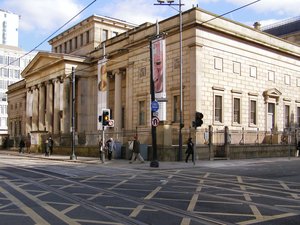
Manchester Art Gallery, ManchesterManchester Art Gallery Manchester 1 Market on the Nile
Williamson Art Gallery - Museum, BirkenheadWilliamson Art Gallery - Museum Birkenhead 1 In the Shade
Atkinson Art Gallery Collection, SouthportAtkinson Art Gallery Collection Southport 1 Guide Bridge
Wolverhampton Art Gallery, WolverhamptonWolverhampton Art Gallery Wolverhampton 1 Evening

Joseph Farquharson across the decades: one unique original for each

Works per decade

Pick a decade to see the original that defines it.

Joseph Farquharson's paintings: questions for the gallery

What is the single most famous work of Joseph Farquharson?Reveal the answer

Through the Calm and Frosty Air - Joseph Farquharson (2026). George Paul Chalmers, 1836 - 1878. Artist (1875) and Self Portrait (1882) come next.

Which ten paintings by Joseph Farquharson are the most famous?Reveal the answer

Through the Calm and Frosty Air - Joseph Farquharson, George Paul Chalmers, 1836 - 1878. Artist, Self Portrait, The Joyless Winter Day, The Orange Seller, Market on the Nile, On the Dee near Woodend, Mrs Farquharson of Finzean (also known as The artist's stepmother), The Hour of Prayer (also known as Interior of the Mosque of Sultan Beni Hassan, Cairo) and A Scottish Interior - The Box Bed. The ranking above gives each one's year and museum.

How many works by Joseph Farquharson are known?Reveal the answer

Our catalog holds 54 works by Joseph Farquharson, dated from 1867 to 1912.

Where can the most famous Joseph Farquharson originals be seen?Reveal the answer

Mostly in Scottish National Portrait Gallery (Edinburgh), Manchester Art Gallery (Manchester) and Williamson Art Gallery - Museum (Birkenhead). The museum table above lists them all.

During which period did Joseph Farquharson create the best-known paintings?Reveal the answer

In 1870s: 5 of the 53 works on this page were made then, George Paul Chalmers, 1836 - 1878. Artist among them.

Which famous Joseph Farquharson painting is the earliest, and which the latest?Reveal the answer

On this page, the earliest is On the Dee near Woodend (1867) and the latest Afterglow (1912).

What subjects did Joseph Farquharson favour?Reveal the answer

Winter (7), Scottish landscape (6) and Landscape (4), across the 53 works on this page.

What materials did Joseph Farquharson paint with most?Reveal the answer

Oil On Canvas, for 3 of the 53 works on this page.

Which movement does the work of Joseph Farquharson belong to?Reveal the answer

Romanticism, judging by the originals on this page.

Joseph Farquharson: a portrait of the artist

The Frozen Mutton: Unveiling the World of Joseph Farquharson

Joseph Farquharson (1846-1935) wasn’t a name that immediately resonates within the grand halls of art history, yet his canvases hold a profound and enduring appeal. Born in Edinburgh amidst the rugged beauty of Scotland, he possessed an innate ability to capture the essence of his homeland – its stark winters, its brooding moors, and the quiet dignity of its rural life. Farquharson’s legacy isn't one of flamboyant innovation or revolutionary technique; rather, it lies in a deeply felt connection to place, a masterful command of light and atmosphere, and an unwavering commitment to portraying the soul of Scotland through his art.

His early years were steeped in tradition. He was the laird of Finzean, a sprawling estate in Aberdeenshire, inheriting not just land but also a lineage deeply intertwined with Scottish history and culture. This connection profoundly shaped his artistic vision. His father, a respected physician, fostered an appreciation for observation and detail, while simultaneously encouraging young Joseph’s burgeoning talent. Formal training at the Trustees' Academy in Edinburgh provided a foundation, but it was the influence of Peter Graham, a fellow landscape painter known for his atmospheric depictions of the North Sea coast, that truly ignited Farquharson’s artistic spirit. Graham’s emphasis on capturing the raw power and beauty of nature – the relentless wind, the crashing waves, the shifting light – became a cornerstone of Farquharson's own approach.

The Parisian Influence: A Shift in Perspective

A pivotal moment in Farquharson’s artistic development arrived with his relocation to Paris in the late 1870s and early 1880s. Seeking a broader exposure to contemporary art movements, he studied under Carolus-Duran, a prominent French painter associated with the Impressionist movement. Duran's teachings emphasized direct observation, capturing fleeting moments of light and color, and utilizing loose, expressive brushstrokes. This shift marked a significant departure from the more academic traditions he’d encountered earlier. Farquharson absorbed these new techniques, incorporating them into his already established style – a subtle yet transformative change that allowed him to render the Scottish landscape with an increased sense of immediacy and vibrancy.

His time in Paris also exposed him to the work of Gustave Courbet, whose realist approach—a focus on depicting nature without idealization—resonated deeply. Farquharson’s paintings began to reflect this influence, showcasing a heightened awareness of texture, detail, and the subtle nuances of light and shadow. He continued to paint in his beloved Finzean, but now with a renewed sensitivity and a more modern sensibility.

A Master of Winter Landscapes

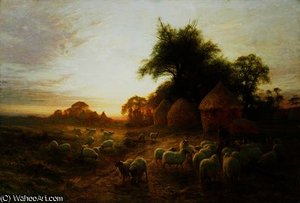
Farquharson’s fame rests primarily on his evocative depictions of winter landscapes. These aren't romanticized visions of snow-covered beauty; they are often stark, unforgiving scenes – vast expanses of white under a leaden sky, punctuated by the silhouettes of sheep huddled against the cold. He possessed an uncanny ability to convey the biting wind, the oppressive silence, and the profound isolation of these environments. The recurring motif of sheep—often depicted in small flocks struggling against the elements—became synonymous with his work, earning him the affectionate (and somewhat ironic) nickname “Frozen Mutton Farquharson.”

His technique was remarkably consistent: he would meticulously prepare a painting hut equipped with a stove and a large window, allowing him to observe the landscape directly. He employed a clever trick – using artificial sheep—to ensure accurate placement within his compositions, capturing the precise arrangement of animals against the dramatic backdrop. This dedication to realism, combined with his masterful use of color and light, created paintings that felt utterly immersive, transporting the viewer directly into the heart of the Scottish winter.

Legacy and Recognition

Farquharson’s work gained increasing recognition throughout his career, culminating in election as an Associate of the Royal Academy in 1900, followed by full membership in 1915. He exhibited extensively at prestigious institutions, including the Royal Society of Arts and the Tate Gallery. His paintings are now held in major collections across Scotland and beyond, testament to their enduring appeal. Beyond his artistic achievements, Farquharson’s story is one of a man deeply connected to his land, a keen observer of nature, and a dedicated artist who captured the spirit of Scotland with remarkable skill and sensitivity. His legacy continues to inspire artists and art lovers alike, reminding us of the profound beauty and power that can be found in the simplest of landscapes.