Portrait of John Crome

The 54 Most Famous John Crome Paintings, Each One of a Kind

Updated October 2026 · ranked by our popularity score (searches, visits and orders for each work) · 54 works by John Crome in our catalogue

In short

Boys Bathing on the River Wensum, Norwich (1817) is the John Crome painting that draws the most eyes; the original belongs to the Yale Center for British Art, New Haven. After it, the eye goes to Grove Scene (1820) and Slate Quarries (1803). Among the 54 works of John Crome in our catalog, these 54 are the most famous, each a unique original presented with its year, its museum and the reason it endures.

1768 – 1821, Norwich Romanticism Most works: Yale Center for British Art

Top 10 paintings by John Crome, through the gallery's eye

1
Boys Bathing on the River Wensum, Norwich (1817) by John Crome

Boys Bathing on the River Wensum, Norwich

1817 · Oil On Canvas · Yale Center for British Art, New Haven

Boys Bathing on the River Wensum, Norwich – A Reflection of Norfolk’s Soul John Crome's “Boys Bathing on the River Wensum, Norwich” isn’t merely a depiction of a picturesque riverside scene; it’s a distillation of the very spirit of Norfolk—a region steeped in tradition and celebrated for its understated beauty. Painted in 1817 during the height of the Romantic era, this landscape masterpiece encapsulates the fascination with nature that characterized…

2
Grove Scene (1820) by John Crome

Grove Scene

1820 · Oil On Canvas · Norwich Castle Museum And Art Gallery, Norwich

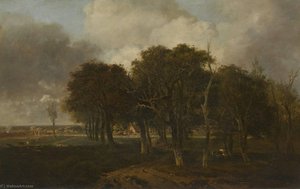
A small clearing within a Norfolk forest provides the setting for this 1820 oil on canvas. Two figures stand amidst the trees, appearing as quiet observers of the landscape. Nearby, a horse grazes in the grass, contributing to the pastoral stillness of the scene. The composition uses these figures to anchor the expansive vista, establishing a connection between the human presence and the natural environment.

6
A Mountain Scene (1806) by John Crome

A Mountain Scene

1806 · Oil · Scottish National Gallery, Edinburgh

In his 1806 masterpiece, A Mountain Scene, John Crome captures a panoramic vista of East Anglian hills, a scene that serves as a profound embodiment of Romantic ideals. The composition is dominated by a substantial rock outcrop in the foreground, its rugged presence acting as a symbol of resilience and permanence against the relentless forces of time and weather. Through a skillful application of perspective, Crome draws the viewer’s gaze…

John Crome's famous paintings, numbers 11 to 54

11The Beaters (1810) by John CromeThe Beaters1810 · Scottish National Gallery 12Yarmouth Jetty (1810) by John CromeYarmouth Jetty1810 · Yale Center for British Art 13Woodland Landscape near Norwich (1810) by John CromeWoodland Landscape near Norwich1810 · Yale Center for British Art 14View near Thorpe; Moonlight scene (1807) by John CromeView near Thorpe; Moonlight scene1807 · Vanderbilt Museum of Art 15Hautbois Common, Norfolk (1810) by John CromeHautbois Common, Norfolk1810 · Metropolitan Museum of Art 16High Tor, Matlock (1811) by John CromeHigh Tor, Matlock1811 · Fitzwilliam Museum 17Hautbois Common, Norfolk (1810) by John CromeHautbois Common, Norfolk1810 18Dock Leaves (1813) by John CromeDock Leaves1813 · Norwich Castle Museum And Art Gallery 19A Heath Scene: Sun after Storm (1818) by John CromeA Heath Scene: Sun after Storm1818 · National Gallery of Ireland 20A Windmill near Norwich (1816) by John CromeA Windmill near Norwich1816 21Yarmouth Harbour - Evening (1817) by John CromeYarmouth Harbour - Evening1817 22The Poringland Oak (1819) by John CromeThe Poringland Oak1819 23A Sandy Bank (1820) by John CromeA Sandy Bank1820 · Scottish National Gallery 24The Harling Gate (1817) by John CromeThe Harling Gate1817 · Vanderbilt Museum of Art 25The Edge of the Forest (1821) by John CromeThe Edge of the Forest1821 · Vanderbilt Museum of Art 26Landscape with Trees and Cattle (1820) by John CromeLandscape with Trees and Cattle1820 27Marlingford Grove (1815) by John CromeMarlingford Grove1815 28Mousehold Heath, Norwich (1820) by John CromeMousehold Heath, Norwich1820 29The Fish Market, Boulogne, France (1820) by John CromeThe Fish Market, Boulogne, France1820 · Norwich Castle Museum And Art Gallery 30Moonlight on the Yare (1817) by John CromeMoonlight on the Yare1817 · National Gallery of Art 31Moonrise on the Yare ( ) (1816) by John CromeMoonrise on the Yare ( )1816 32Ruined Buildings by John CromeRuined BuildingsNational Gallery of Canada 33Windmill near Norwich by John CromeWindmill near NorwichMuseum of Fine Arts 34Landscape Edge of a Wood (1820) by John CromeLandscape Edge of a Wood1820 · Courtauld Gallery 35The Lime Kiln (1806) by John CromeThe Lime Kiln1806 36An Egyptian Poppy and a Water Mole (1812) by John CromeAn Egyptian Poppy and a Water Mole1812 · Yale Center for British Art 37View near Weymouth by John CromeView near WeymouthDetroit Institute of Arts 38A sandy hollow by John CromeA sandy hollowFitzwilliam Museum 39Yarmouth Beach by John CromeYarmouth BeachYale University Art Gallery 40A Barge with a Wounded Soldier by John CromeA Barge with a Wounded SoldierYale Center for British Art 41Moonlight Norwich, Norfolk by John CromeMoonlight Norwich, NorfolkRussell 42The Edge of the Forest by John CromeThe Edge of the Forest 43Landscape with a Waterfall near Norwich, Norfolk, 1819 by John CromeLandscape with a Waterfall near Norwich, Norfolk, 1819The Wilson: Cheltenham Art Gallery And Museum 44Wooded Landscape with an Oak by John CromeWooded Landscape with an Oak 45The Mill by John CromeThe MillNorfolk Museums 46Moonlight by John CromeMoonlight 47Mousehold Heath by John CromeMousehold Heath 48The Mill (after Rembrandt van Rijn) by John CromeThe Mill (after Rembrandt van Rijn)Norfolk Museums 49Lane near Norwich by John CromeLane near NorwichWolverhampton Art Gallery 50Landscape with a Cottage and Trees by John CromeLandscape with a Cottage and TreesNorfolk Museums 51A Harvest by John CromeA HarvestSheffield City Art Galleries 52Landscape with a River by John CromeLandscape with a RiverSheffield City Art Galleries 53Mousehold Heath, Norwich (1819) by John CromeMousehold Heath, Norwich1819 54The River Wensum, Norwich (1814) by John CromeThe River Wensum, Norwich1814 · Yale Center for British Art

The subjects that held John Crome's eye

The four subjects that come back most often in these originals, each with its finest example.

The museums that keep John Crome's originals

The 8 museums that hold the most of the paintings on this page.

Museum City Works by John Crome Paintings from this list
Yale Center for British Art, New HavenYale Center for British Art New Haven 6 Boys Bathing on the River Wensum, Norwich, Yarmouth Jetty, Woodland Landscape near Norwich
Scottish National Gallery, EdinburghScottish National Gallery Edinburgh 4 A Mountain Scene, The Bell Inn, The Beaters
Norwich Castle Museum And Art Gallery, NorwichNorwich Castle Museum And Art Gallery Norwich 3 Grove Scene, Dock Leaves, The Fish Market, Boulogne, France
Vanderbilt Museum of Art Nashville 3 View near Thorpe; Moonlight scene, The Harling Gate, The Edge of the Forest
Norfolk Museums, NorwichNorfolk Museums Norwich 3 The Mill, The Mill (after Rembrandt van Rijn), Landscape with a Cottage and Trees
Birmingham Museum and Art Gallery, BirminghamBirmingham Museum and Art Gallery Birmingham 2 The Way Through the Wood, View At Blofield, Near Norwich
National Gallery of Canada, OttawaNational Gallery of Canada Ottawa 2 The Old Oak, Ruined Buildings
Fitzwilliam MuseumFitzwilliam Museum 2 High Tor, Matlock, A sandy hollow

John Crome across the decades: one unique original for each

Works per decade

Pick a decade to see the original that defines it.

John Crome's paintings: questions for the gallery

What is the single most famous work of John Crome?Reveal the answer

Boys Bathing on the River Wensum, Norwich (1817), Yale Center for British Art, New Haven. Grove Scene (1820) and Slate Quarries (1803) come next.

At what age did John Crome create Boys Bathing on the River Wensum, Norwich?Reveal the answer

49 years old: Boys Bathing on the River Wensum, Norwich dates from 1817, and John Crome was born in 1768.

Which ten paintings by John Crome are the most famous?Reveal the answer

Boys Bathing on the River Wensum, Norwich, Grove Scene, Slate Quarries, The Willow, Sheds and Old Houses on the Yare, A Mountain Scene, The Way Through the Wood, View At Blofield, Near Norwich, The Old Oak and The Bell Inn. The ranking above gives each one's year and museum.

How many works by John Crome are known?Reveal the answer

Our catalog holds 54 works by John Crome, dated from 1800 to 1821.

Where can the most famous John Crome originals be seen?Reveal the answer

Mostly in Yale Center for British Art (New Haven), Scottish National Gallery (Edinburgh) and Norwich Castle Museum And Art Gallery (Norwich). The museum table above lists them all.

During which period did John Crome create the best-known paintings?Reveal the answer

In 1810s: 22 of the 54 works on this page were made then, Boys Bathing on the River Wensum, Norwich among them.

Which famous John Crome painting is the earliest, and which the latest?Reveal the answer

On this page, the earliest is The Willow (1800) and the latest The Edge of the Forest (1821).

What subjects did John Crome favour?Reveal the answer

Landscape (11), Norfolk (6) and Rural scene (4), across the 54 works on this page.

What materials did John Crome paint with most?Reveal the answer

Oil On Canvas, for 5 of the 54 works on this page.

Which movement does the work of John Crome belong to?Reveal the answer

Romanticism, judging by the originals on this page.

What John Crome originals can I see at the Yale Center for British Art?Reveal the answer

Boys Bathing on the River Wensum, Norwich, Yarmouth Jetty and Woodland Landscape near Norwich: the Yale Center for British Art, New Haven holds 6 of the works on this page.

John Crome: a portrait of the artist

A Norfolk Son: The Life and Art of John Crome

John Crome, affectionately known as “Old Crome” to distinguish him from his artist son, stands as a pivotal figure in British art history—a founder and leading light of the celebrated Norwich School. Born in 1768 in the bustling market town of Norwich, Norfolk, Crome’s journey was one of remarkable self-education and dedication, rising from humble beginnings to become a respected landscape painter who captured the very essence of his beloved East Anglian countryside. His father, a weaver, instilled a strong work ethic, but it was an apprenticeship with house, coach, and sign painter Francis Whisler that first nurtured Crome’s artistic inclinations, providing him with foundational skills in design and color. This practical training proved invaluable as he began to explore his passion for depicting the natural world around him. A formative friendship with Robert Ladbrooke, a fellow aspiring artist, further fueled his development; together they sketched en plein air, honing their observational abilities and sharing a burgeoning enthusiasm for art.

Forging a Regional Identity: The Norwich School

Crome’s artistic trajectory was significantly shaped by the generosity of Thomas Harvey of Old Catton, who granted him access to his impressive art collection. This exposure to masterpieces by artists like Gainsborough and Hobbema proved transformative, providing Crome with crucial models for composition, light, and atmosphere. Further guidance came from established figures such as Sir William Beechey and John Opie, cementing his connection to the wider artistic community. However, it was in 1803 that Crome truly left his mark on the art world, co-founding the Norwich Society of Artists with Robert Ladbrooke. This bold initiative marked the formal beginning of the Norwich School—a groundbreaking movement that championed direct observation of nature and sought to capture the unique character of the Norfolk landscape, distinct from the prevailing artistic trends emanating from London. As a frequent president of the society, Crome became its driving force, fostering a community of like-minded painters dedicated to celebrating their regional identity.

Romantic Sensibility and Artistic Influences

Crome’s style is characterized by a distinctly Romantic sensibility—an expressive brushwork, atmospheric depictions, and an emotional connection to the land. He was deeply rooted in Norfolk scenery, finding inspiration in its broad skies, winding rivers, ancient trees, and humble rural life. While he drew heavily from Dutch 17th-century masters like Hobbema – a lifelong admiration culminating in his famous last words, “Oh Hobbema, my dear Hobbema, how I have loved you!” – he also acknowledged the influence of Richard Wilson’s lyrical landscapes. Crome distinguished himself by being among the first English artists to accurately represent identifiable tree species, moving beyond generalized forms and demonstrating a keen botanical eye. Proficient in both watercolor and oil, he produced over 300 paintings throughout his career, each imbued with a sense of intimacy and authenticity. His works weren’t merely representations of places; they were evocations of mood and feeling, capturing the spirit of Norfolk with remarkable sensitivity.

Legacy and Lasting Impact

John Crome's contribution extended far beyond his artistic output. The Norwich School he helped establish fostered a distinct regional artistic identity, nurturing generations of painters who followed in his footsteps. Though initially facing some resistance from the London art establishment, Crome gained national recognition through thirteen exhibits at the Royal Academy between 1806 and 1818. His etchings, though unpublished during his lifetime, revealed another facet of his talent. A posthumous exhibition showcasing over 100 of his works underscored the esteem in which he was held by his peers. Even today, Crome’s legacy endures—not only through his paintings but also in the geographical landmarks that bear his name: Crome’s Broad and Crome ward stand as enduring testaments to his lasting impact on Norwich and Norfolk. His life serves as an inspiring example of how artistic vision, combined with a deep connection to one's surroundings, can create a body of work that resonates across generations.

Final Years and Reflections

In 1814, Crome embarked on a brief but significant journey to Paris following Napoleon’s defeat, incorporating views of the city into his repertoire. He continued to share his knowledge and passion as a drawing master at Norwich School for many years, mentoring promising artists like James Stark and Edward Thomas Daniell. His dedication to education ensured that the spirit of the Norwich School would continue to flourish. John Crome passed away on April 22, 1821, in his beloved Norwich, leaving behind a legacy as one of England’s most important landscape painters. He wasn't merely an artist; he was a chronicler of place, a champion of regional identity, and a testament to the power of artistic vision born from humble beginnings. His work continues to captivate viewers with its quiet beauty, evocative atmosphere, and enduring connection to the heart of Norfolk.