John Baptist de Medina: Life and Legacy
Early Life and Training
- Birth and Origins: Sir John Baptist de Medina was born in 1659 in Brussels, to a Spanish army captain. His early life was shaped by his family’s military background and the vibrant artistic environment of Brussels.
- Artistic Education: He received his initial artistic training under François Duchatel, a respected painter of the time. This foundational education instilled in him the principles of Baroque art and portraiture.
Move to England and Scotland
- London Years (1686): In 1686, de Medina moved to London, establishing his studio in Drury Lane. He quickly gained recognition for his portraiture skills.
- Scottish Patronage: De Medina specialized in painting Scottish sitters even while in London. Later, around 1688-89 or 1694, he relocated to Edinburgh, where he remained for the rest of his life. He was greatly encouraged and sponsored by the Earl of Melville.
- Political Connections: The Earl of Melville’s influence was crucial; as Secretary of State for Scotland, he provided de Medina with access to prominent figures and commissions.
Artistic Style and Influences
- Baroque Portraiture: De Medina’s style is firmly rooted in the Baroque tradition. His portraits are characterized by a sense of realism, dramatic lighting, and rich colors.
- Influences: He was significantly influenced by Sir Godfrey Kneller, whose portrait style he emulated, but often with a more relaxed and informal approach.
- Distinctive Features: De Medina favored bright blues and rose-reds in clothing and dark backgrounds. The quality of his work varied, likely due to the assistance of studio assistants.
Major Achievements and Works
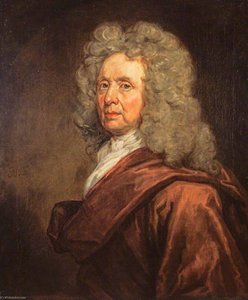
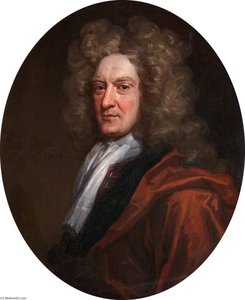
- Portrait Series at Surgeons’ Hall: His most celebrated works are a collection of approximately 30 oval bust-length portraits housed in Surgeons' Hall, Edinburgh. These are often compared to Kneller’s Kit Cat Club series.
- *Paradise Lost* Illustrations (1688): De Medina was the first artist to illustrate John Milton’s epic poem *Paradise Lost*. His twelve engraved plates for the 1688 edition are notable for their careful adherence to the text and imaginative use of biblical iconography.
- Portraits of Scottish Nobility: He created numerous portraits of prominent Scottish figures, solidifying his position as the leading portraitist in Scotland during his lifetime.
Historical Significance and Legacy
- Dominant Portraitist: De Medina held a near-monopoly on portraiture in Scotland for much of his career, charging standard fees of £5 for a head and £10 for a half-length portrait.
- Knighthood (1706): He was knighted in 1706, one of the last Scottish knights created before the Acts of Union in 1707.
- Mentorship: De Medina trained both his son and William Aikman, who became a leading Scottish portrait painter of the next generation.
- Lasting Impact: While not as widely recognized internationally as some of his contemporaries, de Medina’s work provides valuable insight into 17th-century Scottish society and artistic practice.
Death and Burial
- Final Years: John Baptist de Medina died in Edinburgh on October 5, 1710.
- Burial Site: He was buried in Greyfriars Kirkyard, Edinburgh, in a solid enclosed vault near the steps leading to the northern section.
Questions & Answers
Can I browse John Baptist Medina's works by color palette?
To find works by John Baptist Medina in a specific palette, use the artist's By Palettes page.
Where can I see John Baptist Medina's artworks in a 3D gallery?
A virtual visit is possible: the 3D Museum page of John Baptist Medina presents the artist's works in a three-dimensional gallery.
Where are John Baptist Medina's artworks mapped by subject?
The Subject Atlas of John Baptist Medina is a page that maps the artist's artworks by their subjects.