Jean-Baptiste Oudry: A Life in Art
Early Life and Training
- Born: March 17, 1686, in Paris, France.
- Oudry came from an artistic family; his father, Jacques Oudry, was a painter and art dealer. His mother, Nicole Papillon, was related to the engraver Jean-Baptiste-Michel Papillon.
- He began his training at the Académie de Saint-Luc, studying under Nicolas de Largillière from 1707 to 1712. This foundational period shaped his early skills in portraiture and observation.
- He quickly progressed, becoming an assistant professor at the Académie de Saint-Luc in 1714 and a full professor by 1717.
Artistic Development and Style
- Initially focused on portraiture, Oudry gradually expanded his repertoire to include still lifes, particularly of fruits and animals, as well as religious subjects.
- His style evolved towards the Rococo, characterized by elegance, naturalism, and a playful depiction of aristocratic life and leisure.
- Oudry’s meticulous attention to detail and his ability to capture the textures and characteristics of animals became hallmarks of his work.
- He demonstrated mastery in both painting and design, seamlessly transitioning between canvas and tapestry creation.
Major Achievements and Notable Works
- The Pastoral Amusements (Les Amusements Champêtres): A series of tapestries designed for the Royal Beauvais Tapestry Manufactory, showcasing idyllic scenes of rural life and hunting.
- Louis XV Hunting a Deer in the Forest of Saint-Germain (1730): This painting solidified Oudry’s reputation as the official painter of the royal hunt. It exemplifies his skill in depicting both the grandeur of the hunt and the natural environment.
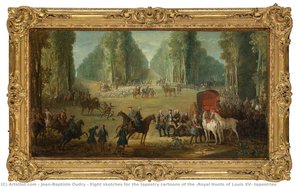
- Royal Hunts of Louis XV (Chasses Royales Gobelins): A series of tapestry designs for the Gobelins Manufactory, further establishing Oudry’s prominence as a tapestry designer.
- Numerous portraits of dead game commissioned by King Louis XV, demonstrating his expertise in animal anatomy and still life composition.
Influences and Legacy
- Influenced By: Nicolas de Largillière played a crucial role in Oudry’s early artistic development, providing foundational training in portraiture and technique.
- Oudry's work influenced subsequent generations of animal painters and tapestry designers. His naturalistic style and attention to detail set a new standard for depicting wildlife.
- He contributed significantly to the decorative arts of the French court, creating luxurious tapestries that adorned royal residences.
Historical Significance
- Oudry’s work provides valuable insights into 18th-century aristocratic life and the importance of hunting as a pastime for the French nobility.
- His tapestries are considered masterpieces of French decorative art, showcasing the technical skill and artistic creativity of the period.
- He was appointed to prestigious positions within the Académie Royale de Peinture et de Sculpture, demonstrating his recognition as a leading artist of his time.
- Died: April 30, 1755, leaving behind a legacy of exquisite paintings and tapestries that continue to be admired today.