Jan Josephszoon van Goyen: A Life in Landscape
Early Life and Training
- Born on January 13, 1596, in Leiden, Netherlands, Jan Josephszoon van Goyen emerged as a pivotal figure in Dutch Golden Age painting.
- He initially apprenticed in Leiden before furthering his studies under Esaias van de Velde in Haarlem. This foundational training proved crucial to his artistic development.
Artistic Style and Development
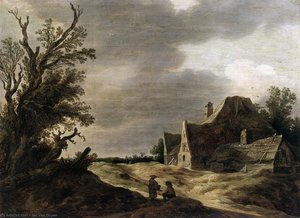
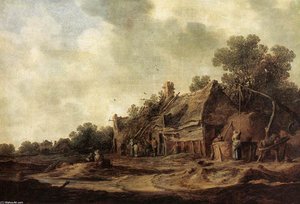
- Van Goyen’s style is immediately recognizable for its simplicity, subtle tonal variations, and use of a limited palette – primarily grays, browns, and greens.
- He moved away from the more colorful and detailed landscapes popular at the time, pioneering a more realistic and atmospheric approach.
- His early works show influence from Van de Velde, but he quickly developed his own distinctive style focusing on capturing the essence of Dutch landscapes.
Prolific Output and Notable Works
- Van Goyen was an incredibly prolific artist, producing an estimated 1,200 paintings and over 1,000 drawings throughout his career.
- Notable works include: River Landscape with Windmill, a quintessential example of his tonal landscapes; and Fishermen by the Lakeshore, showcasing his ability to depict serene waterscapes.
- He frequently painted scenes of rivers, lakes, dunes, and expansive skies, capturing the unique character of the Dutch countryside.
Influences and Legacy
- While influenced by Van de Velde, Van Goyen’s work itself became highly influential.
- He directly impacted artists such as Jan Steen, who was one of his pupils.
- His emphasis on realism and atmospheric effects paved the way for later landscape painters.
Financial Struggles and Later Life
- Despite his artistic success, Van Goyen faced significant financial difficulties throughout his life.
- He engaged in various business ventures, including tulip speculation (during “Tulip Mania”) and real estate investments, but often found himself deeply in debt.
- At the time of his death on April 27, 1656, in The Hague, he was reportedly 18,000 guilders in debt.
Historical Significance
- Van Goyen’s work is considered a cornerstone of Dutch Golden Age painting and a significant contribution to the development of landscape art.
- He captured the spirit of 17th-century Holland, reflecting its growing prosperity and connection to the land.
- His innovative techniques and realistic depictions continue to inspire artists and captivate audiences today.
Questions & Answers
What other names is Jan Josephszoon Van Goyen known by?
Jan Josephszoon Van Goyen is also known as Goyen, Jan Van, Jan van Goyen.
How is Jan Josephszoon Van Goyen's career divided into periods?
A chronological account of Jan Josephszoon Van Goyen's work is available on the artist's Chronicle page, where the artworks pass in order of creation, chapter by chapter.
How can I follow Jan Josephszoon Van Goyen's work year by year?
Jan Josephszoon Van Goyen's artworks can be seen in chronological order on the artist's Artwork Timeline page.