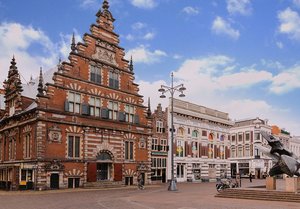
Portrait of Jan De Bray

The 63 Most Famous Jan De Bray Paintings, a Gallery Selection

Updated November 2026 · ranked by our popularity score (searches, visits and orders for each work) · 65 works by Jan De Bray in our catalogue

In short

Of all the originals Jan De Bray left, the most famous is The Regents of the Children's Orphanage in Haarlem (1663), in the collection of the Frans Halsmuseum, Haren. Close behind it come The Adoration of the Shepherds (1665) and Venus and Cupid in Vulcan's smithy (1683). Our catalog holds 65 works by Jan De Bray; the gallery has kept the 63 the world admires most, each shown with its date, its museum and its story.

1627 – 1697, Haarlem Baroque Most works: Frans Hals Museum

Jan De Bray's top 10 paintings: the gallery's choice

1
The Regents of the Children's Orphanage in Haarlem (1663) by Jan De Bray

The Regents of the Children's Orphanage in Haarlem

1663 · Oil On Canvas · Frans Halsmuseum, Haren

Jan de Bray’s “The Regents of the Children’s Orphanage in Haarlem,” painted in 1663, is more than a simple portrait; it’s a meticulously crafted tableau that speaks volumes about the social and moral landscape of the Dutch Golden Age. Measuring an imposing 188 x 249 cm, this oil on canvas work immediately commands attention with its dramatic lighting and tightly composed figures – six men seated around a table, radiating…

2
The Adoration of the Shepherds (1665) by Jan De Bray

The Adoration of the Shepherds

1665 · Oil · Mauritshuis, The Hague

In this 1665 work, Jan De Bray brings us into the quiet darkness of a stable in Bethlehem. The air feels heavy with the weight of a miraculous arrival. At the center of this holy encounter lies the newborn baby Jesus, resting within his manger. The scene captures a moment of profound stillness where the earthly and the divine meet in the shadows of the hay and wood.

3
Venus and Cupid in Vulcan's smithy (1683) by Jan De Bray

Venus and Cupid in Vulcan's smithy

1683 · Oil On Canvas · Frans Hals Museum, Haren

Jan De Bray executed Venus and Cupid in Vulcan's smithy in 1683. Also known as Venus and Cupid in the forge of Vulcan, the work belongs to the Dutch Golden Age. The composition centers on the mythological intersection of divine figures and the physical labor of the forge.

4
Head of a Young Boy (1650) by Jan De Bray

Head of a Young Boy

1650 · Oil On Canvas · National Gallery of Art, Washington

A single youth occupies the center of this oval-shaped bust-length portrait. He gazes outward with a serious, contemplative expression that pulls the viewer into his quiet space. The light enters from the upper left, washing over his skin to create a luminous, soft texture. This directional glow casts gentle shadows across the right side of his face, carving depth into his features. He wears a dark doublet and a crisp…

5
Family Portrait of Braems-Van der Laen with Christ Blessing the Children (1663) by Jan De Bray

Family Portrait of Braems-Van der Laen with Christ Blessing the Children

1663 · Oil On Canvas · Frans Hals Museum, Haren

In 1663, Jan De Bray painted the Family Portrait of Braems-Van der Laen with Christ Blessing the Children. This work is a historiated portrait, a genre where the likenesses of living people are woven into a sacred or historical scene. Here, the domestic reality of a family meets the divine presence of a biblical event. The figures are not merely models for a scene; they are the subjects of the…

7
The Haarlem City Maiden greets Frederik Hendrik (1681) by Jan De Bray

The Haarlem City Maiden greets Frederik Hendrik

1681 · Oil · Frans Hals Museum, Haren

The scene unfolds within the grand tradition of history painting, where The Haarlem City Maiden greets Frederik Hendrik captures a moment of profound symbolic significance. Painted by Jan De Bray in 1681, the work presents a carefully constructed allegory of Frederik Hendrik acting as a bringer of peace. Every figure and gesture within the composition works to communicate this specific political and social ideal through the language of allegory.

8
Portrait of a Woman with a Black Cap (1657) by Jan De Bray

Portrait of a Woman with a Black Cap

1657 · Oil On Canvas · National Gallery, London

A bust-length portrait presents a woman positioned slightly off-center, her body turned toward the left while her gaze meets the viewer directly. She wears a black cap that covers her hair, framing a face rendered with naturalistic flesh tones. A large white collar rests against her chest, its folds appearing smooth and matte in texture. The subject's clothing consists of a dark, heavy bodice that absorbs much of the light.…

9
Portrait of a Six-year-old Boy (1654) by Jan De Bray

Portrait of a Six-year-old Boy

1654 · Oil On Canvas · Mauritshuis, The Hague

In this intimate encounter, we meet the subject of Portrait of a Six-year-old Boy, a work that captures a fleeting moment of childhood stillness. Painted by Jan De Bray in 1654, the portrait presents a young boy who gazes out with a solemn and contemplative expression. His large blue eyes hold a weight of seriousness that seems to defy his tender age. He stands poised, a small figure caught in…

The Jan De Bray selection continues, 11 to 63

11Portrait of a Boy (1662) by Jan De BrayPortrait of a Boy1662 · Scottish National Gallery 12Portrait of a Man (1658) by Jan De BrayPortrait of a Man1658 13Meleager and Atalanta (1660) by Jan De BrayMeleager and Atalanta1660 · Gemäldegalerie 14A Group of two Boys (1651) by Jan De BrayA Group of two Boys1651 · National Gallery of Ireland 15Portrait of Dammas Guldewagen (1657) by Jan De BrayPortrait of Dammas Guldewagen1657 · Dayton Art Institute 16Portrait of a woman (1660) by Jan De BrayPortrait of a woman1660 · Fitzwilliam Museum 17The Banquet of Cleopatra (1652) by Jan De BrayThe Banquet of Cleopatra1652 · Royal Collection 18Portrait of a Young Woman (1650) by Jan De BrayPortrait of a Young Woman1650 · Museum of Fine Arts Ghent (MSK) 19Portrait of a Boy holding a Basket of Fruit (1658) by Jan De BrayPortrait of a Boy holding a Basket of Fruit1658 · Museum of Fine Arts 20Yael and Sisera (1659) by Jan De BrayYael and Sisera1659 · Йоркський художній музей 21Joseph Receiving His Father and Brothers in Egypt (1655) by Jan De BrayJoseph Receiving His Father and Brothers in Egypt1655 22King David and the Shew Bread (1662) by Jan De BrayKing David and the Shew Bread1662 · Calke Abbey 23Portrait of a man (1665) by Jan De BrayPortrait of a man1665 · Rijksmuseum Twenthe 24Portrait of Agatha van der Horn (1603-1680) (1663) by Jan De BrayPortrait of Agatha van der Horn (1603-1680)1663 · Villa Vauban 25David, dressed in a linen shirt, brings the ark into Jerusalem, dancing before the ark and making music, while the people rejoice  (2 Samuel 6:11-14) (1674) by Jan De BrayDavid, dressed in a linen shirt, brings the ark into Jerusalem, dancing before the ark and making music, while the people rejoice (2 Samuel 6:11-14)1674 · Herzog Anton Ulrich Museum 26Portrait of Andries van der Horn (1600-1677) (1662) by Jan De BrayPortrait of Andries van der Horn (1600-1677)1662 · Kunsthandel P. de Boer 27Portrait of a woman with a red bow in her hair (1667) by Jan De BrayPortrait of a woman with a red bow in her hair1667 · Fondation Custodia 28The Orphanage (1663) by Jan De BrayThe Orphanage1663 · Graphische Sammlung Albertina 29The Discovery of Achilles (1664) by Jan De BrayThe Discovery of Achilles1664 30The de Bray Family (The Banquet of Antony and Cleopatra) (1669) by Jan De BrayThe de Bray Family (The Banquet of Antony and Cleopatra)1669 · Currier Gallery of Art 31Family Portrait of De Lange (1685) by Jan De BrayFamily Portrait of De Lange1685 · Zaans Museum 32Penitent Magdalene (1678) by Jan De BrayPenitent Magdalene1678 33Portrait of Joannes de Groot (1640-1692) (1692) by Jan De BrayPortrait of Joannes de Groot (1640-1692)1692 · Museum Catharijneconvent 34Regentesses of the Leproos-, Pest, and Dolhuis in Haarlem (1667) by Jan De BrayRegentesses of the Leproos-, Pest, and Dolhuis in Haarlem1667 · Frans Hals Museum 35Portrait of a Man (1662) by Jan De BrayPortrait of a Man1662 · Scottish National Gallery 36Portrait of a Priest (1660) by Jan De BrayPortrait of a Priest1660 · Museum Boijmans Van Beuningen 37Haarlem Printer Abraham Casteleyn and His Wife Margarieta van Bancken (detail) (1663) by Jan De BrayHaarlem Printer Abraham Casteleyn and His Wife Margarieta van Bancken (detail)1663 · Rijksmuseum 38Pharaoh's Daughter with Her Attendants and Moses in the Reed Basket (1661) by Jan De BrayPharaoh's Daughter with Her Attendants and Moses in the Reed Basket1661 · Museum Boijmans Van Beuningen 39Portrait of a Boy (1663) by Jan De BrayPortrait of a Boy1663 · Scottish National Gallery 40Portrait of a Woman (1663) by Jan De BrayPortrait of a Woman1663 · Scottish National Gallery 41The Regents of the Children's Orphanage in Haarlem (1663) by Jan De BrayThe Regents of the Children's Orphanage in Haarlem1663 · British Museum 42The Discovery of Achilles (1663) by Jan De BrayThe Discovery of Achilles1663 · The Morgan Library & Museum 43Portrait of the Artist's Parents, Salomon de Bray and Anna Westerbaen (1664) by Jan De BrayPortrait of the Artist's Parents, Salomon de Bray and Anna Westerbaen1664 · National Gallery of Art 44Governors of the Leper Hospital at Haarlem (1667) by Jan De BrayGovernors of the Leper Hospital at Haarlem1667 · Frans Hals Museum 45Adoration of the Magi (1658) by Jan De BrayAdoration of the Magi1658 46Portrait of the Artist's Parents (1660) by Jan De BrayPortrait of the Artist's Parents1660 47Josephus de Kies of Wissen (1629-1677) (1672) by Jan De BrayJosephus de Kies of Wissen (1629-1677)1672 · Gemäldegalerie 48Portrait of Jan Adriaan de Kies van Wissen (1642-1682) (1671) by Jan De BrayPortrait of Jan Adriaan de Kies van Wissen (1642-1682)1671 · Royal Museums of Fine Arts of Belgium 49David Playing the Harp (detail) (1670) by Jan De BrayDavid Playing the Harp (detail)1670 50Tending Children in the Orphanage in Haarlem (1663) by Jan De BrayTending Children in the Orphanage in Haarlem1663 · Fondation Custodia 51David Playing the Harp (1670) by Jan De BrayDavid Playing the Harp1670 · Staatliche Kunsthalle Karlsruhe 52The Adoration of the Magi (1674) by Jan De BrayThe Adoration of the Magi1674 · Historisches Museum 53The Governors of the Guild of St Luke, Haarlem (detail) (1675) by Jan De BrayThe Governors of the Guild of St Luke, Haarlem (detail)1675 · Frans Halsmuseum 54Tending Children at the Orphanage in Haarlem (1663) by Jan De BrayTending Children at the Orphanage in Haarlem1663 · Frans Halsmuseum 55Allegorical Family Portrait (1670) by Jan De BrayAllegorical Family Portrait1670 · Hermitage Museum 56Bacchus by Jan De BrayBacchus 57Haarlem Printer Abraham Casteleyn and His Wife Margarieta van Bancken by Jan De BrayHaarlem Printer Abraham Casteleyn and His Wife Margarieta van Bancken 58Haarlem Printer Abraham Casteleyn and His Wife Margarieta van Bancken by Jan De BrayHaarlem Printer Abraham Casteleyn and His Wife Margarieta van BanckenFondation Custodia 59The Holy Family by Jan De BrayThe Holy Family 60Portrait of a Young Woman by Jan De BrayPortrait of a Young WomanMuseum voor Schone Kunsten 61Haarlem Printer Abraham Casteleyn and His Wife Margarieta van Bancken (1663) by Jan De BrayHaarlem Printer Abraham Casteleyn and His Wife Margarieta van Bancken1663 · Rijksmuseum 62Judith and Holofernes, Jan de Bray, 1659 (1659) by Jan De BrayJudith and Holofernes, Jan de Bray, 16591659 · Rijksmuseum 63The Governors of the Guild of St Luke, Haarlem (1675) by Jan De BrayThe Governors of the Guild of St Luke, Haarlem1675 · Frans Halsmuseum

The subjects that held Jan De Bray's eye

The four subjects that come back most often in these originals, each with its finest example.

The museums that keep Jan De Bray's originals

The 8 museums that hold the most of the paintings on this page.

Museum City Works by Jan De Bray Paintings from this list
Frans Hals Museum, HarenFrans Hals Museum Haren 5 Venus and Cupid in Vulcan's smithy, Family Portrait of Braems-Van der Laen with Christ Blessing the Children, The Haarlem City Maiden greets Frederik Hendrik
Frans Halsmuseum, HarenFrans Halsmuseum Haren 4 The Regents of the Children's Orphanage in Haarlem, The Governors of the Guild of St Luke, Haarlem (detail), Tending Children at the Orphanage in Haarlem
Scottish National Gallery, EdinburghScottish National Gallery Edinburgh 4 Portrait of a Boy, Portrait of a Man, Portrait of a Boy
Fondation Custodia, ParisFondation Custodia Paris 3 Portrait of a woman with a red bow in her hair, Tending Children in the Orphanage in Haarlem, Haarlem Printer Abraham Casteleyn and His Wife Margarieta van Bancken
Rijksmuseum, AmsterdamRijksmuseum Amsterdam 3 Haarlem Printer Abraham Casteleyn and His Wife Margarieta van Bancken (detail), Haarlem Printer Abraham Casteleyn and His Wife Margarieta van Bancken, Judith and Holofernes, Jan de Bray, 1659
Mauritshuis, The HagueMauritshuis The Hague 2 The Adoration of the Shepherds, Portrait of a Six-year-old Boy
National Gallery of Art, WashingtonNational Gallery of Art Washington 2 Head of a Young Boy, Portrait of the Artist's Parents, Salomon de Bray and Anna Westerbaen
Gemäldegalerie, BerlinGemäldegalerie Berlin 2 Meleager and Atalanta, Josephus de Kies of Wissen (1629-1677)

Jan De Bray decade by decade: the original that defines each

Works per decade

Pick a decade to see the original that defines it.

Collectors' questions about Jan De Bray's paintings

Which work is Jan De Bray most famous for?Reveal the answer

The Regents of the Children's Orphanage in Haarlem (1663), Frans Halsmuseum, Haren. The Adoration of the Shepherds (1665) and Venus and Cupid in Vulcan's smithy (1683) come next.

What age was Jan De Bray when The Regents of the Children's Orphanage in Haarlem was made?Reveal the answer

36 years old: The Regents of the Children's Orphanage in Haarlem dates from 1663, and Jan De Bray was born in 1627.

What are the ten most famous Jan De Bray paintings?Reveal the answer

The Regents of the Children's Orphanage in Haarlem, The Adoration of the Shepherds, Venus and Cupid in Vulcan's smithy, Head of a Young Boy, Family Portrait of Braems-Van der Laen with Christ Blessing the Children, Portrait of a Girl, The Haarlem City Maiden greets Frederik Hendrik, Portrait of a Woman with a Black Cap, Portrait of a Six-year-old Boy and The Discovery of Achilles among the Daughters of Lycomedes. The ranking above gives each one's year and museum.

How many paintings did Jan De Bray leave?Reveal the answer

Our catalog holds 65 works by Jan De Bray, dated from 1650 to 1692.

In which museums do Jan De Bray's masterpieces hang?Reveal the answer

Mostly in Frans Hals Museum (Haren), Frans Halsmuseum (Haren) and Scottish National Gallery (Edinburgh). The museum table above lists them all.

In which years did Jan De Bray paint the most famous works?Reveal the answer

In 1660s: 30 of the 63 works on this page were made then, The Regents of the Children's Orphanage in Haarlem among them.

What are the first and the last famous originals of Jan De Bray?Reveal the answer

On this page, the earliest is Head of a Young Boy (1650) and the latest Portrait of Joannes de Groot (1640-1692) (1692).

Which subjects did Jan De Bray choose most often?Reveal the answer

Man (22), Woman (19) and White collar (18), across the 63 works on this page.

Which technique did Jan De Bray use most?Reveal the answer

Oil On Canvas, for 37 of the 63 works on this page.

To which art movement does Jan De Bray belong?Reveal the answer

Baroque and Dutch golden age, judging by the originals on this page.

Which Jan De Bray works hang at the Frans Hals Museum?Reveal the answer

Venus and Cupid in Vulcan's smithy, Family Portrait of Braems-Van der Laen with Christ Blessing the Children and The Haarlem City Maiden greets Frederik Hendrik: the Frans Hals Museum, Haren holds 5 of the works on this page.

Jan De Bray: life and work

Jan Siberechts: Bridging the Divide Between Flanders and England

Jan Siberechts, born in Antwerp around 1627 and passing away in England circa 1700, represents a fascinating confluence of artistic influences – a testament to the dynamic exchange between the Netherlands and Britain during the late 17th century. His story isn’t one of singular innovation, but rather a skillful synthesis of Flemish landscape tradition with the evolving tastes of English aristocratic patrons. Siberechts's career unfolded against the backdrop of significant political and religious shifts; he arrived in England as a Catholic amidst a period of increasing tensions between Protestantism and Catholicism, adding another layer to his artistic journey.
  • Early Life and Training: Siberechts’s father was a sculptor, providing him with an early exposure to the visual arts. He received formal training at the Guild of St Luke in Antwerp, a crucial step towards establishing himself as a professional artist. This foundation instilled within him a deep understanding of classical composition and artistic technique.
  • Italian Influence: Initial works reveal a clear debt to Italianate landscape painting – a stylistic trend prevalent throughout Europe during this period. These early pieces demonstrate his study of the idealized landscapes favored by artists like Titian and Canaletto, showcasing a meticulous attention to detail and atmospheric perspective.
  • Flemish Roots in England: Siberechts’s style gradually evolved as he spent time in England, absorbing influences from the local landscape and adapting to the specific demands of his English clientele. He developed a distinctive approach that blended Flemish compositional techniques with depictions of the British countryside – particularly the Peak District.

A Patron's Eye: Landscapes for Country Houses

Siberechts’s most significant contribution lies in his role as a landscape painter for wealthy English landowners. He was commissioned to create views of prestigious country houses, including Longleat, Chevely, Chatsworth, and Wollaton – each painting offering a glimpse into the grandeur and lifestyle of the elite. These commissions weren't merely exercises in topographical accuracy; they were carefully crafted representations designed to enhance the prestige and status of their patrons. Siberechts skillfully employed atmospheric perspective, creating a sense of depth and distance that emphasized the scale and beauty of these estates.
  • The Peak District: He became particularly renowned for his depictions of the rugged landscapes of the Peak District, capturing its dramatic cliffs, rolling hills, and meandering rivers with remarkable precision.
  • Royal Connections: Siberechts’s work gained favor within the court of George Villiers, 2nd Duke of Buckingham, who had previously admired some of his paintings in Antwerp. This connection opened doors to further commissions from influential figures.
  • A Reflection of Status: The landscapes he painted were not simply representations of scenery; they were carefully constructed statements about wealth, power, and the appreciation of nature – all vital elements within the social fabric of 17th-century England.

Beyond the View: Siberechts’s Artistic Techniques

While often categorized as a landscape painter, Siberechts's work demonstrates a sophisticated understanding of artistic principles beyond mere representation. He was particularly adept at capturing light and shadow, creating a sense of realism and atmosphere that set his paintings apart. His meticulous attention to detail—evident in the rendering of foliage, rocks, and water—reveals a deep appreciation for the natural world.
  • Compositional Mastery: Siberechts’s compositions are characterized by a balanced use of space, color, and form, reflecting his training in Flemish landscape tradition.
  • Use of Color: He skillfully employed a muted palette—dominated by earthy tones—to create a sense of realism and atmospheric depth.
  • Perspective Techniques: Siberechts’s mastery of perspective is particularly evident in his depictions of distant landscapes, where he used atmospheric haze to suggest depth and distance.

Legacy and Historical Context

Jan Siberechts's work holds a unique place in the history of British landscape painting. He represents one of the earliest examples of topographical views created in England, laying the groundwork for subsequent generations of artists who would explore the country’s diverse landscapes. His paintings offer valuable insights into the social and cultural life of 17th-century England, reflecting the tastes and aspirations of its wealthy landowners. Siberechts's journey from Antwerp to England exemplifies the interconnectedness of European artistic networks during a period of significant change and demonstrates how artists could adapt their styles while retaining their core traditions. His legacy endures through his meticulously rendered landscapes, which continue to captivate viewers with their beauty and historical significance.