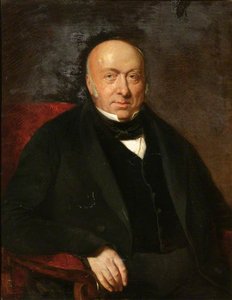
Portrait of James Giles

The 100 Most Famous James Giles Paintings, a Gallery Selection

Updated November 2026 · ranked by our popularity score (searches, visits and orders for each work) · 182 works by James Giles in our catalogue

In short

Of all the originals James Giles left, the most famous is Deer Drinking at a Forest Stream (1851), in the collection of the The National Trust For Scotland, Turrief. Close behind it come The Monarch of the Glen (1861) and Lochside Scene (1838). Our catalog holds 182 works by James Giles; the gallery has kept the 100 the world admires most, each shown with its date, its museum and its story.

1801 – 1870, Aberdeen Romanticism Most works: The National Trust For Scotland

James Giles's top 10 paintings: the gallery's choice

2
The Monarch of the Glen (1861) by James Giles

The Monarch of the Glen

1861 · Oil

A single stag occupies the center of this oil painting, positioned upon a dark, rocky outcrop. The animal is depicted in profile, its head turned slightly toward the viewer. Its antlers extend upward and outward, forming complex, organic shapes against a backdrop of heavy, white and grey clouds. The lighting is diffused, as if filtered through an overcast sky, casting soft shadows across the stag's musculature and the texture of…

3
Lochside Scene (1838) by James Giles

Lochside Scene

1838 · Acrylic On Canvas · University of Aberdeen, Амстердам

James William Giles' "Lochside Scene," painted in 1838, isn’t merely a depiction of a Scottish landscape; it’s a carefully constructed tableau brimming with the quiet dignity and understated beauty characteristic of the artist’s oeuvre. The scene unfolds along the shores of a loch – likely Loch Lomond or a similar expanse of water – where two figures stand poised on the bank, seemingly lost in contemplation beneath the fading light…

The James Giles selection continues, 11 to 100

11Landscape (1847) by James GilesLandscape1847 12Moorland Landscape with Sportsman and Setter (1843) by James GilesMoorland Landscape with Sportsman and Setter1843 · The National Trust For Scotland 13Reverend George Morison (1757–1845) (1845) by James GilesReverend George Morison (1757–1845)1845 14Stalking (1845) by James GilesStalking1845 · The National Trust For Scotland 15Bridge over a River (1845) by James GilesBridge over a River1845 · The National Trust For Scotland 16Castle by a River (1845) by James GilesCastle by a River1845 · The National Trust For Scotland 17Aberdeen from the South West (1847) by James GilesAberdeen from the South West1847 · The National Trust For Scotland 18Self Portrait (1842) by James GilesSelf Portrait1842 · Royal Scottish Academy of Art - Architecture 19Stirling Hill Quarry, near Peterhead (1847) by James GilesStirling Hill Quarry, near Peterhead1847 · Mintlaw Discovery Centre 20Deer (1854) by James GilesDeer1854 21Buchanness (1851) by James GilesBuchanness1851 · The National Trust For Scotland 22William Elphinstone (1431–1514), Bishop of Aberdeen (1849) by James GilesWilliam Elphinstone (1431–1514), Bishop of Aberdeen1849 23Waterfall (1851) by James GilesWaterfall1851 · The National Trust For Scotland 24Sir Walter Scott with a Dog (1854) by James GilesSir Walter Scott with a Dog1854 · Abbotsford House 25Marriage Portrait of Lieutenant Colonel James Stewart to Williamina Kerr, 1803 (1849) by James GilesMarriage Portrait of Lieutenant Colonel James Stewart to Williamina Kerr, 18031849 · The Black Watch Castle - Museum 26A View in Windsor Great Park (1857) by James GilesA View in Windsor Great Park1857 · Royal Collection 27Marischal College Quadrangle, Aberdeen (1861) by James GilesMarischal College Quadrangle, Aberdeen1861 · University of Aberdeen 28The Monarch of the Glen (1861) by James GilesThe Monarch of the Glen1861 · The National Trust For Scotland 29Castle Fraser (1858) by James GilesCastle Fraser1858 · The National Trust For Scotland 30Self Portrait in a Maroon Coat and Crimson Beret (1846) by James GilesSelf Portrait in a Maroon Coat and Crimson Beret1846 · The National Trust For Scotland 31The Cottesmore Prize Heifer by James GilesThe Cottesmore Prize Heifer 32Alexander Forbes Irvine by James GilesAlexander Forbes Irvine 33Figures By A Palace by James GilesFigures By A Palace 34Self Portrait by James GilesSelf Portrait 35Baillie George Hendry of Aberdeen by James GilesBaillie George Hendry of AberdeenThe National Trust For Scotland 36A Falconer (1833) by James GilesA Falconer1833 · Upton House 37Findhorn, Moray by James GilesFindhorn, Moray 38Aqua claudia, near tivoli by James GilesAqua claudia, near tivoli 39Balmoral castle by James GilesBalmoral castle 40View Of Aberdeen From The South by James GilesView Of Aberdeen From The South 41Monymusk house by James GilesMonymusk house 42Gight castle by James GilesGight castle 43Happy Hunting by James GilesHappy Hunting 44John Ramsay by James GilesJohn Ramsay 45Archibald Simpson - by James GilesArchibald Simpson - 46Cicero's Tomb At The Bay Of Gaeta by James GilesCicero's Tomb At The Bay Of Gaeta 47Archibald Simpson by James GilesArchibald Simpson 48King's College, Old Aberdeen by James GilesKing's College, Old Aberdeen 49Colqhouny castle by James GilesColqhouny castle 50View of king's college, aberdeen, with figures in the foreground by James GilesView of king's college, aberdeen, with figures in the foreground 51Old Cottages Near Tranent by James GilesOld Cottages Near Tranent 52Hagberry Pot, River Ythan by James GilesHagberry Pot, River Ythan 53On The Don by James GilesOn The Don 54The Staircase In Fyvie Castl by James GilesThe Staircase In Fyvie Castl 55Figures On A Rocky Beach by James GilesFigures On A Rocky Beach 56Gray Campbell by James GilesGray Campbell 57Encounter bay by James GilesEncounter bay 58Tolquhon Castle by James GilesTolquhon Castle 59On Deeside by James GilesOn Deeside 60Self Portrait - by James GilesSelf Portrait - 61Quarrying - Peterhead Quarry With A Lighthouse In The Background by James GilesQuarrying - Peterhead Quarry With A Lighthouse In The Background 62Sketch Of A Figure Walking By A Stream by James GilesSketch Of A Figure Walking By A Stream 63A Sketch Of Lord Haddo's Terrace by James GilesA Sketch Of Lord Haddo's Terrace 64Portrait Of A Fisherman, Traditionally Identified As Robert Blair Maconochie Esq by James GilesPortrait Of A Fisherman, Traditionally Identified As Robert Blair Maconochie Esq 65Sunset Over The River Divie, Dunphail by James GilesSunset Over The River Divie, Dunphail 66A Sportsman With Gundogs On A Woodland Path by James GilesA Sportsman With Gundogs On A Woodland Path 67Study In Glen Quoich, Mar Forest - After A Gale by James GilesStudy In Glen Quoich, Mar Forest - After A Gale 68The Honourable Mrs Gordon Of Fyvie by James GilesThe Honourable Mrs Gordon Of Fyvie 69Bailie James Forbes by James GilesBailie James Forbes 70The Findhorn From Heronry by James GilesThe Findhorn From Heronry 71View Of A Scottish Castle by James GilesView Of A Scottish Castle 72An Angler In A River Landscape by James GilesAn Angler In A River Landscape 73Landscape by James GilesLandscape 74Girl Combing Her Hair by James GilesGirl Combing Her Hair 75Snipe Shooting by James GilesSnipe Shooting 76Archibald Simpson, Architect by James GilesArchibald Simpson, Architect 77Gight, From Below by James GilesGight, From Below 78The Interior Of The Drawing Room At Haddo by James GilesThe Interior Of The Drawing Room At Haddo 79Haddo - The Park Seen Through The Open Drawing Room Door by James GilesHaddo - The Park Seen Through The Open Drawing Room Door 80A Falconer by James GilesA Falconer 81Heads Of Aberdeen Personalities - by James GilesHeads Of Aberdeen Personalities - 82Dr William Keith by James GilesDr William KeithUniversity of Aberdeen 83The Findhorn from Heronry by James GilesThe Findhorn from Heronry 84Anne), Countess Of Aberdeen, And Her Son, Lord William Gordon Of Fyvie by James GilesAnne), Countess Of Aberdeen, And Her Son, Lord William Gordon Of Fyvie 85An Interior by James GilesAn InteriorThe National Trust For Scotland 86Stags on the Highlands by James GilesStags on the HighlandsNational Trust 87Aberdeen from the South, with the Bridge of Dee by James GilesAberdeen from the South, with the Bridge of DeeThe National Trust For Scotland 88A Gun Room with George, 4th Earl of Aberdeen by James GilesA Gun Room with George, 4th Earl of Aberdeen 89Landscape Sketch by James GilesLandscape Sketch 90An Interior at Haddo with George, 4th Earl of Aberdeen, Reading by James GilesAn Interior at Haddo with George, 4th Earl of Aberdeen, Reading 91Heads of Aberdeen Personalities by James GilesHeads of Aberdeen Personalities 92Sketch of Deer, Evening by James GilesSketch of Deer, Evening 93Evening on the Findhorn by James GilesEvening on the FindhornThe National Trust For Scotland 94The Borghese Gardens, Rome by James GilesThe Borghese Gardens, Rome 95A Lake at Haddo by James GilesA Lake at HaddoThe National Trust For Scotland 96Island of Handa, West Coast of Sutherland by James GilesIsland of Handa, West Coast of SutherlandThe Fleming Collection 97Tolquhon Castle by James GilesTolquhon CastleThe National Trust For Scotland 98Castle of Gight by James GilesCastle of GightThe National Trust For Scotland 99A Gun Room with George, 4th Earl of Aberdeen by James GilesA Gun Room with George, 4th Earl of AberdeenThe National Trust For Scotland 100William Elphinstone (1431–1514), Bishop of Aberdeen (after Flemish School) by James GilesWilliam Elphinstone (1431–1514), Bishop of Aberdeen (after Flemish School)The National Trust For Scotland

James Giles's famous paintings, period by period

The subjects that held James Giles's eye

The four subjects that come back most often in these originals, each with its finest example.

The museums that keep James Giles's originals

The 8 museums that hold the most of the paintings on this page.

Museum City Works by James Giles Paintings from this list
The National Trust For Scotland, ElginThe National Trust For Scotland Elgin 18 Woodland Path with Figures, The Interior of the Drawing Room at Haddo, Moorland Landscape with Sportsman and Setter
The National Trust For Scotland, TurriefThe National Trust For Scotland Turrief 4 Deer Drinking at a Forest Stream, Waterfall, Self Portrait in a Maroon Coat and Crimson Beret
University of Aberdeen, АмстердамUniversity of Aberdeen Амстердам 3 Lochside Scene, Marischal College Quadrangle, Aberdeen, Dr William Keith
Royal Collection, LondonRoyal Collection London 3 A View of Balmoral, A View of Lochnagar, A View in Windsor Great Park
Royal Scottish Academy of Art - Architecture, EdinburghRoyal Scottish Academy of Art - Architecture Edinburgh 2 The Weird Wife o' Lang Stane Lea, Self Portrait
Mintlaw Discovery Centre, PeterheadMintlaw Discovery Centre Peterhead 1 Stirling Hill Quarry, near Peterhead
Abbotsford House, MalvernAbbotsford House Malvern 1 Sir Walter Scott with a Dog
The Black Watch Castle - Museum, PerthThe Black Watch Castle - Museum Perth 1 Marriage Portrait of Lieutenant Colonel James Stewart to Williamina Kerr, 1803

James Giles decade by decade: the original that defines each

Works per decade

Pick a decade to see the original that defines it.

Collectors' questions about James Giles's paintings

Which work is James Giles most famous for?Reveal the answer

Deer Drinking at a Forest Stream (1851), The National Trust For Scotland, Turrief. The Monarch of the Glen (1861) and Lochside Scene (1838) come next.

What age was James Giles when Deer Drinking at a Forest Stream was made?Reveal the answer

50 years old: Deer Drinking at a Forest Stream dates from 1851, and James Giles was born in 1801.

What are the ten most famous James Giles paintings?Reveal the answer

Deer Drinking at a Forest Stream, The Monarch of the Glen, Lochside Scene, The Honourable Mrs Gordon of Fyvie, Fyvie Castle, Aberdeenshire, The Weird Wife o' Lang Stane Lea, Woodland Path with Figures, The Interior of the Drawing Room at Haddo, A View of Balmoral and A View of Lochnagar. The ranking above gives each one's year and museum.

How many paintings did James Giles leave?Reveal the answer

Our catalog holds 182 works by James Giles, dated from 1822 to 1861.

In which museums do James Giles's masterpieces hang?Reveal the answer

Mostly in The National Trust For Scotland (Elgin), The National Trust For Scotland (Turrief) and University of Aberdeen (Амстердам). The museum table above lists them all.

In which years did James Giles paint the most famous works?Reveal the answer

In 1840s: 14 of the 100 works on this page were made then, A View of Balmoral among them.

What are the first and the last famous originals of James Giles?Reveal the answer

On this page, the earliest is The Honourable Mrs Gordon of Fyvie (1822) and the latest The Monarch of the Glen (1861).

Which subjects did James Giles choose most often?Reveal the answer

Buildings (8), Landscape (7) and Scottish landscape (4), across the 100 works on this page.

Which technique did James Giles use most?Reveal the answer

Oil, for 2 of the 100 works on this page.

To which art movement does James Giles belong?Reveal the answer

Romanticism and Realism, judging by the originals on this page.

Which James Giles works hang at the The National Trust For Scotland?Reveal the answer

Woodland Path with Figures, The Interior of the Drawing Room at Haddo and Moorland Landscape with Sportsman and Setter: the The National Trust For Scotland, Elgin holds 17 of the works on this page.

James Giles: life and work

James Giles: The Highland Visionary

James William Giles (1801–1870) wasn’t a name that dominated the grand halls of the Royal Academy in London, nor did his canvases command the immediate attention of the Parisian art world. Yet, within the heart of Scotland, particularly in Aberdeen, he cultivated a singular and profoundly evocative style – one that captured the rugged beauty of the Highlands with an almost melancholic grace. He was, in essence, a painter of atmosphere, of light filtering through mist-laden mountains, and of the quiet dignity of ancient castles standing sentinel against the vastness of the Scottish landscape. His legacy lies not in flamboyant exhibitions or celebrity patronage, but in a deeply personal and remarkably consistent body of work that continues to resonate with viewers today.

Born in Glasgow in 1801, Giles’s early life was marked by hardship following his father's death. Forced to contribute to the household income at a young age, he honed his artistic skills through self-teaching and private instruction, demonstrating an innate talent that quickly surpassed mere technical proficiency. His family’s connection to the textile industry – his father worked as a designer for calico – instilled in him a keen eye for color and pattern, which later informed his landscape paintings with subtle shifts of hue and texture. Moving to Aberdeen around 1805, he found a fertile ground for artistic development, immersing himself in the city’s vibrant cultural scene and establishing a studio where he began to develop his distinctive style.

The Influence of Italy and the Highland Landscape

Giles's artistic journey took a pivotal turn with his travels to Italy in the mid-1820s. This extended sojourn proved transformative, exposing him to the masterpieces of the Old Masters – Raphael, Michelangelo, and Titian – and profoundly influencing his approach to composition, color, and light. He meticulously copied numerous paintings, not merely as exercises in technique but as a means of absorbing their essence, learning how they rendered atmosphere and emotion. Returning to Scotland, he brought with him a renewed sense of purpose and a heightened ability to translate the dramatic Highland landscape onto canvas. Crucially, his Italian experience didn’t lead to a slavish imitation of classical styles; instead, it provided him with a sophisticated understanding of artistic principles that he then applied uniquely to his Scottish subject matter.

His subjects were predominantly landscapes – the rugged mountains of Deeside, the rolling hills of Aberdeenshire, and the dramatic coastline. He wasn’t interested in grand vistas or heroic scenes; rather, he sought out intimate moments—a lone shepherd against a brooding sky, a ruined castle shrouded in mist, a stream winding through a glen. He frequently depicted these scenes during periods of inclement weather – rain, fog, and snow – imbuing them with a sense of solitude and melancholy. This preference for atmospheric conditions became a hallmark of his style, contributing to the haunting beauty of his paintings.

Royal Commissions and Artistic Recognition

Giles’s talent quickly gained recognition within Scotland's aristocratic circles. He was commissioned to paint numerous landscapes for prominent families, including the Earls of Aberdeen and Sutherland, securing him a comfortable living and establishing his reputation as a skilled and reliable artist. Perhaps most significantly, Queen Victoria herself became a patron, commissioning several paintings of Balmoral Castle – the estate she acquired in 1848. Giles’s depiction of the old castle, predating the grand Victorian rebuild, is particularly noteworthy for its faithfulness to the original structure and its evocative portrayal of the surrounding landscape. This royal patronage cemented his position as one of Scotland's most respected artists.
In 1829, he was elected an Academician of the Royal Scottish Academy, a prestigious honor that further validated his artistic achievements. He continued to exhibit his work at both the Royal Scottish Academy and the British Institution in London throughout his career, consistently receiving positive reviews for his atmospheric landscapes and skillful rendering of light and color. His later years were marked by a dedication to documenting the ancient castles of Aberdeenshire, culminating in the publication of “Drawings of Aberdeenshire Castles” (1838-1855), a collection of meticulously rendered watercolor sketches that remain highly valued for their artistic merit and historical significance.

A Lasting Legacy

James Giles died in Aberdeen in 1870, leaving behind a substantial body of work that reflects his deep connection to the Scottish landscape. While he may not be as widely celebrated as some of his contemporaries, his paintings possess a quiet power and emotional resonance that continues to captivate viewers today. His ability to capture the essence of the Highland atmosphere—the mist-shrouded mountains, the brooding skies, and the sense of timeless solitude—makes him one of Scotland’s most important landscape painters. His work stands as a testament to the enduring beauty of the Scottish Highlands and the artistic vision of a man who dedicated his life to capturing its spirit on canvas.