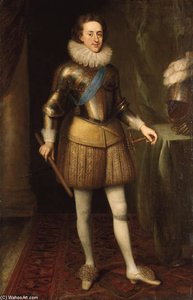
Portrait of Isaac Oliver

The 43 Most Famous Isaac Oliver Paintings, Each One of a Kind

Updated November 2026 · ranked by our popularity score (searches, visits and orders for each work) · 43 works by Isaac Oliver in our catalogue

In short

Ludovic Stuart (1574-1623/1624), first Duke of Richmond and second Duke of Lennox or Thomas Howard (1561-1628), Earl of Suffolk (1598) is the Isaac Oliver painting that draws the most eyes; the original belongs to the Rijksmuseum, Amsterdam. After it, the eye goes to Robert Devereux, Second Earl of Essex (1596) and Portrait of a Woman (1596). Among the 43 works of Isaac Oliver in our catalog, these 43 are the most famous, each a unique original presented with its year, its museum and the reason it endures.

1556 – 1617, Rouen Most works: Rijksmuseum

Top 10 paintings by Isaac Oliver, through the gallery's eye

1
Ludovic Stuart (1574-1623/1624), first Duke of Richmond and second Duke of Lennox or Thomas Howard (1561-1628), Earl of Suffolk (1598) by Isaac Oliver

Ludovic Stuart (1574-1623/1624), first Duke of Richmond and second Duke of Lennox or Thomas Howard (1561-1628), Earl of Suffolk

1598 · Watercolor · Rijksmuseum, Amsterdam

The subject stares from an oval window of gold, a man caught in the stillness of a single moment. He is positioned slightly off-center, his gaze drifting toward the left as if acknowledging a presence just beyond the frame. A deep, saturated ultramarine blue forms the backdrop, a solid wall of color that pushes the figure forward. Against this intense field, the pale, naturalistic tones of his skin emerge with…

3
Portrait of a Woman (1596) by Isaac Oliver

Portrait of a Woman

1596 · Watercolor · Rijksmuseum, Amsterdam

The subject gazes out from a small, oval window into the year 1596, her presence felt through the delicate layers of lace and the glint of precious stones. She sits in a quiet, intimate moment, her dark, tightly curled hair catching the light and revealing intricate jeweled ornaments tucked within the shadows. A massive white lace ruff, a millstone collar, fans out around her neck in a complex geometry of…

4
Arabella Stuart (1595) by Isaac Oliver

Arabella Stuart

1595 · Watercolor · Rijksmuseum, Amsterdam

Isaac Oliver captures the likeness of Lady Arabella Stuart in this intimate portrait miniature. The subject, who lived from 1575 to 1615, is rendered with a quiet, steady gaze. This work is dated 1595. A single pearl rests against her skin, a small point of light amidst the soft shadows of her neck.

5
Dudley North, third Baron North (1581-1666) (1609) by Isaac Oliver

Dudley North, third Baron North (1581-1666)

1609 · Gouache · Yale Center for British Art, New Haven

To hold a miniature of this scale is to enter a private, whispered world of the early seventeenth century. This portrait of Dudley North, third Baron North, captures a young man in a moment of quiet composure. He is presented in a three-quarter view, his head turned slightly toward the center, eyes meeting the viewer with a calm, steady gaze. The composition is contained within an oval frame, a format…

6
Young Man Seated under a Tree (1590) by Isaac Oliver

Young Man Seated under a Tree

1590 · Oil · Royal Collection, London

The portrait titled Young Man Seated under a Tree is a work by Isaac Oliver. Created about 1590, this painting captures a single male figure positioned within a lush landscape. He is dressed in aristocratic attire, his presence marked by the formal dignity of his station. In his hand, he holds a walking stick, a quiet companion to his poised stance.

7
Portrait of an Unknown Gentleman in a Copper Medallion (1600) by Isaac Oliver

Portrait of an Unknown Gentleman in a Copper Medallion

1600 · Watercolor · Amsterdam Museum, Amsterdam

A bust-length portrait of a gentleman emerges from a deep cobalt blue background, creating a sharp contrast that directs all attention to the sitter. He is rendered with a calm, steady gaze, looking slightly off-center. His dark hair, well-groomed mustache, and small goatee are defined by precise, fine lines. He wears a dark doublet or jacket, accented by a crisp white collar at the neck. A single hand is positioned…

8
Portrait of a Woman in Masquerade Costume as Flora (1596) by Isaac Oliver

Portrait of a Woman in Masquerade Costume as Flora

1596 · Watercolor · Rijksmuseum, Amsterdam

Isaac Oliver executed Portrait of a Woman in Masquerade Costume as Flora around 1596. This miniature portrait captures a female subject adorned in an elaborate masquerade costume, specifically representing the classical figure of Flora. The work belongs to the tradition of late Renaissance and Mannerist portraiture, rendered with the precision required for small-scale works on parchment.

9
Elizabeth, Queen of Bohemia (1596) by Isaac Oliver

Elizabeth, Queen of Bohemia

1596 · Gouache · Yale Center for British Art, New Haven

The light catches the soft, luminous skin of Elizabeth, Queen of Bohemia, as she gazes out from an intimate oval frame. This portrait miniature, captured around 1596, offers a quiet, direct connection between the subject and the viewer. Her face, rendered with a delicate touch, emerges from a pale blue background, framed by the voluminous texture of her hair and the airy, translucent quality of a lace collar. There is…

10
Madonna and Child in Glory (1611) by Isaac Oliver

Madonna and Child in Glory

1611 · Oil · Cleveland Museum of Art, Cleveland

In Madonna and Child in Glory by Isaac Oliver, the viewer is presented with a quiet, celestial scene. The composition is centered upon the seated Virgin Mary, who cradles the Christ Child in her lap. They are positioned amidst a soft cloudscape of neutral grays and whites, creating a sense of divine presence. A bright, ethereal light emanates from behind the figures, casting a gentle glow that defines their forms…

Isaac Oliver's famous paintings, numbers 11 to 43

The subjects that held Isaac Oliver's eye

The four subjects that come back most often in these originals, each with its finest example.

The museums that keep Isaac Oliver's originals

The 8 museums that hold the most of the paintings on this page.

Museum City Works by Isaac Oliver Paintings from this list
Rijksmuseum, AmsterdamRijksmuseum Amsterdam 4 Ludovic Stuart (1574-1623/1624), first Duke of Richmond and second Duke of Lennox or Thomas Howard (1561-1628), Earl of Suffolk, Portrait of a Woman, Arabella Stuart
Nationalmuseum, StockholmNationalmuseum Stockholm 4 Lady Venetia Anastasia Digby, Admiral George Clifford (1558-1605), 3rd earl of Cumberland, Charles I as a child, King of England, Scotland and Ireland
Yale Center for British Art, New HavenYale Center for British Art New Haven 3 Robert Devereux, Second Earl of Essex, Dudley North, third Baron North (1581-1666), Elizabeth, Queen of Bohemia
Royal Collection, LondonRoyal Collection London 1 Young Man Seated under a Tree
Amsterdam Museum, AmsterdamAmsterdam Museum Amsterdam 1 Portrait of an Unknown Gentleman in a Copper Medallion
Cleveland Museum of Art, ClevelandCleveland Museum of Art Cleveland 1 Madonna and Child in Glory
Victoria and Albert Museum, LondonVictoria and Albert Museum London 1 Frances Howard, Countess of Somerset and Essex
Brandywine Museum of Art, Delaware CountyBrandywine Museum of Art Delaware County 1 The Annunciation

Isaac Oliver across the decades: one unique original for each

Works per decade

Pick a decade to see the original that defines it.

Isaac Oliver's paintings: questions for the gallery

What is the single most famous work of Isaac Oliver?Reveal the answer

Ludovic Stuart (1574-1623/1624), first Duke of Richmond and second Duke of Lennox or Thomas Howard (1561-1628), Earl of Suffolk (1598), Rijksmuseum, Amsterdam. Robert Devereux, Second Earl of Essex (1596) and Portrait of a Woman (1596) come next.

At what age did Isaac Oliver create Ludovic Stuart (1574-1623/1624), first Duke of Richmond and second Duke of Lennox or Thomas Howard (1561-1628), Earl of Suffolk?Reveal the answer

42 years old: Ludovic Stuart (1574-1623/1624), first Duke of Richmond and second Duke of Lennox or Thomas Howard (1561-1628), Earl of Suffolk dates from 1598, and Isaac Oliver was born in 1556.

Which ten paintings by Isaac Oliver are the most famous?Reveal the answer

Ludovic Stuart (1574-1623/1624), first Duke of Richmond and second Duke of Lennox or Thomas Howard (1561-1628), Earl of Suffolk, Robert Devereux, Second Earl of Essex, Portrait of a Woman, Arabella Stuart, Dudley North, third Baron North (1581-1666), Young Man Seated under a Tree, Portrait of an Unknown Gentleman in a Copper Medallion, Portrait of a Woman in Masquerade Costume as Flora, Elizabeth, Queen of Bohemia and Madonna and Child in Glory. The ranking above gives each one's year and museum.

How many works by Isaac Oliver are known?Reveal the answer

Our catalog holds 43 works by Isaac Oliver, dated from 1590 to 1611.

Where can the most famous Isaac Oliver originals be seen?Reveal the answer

Mostly in Rijksmuseum (Amsterdam), Nationalmuseum (Stockholm) and Yale Center for British Art (New Haven). The museum table above lists them all.

During which period did Isaac Oliver create the best-known paintings?Reveal the answer

In 1590s: 8 of the 43 works on this page were made then, Ludovic Stuart (1574-1623/1624), first Duke of Richmond and second Duke of Lennox or Thomas Howard (1561-1628), Earl of Suffolk among them.

Which famous Isaac Oliver painting is the earliest, and which the latest?Reveal the answer

On this page, the earliest is Young Man Seated under a Tree (1590) and the latest Madonna and Child in Glory (1611).

What subjects did Isaac Oliver favour?Reveal the answer

Portraits (8), Portrait (7) and Man (6), across the 43 works on this page.

What materials did Isaac Oliver paint with most?Reveal the answer

Watercolor, for 6 of the 43 works on this page.

What Isaac Oliver originals can I see at the Rijksmuseum?Reveal the answer

Ludovic Stuart (1574-1623/1624), first Duke of Richmond and second Duke of Lennox or Thomas Howard (1561-1628), Earl of Suffolk, Portrait of a Woman and Arabella Stuart: the Rijksmuseum, Amsterdam holds 4 of the works on this page.

Isaac Oliver: a portrait of the artist

A Master of the Miniature: The Life of Isaac Oliver

The delicate art of portrait miniature painting finds one of its most profound voices in the work of Isaac Oliver. Born in Rouen, France, around 1565, his early years were shaped by the turbulent winds of the Wars of Religion. Seeking refuge from the conflict, his Huguenot parents, Peter and Epiphany Oliver, brought him to London in 1568. This migration would ultimately place him at the heart of the English Renaissance, where he would refine a talent that would capture the very essence of the Elizabethan and Jacobean courts.

Oliver’s artistic journey was one of deep apprenticeship and familial connection. He studied the intricate craft of miniature painting under the renowned Nicholas Hilliard, yet he did not merely replicate his master's style. Instead, Oliver breathed a new, naturalistic vitality into the medium. His work began to reflect a sophisticated blend of influences, drawing from the subtle elegance of Italian art and the rich, textured realism found in Flemish traditions. This evolution marked a departure from more stylized predecessors, moving toward a technique that favored emotional depth and luminous detail.

Artistry, Technique, and Courtly Splendor

To gaze upon an Oliver miniature is to witness a masterclass in light and shadow. His technique involved a meticulous layering of thin glazes, a process that allowed him to build up textures and tones with incredible precision. He possessed a singular ability to render the soft, diffused illumination that seems to emanately from within his subjects, bathing faces in a gentle glow that highlights the delicate curve of a cheekbone or the subtle melancholy in an eye. His commitment to realism extended to the most minute details, from the intricate ruffles and folds of an elaborate gown to the shimmering luster of a single jewel.

His professional life was deeply intertwined with the highest echelons of English society. Following the death of Elizabeth I, Oliver’s reputation secured him a place within the court of James I. He was appointed as "her Majesties painter in the art of lymning," a prestigious role that saw him capturing the likenesses of royalty and nobility alike. His portraits of figures such as Queen Anne of Denmark and Henry Frederick, Prince of Wales stand as testaments to his ability to convey both the formal dignity of the monarchy and a more intimate, human vulnerability.

Legacy and Historical Significance

The legacy of Isaac Oliver is preserved not only in the physical remnants of his exquisite miniatures but also in the lineage of talent he helped foster. His son, Peter Oliver, would go on to become an eminent miniature painter in his own right, continuing the family's contribution to this specialized art form. Through his marriage to Sara, the daughter of the celebrated portrait painter Marcus Gheeraerts the Elder, Oliver was further embedded in a rich tapestry of artistic excellence that defined the era.

Today, the works of Isaac Oliver serve as poignant windows into a vanished world. Whether through his evocative portraits of figures like Frances Howard, Countess of Somerset and Essex—which capture a tableau of ambition and heartbreak—or his more classical oil paintings, his contribution to the history of portraiture remains undeniable. His ability to marry meticulous detail with subtle emotional depth ensures that his miniatures remain much more than mere likenesses; they are enduring psychological studies that continue to captivate the modern eye.