Portrait of Hendrick Dubbels

The 36 Most Famous Hendrick Dubbels Paintings, Each One of a Kind

Updated November 2026 · ranked by our popularity score (searches, visits and orders for each work) · 45 works by Hendrick Dubbels in our catalogue

In short

Winter Landscape (1641) is the Hendrick Dubbels painting that draws the most eyes; the original belongs to the Honolulu Museum of Art, Honolulu. After it, the eye goes to Sea Storm with Shipwreck (1655) and View of Amsterdam seen from the IJ (1651). Among the 45 works of Hendrick Dubbels in our catalog, these 36 are the most famous, each a unique original presented with its year, its museum and the reason it endures.

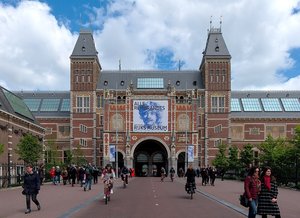
1621 – 1707, Amsterdam Dutch golden age Most works: Rijksmuseum

Top 10 paintings by Hendrick Dubbels, through the gallery's eye

1
Winter Landscape (1641) by Hendrick Dubbels

Winter Landscape

1641 · Oil On Canvas · Honolulu Museum of Art, Honolulu

A heavy, dramatic sky hangs low over a frozen expanse, casting a somber mood across the scene. The air feels thick with moisture, as if a sudden frost has just gripped the landscape. Beneath a canopy of billowing, charcoal-colored clouds, a pale pink glow struggles to pierce through the gloom near the horizon, suggesting the quiet transition of dawn or the fading light of dusk. This light does not warm…

2
Sea Storm with Shipwreck (1655) by Hendrick Dubbels

Sea Storm with Shipwreck

The sea is a heavy, churning mass of grey and white. In this 1655 oil painting, the water does not merely move; it strikes. Massive, diagonal waves rise like walls of liquid stone, their crests frozen in thick, impasto foam that catches a pale, ghostly light. A ship struggles within this chaos, its masts tilting at a desperate angle against the crushing weight of the sky. The composition pulls the…

3
View of Amsterdam seen from the IJ (1651) by Hendrick Dubbels

View of Amsterdam seen from the IJ

1651 · Oil On Canvas · Amsterdam Museum, Amsterdam

The composition presents a wide view of the IJ waterway, looking toward the skyline of Amsterdam. In the foreground and middle ground, several sailing vessels occupy the water. These ships vary in size and type, with some positioned in profile and others angled toward the viewer. The vessels feature detailed rigging, masts, and sails, some of which appear filled by the wind. The water surface is relatively calm, reflecting the…

4
A Calm, with fishermen near a jetty (1655) by Hendrick Dubbels

A Calm, with fishermen near a jetty

1655 · Oil On Canvas

In this 1655 oil on canvas, the composition is defined by a low horizon line that allows a vast, cloud-filled sky to occupy the upper two-thirds of the frame. The scene depicts a tranquil maritime setting near a jetty, where the water meets a shoreline under a dramatic, expansive sky. Several wooden sailing vessels are positioned within the frame; some feature raised sails while others remain at rest. Near the…

5
Ships on open water, a frigate on the right (1657) by Hendrick Dubbels

Ships on open water, a frigate on the right

1657 · Oil · Staatliche Kunstsammlungen Dresden, Dresden

Ships on open water, a frigate on the right is a maritime oil painting by Hendrick Dubbels. Created about 1657, the work captures a dramatic seascape characterized by a turbulent sky and heavy, swirling clouds. The composition focuses on the movement of the sea, featuring several sailing vessels navigating choppy, dark waters. A large, detailed frigate occupies the right side of the canvas, its dark hull and complex rigging silhouetted…

6
Calm Sea at Ebb Tide (1653) by Hendrick Dubbels

Calm Sea at Ebb Tide

1653 · Oil On Canvas · Kunsthistorisches Museum, Vienna

The scene depicts a maritime landscape during an ebb tide, where the water recedes to reveal a shallow, wet shoreline. In the foreground, the low perspective places the viewer near the edge of the water, where the surface reflects the heavy, overcast sky. Two primary vessels occupy the mid-ground. To the left, a larger sailing ship sits in the water, while to the right, a more prominent multi-masted boat features…

7
The Port of Amsterdam in Winter (1660) by Hendrick Dubbels

The Port of Amsterdam in Winter

1660 · Oil On Canvas · Museo del Prado, Madrid

A vast, overcast sky dominates the upper two-thirds of this 1660 oil on canvas, casting a soft, diffused light over a frozen harbor. The low horizon line emphasizes the immense scale of the atmosphere, pushing the viewer's gaze toward the rhythmic verticality of ship masts. Below, the icy surface of the water reflects a muted palette of slate blue, grey, and white, punctuated by the warm, earthy tones of wooden…

8
View of a Dutch Roadstead (1652) by Hendrick Dubbels

View of a Dutch Roadstead

1652 · Oil On Canvas · Statens Museum For Kunst, Copenhagen

A heavy, cloud-filled sky dominates the upper two-thirds of this 1652 oil on canvas, casting a diffused, indirect light across a Dutch roadstead. The composition utilizes a low horizon line to emphasize the vastness of the atmosphere, where muted tones of grey, beige, ochre, and deep brown create a sense of misty, overcast light. Vertical masts of various sailing vessels break the horizontal expanse of the water and shoreline, providing…

9
Ships in a Breeze Off the Dutch Coast (1655) by Hendrick Dubbels

Ships in a Breeze Off the Dutch Coast

1655 · Oil On Canvas · Statens Museum For Kunst, Copenhagen

A fleet of sailing vessels navigates choppy waters under a heavy, cloud-filled sky in this 1655 oil on canvas. The composition utilizes a low horizon line, which emphasizes the vastness of the sky and the scale of the cumulus clouds. Muted, tonalist hues of deep blue, grey, ochre, and earthy brown dominate the palette. The vertical masts of the ships and the diagonal sweeps of the billowing sails provide a…

10
A Calm Sea (1655) by Hendrick Dubbels

A Calm Sea

1655 · Oil On Canvas · Museum Boijmans Van Beuningen, Rotterdam

There is a profound stillness in this 1655 composition, a moment of pause captured amidst the vastness of the maritime world. The scene presents a serene seascape where the horizon is dominated by an expansive sky, filled with large, billowing cumulus clouds that occupy the upper two-thirds of the canvas. These clouds, rendered with a soft and painterly texture, seem to hold the weight of the atmosphere, casting a gentle,…

Hendrick Dubbels's famous paintings, numbers 11 to 36

The subjects that held Hendrick Dubbels's eye

The four subjects that come back most often in these originals, each with its finest example.

The museums that keep Hendrick Dubbels's originals

The 8 museums that hold the most of the paintings on this page.

Museum City Works by Hendrick Dubbels Paintings from this list
Rijksmuseum, AmsterdamRijksmuseum Amsterdam 5 Port with sailships and a ferry, Calm sea, Harbor with Sailing Ships and Ferry
Amsterdam Museum, AmsterdamAmsterdam Museum Amsterdam 3 View of Amsterdam seen from the IJ, Amsterdam, skating on the Amstel river near the two city defense quarters (called blokhuizen), A fleet near Den Helder
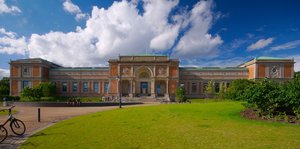
Statens Museum For Kunst, CopenhagenStatens Museum For Kunst Copenhagen 2 View of a Dutch Roadstead, Ships in a Breeze Off the Dutch Coast
Museum Boijmans Van Beuningen, RotterdamMuseum Boijmans Van Beuningen Rotterdam 2 A Calm Sea, Ships in a storm
National Maritime Museum, LondonNational Maritime Museum London 2 Dutch Fishing Boats Becalmed near a Jetty, Dutch Vessels at a Pier
Honolulu Museum of Art, HonoluluHonolulu Museum of Art Honolulu 1 Winter Landscape
Bavarian State Painting Collections, MunichBavarian State Painting Collections Munich 1 Sea Storm with Shipwreck
Staatliche Kunstsammlungen Dresden, DresdenStaatliche Kunstsammlungen Dresden Dresden 1 Ships on open water, a frigate on the right

Hendrick Dubbels across the decades: one unique original for each

Works per decade

Pick a decade to see the original that defines it.

Hendrick Dubbels's paintings: questions for the gallery

What is the single most famous work of Hendrick Dubbels?Reveal the answer

Winter Landscape (1641), Honolulu Museum of Art, Honolulu. Sea Storm with Shipwreck (1655) and View of Amsterdam seen from the IJ (1651) come next.

At what age did Hendrick Dubbels create Winter Landscape?Reveal the answer

20 years old: Winter Landscape dates from 1641, and Hendrick Dubbels was born in 1621.

Which ten paintings by Hendrick Dubbels are the most famous?Reveal the answer

Winter Landscape, Sea Storm with Shipwreck, View of Amsterdam seen from the IJ, A Calm, with fishermen near a jetty, Ships on open water, a frigate on the right, Calm Sea at Ebb Tide, The Port of Amsterdam in Winter, View of a Dutch Roadstead, Ships in a Breeze Off the Dutch Coast and A Calm Sea. The ranking above gives each one's year and museum.

How many works by Hendrick Dubbels are known?Reveal the answer

Our catalog holds 45 works by Hendrick Dubbels, dated from 1641 to 1676.

Where can the most famous Hendrick Dubbels originals be seen?Reveal the answer

Mostly in Rijksmuseum (Amsterdam), Amsterdam Museum (Amsterdam) and Statens Museum For Kunst (Copenhagen). The museum table above lists them all.

During which period did Hendrick Dubbels create the best-known paintings?Reveal the answer

In 1650s: 13 of the 36 works on this page were made then, Sea Storm with Shipwreck among them.

Which famous Hendrick Dubbels painting is the earliest, and which the latest?Reveal the answer

On this page, the earliest is Winter Landscape (1641) and the latest View of Batavia, Hendrick Jacobsz. Dubbels, 1640 - 1676 (1676).

What subjects did Hendrick Dubbels favour?Reveal the answer

Clouds (22), Sky (21) and Water (20), across the 36 works on this page.

What materials did Hendrick Dubbels paint with most?Reveal the answer

Oil On Canvas, for 23 of the 36 works on this page.

Which movement does the work of Hendrick Dubbels belong to?Reveal the answer

Dutch golden age, judging by the originals on this page.

What Hendrick Dubbels originals can I see at the Rijksmuseum?Reveal the answer

Port with sailships and a ferry, Calm sea and Harbor with Sailing Ships and Ferry: the Rijksmuseum, Amsterdam holds 5 of the works on this page.

Hendrick Dubbels: a portrait of the artist

The Maritime World of Hendrick Dubbels

Hendrick Dubbels, a name perhaps less celebrated than some of his Dutch Golden Age contemporaries, nevertheless occupies a significant niche in the pantheon of marine painters. Born and active during the 17th century – precise dates remain elusive, adding to the mystique surrounding this artist – Dubbels dedicated his life to capturing the drama and detail of ships and the sea. He wasn’t merely documenting vessels; he was translating the very essence of Dutch maritime power, trade, and exploration onto canvas. His work provides a fascinating window into a period where the Netherlands dominated global shipping lanes and its artistic output reflected this national pride. Dubbels' paintings are characterized by their meticulous realism, dynamic compositions, and atmospheric rendering, qualities that established him as a sought-after artist among merchants, naval officers, and collectors alike.

A Life Shrouded in Detail

Unfortunately, biographical information regarding Hendrick Dubbels is remarkably scarce. Unlike artists who benefitted from extensive patronage networks or self-promotion, details of his personal life are fragmented. It’s believed he hailed from a family connected to the shipbuilding industry, which likely fostered his early fascination with ships and their construction. He appears to have been primarily active in Amsterdam, the bustling heart of Dutch commerce and naval activity. Records suggest he worked alongside other prominent marine artists of the time, potentially as a studio assistant or through collaborative projects. While we lack intimate details about his upbringing or personal relationships, the sheer volume and quality of his surviving work speak volumes about his dedication to his craft and his mastery of maritime subject matter. The absence of extensive documentation perhaps reflects a focus on the technical aspects of painting rather than self-aggrandizement – a characteristic common among many skilled artisans of the period who prioritized execution over personal fame.

Painting the Fleet: Style and Technique

Dubbels’ artistic style is firmly rooted in the Dutch Realist tradition, but he infused it with a unique sense of dynamism. His paintings aren't static depictions; they convey movement – the roll of waves, the billowing of sails, the energy of a busy harbor. He possessed an exceptional ability to render light and shadow, creating atmospheric effects that heighten the drama of his scenes. His meticulous attention to detail is perhaps his most defining characteristic. Each ship is painstakingly rendered, from the intricate rigging to the individual planks of wood on the hull. Dubbels wasn’t simply painting ships; he was recreating them with an almost photographic accuracy. He often depicted vessels in various states – at anchor, underway, engaged in battle, or caught in a storm – showcasing his versatility and technical skill. His compositions are typically complex, featuring multiple ships and figures arranged to create a sense of depth and perspective. The color palettes he employed were generally subdued, reflecting the often-grey and overcast conditions of the North Sea, but punctuated by flashes of vibrant color in flags, clothing, or the setting sun.

Influences and Legacy

While Dubbels developed a distinctive style, his work wasn’t created in isolation. He was undoubtedly influenced by earlier Dutch marine painters such as Jan Porcellis and Simon de Vlieger, both of whom pioneered realistic depictions of ships and seascapes. However, Dubbels moved beyond mere imitation, developing a more sophisticated understanding of light, atmosphere, and composition. His paintings also reflect the influence of contemporary cartography and naval architecture, demonstrating his commitment to accuracy and detail.
  • His work served as an important visual record of Dutch shipbuilding technology and maritime practices.
  • Dubbels’ paintings were highly sought after by collectors who valued their realism and historical significance.
  • He contributed to the development of a distinctively Dutch marine painting tradition that would influence generations of artists.
Although his name may not be as widely recognized today, Hendrick Dubbels' legacy endures through the numerous paintings he left behind – testaments to his skill, dedication, and profound understanding of the maritime world. His work continues to captivate viewers with its beauty, detail, and evocative portrayal of a pivotal era in Dutch history.