Portrait of George Barbier

The 100 Most Famous George Barbier Paintings, a Gallery Selection

Updated November 2026 · ranked by our popularity score (searches, visits and orders for each work) · 160 works by George Barbier in our catalogue

In short

Of all the originals George Barbier left, the most famous is Fan (1914), in the collection of the Metropolitan Museum of Art, New York. Close behind it come Single Ladies (1910) and An Amazon, from Costumes Parisiens (1913). Our catalog holds 160 works by George Barbier; the gallery has kept the 100 the world admires most, each shown with its date, its museum and its story.

1882 – 1932, Nantes Art deco Most works: The Phillips Collection

George Barbier's top 10 paintings: the gallery's choice

1
Fan (1914) by George Barbier

Fan

1914 · Oil · Metropolitan Museum of Art, New York

George Barbier's "Fan," painted in 1914, isn’t merely an illustration; it’s a portal into the heart of Art Deco’s opulent androgyny. This exquisite piece, now meticulously reproduced, captures a fleeting moment of sophisticated leisure within a world brimming with theatrical glamour and subtle symbolism. Barbier, a master orchestrator of visual style, didn't simply depict a fan; he constructed an entire atmosphere—a shimmering tableau vivant that speaks volumes about the era’s…

2
Single Ladies (1910) by George Barbier

Single Ladies

1910 · Watercolor

Two women sit at a table in a Parisian cafe, captured in a moment of quiet leisure. The composition is centered, drawing the eye to the figures and the objects that define their social sphere. They are dressed in the height of fashion, their silhouettes defined by bold outlines and simplified forms. A sense of nostalgia permeates the scene, suggesting a specific era of elegance and urban sophistication. The atmosphere…

3
An Amazon, from Costumes Parisiens (1913) by George Barbier

An Amazon, from Costumes Parisiens

1913 · Lithograph

A woman stands in profile, her silhouette cutting a sharp, graceful line against a minimalist backdrop. She is a figure of quiet strength, captured in a moment of poised stillness that feels both modern and ancient. Dressed in the fashion of 1913, her attire suggests a departure from the restrictive silhouettes of previous eras, leaning instead into the streamlined geometry that defines the early twentieth century. A single, skeletal tree…

4
The songs of Bilitis (1922) by George Barbier

The songs of Bilitis

1922 · Lithograph

is a work by the French illustrator George Barbier, dating to 1922. The imagery draws its subject matter from the poetry of Pierre Louÿs, specifically the erotic and classical themes found within the collection of the same name.

5
Falbalas And Fanfreluches (1925) by George Barbier

Falbalas And Fanfreluches

1925 · Lithograph

The air feels heavy with the scent of expensive perfume and the soft rustle of silk as a couple pauses in a moment of poised stillness. They exist within a world of flattened planes and sharp, clean lines, where the very concept of depth seems to have surrendered to the elegance of pattern. The woman moves with a theatrical grace, her gown a cascade of purples and blues that flow…

6
La Fontaine De Coquillages by George Barbier

La Fontaine De Coquillages

Illustration

The scene unfolds in a dreamlike space where a woman stands poised before a fountain. She holds a cup or bowl with a delicate grace, her presence commanding the center of this blue and white world. On either side of her, statues frame the composition, adding a sense of classical weight to the ethereal atmosphere. In the background, the faint silhouettes of other figures suggest a social gathering, yet they…

The George Barbier selection continues, 11 to 100

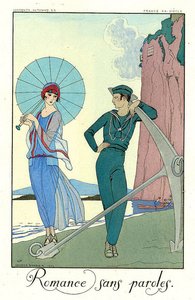
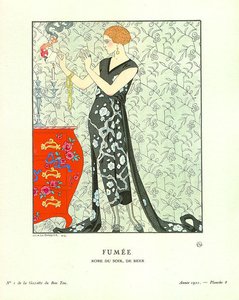
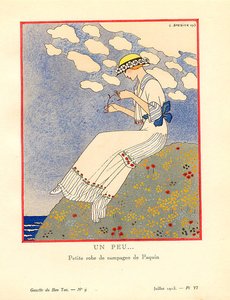
11Dernière Nuit De Don Juan by George BarbierDernière Nuit De Don Juan 12L'amour Est Aveugle by George BarbierL'amour Est Aveugle 13L'apres-midi D'un Faune by George BarbierL'apres-midi D'un Faune 14Visez Au Coeur, Belles Dame by George BarbierVisez Au Coeur, Belles Dame 15L'arc En Ciel by George BarbierL'arc En Ciel 16Fashion Plate For La Gazette Du Bon Ton by George BarbierFashion Plate For La Gazette Du Bon Ton 17Grand-mere ^ Petite-fille by George BarbierGrand-mere ^ Petite-fille 18Nijinsky by George BarbierNijinsky 19Mademoiselle Spinelly Chez Elle by George BarbierMademoiselle Spinelly Chez Elle 20Les Belles Sauvagesses by George BarbierLes Belles Sauvagesses 21Minuit! ... Ou L'appartement A La Mode by George BarbierMinuit! ... Ou L'appartement A La Mode 22Le Grand Decolletage by George BarbierLe Grand Decolletage 23L'eau by George BarbierL'eau 24Le Feu by George BarbierLe Feu 25Les Allies A Versailles by George BarbierLes Allies A Versailles 26La Terre by George BarbierLa Terre 27Lepape by George BarbierLepape 28Vaslav Nijinsky In 'la Spectre De La Rose' Unframed by George BarbierVaslav Nijinsky In 'la Spectre De La Rose' Unframed 29L'air by George BarbierL'air 30L'avarice by George BarbierL'avarice 31Untitled by George BarbierUntitled 32Romance Sans Paroles by George BarbierRomance Sans Paroles 33La Joueuse De Theorbe by George BarbierLa Joueuse De Theorbe 34L'arc Rouge by George BarbierL'arc Rouge 35Incantation by George BarbierIncantation 36La Belle Matineuse by George BarbierLa Belle Matineuse 37Ah, Quel Beau Temps by George BarbierAh, Quel Beau Temps 38Adieu by George BarbierAdieu 39Fumee by George BarbierFumee 40Le Depart Pour Le Casino by George BarbierLe Depart Pour Le Casino 41Oui! by George BarbierOui! 42Cortege by George BarbierCortege 43Costume De Yacht by George BarbierCostume De Yacht 44Au Revoir by George BarbierAu Revoir 45Dangerous Liaisons by George BarbierDangerous Liaisons 46Le Paravent Rouge by George BarbierLe Paravent Rouge 47Les Columbes Familieres by George BarbierLes Columbes Familieres 48Jeanne Paquin Gown by George BarbierJeanne Paquin Gown 49L'Europe by George BarbierL'Europe 50Le Tombeau Des Secrets by George BarbierLe Tombeau Des Secrets 51Love, Desire, and Death by George BarbierLove, Desire, and Death 52George Barbier for perfume Lubin (1912) by George BarbierGeorge Barbier for perfume Lubin1912 · The Fan Museum 53Mademoiselle Sorel En Grand Habit by George BarbierMademoiselle Sorel En Grand Habit 54L'hiver by George BarbierL'hiver 55L'ete by George BarbierL'ete 56Poestum by George BarbierPoestum 57La Souris by George BarbierLa Souris 58La Guirlande by George BarbierLa Guirlande 59Designs On The Dances Of Vaslav Nijinsky by George BarbierDesigns On The Dances Of Vaslav Nijinsky 60Jeune Fille Elegante Unframed by George BarbierJeune Fille Elegante Unframed 61Two Georges Barbier Costume Sketches by George BarbierTwo Georges Barbier Costume Sketches 62L'escarpotette by George BarbierL'escarpotette 63Manteau De Velours Blanc by George BarbierManteau De Velours Blanc 64Costumes Parisiens by George BarbierCostumes Parisiens 65Au Lido by George BarbierAu Lido 66Rouge Et Or by George BarbierRouge Et Or 67La Gazette by George BarbierLa Gazette 68Pour St. Moritz by George BarbierPour St. MoritzRoyal Museums of Fine Arts of Belgium 69Le Matin Et Le Soir by George BarbierLe Matin Et Le Soir 70Eventails by George BarbierEventails 71Pavane by George BarbierPavaneThe Phillips Collection 72Le Jeu Des Graces by George BarbierLe Jeu Des Graces 73Qui Ne Vous Aimerait by George BarbierQui Ne Vous Aimerait 74Proserpine by George BarbierProserpine 75Papillons by George BarbierPapillons 76Le Coup De Vent by George BarbierLe Coup De Vent 77L'envie (envy) by George BarbierL'envie (envy) 78Midi Sur L'eau by George BarbierMidi Sur L'eau 79La Luxure (pleasure) by George BarbierLa Luxure (pleasure)Staatliche Kunstsammlungen Dresden 80La Belle Aux Moineaux by George BarbierLa Belle Aux Moineaux 81Voici Des Fleurs by George BarbierVoici Des Fleurs 82Costume De Bain by George BarbierCostume De Bain 83Esperez by George BarbierEsperez 84Mlle. Sorel Au Bal Du Grand Prix by George BarbierMlle. Sorel Au Bal Du Grand Prix 85L'ilot by George BarbierL'ilot 86Toilette D'ete by George BarbierToilette D'ete 87Le Jour Et La Nuit by George BarbierLe Jour Et La Nuit 88A Greek Tragedy Together With 'le Cavalier Blanc' Gouache Over Print Base by George BarbierA Greek Tragedy Together With 'le Cavalier Blanc' Gouache Over Print Base 89L'Averse Intempestive by George BarbierL'Averse Intempestive 90Voici Mes Ailes! by George BarbierVoici Mes Ailes! 91Vesper by George BarbierVesper 92Robe De Taffetas Gris by George BarbierRobe De Taffetas Gris 93Nijinsky by George BarbierNijinsky 94La Danseuse Aux Jets D'eau by George BarbierLa Danseuse Aux Jets D'eau 95Robe De Crepe De Chine by George BarbierRobe De Crepe De Chine 96Manteau De Damas Rose-garni by George BarbierManteau De Damas Rose-garni 97L'aveu Difficile by George BarbierL'aveu Difficile 98Robe D'interieur En Soie Brochee by George BarbierRobe D'interieur En Soie Brochee 99La toilette delicieuse by George BarbierLa toilette delicieuse 100Un Peu by George BarbierUn Peu

The subjects that held George Barbier's eye

The four subjects that come back most often in these originals, each with its finest example.

The museums that keep George Barbier's originals

The 5 museums that hold the most of the paintings on this page.

Museum City Works by George Barbier Paintings from this list
The Phillips Collection, Washington, D.C.The Phillips Collection Washington, D.C. 2 Pavane
Metropolitan Museum of Art, New YorkMetropolitan Museum of Art New York 1 Fan
The Fan Museum, GreenwichThe Fan Museum Greenwich 1 George Barbier for perfume Lubin
Royal Museums of Fine Arts of Belgium, BrusselsRoyal Museums of Fine Arts of Belgium Brussels 1 Pour St. Moritz
Staatliche Kunstsammlungen Dresden, DresdenStaatliche Kunstsammlungen Dresden Dresden 1 La Luxure (pleasure)

George Barbier year by year: the originals that define each

From 1910 to 1925, George Barbier worked for 16 years: the selection follows that long career year by year, through its finest originals.

Works per year

Pick a year to see its originals.

Collectors' questions about George Barbier's paintings

Which work is George Barbier most famous for?Reveal the answer

Fan (1914), Metropolitan Museum of Art, New York. Single Ladies (1910) and An Amazon, from Costumes Parisiens (1913) come next.

What age was George Barbier when Fan was made?Reveal the answer

32 years old: Fan dates from 1914, and George Barbier was born in 1882.

What are the ten most famous George Barbier paintings?Reveal the answer

Fan, Single Ladies, An Amazon, from Costumes Parisiens, The songs of Bilitis, Falbalas And Fanfreluches, La Fontaine De Coquillages, La Belle Personne, Sur L'herbe Unframed, Pink And Grey Unframed and Le Crayon Aussi Est Une Amie Unframed. The ranking above gives each one's year and museum.

How many paintings did George Barbier leave?Reveal the answer

Our catalog holds 160 works by George Barbier, dated from 1910 to 1925.

In which museums do George Barbier's masterpieces hang?Reveal the answer

Mostly in The Phillips Collection (Washington, D.C.), Metropolitan Museum of Art (New York) and The Fan Museum (Greenwich). The museum table above lists them all.

What are the first and the last famous originals of George Barbier?Reveal the answer

On this page, the earliest is Single Ladies (1910) and the latest Falbalas And Fanfreluches (1925).

Which subjects did George Barbier choose most often?Reveal the answer

Fashion illustration (7), Vintage illustration (7) and Elegant woman (6), across the 100 works on this page.

Which technique did George Barbier use most?Reveal the answer

Lithograph, for 3 of the 100 works on this page.

To which art movement does George Barbier belong?Reveal the answer

Art deco, judging by the originals on this page.

George Barbier: life and work

George Barbier: The Architect of Art Deco Elegance

George Barbier (1882-1932) wasn’t merely an illustrator; he was a meticulous architect of style, a visual storyteller who shaped the aesthetic landscape of the early 20th century. Born in Nantes, France, into a family steeped in artistic tradition – his father was a painter and his cousin Paul Iribe a celebrated designer – Barbier inherited a deep appreciation for beauty and an innate ability to translate it onto paper. His career, though relatively brief, left an indelible mark on fashion, theatre, and decorative arts, establishing him as one of the foremost figures of the Art Deco movement.

Barbier’s early training at the École des Beaux-Arts in Paris provided a solid foundation in classical drawing techniques, but it was his exposure to the vibrant social circles surrounding magazines like *La Gazette du Bon Ton* that truly ignited his creative spirit. He became part of a close-knit group of artists – including Paul Iribe, Bernard Boutet de Monvel, and Georges Lepape – known affectionately as “The Knights of the Bracelet,” a moniker reflecting their penchant for flamboyant attire and sophisticated designs. This environment fostered experimentation and collaboration, pushing Barbier to explore new approaches to illustration and design.

A Symphony of Fashion and Theatre

Barbier’s work is instantly recognizable by its opulent detail, intricate patterns, and a masterful command of color. He initially gained prominence through his illustrations for fashion magazines, particularly *La Gazette du Bon Ton*, where he captured the spirit of Parisian society with breathtaking elegance. His depictions of women in shimmering gowns, adorned with feathers, jewels, and elaborate headwear, were not simply portraits; they were miniature narratives, conveying a sense of glamour, sophistication, and even playful sensuality. He didn’t just draw dresses; he created entire worlds around them.

However, Barbier's talent extended far beyond the realm of fashion. He quickly established himself as a sought-after designer for theatre productions, creating stunning costumes for ballet companies like Sergei Diaghilev’s Ballets Russes and collaborating on lavish sets for the Folies Bergère in Paris. His designs were characterized by their exotic influences – incorporating motifs from ancient Egypt, Persia, and the Far East – blended seamlessly with Art Deco geometric forms and luxurious fabrics. His work for *Casanova* (1928), a production starring Rudolph Valentino, cemented his reputation as a master of theatrical costume design.

The Falbalas & Fanfreluches: A Visual Legacy

Perhaps Barbier’s most enduring legacy lies in his series of almanacs, *Falbalas et Fanfreluches* (1922-1926). These beautifully illustrated books were a showcase for his distinctive style – a dazzling blend of fashion, fantasy, and decorative motifs. Each page was a miniature masterpiece, filled with exquisitely rendered figures, intricate patterns, and a palpable sense of joie de vivre. The titles themselves—"falbalas" (ruffles) and "fanfreluches" (frills)—perfectly captured the essence of his work: a celebration of luxurious fabrics and playful ornamentation.

These almanacs weren’t merely decorative; they were carefully constructed visual narratives, often depicting social gatherings, exotic travels, and moments of romantic intrigue. Barbier's meticulous attention to detail—from the texture of silk to the sparkle of diamonds—created a world of unparalleled beauty and sophistication. The influence of *Falbalas et Fanfreluches* can still be seen today in contemporary fashion and design, demonstrating the enduring power of Barbier’s vision.

Influences and Artistic Connections

Barbier's artistic development was shaped by a diverse range of influences. The classical training he received at the École des Beaux-Arts provided him with a strong foundation in drawing and composition, while his exposure to contemporary movements like Fauvism and Cubism broadened his aesthetic horizons. He also drew inspiration from Orientalist art, particularly the vibrant colors and intricate patterns of Persian textiles. His close relationships with other prominent artists – including Paul Iribe and Georges Lepape – fostered a spirit of collaboration and experimentation that fueled his creative growth.

Furthermore, Barbier’s work reflects the broader cultural trends of the 1920s—a period marked by economic prosperity, technological innovation, and a fascination with exotic cultures. The rise of mass media, particularly magazines like *La Gazette du Bon Ton*, provided him with a platform to reach a wide audience and establish his reputation as one of the leading illustrators of his time.

A Lasting Impact

George Barbier’s career was tragically cut short by illness in 1932, at the age of 50. Despite his untimely death, his work continues to captivate and inspire. His illustrations are prized for their beauty, elegance, and technical virtuosity, and they remain a defining example of Art Deco style. Barbier’s legacy extends beyond the realm of illustration; he helped to shape the visual language of fashion, theatre, and decorative arts, leaving an enduring mark on the cultural landscape.