In short
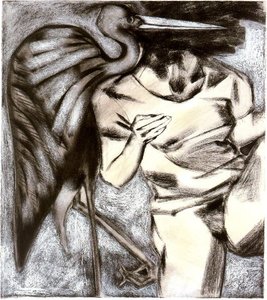
To the gallery's eye, Francesco Clemente's most famous painting is Midnight Sun V (1982). Self-Portrait (2005) and Untitled (409) complete the trio every eye recognises. Of the 103 works by Francesco Clemente in our catalog, the gallery presents the 100 most famous below, each original with its year, its museum and what makes it unique.
The gallery's top 10 Francesco Clemente paintings
Francesco Clemente paintings, ranked 11 to 100
Francesco Clemente's famous paintings, period by period
Mature Period
19 works in this listContemporary
6 works in this listThe subjects that held Francesco Clemente's eye
The four subjects that come back most often in these originals, each with its finest example.
Dreamlike 8 works
Melancholy 6 works
Distortion 4 works
Italian art 4 works
The museums that keep Francesco Clemente's originals
The 3 museums that hold the most of the paintings on this page.
| Museum | City | Works by Francesco Clemente | Paintings from this list |
|---|---|---|---|
| Chicago | 1 | Two Seeds | |
| Boston | 1 | Untitled | |
| Frankfurt | 1 | Tandoori Satori Nr. 15 |
Francesco Clemente, the signature paintings of each year
24 years of Francesco Clemente's art, 1982 to 2005: the gallery follows them year by year, through the most famous originals of each.
Francesco Clemente's paintings: the gallery answers
Which Francesco Clemente painting is the most famous of all?Reveal the answer
Midnight Sun V (1982). Self-Portrait (2005) and Untitled (409) come next.
How old was Francesco Clemente on completing Midnight Sun V?Reveal the answer
30 years old: Midnight Sun V dates from 1982, and Francesco Clemente was born in 1952.
Which are Francesco Clemente's top 10 paintings?Reveal the answer
Midnight Sun V, Self-Portrait, Untitled (409), Untitled (203), Hijo, Untitled (797), Untitled (279), Untitled (431), Untitled (984) and Untitled (520). The ranking above gives each one's year and museum.
How many works did Francesco Clemente create?Reveal the answer
Our catalog holds 103 works by Francesco Clemente, dated from 1982 to 2005.
Where do Francesco Clemente's most famous originals hang?Reveal the answer
Mostly in Art Institute of Chicago (Chicago), Museum of Fine Arts (Boston) and Städel Museum (Frankfurt). The museum table above lists them all.
Which are Francesco Clemente's earliest and latest famous works?Reveal the answer
On this page, the earliest is Midnight Sun V (1982) and the latest Self-Portrait (2005).
Which subjects did Francesco Clemente return to most?Reveal the answer
Dreamlike (8), Melancholy (6) and Distortion (4), across the 100 works on this page.
Which movement is Francesco Clemente associated with?Reveal the answer
Transavanguardia, judging by the originals on this page.
Francesco Clemente: the artist
A Life Interwoven: The Art of Francesco Clemente
Francesco Clemente emerged as a pivotal figure in the late 20th-century art world, an artist whose work transcends geographical boundaries and stylistic categorization. Born in Naples, Italy, in 1952, Clemente’s artistic journey has been one of constant exploration—a restless seeking that led him from the architectural studies he initially pursued at the Università degli Studi di Roma to a profound immersion in the spiritual and aesthetic traditions of India, and ultimately, to a globally recognized practice. His paintings are not merely images; they are portals into a realm where dream logic intertwines with ancient symbolism, where the human body is rendered as both vulnerable and transcendent. Early influences like Alighiero Boetti and Cy Twombly provided a foundation, fostering his artistic development during his formative years in Rome, but it was Clemente’s encounter with Eastern philosophies that truly ignited his unique visual language. He wasn't simply seeking aesthetic novelty; he was embarking on a profound quest for understanding the human condition itself, a search reflected in every brushstroke and carefully chosen symbol.The Transavanguardia & A Return to Narrative
Clemente rose to prominence alongside the Italian *Transavanguardia* movement of the late 1970s—a deliberate rebellion against the prevailing conceptual art and minimalist formalism that had dominated the previous decade. This was a return to figuration, to narrative, to the expressive power of paint itself. While many artists were stripping away layers of meaning, Clemente was building them up, layering symbols and allusions drawn from personal mythology, Hindu iconography, and the collective unconscious. His participation in the 39th Venice Biennale in 1980 served as a crucial turning point, establishing him on the international stage. He wasn’t simply painting pictures; he was constructing worlds—fragile, enigmatic, and deeply evocative. This period saw Clemente grappling with themes of identity, spirituality, and the human condition, often depicting figures fragmented or distorted, reflecting an inner psychological landscape. The body, in his work, is rarely a static form but rather a threshold, a liminal space between the self and the universe. This embrace of subjectivity and emotional resonance was a direct challenge to the cool detachment that had characterized much of the art world prior.India as Muse: A Profound Transformation
The artist’s first journey to India in 1973 proved transformative. It wasn't merely a geographical relocation; it was an immersion into a different way of seeing, of being. He spent extended periods living and working in Madras (now Chennai), studying Sanskrit, delving into Hindu and Buddhist literature, and collaborating with local artists. This exposure profoundly shaped his artistic style, infusing it with the vibrant colors, intricate details, and symbolic richness of Indian miniature painting and folk art traditions. The influence is palpable—not as imitation, but as a deeply internalized aesthetic that reshaped his approach to composition, color, and subject matter. He absorbed the philosophical underpinnings of these ancient cultures, incorporating them into his exploration of consciousness and existence. This period wasn't about appropriating another culture; it was about forging a synthesis between Eastern and Western perspectives, creating something entirely new. The delicate precision of miniature painting found its way into Clemente’s work, alongside the raw emotionality he had cultivated in Italy.A Continuing Legacy: Neo-Expressionism & Beyond
Clemente's arrival in New York in 1980 coincided with the rise of *Neo-Expressionism*—a movement that saw a resurgence of figurative painting and emotionally charged imagery. He quickly became a key contributor, his work resonating with an audience hungry for art that spoke to the human experience with raw honesty and vulnerability. His paintings from this period often feature dreamlike scenarios, surreal juxtapositions, and ambiguous spaces that resist easy interpretation. The recurring motif of the body—often fragmented, vulnerable, or in states of transformation—continues to be a central theme. Throughout his career, Clemente has consistently pushed boundaries, experimenting with different media—from oil paint and watercolor to fresco and sculpture—and collaborating with writers like Allen Ginsberg and Robert Creeley. His election to the American Academy of Arts and Letters in 2002 further solidified his standing within the art world, a testament to his enduring influence. Clemente’s work is not easily categorized; it exists in a space between cultures, traditions, and artistic movements. He continues to live and work between New York, Chennai, and Varanasi, constantly evolving and challenging our perceptions of art and reality.A Bridge Between Worlds
The historical significance of Francesco Clemente lies in his ability to synthesize disparate cultural and artistic traditions into a cohesive and deeply personal vision. He didn’t simply borrow from Eastern or Western aesthetics; he *translated* them, creating a visual language that is both ancient and contemporary. His contribution to the Transavanguardia movement was crucial in revitalizing figurative painting at a time when conceptual art reigned supreme. More than just an artist, Clemente is a cultural bridge—a conduit between worlds—whose work invites us to contemplate our place within the vast tapestry of human experience.- His paintings are filled with symbolic imagery drawn from diverse sources.
- He masterfully blends traditional techniques with contemporary sensibilities.
- Clemente’s art explores universal themes of identity, spirituality, and mortality.