The Silent Shadow of the Renaissance
In the luminous history of the Italian Quattrocento, certain names shine with an almost blinding brilliance, while others linger in the soft, evocative shadows cast by these giants. Fra Diamante is a figure who exists within that profound twilight—a painter whose brushstrokes were inextricably woven into the very fabric of the Florentine Renaissance. Born near the Tuscan town of Prato around 1430, his life was defined by the quiet discipline of the Carmelite order. As a friar, his early years were shaped by monastic devotion, an environment that provided not only the spiritual sustenance for his subject matter but also the professional foundations of his artistic journey. He emerged from the convent not merely as a man of prayer, but as a skilled garzone, beginning his ascent in the workshop of the legendary Filippo Lippi.
The relationship between Diamante and Lippi was far more than a simple apprenticeship; it was a dynamic artistic synergy that fueled some of the era's most significant fresco cycles. As Lippi’s trusted assistant and friend, Diamante played a pivotal role in translating Byzantine-inspired reverence into the burgeoning naturalism of the Florentine style. Together, they undertook the monumental task of decorating the east end of the Prato Cathedral, a project where Diamante’s hand helped breathe life into sacred narratives. His contributions to works such as the depictions of the Nativity and the Funeral of St. Jerome showcase a remarkable sensitivity to light and human emotion, capturing a quiet intensity that allowed the divine to feel intimately present within the earthly realm.
A Legacy of Devotion and Transition
The trajectory of Diamante’s career was marked by dramatic shifts in fortune and sudden departures that mirrored the turbulent nature of the era. His importance to the Florentine community was so significant that when he was recalled to Florence by his conventual superior, the very progress of the Prato Cathedral frescoes was suspended, prompting a formal petition to the metropolitan of Florence to ensure his return. This level of institutional concern underscores the vital role he played in executing the grand visions of his master. Following the death of Lippi in 1469, Diamante found himself at a crossroads of both professional and personal responsibility. He was tasked with the care of Lippi’s young son, the future master Filippino Lippi, a duty that would link his legacy to the next generation of Renaissance greatness.
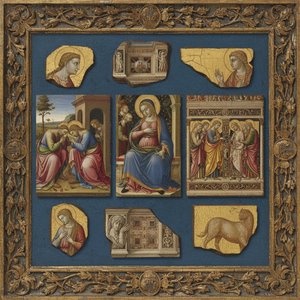
His technical mastery is perhaps most poignantly observed in works like The Nativity, currently housed in the Louvre. In this panel, painted between 1465 and 1470, one finds a window into a world where faith and artistry intertwine with breathtaking grace. The composition radiates a profound sense of intimacy; Mary, draped in flowing robes of deep blue, cradles the infant Jesus amidst a humble stable, while angels observe from above with ethereal delicacy. Even when his individual hand is difficult to distinguish from Lippi’s, the spiritual weight of the compositions speaks to a shared vision of grace. Though much of his fresco work in the Prato convent was lost to time and the alteration of sacred buildings, Fra Diamante remains an essential, if enigmatic, witness to the splendor of the Florentine Renaissance.