Famous painters by country

Great Hungarian Painters

The masters our own painters keep coming back to. Hungarian painting of the 19th and 20th centuries joined academic history painting, the plein-air colony of Nagybánya and the avant-garde of László Moholy-Nagy. Here are 24 of them, each with three works that still teach painters today and the museum where they can be seen.

Victor Vasarely (1906–1997), László Moholy-Nagy (1895–1946) and Amrita Sher-Gil (1913–1941) head the 24 great Hungarian masters who inspire our artists, all born in Hungary, each with three key works.

  1. Terek by Victor Vasarely1Victor Vasarely
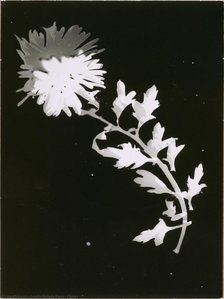
  2. Small composition by László Moholy-Nagy2László Moholy-Nagy
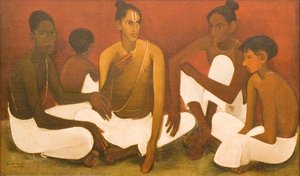
  3. Brahmacharis by Amrita Sher-Gil3Amrita Sher-Gil
  • 24Painters on this list
  • 1673–1913Years of birth
  • 320Artists born in Hungary in our catalogue
  • 4,576Of their works in our catalogue

The list

The 24 great Hungarian painters

1of 24

Victor Vasarely

Born in Pécs Op Art, Kinetic Art, Geometric Abstraction

Victor Vasarely

He did not rely on traditional light sources or classical chiaroscuro to create form. In works like Torony-Nagy, the intersection of crisp white lines with deep blues and emerald greens creates a rhythmic optical vibration. In 1982, his work traveled into space when serigraphs were included aboard the French-Soviet spacecraft Salyut 7.

Where to see Tracing the physical presence of his work requires traveling across several locations in France and Hungary.

Signature works · The 100 signature works

2of 24

László Moholy-Nagy

Born in Bácsborsód Constructivism, Bauhaus

László Moholy-Nagy

Joining the Bauhaus: In 1923, Moholy-Nagy joined the Bauhaus school in Weimar, Germany, initially co-teaching the preliminary course with Josef Albers and eventually replacing Johannes Itten as head of the metal workshop. Shifting the Bauhaus Direction: His arrival marked a shift away from Expressionism towards a more Constructivist and design-oriented approach, aligning with the school’s original aims. Education and War Service: He initially studied law in Budapest before serving in World War I, sustaining a serious injury.

Signature works · The 100 signature works

3of 24

Amrita Sher-Gil

Born in Budapest Modern Indian art, Avant-garde

Amrita Sher-Gil

Amrita Sher-Gil’s style is instantly recognizable for its bold use of color, simplified forms, and expressive figures. She didn’t merely depict what she saw; she imbued her paintings with emotion, creating works that are both visually stunning and deeply moving. She is rightfully regarded as a pioneer of modern Indian painting, bridging Western artistic techniques with indigenous traditions and paving the way for future generations of artists.

Signature works · The 100 signature works

4of 24

Vilmos Aba-Novak

Born in Budapest Modern Hungarian art

Vilmos Aba-Novak

Born in Budapest on March 15th, 1894, Vilmos Aba-Novák’s early life was marked by an exposure to the visual arts. He initially studied at the Budapest Art School until 1912, laying the groundwork for his future career. His legacy extends beyond individual artworks; he helped to establish a distinctly Hungarian modern style that blended influences from Expressionism, the Italian Novecento, and his own unique artistic vision.

Signature works · The 100 signature works

5of 24

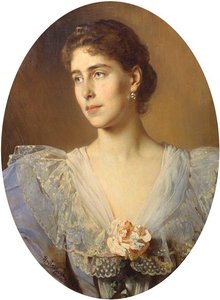
Philip de László

Born in Pest

Philip de László

De László’s early work demonstrated a keen eye for detail and a developing mastery of realism. His influences included the academic traditions he learned at the Academy, as well as the prevailing trends in portraiture during the late 19th and early 20th centuries.

Signature works · The 100 signature works

6of 24

Gyula Benczúr

Born in Nyíregyháza Academic Realism & Romanticism

Gyula Benczúr

Under the watchful eyes of masters such as Hermann Anschutz and Johann Georg Hiltensperger, he forged a technical foundation that allowed him to navigate the complexities of human anatomy and historical texture.

Signature works · The 100 signature works

8of 24

József Rippl-Rónai

Born in Kaposvár ['Impressionism', 'Post-Impressionism', 'Symbolism']

József Rippl-Rónai

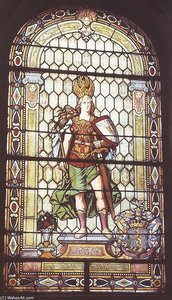
Rippl-Rónai's formal artistic education began at the Munich Academy of Fine Arts before continuing at the Académie Julian in Paris. His early works demonstrated a vibrant use of color, bold brushstrokes, and innovative compositions, reflecting his engagement with Impressionism, Post-Impressionism, and Symbolism. Design Contributions: Beyond painting, he contributed significantly to design, undertaking commissions such as the interior design of the Andrássy palace and creating stained-glass windows for the Ernst Museum.

Signature works · The 100 signature works

9of 24

Katarina Ivanović

Born in Veszprém Biedermeier and Romanticism

Katarina Ivanović

Her life, moving between the Austrian Empire, Paris, and Zagreb, ended in Székesfehérvár in 1882, but her legacy is anchored in the permanent collections of the National Museum of Serbia, where her forty-eight known paintings continue to define the origins of modern Serbian painting.

Signature works · The 100 signature works

10of 24

Mihály Zichy

Born in Zala Romanticism

Mihály Zichy

Vienna Years & Waldmüller's Mentorship: Studying under Waldmüller solidified Zichy’s technique and broadened his artistic horizons. Petersburg witnessed a significant shift towards portraiture, driven by commissions from influential figures like Lajós Batthyány – a bold declaration of allegiance to Hungarian independence during the Austro-Hungarian Compromise of 1867. "Autodafé," painted in 1868, confronts viewers with the horrors of the Spanish Inquisition through a masterful use of chiaroscuro and symbolic imagery.

Signature works · The 100 signature works

11of 24

Antal Berkes

Born in Budapest Impressionism

Antal Berkes

His formative years were spent within the framework of the Academy of Fine Arts, where he initially honed his skills in landscape painting, a traditional pursuit often considered a stepping stone to more ambitious subjects. While he continued to paint scenes of Budapest, his Parisian experience broadened his perspective and led to subtle shifts in his style.

Signature works · The 100 signature works

12of 24

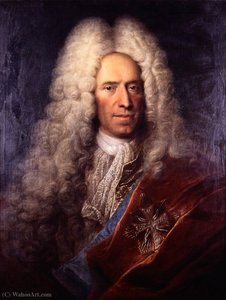
Ádám Mányoki

Born in Szokolya Baroque Painting

Ádám Mányoki

Born in 1673 in the modest village of Szokolya, Hungary, Mányoki’s journey from the son of a struggling Protestant pastor to a celebrated court painter is a testament to the transformative power of raw talent.

Signature works · The 100 signature works

13of 24

Nickolas Muray

Born in Budapest Portrait Photography

Nickolas Muray

Born Miklós Mandl in Budapest in 1892, his journey from a Hungarian student of graphic arts to an American icon of photography is a sweeping narrative of technical precision meeting profound artistic intuition. Muray’s arrival in New York City in 1913 marked the beginning of a transformative era in American visual culture.

Signature works · The 100 signature works

16of 24

Sandor Nagy

Post-Impressionism

Sandor Nagy

This period witnessed a crucial evolution in his work—a shift from the more academic influences of Rome towards a distinctly Hungarian style. His palette became richer, incorporating vibrant hues inspired by the surrounding flora and fauna. His work is considered an important example of Hungarian Modernism, reflecting a blend of traditional influences with contemporary artistic trends.

Signature works · The 100 signature works

17of 24

Martin Munkácsi

Born in Cluj-Napoca Action photography

Martin Munkácsi

This wasn't merely about staging action; Munkácsi possessed an innate ability to anticipate and capture the perfect moment. He collaborated closely with Carmel Snow, pioneering techniques such as photographing models running towards the camera – a practice previously unheard of. His dynamic compositions, masterful use of light and shadow, and ability to capture fleeting moments profoundly influenced Henri Cartier-Bresson, who famously declared that Munkácsi's photograph ‘Three Boys at Lake Tanganyika’ ignited his passion for photography.

Signature works · The 100 signature works

19of 24

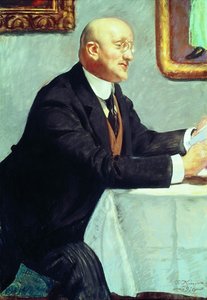
Igor Grabar

Born in Buda Post-Impressionism

Igor Grabar

This role evolved as the political landscape shifted, and he eventually served as the Head of the State Tretyakov Gallery from 1918 to 1925. His administrative reach extended to the highest levels of the state when he was named the Director of the All-Russian Academy of Arts in 1943. He managed art-restoration workshops during two distinct periods, from 1918 to 1930 and again from 1944 to 1960.

Where to see His paintings can be found in several major collections across Russia and Ukraine.

Signature works · The 100 signature works

20of 24

Agost Benkhard

Impressionism

Agost Benkhard

Paintings like ‘ August ’ exemplify his masterful blending of Impressionistic principles with a deep appreciation for the Hungarian countryside. His ‘ Reclining Nude,’ painted in 1928, showcases his ability to convey emotion through subtle tonal variations and delicate brushwork—a testament to his humanist vision. Benkhard’s artistic journey was profoundly shaped by the Impressionist movement, particularly Monet's explorations of light and color.

Signature works · The 100 signature works

21of 24

Gyula Batthyany

Romantic Realism

Gyula Batthyany

His father, Count Lajos Batthyány, was a prominent figure—governor of Fiume and a member of parliament—while his mother, Countess Ilona Andrássy, further cemented the family’s position within Hungary's elite circles. His formal education commenced at the prestigious Hungarian Academy of Fine Arts, where he studied under the guidance of János Vaszary. The elongated figures in his paintings recall the work of El Greco, while the overall decorativeness hints at the illustration styles of Surrealism and Art Deco.

Signature works · The 100 signature works

23of 24

Ernő Goldfinger

Born in Budapest Modernist Architecture

Ernő Goldfinger

His early London projects, most notably his own residence at 2 Willow Road, serve as intimate studies in restraint and symmetry. By the time he relocated to London in 1934 with his wife, the artist Ursula Blackwell, Goldfinger possessed a vision that sought to marry the geometric precision of the machine age with a deeply humanistic approach to habitation.

Signature works · The 100 signature works

Figures

Where they were born, when, and where to see them

City of birth
Budapest6
Pécs1
Bácsborsód1
Pest1
Nyíregyháza1
Sopron1
Kaposvár1
Veszprém1
Century of birth
17th century1
18th century1
19th century18
20th century4
Museums holding their key works
Hungarian National Gallery4
Inter-American Development Bank1
Bauhaus Dessau Foundation1
Centre Pompidou1
Kiran Nadar Museum of Art1
National Gallery of Modern Art1
Balliol College1
Vychodoslovenské Galéria1

Questions and answers

Great Hungarian painters: questions and answers

How this list is ranked Our ranking draws on Wikipedia, the manual rank our editors give each artist and artwork, and the visits each page receives every month.