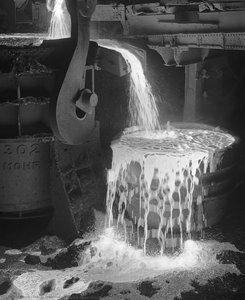
David Plowden: A Chronicle of Vanishing America
David Plowden, born in Boston in 1932 and still actively creating today, is more than just a photographer; he’s a chronicler of a disappearing America. His work, spanning nearly seven decades, meticulously documents the fading grandeur of industrial landscapes, steam trains, small towns, and the agricultural heartland – scenes that increasingly exist as relics of a bygone era. Plowden's photographs aren’t simply images; they are powerful testaments to a nation undergoing profound transformation, capturing both the beauty and the melancholy of progress.
Plowden’s early life instilled in him a deep appreciation for machinery and the rhythms of industry. Growing up primarily in New York City, he found solace and fascination in the world beyond – specifically, the vast expanse of rural America. This childhood curiosity led him to study economics at Yale College before pursuing photography seriously. A pivotal moment came with his apprenticeship under Minor White and Nathan Lyons in Rochester, New York, immersing himself in the principles of modernist photographic expression. These formative experiences shaped his approach: a deliberate focus on detail, stark contrasts, and an almost sculptural quality to his compositions.
His career began modestly, working for publications like *Time*, *Life*, and *Newsweek*. However, it was his lifelong obsession with steam trains that truly defined his artistic trajectory. Recognizing the imminent demise of these magnificent machines – replaced by diesel and electric alternatives – Plowden embarked on a dedicated project to document them before they vanished entirely. This pursuit led him across vast distances, from the rolling hills of Pennsylvania to the industrial heartland of the Midwest. He wasn’t merely photographing trains; he was capturing an entire way of life inextricably linked to their operation.
The Language of Industry
Plowden's photographs are characterized by a remarkable ability to convey scale and texture. His images of steel mills, for instance – works like “Inland Steel” (1979) – aren’t romanticized depictions; they are brutally honest portrayals of industrial might. The sheer size of the structures, rendered in stark black and white, is almost overwhelming, emphasizing the human effort required to operate them. Geometric lines dominate these compositions, creating a sense of order amidst the chaos of production. He frequently used long exposures and careful manipulation of light to capture the textures of concrete, metal, and smoke – elements that contribute significantly to the photographs’ impact.
Beyond industrial scenes, Plowden's work extends to documenting small towns and agricultural landscapes. “Men cleaning cargo hold on steamer ‘Crispin Oglebay’” (1968) offers a poignant glimpse into the daily lives of workers in a bustling port, showcasing their labor with a quiet dignity. Similarly, his images of grain elevators and farmhouses capture the essence of rural America – its simplicity, resilience, and connection to the land. He wasn’t interested in grand narratives; instead, he focused on the intimate details that revealed the character of these communities.
A Guggenheim Fellowship and Critical Recognition
Plowden's dedication to his craft was recognized with a prestigious Guggenheim Fellowship in 1968, a testament to the significance of his work. This award provided him with invaluable time and resources to pursue his projects, allowing him to travel extensively and develop his artistic vision. His photographs have been exhibited at major institutions worldwide, including the Art Institute of Chicago, the Smithsonian Institution, and the Library of Congress, solidifying his place as a leading figure in American documentary photography.
The Beinecke Rare Book & Manuscript Library at Yale University holds the complete archive of Plowden’s work, a remarkable collection that offers unparalleled insight into his creative process. This archive serves not only as a repository for his photographs but also as a valuable resource for scholars and researchers interested in understanding the history of American photography and the changing landscape of the nation.
Themes of Loss and Remembrance
Throughout his career, Plowden’s work has consistently explored themes of loss and remembrance. He documented industries that were rapidly disappearing – steam trains, steel mills, and small towns – recognizing their significance as symbols of a bygone era. His photographs aren't simply records of these vanishing scenes; they are elegies for a way of life that was being irrevocably altered by industrialization and urbanization. He understood that his images would serve as a visual record for future generations, reminding them of the beauty and importance of the landscapes he captured.
Despite the melancholy undertones of some of his work, Plowden’s photographs are ultimately imbued with a sense of quiet dignity and respect. He approached his subjects with empathy and understanding, capturing their essence in a way that transcends mere documentation. David Plowden's legacy lies not only in his stunning images but also in his ability to evoke a profound emotional response – a recognition of the past and a contemplation of the future.