Portrait of Arthur Hacker

The 93 Most Famous Arthur Hacker Paintings, Each One of a Kind

Updated October 2026 · ranked by our popularity score (searches, visits and orders for each work) · 94 works by Arthur Hacker in our catalogue

In short

Flare and Flutter: Piccadilly Circus at Night (1912) is the Arthur Hacker painting that draws the most eyes. After it, the eye goes to Figure walking on the shore, Lake Como, Italy and Portrait Of Artist's Sister­-in­-Law (1882). Among the 94 works of Arthur Hacker in our catalog, these 93 are the most famous, each a unique original presented with its year, its museum and the reason it endures.

1858 – 1919, London Impressionism Most works: Cartwright Hall Art Gallery

Top 10 paintings by Arthur Hacker, through the gallery's eye

1
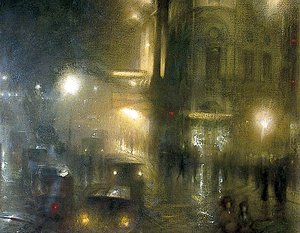
Flare and Flutter: Piccadilly Circus at Night (1912) by Arthur Hacker

Flare and Flutter: Piccadilly Circus at Night

1912 · Oil On Canvas

The oil on canvas painting titled Flare and Flutter: Piccadilly Circus at Night was created by the artist Arthur Hacker. This work dates to 1912. The subject matter focuses on a night scene located at Piccadilly Circus in London. The composition captures a specific moment of urban activity within this metropolitan setting.

3
Portrait Of Artist's Sister­-in­-Law (1882) by Arthur Hacker

Portrait Of Artist's Sister­-in­-Law

1882 · Oil

Created during a period of shifting social customs, the painting reflects the increasing visibility of women in organized leisure activities. The sitter's pose is not one of passive elegance, but of active readiness. By combining the formal portraiture tradition with the specific iconography of tennis, the work bridges the gap between domestic refinement and the burgeoning culture of outdoor sport. It remains a precise record of a specific social identity…

Arthur Hacker's famous paintings, numbers 11 to 93

11Saying Grace (1911) by Arthur HackerSaying Grace1911 12Bacchante (1913) by Arthur HackerBacchante1913 13Sir John Martin-Harvey as 'Hamlet' (1916) by Arthur HackerSir John Martin-Harvey as 'Hamlet'1916 14Autumn (1919) by Arthur HackerAutumn1919 15John Kitson, Last Chairman of the Torquay Local Board by Arthur HackerJohn Kitson, Last Chairman of the Torquay Local Board 16The Cloud (1901) by Arthur HackerThe Cloud1901 · Cartwright Hall Art Gallery 17Innocence (1899) by Arthur HackerInnocence1899 18A Wet Night at Piccadilly Circus (1910) by Arthur HackerA Wet Night at Piccadilly Circus1910 19Cat and Mouse (1883) by Arthur HackerCat and Mouse1883 20Untitled (1880) by Arthur HackerUntitled1880 21Portrait Of The Artist's Brother (1882) by Arthur HackerPortrait Of The Artist's Brother1882 22Christ and the Magdalene (1890) by Arthur HackerChrist and the Magdalene1890 23Seated Girl (1890) by Arthur HackerSeated Girl1890 24Pelagia and Philammon (1887) by Arthur HackerPelagia and Philammon1887 25The Children's Prayer (1888) by Arthur HackerThe Children's Prayer1888 26Fire Fancies (1890) by Arthur HackerFire Fancies1890 27Making Friends with a Collie (1889) by Arthur HackerMaking Friends with a Collie1889 28A woodcutter and his daughter (1892) by Arthur HackerA woodcutter and his daughter1892 29A Difficulty (1888) by Arthur HackerA Difficulty1888 · Oldham Art Gallery 30Daphne (1890) by Arthur HackerDaphne1890 · Ferens Art Gallery 31Mrs R. E. Moare (1889) by Arthur HackerMrs R. E. Moare1889 32Portrait of a Girl (1896) by Arthur HackerPortrait of a Girl1896 33The Cloister or the World (1896) by Arthur HackerThe Cloister or the World1896 · Cartwright Hall Art Gallery 34Sir Herbert Marshall, Mayor of Leicester (1898) by Arthur HackerSir Herbert Marshall, Mayor of Leicester1898 35The Sea Maiden (1897) by Arthur HackerThe Sea Maiden1897 36The Temptation of Sir Percival (1894) by Arthur HackerThe Temptation of Sir Percival1894 · Leeds Art Gallery 37Sir John Fowler Leece Brunner, 2nd Bt, MP, JP (1865-1929) (1901) by Arthur HackerSir John Fowler Leece Brunner, 2nd Bt, MP, JP (1865-1929)1901 · Greys Court 38A Quiet Cove, Girl Canoeing (1900) by Arthur HackerA Quiet Cove, Girl Canoeing1900 39Portrait of Christabel Cockerell (1900) by Arthur HackerPortrait of Christabel Cockerell1900 40Sir Walter Vaughan Morgan (1901) by Arthur HackerSir Walter Vaughan Morgan1901 41Sir William Hayes Fisher, Lord Downham of Fulham (1899) by Arthur HackerSir William Hayes Fisher, Lord Downham of Fulham1899 42The Drone (1899) by Arthur HackerThe Drone1899 43Musicienne du Silence (1900) by Arthur HackerMusicienne du Silence1900 44A Daughter of Judah by Arthur HackerA Daughter of JudahAuckland Art Gallery Toi o Tāmaki 45Forget-me-nots by Arthur HackerForget-me-nots 46Contemplation by Arthur HackerContemplation 47A Nude Bacchante With A Child Faun by Arthur HackerA Nude Bacchante With A Child Faun 48A Heavy Burden by Arthur HackerA Heavy Burden 49On the Houseboat by Arthur HackerOn the Houseboat 50Young girl in a punt by Arthur HackerYoung girl in a punt 51The Gold Bowl by Arthur HackerThe Gold Bowl 52Imprisoned Spring (1911) by Arthur HackerImprisoned Spring1911 53The Hours (1906) by Arthur HackerThe Hours1906 54Sir A. Norman Hill (1908) by Arthur HackerSir A. Norman Hill1908 55Henry Payne (1908) by Arthur HackerHenry Payne1908 56Portrait of the Artist's Mother (1907) by Arthur HackerPortrait of the Artist's Mother1907 57Miss Ivy Lilian Close (1908) by Arthur HackerMiss Ivy Lilian Close1908 · Ferens Art Gallery 58Sir John Brunner (1909) by Arthur HackerSir John Brunner1909 59St Paul's Cathedral (1912) by Arthur HackerSt Paul's Cathedral1912 60Sir Nathan Bodington, Vice-Chancellor of the University of Leeds (1912) by Arthur HackerSir Nathan Bodington, Vice-Chancellor of the University of Leeds1912 61Vale or Farewell (1913) by Arthur HackerVale or Farewell1913 62Sir Henry Randall, Director of H. E. Randall Ltd (1919) by Arthur HackerSir Henry Randall, Director of H. E. Randall Ltd1919 63Daisies at Burnham (1918) by Arthur HackerDaisies at Burnham1918 64A female nude at her toilet (1918) by Arthur HackerA female nude at her toilet1918 65Trafalgar Square (1919) by Arthur HackerTrafalgar Square1919 66Sir Frank Short (1918) by Arthur HackerSir Frank Short1918 67Fisherman's Wife (1885) by Arthur HackerFisherman's Wife1885 68A Morning Walk (1902) by Arthur HackerA Morning Walk1902 69Westminster Abbey at night (1912) by Arthur HackerWestminster Abbey at night1912 70Mending a Net by Arthur HackerMending a Net 71The High Priestess by Arthur HackerThe High Priestess 72Persephone by Arthur HackerPersephone 73In the Orchard by Arthur HackerIn the Orchard 74Young Nelson by Arthur HackerYoung Nelson 75Sir John Tomlinson Brunner, Pro-Chancellor of the University of Liverpool by Arthur HackerSir John Tomlinson Brunner, Pro-Chancellor of the University of Liverpool 76Returning from the Hayfield by Arthur HackerReturning from the Hayfield 77The Syrinx by Arthur HackerThe SyrinxManchester Art Gallery 78Oporto, Portugal by Arthur HackerOporto, Portugal 79King Charles' Day by Arthur HackerKing Charles' Day 80Picking wildflowers by Arthur HackerPicking wildflowers 81Mount Etna From Taormina by Arthur HackerMount Etna From Taormina 82Reverie by Arthur HackerReverie 83The Farm Girl by Arthur HackerThe Farm Girl 84Spring Flowers by Arthur HackerSpring Flowers 85The Knitting Lesson by Arthur HackerThe Knitting Lesson 86Peonies by Arthur HackerPeonies 87Charlotte A. Ferguson of Largham, Donor of Victory Park by Arthur HackerCharlotte A. Ferguson of Largham, Donor of Victory Park 88Percival with the Grail Cup by Arthur HackerPercival with the Grail Cup 89Return from the Matinée, Piccadilly Circus by Arthur HackerReturn from the Matinée, Piccadilly Circus 90A skyphos, a kylix, a wine jug, and an Egyptian necklace before a Greek frieze, on marble tiles by Arthur HackerA skyphos, a kylix, a wine jug, and an Egyptian necklace before a Greek frieze, on marble tiles 91The Cloister of the Bell by Arthur HackerThe Cloister of the Bell 92Cockle Gatherers by Arthur HackerCockle Gatherers 93Milking Time by Arthur HackerMilking TimeNational Gallery of Wales

Arthur Hacker's famous paintings, period by period

The subjects that held Arthur Hacker's eye

The four subjects that come back most often in these originals, each with its finest example.

The museums that keep Arthur Hacker's originals

The 8 museums that hold the most of the paintings on this page.

Museum City Works by Arthur Hacker Paintings from this list
Cartwright Hall Art GalleryCartwright Hall Art Gallery 2 The Cloud, The Cloister or the World
Ferens Art Gallery, Kingston upon HullFerens Art Gallery Kingston upon Hull 2 Daphne, Miss Ivy Lilian Close
Oldham Art Gallery, OldhamOldham Art Gallery Oldham 1 A Difficulty
Leeds Art Gallery, LeedsLeeds Art Gallery Leeds 1 The Temptation of Sir Percival
Greys CourtGreys Court 1 Sir John Fowler Leece Brunner, 2nd Bt, MP, JP (1865-1929)
Auckland Art Gallery Toi o Tāmaki, AucklandAuckland Art Gallery Toi o Tāmaki Auckland 1 A Daughter of Judah
Manchester Art Gallery, ManchesterManchester Art Gallery Manchester 1 The Syrinx
National Gallery of Wales, CardiffNational Gallery of Wales Cardiff 1 Milking Time

Arthur Hacker across the decades: one unique original for each

Works per decade

Pick a decade to see the original that defines it.

Arthur Hacker's paintings: questions for the gallery

What is the single most famous work of Arthur Hacker?Reveal the answer

Flare and Flutter: Piccadilly Circus at Night (1912). Figure walking on the shore, Lake Como, Italy and Portrait Of Artist's Sister­-in­-Law (1882) come next.

At what age did Arthur Hacker create Flare and Flutter: Piccadilly Circus at Night?Reveal the answer

54 years old: Flare and Flutter: Piccadilly Circus at Night dates from 1912, and Arthur Hacker was born in 1858.

Which ten paintings by Arthur Hacker are the most famous?Reveal the answer

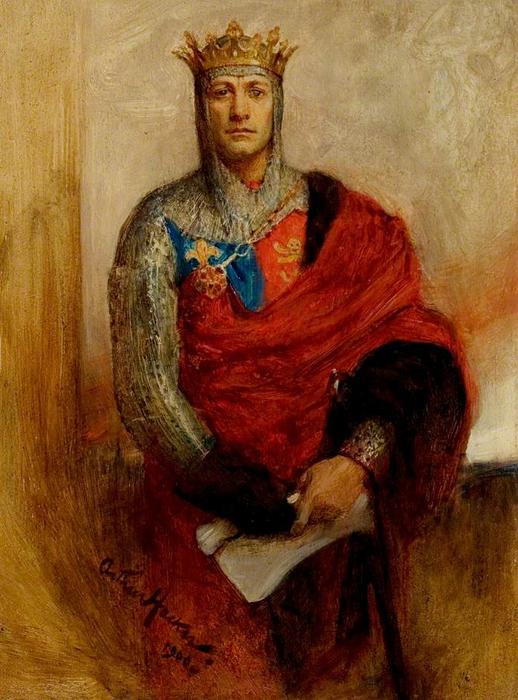
Flare and Flutter: Piccadilly Circus at Night, Figure walking on the shore, Lake Como, Italy, Portrait Of Artist's Sister­-in­-Law, Right Honourable Charles Seale-Hayne, The Annunciation, Vae Victis! The Sack of Morrocco by the Almohades, Woe to the Vanquished, And There Was a Great Cry in Egypt, The Girl in White, In Jeopardy and Lewis Waller as Henry V. The ranking above gives each one's year and museum.

How many works by Arthur Hacker are known?Reveal the answer

Our catalog holds 94 works by Arthur Hacker, dated from 1877 to 1919.

Where can the most famous Arthur Hacker originals be seen?Reveal the answer

Mostly in Cartwright Hall Art Gallery, Ferens Art Gallery (Kingston upon Hull) and Oldham Art Gallery (Oldham). The museum table above lists them all.

During which period did Arthur Hacker create the best-known paintings?Reveal the answer

In 1890s: 17 of the 93 works on this page were made then, The Annunciation among them.

Which famous Arthur Hacker painting is the earliest, and which the latest?Reveal the answer

On this page, the earliest is Right Honourable Charles Seale-Hayne (1877) and the latest Autumn (1919).

What subjects did Arthur Hacker favour?Reveal the answer

Men (10), Victorian (5) and Woman (4), across the 93 works on this page.

What materials did Arthur Hacker paint with most?Reveal the answer

Oil On Canvas, for 4 of the 93 works on this page.

Which movement does the work of Arthur Hacker belong to?Reveal the answer

Impressionism, judging by the originals on this page.

What Arthur Hacker originals can I see at the Cartwright Hall Art Gallery?Reveal the answer

The Cloud and The Cloister or the World: the Cartwright Hall Art Gallery holds 2 of the works on this page.

Arthur Hacker: a portrait of the artist

Early Life and Academic Foundations

Arthur Hacker, born in St Pancras, London, on September 25th, 1858, emerged from a family steeped in artistic tradition. His father, Edward Hacker, was a respected line engraver specializing in animal and sporting prints—a profession that undoubtedly instilled in young Arthur an early appreciation for meticulous detail and technical skill. This foundation proved crucial as Hacker embarked on his formal art education at the Royal Academy Schools between 1876 and 1880. However, seeking broader horizons, he continued his studies at the prestigious Atelier Bonnat in Paris, a move that would profoundly shape his artistic trajectory. The influence of French academic painting became immediately apparent, providing Hacker with a rigorous framework for composition, anatomy, and color theory. He debuted at the Royal Academy Summer Exhibition in 1878, signaling the beginning of his public career.

A Synthesis of Styles: Religious Scenes and Portraiture

Hacker’s artistic output was remarkably diverse, yet consistently characterized by a refined elegance and a deep sensitivity to light and atmosphere. While he gained recognition for painting religious scenes—works imbued with a quiet spirituality and emotional depth—he also excelled in portraiture. His travels through Spain and North Africa left an indelible mark on his palette and subject matter, introducing exotic elements and vibrant color schemes into his work. He twice exhibited at the Royal Academy, in 1878 and 1910, demonstrating a sustained commitment to the established art world. In 1910, Hacker was elected an Academician—a testament to his growing reputation and mastery of the craft. This period saw him balancing grand religious compositions with increasingly sought-after portrait commissions, capturing the likenesses of prominent politicians, army officers, clergy, and figures from the artistic community.

Navigating Victorian Tastes: Genre Painting and Symbolism

As the Victorian era transitioned into the Edwardian period, Hacker adeptly navigated shifting aesthetic preferences. The demand for literary and historical subjects waned, prompting him to diversify his repertoire. He revisited rustic and domestic genre scenes, showcasing a natural versatility that allowed him to adapt to changing tastes. During the Boer War, he contributed works reflecting the bittersweet nature of conflict—subtle symbolic explorations rather than explicit depictions of battle. His painting *The Cloister of the Bell*, for example, exemplifies this period, featuring an ethereal woman within a serene landscape, evoking a sense of contemplation and tranquility. He also demonstrated a fascination with Pre-Raphaelite values, attempting to revive their aesthetic in his own unique style.

Major Works and Lasting Legacy

Hacker’s oeuvre includes several notable paintings that continue to captivate audiences today. *The Annunciation* at the Tate Britain is a prime example of his religious artistry—a delicate rendering of a pivotal biblical moment. *Pelagia and Philammon*, housed in Liverpool's Walker Art Gallery, showcases his skill in depicting classical narratives with emotional nuance. Other significant works include *The Children’s Prayer* (1888) at the Atkinson Museum, Southport, and *The Temptation of Sir Percival* in Leeds City Art Gallery. In 1902, Hacker built a new house called Hall Ingle in Checkendon, Oxfordshire, commissioning architect Maxwell Ayrton and personally overseeing the decorations—a testament to his holistic artistic vision. He died on November 12th, 1919, in Kensington, London, and is buried in Brookwood Cemetery, Surrey.

Historical Significance and Modern Appreciation

Arthur Hacker occupies a unique position within British art history. He successfully bridged the gap between French academic training and Victorian sensibilities, creating works that were both technically accomplished and emotionally resonant. His ability to adapt to changing tastes while maintaining his distinctive style ensured his continued success throughout his career. While perhaps not as widely celebrated as some of his contemporaries, Hacker’s paintings are increasingly recognized for their beauty, sophistication, and insightful portrayal of the human condition. Today, his works can be found in prominent public collections and private galleries, offering a glimpse into a fascinating era of artistic innovation and refinement. His legacy endures through the captivating scenes he created—a testament to his skill as a painter and his enduring contribution to British art.