Portrait of Anna Airy

The 19 Most Famous Anna Airy Paintings, a Gallery Selection

Updated November 2026 · ranked by our popularity score (searches, visits and orders for each work) · 20 works by Anna Airy in our catalogue

In short

Of all the originals Anna Airy left, the most famous is Morning Sunlight (1926), in the collection of the Doncaster Museum And Art Gallery, Doncaster. Close behind it come The 'L' Press Forging the Jacket of an 18 Inch Gun, Armstrong Whitworth Works, Openshaw (1918) and Mrs Monica Burnand (1916). Our catalog holds 20 works by Anna Airy; the gallery has kept the 19 the world admires most, each shown with its date, its museum and its story.

1882 – 1964, Greenwich Most works: Usher Gallery

Anna Airy's top 10 paintings: the gallery's choice

1
Morning Sunlight (1926) by Anna Airy

Morning Sunlight

1926 · Oil · Doncaster Museum And Art Gallery, Doncaster

In Morning Sunlight, Anna Airy invites us into the quiet, rustic interior of a barn. The composition is defined by a deliberate interplay of light and shadow that moves across the wooden structure. Sunlight streams through narrow gaps in the roof, cutting through the dimness to create a warm atmosphere within the space. These beams of light fall upon a floor covered in straw and hay, adding a tactile quality…

3
Mrs Monica Burnand (1916) by Anna Airy

Mrs Monica Burnand

1916 · Oil

The portrait depicts a woman positioned in a three-quarter view, looking directly toward the viewer. She has brown hair that frames a pale face. A necklace rests against her neck, and her attire includes a garment accented by a blue ribbon tied around the waist. The background consists of a plain wall, which provides a sense of spatial depth behind the subject. The composition focuses on the sitter's steady gaze…

4
Interior with Mrs Charles Burnand (1919) by Anna Airy

Interior with Mrs Charles Burnand

1919 · Oil

In this quiet domestic scene, titled Interior with Mrs Charles Burnand, we encounter the work of Anna Airy. Painted about 1919, the piece reflects the artist's particular interest in capturing the nuances of everyday life. Airy was an English painter who possessed a remarkable ability to translate the stillness of a private moment into a tangible, lived-in reality.

7
Soldiers in the Fields in South Africa (1902) by Anna Airy

Soldiers in the Fields in South Africa

1902 · Oil On Canvas · The Royal Hospital Chelsea, London

Anna Airy's "Soldiers in the Fields in South Africa," painted in 1902, is more than just a depiction of men resting amidst a pastoral landscape; it’s a poignant meditation on duty, camaraderie, and the quiet dignity found within moments of respite. Created during a period of significant social upheaval and military engagement, this oil-on-canvas work offers a rare glimpse into the lives of soldiers stationed in South Africa, capturing not…

The Anna Airy selection continues, 11 to 19

The museums that keep Anna Airy's originals

The 7 museums that hold the most of the paintings on this page.

Museum City Works by Anna Airy Paintings from this list
Usher Gallery, LincolnUsher Gallery Lincoln 2 Children Blackberrying, Roses Triumphant
Doncaster Museum And Art Gallery, DoncasterDoncaster Museum And Art Gallery Doncaster 1 Morning Sunlight
The Royal Hospital Chelsea, LondonThe Royal Hospital Chelsea London 1 Soldiers in the Fields in South Africa
Canadian War Museum, OttawaCanadian War Museum Ottawa 1 Cookhouse, Witley Camp, 1918
Armley Mills, LeedsArmley Mills Leeds 1 Fred Grover
Touchstones Rochdale, RochdaleTouchstones Rochdale Rochdale 1 July Piece
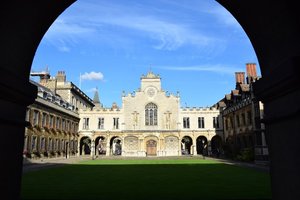
Peterhouse, CambridgePeterhouse Cambridge 1 Sir John Gorell Barnes (1848–1913), Hon. Fellow

Anna Airy decade by decade: the original that defines each

Works per decade

Pick a decade to see the original that defines it.

Collectors' questions about Anna Airy's paintings

Which work is Anna Airy most famous for?Reveal the answer

Morning Sunlight (1926), Doncaster Museum And Art Gallery, Doncaster. The 'L' Press Forging the Jacket of an 18 Inch Gun, Armstrong Whitworth Works, Openshaw (1918) and Mrs Monica Burnand (1916) come next.

What age was Anna Airy when Morning Sunlight was made?Reveal the answer

44 years old: Morning Sunlight dates from 1926, and Anna Airy was born in 1882.

What are the ten most famous Anna Airy paintings?Reveal the answer

Morning Sunlight, The 'L' Press Forging the Jacket of an 18 Inch Gun, Armstrong Whitworth Works, Openshaw, Mrs Monica Burnand, Interior with Mrs Charles Burnand, Women Working in a Gas Retort House South Metropolitan Gas Company, London, Gay Glitter in June, Soldiers in the Fields in South Africa, The Kitchen's Queen, Mrs Telford Simpson and Cookhouse, Witley Camp, 1918. The ranking above gives each one's year and museum.

How many paintings did Anna Airy leave?Reveal the answer

Our catalog holds 20 works by Anna Airy, dated from 1902 to 1951.

In which museums do Anna Airy's masterpieces hang?Reveal the answer

Mostly in Usher Gallery (Lincoln), Doncaster Museum And Art Gallery (Doncaster) and The Royal Hospital Chelsea (London). The museum table above lists them all.

In which years did Anna Airy paint the most famous works?Reveal the answer

In 1910s: 9 of the 19 works on this page were made then, The 'L' Press Forging the Jacket of an 18 Inch Gun, Armstrong Whitworth Works, Openshaw among them.

What are the first and the last famous originals of Anna Airy?Reveal the answer

On this page, the earliest is Soldiers in the Fields in South Africa (1902) and the latest Alderman Cyril Catchpole (1951).

Which technique did Anna Airy use most?Reveal the answer

Oil, for 3 of the 19 works on this page.

Which Anna Airy works hang at the Usher Gallery?Reveal the answer

Children Blackberrying and Roses Triumphant: the Usher Gallery, Lincoln holds 2 of the works on this page.

Anna Airy: life and work

A Pioneer’s Palette: The Life and Art of Anna Airy

Anna Airy, born in Greenwich in 1882, emerged as a significant figure in early 20th-century British art—a time of immense social and artistic change. Her lineage was steeped in intellectual pursuit; the granddaughter of Sir George Biddell Airy, Astronomer Royal, and Johann Benedict Listing, a professor at the University of Göttingen, she inherited a legacy of rigorous observation and scientific curiosity that would subtly inform her artistic vision. The early loss of her mother and upbringing by her artist aunts fostered an environment where creativity flourished, and her father’s encouragement solidified her path toward a life dedicated to art. Airy's formal training began at the prestigious Slade School of Fine Art in London from 1899 to 1903, where she honed her skills under the tutelage of influential figures like Fred Brown, Henry Tonks, and Philip Wilson Steer. It was here that she developed a versatile approach, mastering oil painting, pastel, etching, and watercolor—a testament to her dedication and natural talent. Her success at the Slade was immediate, earning her numerous prizes including the coveted Melville Nettleship Prize for three consecutive years and a Slade School Scholarship in 1902.

From Idyllic Landscapes to Factories of War

Airy’s early artistic endeavors showcased a diverse range of subjects—portraits revealing psychological depth, landscapes imbued with atmospheric nuance, and botanical studies rendered with meticulous detail. She exhibited regularly at the Royal Academy from 1905 onward, establishing herself as a rising star in the London art scene. A one-woman exhibition at the Carfax Gallery in 1908 further cemented her reputation. However, it was the outbreak of World War I that dramatically altered the course of her career and secured her place in history. In an unprecedented move, Airy became one of the first women officially commissioned as a war artist by the Imperial War Museum. Unlike many male artists who focused on battlefield scenes, Airy’s commission centered on documenting the vital—yet often overlooked—world of wartime industry. She was assigned to paint scenes at factories across Britain, including the National Projectile Factory in Hackney Marshes, London, and facilities in Chilwell, Nottingham, Glasgow, and Hendon. Her paintings offer a compelling glimpse into the lives of those who labored tirelessly to support the war effort, particularly the women who filled roles traditionally held by men. The conditions were often harsh; one anecdote recounts how the intense heat at the Hackney Marshes factory literally burned through her shoes while she was painting “A Shell Forge.” This dedication to capturing authenticity—even at personal discomfort—speaks volumes about her commitment as an artist and a documentarian of her time.

Style, Influences, and Artistic Versatility

Airy’s artistic style defied easy categorization. While influenced by contemporaries like William Orpen and Augustus John, she forged her own path, blending elements of impressionism with a keen eye for realism. Her pastels often possessed a delicate luminosity, while her oil paintings demonstrated a boldness in brushwork and color. She was equally adept at the precise lines of etching, showcasing her mastery across various mediums. A recurring theme throughout her work was an appreciation for natural forms—flowers, ferns, and fruits were frequent subjects, rendered with both scientific accuracy and artistic sensitivity. This fascination likely stemmed from her upbringing and family connections to the world of science. Beyond her war-related commissions, Airy continued to explore a wide range of subject matter, demonstrating a remarkable versatility that set her apart from many of her peers. She was a member of several prominent art societies—the Pastel Society, the Royal Society of Painter-Etchers, the Royal Institute of Oil Painters, and the Royal Institute of Painters in Water Colours—reflecting her broad artistic interests and recognition within the art community.

Legacy and Lasting Impact

Following the war, Airy continued to paint, exhibit, and teach, solidifying her position as a leading woman artist of her generation. She married fellow artist Geoffrey Buckingham Pocock and later moved to Playford near Ipswich, where she taught at the local art school. In addition to her artistic practice, Airy shared her knowledge through writing, authoring “The Art of Pastel” (1930) and “Making a Start in Art” (1951). Her works are now held in prestigious collections including the British Museum, the Victoria and Albert Museum, and the Imperial War Museum, as well as galleries across the UK and internationally. Airy’s historical significance extends beyond her artistic achievements. As one of the first women to be officially commissioned as a war artist, she broke down barriers for female artists in a traditionally male-dominated field. Her paintings provide invaluable visual records of wartime industry and the changing roles of women in British society during World War I—a period of profound transformation. Anna Airy’s legacy endures not only through her captivating artwork but also as an inspiration to future generations of artists, particularly women seeking to make their mark on the world. She remains a testament to the power of art to document history, challenge conventions, and celebrate the resilience of the human spirit.