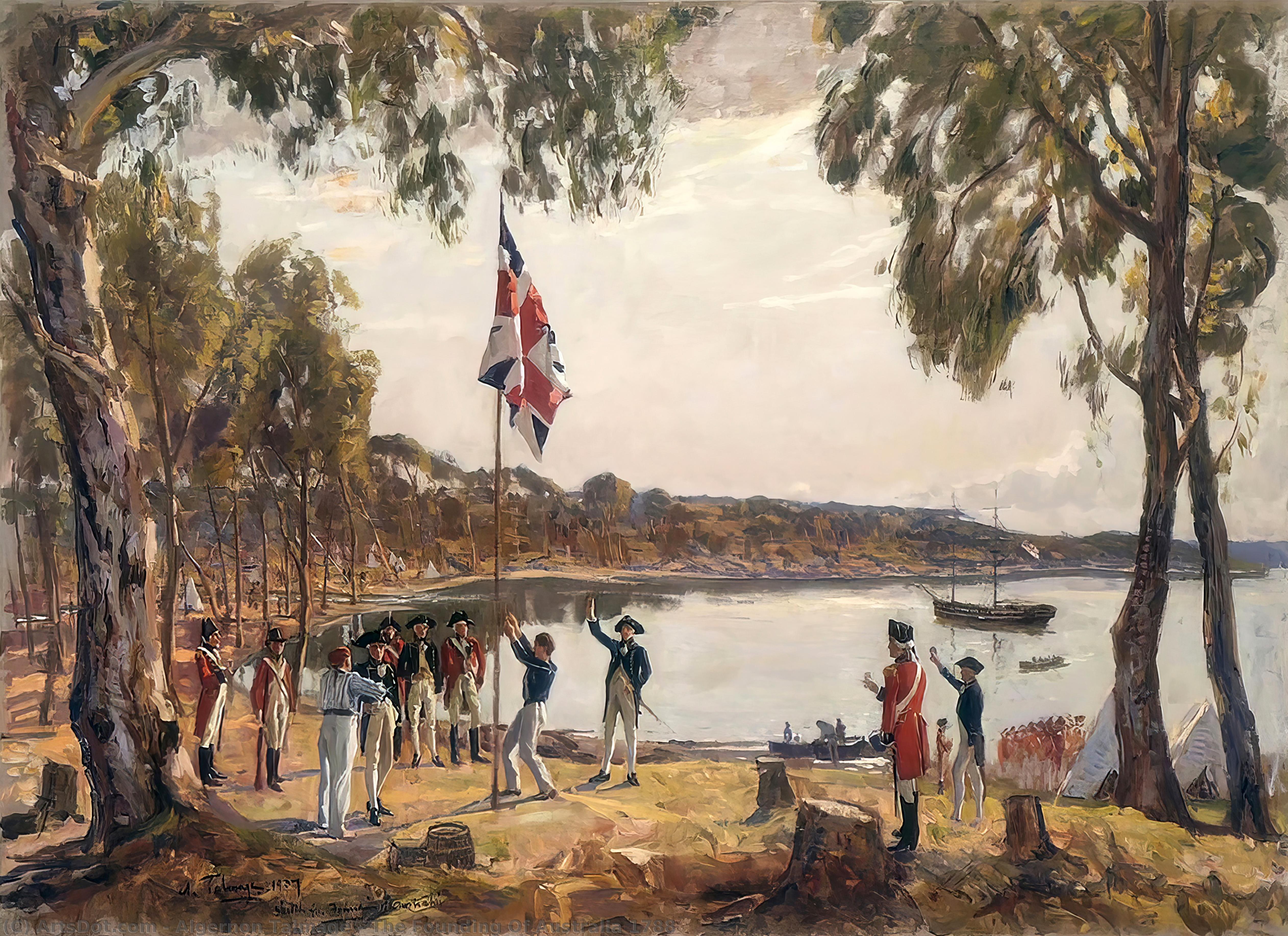
A Life Bathed in Light: The Story of Algernon Talmage
Born in the tranquil Oxfordshire countryside in 1871, Algernon Mayow Talmage emerged as a significant, though often understated, voice within the British
Impressionist movement. His life story is one marked by both artistic dedication and personal resilience. A childhood accident that permanently impaired his right hand didn’t deter him; instead, it compelled him to master painting with his left, forging a unique perspective and approach to his craft. This early adversity perhaps instilled in him a heightened sensitivity to the nuances of
light and shadow – qualities that would become hallmarks of his work. Talmage's lineage was steeped in Cornish heritage through his mother, a connection that would later draw him to the captivating landscapes of St Ives, Cornwall, a place that profoundly shaped his artistic vision. His initial training under
Hubert von Herkomer at Bushey Art School provided a solid foundation in naturalistic techniques, emphasizing direct observation and
meticulous detail – skills he would later synthesize with the burgeoning Impressionist aesthetic.
The Cornish Embrace: Finding a Voice in Light and Landscape
The move to St Ives proved pivotal for Talmage. He found himself amongst a vibrant community of artists drawn by the dramatic coastline, the ever-shifting light, and the raw beauty of the region. Alongside contemporaries like
Julius Olsson and
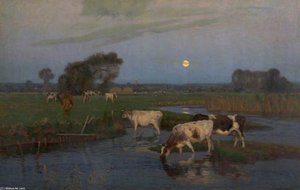
Adrian Stokes, he co-founded an Artists’ Club, fostering a collaborative environment where techniques were shared and artistic ideas flourished. It was here that Talmage truly began to develop his signature style – a delicate interplay of color and atmosphere, capturing not just what he *saw*, but how it *felt* to be immersed in the natural world. His paintings from this period frequently depict rural scenes, particularly those featuring horses, and coastal vistas rendered with a remarkable sensitivity to light’s ephemeral qualities. He wasn't merely recording landscapes; he was evoking moods, conveying a sense of peaceful observation and a deep connection to nature. In 1900, Talmage further solidified his commitment to artistic education by establishing the Cornish School of Landscape, Figure and Sea Painting with
Olsson, nurturing the next generation of artists.
A Mentor’s Legacy: Shaping Artistic Visions
While Talmage's own paintings are deserving of recognition, perhaps his most enduring legacy lies in his profound influence as a mentor. He is particularly remembered for his guidance of
Emily Carr, the celebrated Canadian artist. During her studies at St Ives, Talmage became a crucial figure in her artistic development. Recognizing
Carr’s potential, he encouraged her to embrace color and light with boldness, famously advising her that “there is sunlight in the shadows.” This simple yet powerful insight proved transformative for
Carr, shaping her distinctive style and ultimately becoming central to her iconic forest paintings – works that would come to define a uniquely Canadian artistic identity. He also imparted his knowledge to Australian painter
Will Ashton, demonstrating a generosity of spirit and dedication to fostering talent in others. Talmage’s mentorship wasn't about imposing a specific technique; it was about unlocking an artist’s individual vision and empowering them to see the world with fresh eyes.
Recognition and Remembrance: A Lasting Contribution
Throughout his career, Algernon Talmage garnered increasing recognition within the
British art establishment. His election as a member of the Royal Society of British Artists in 1902 was a significant milestone, solidifying his position amongst his peers. He continued to exhibit widely, showcasing his work at prestigious venues like the Royal Academy and various galleries across London and beyond. His paintings found their way into numerous public and private collections, attesting to their enduring appeal. Though not a household name in the same vein as some of his contemporaries, Talmage played an important role in bridging the gap between traditional
landscape painting and the emerging
Impressionist movement. His ability to capture the subtle nuances of light and atmosphere, combined with his dedication to teaching and mentorship, leaves behind a rich
artistic legacy. He passed away in 1939, leaving behind a body of work that continues to resonate with its
quiet beauty and evocative power – a testament to a life dedicated to observing, interpreting, and sharing the wonders of the natural world.