Early Life and Education
- Born: July 24, 1927, Sheepshead Bay, Brooklyn, New York, USA
- Family moved to St. Albans, Queens at a young age.
- Developed an interest in art early on.
- Studied at the Cooper Union (1946-1949), learning Modern art theories and techniques under Morris Kantor.
- Attended the Skowhegan School of Painting and Sculpture in Maine, honing painting skills and emphasizing painting from life. This experience proved pivotal to his artistic development.
Artistic Style and Influences
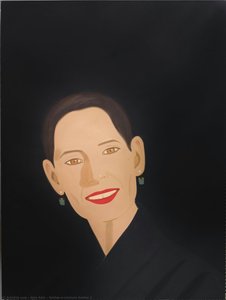
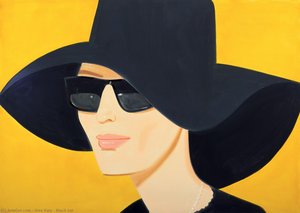
- Style: Characterized by simplicity, bold colors, and cool emotional detachment. Often divided into portraiture and landscape genres.
- Influences: Kitagawa Utamaro (Japanese artist known for woodcuts). Comparisons have been drawn to Andy Warhol and Keith Haring.
- Techniques: Experimentation with "cutouts" – painting on cut panels of wood or aluminum. Direct painting onto shaped aluminum sheets became a signature technique.
- Monochrome Backgrounds: A defining characteristic, separating him from gestural figure painters and anticipating Pop Art.
- Photographic & Cinematic Strategies: Incorporation of cropping, decoupage, and repetition to create rhythm within paintings.
Notable Works and Development
- Early Works: Small collages of figures in landscapes (late 1950s).
- Portraiture Focus: Paintings of friends and his wife, Ada, became central themes.
- Significant Pieces: "Alex Katz: Thursday Night," "Alex Katz: Ada in Black Sweater."
- Large-Scale Paintings (1960s): Dramatic cropping of faces influenced by film and advertising.
- Landscape Series (late 1980s & 1990s): “Environmental” landscapes with loosened edges and painterly brushstrokes.
- Night Pictures: Exploration of new light sources, departing from sunlit landscapes.
- Floral Paintings: Profusion of blossoms covering canvases (early 2000s).
- Recent Works: Drastic cropping of individual portraits and sequencing images across linen. iPhone photography used as a starting point for compositions.
Achievements and Historical Significance
- Pop Art Association: Often associated with the Pop Art movement, reflecting influences from popular culture.
- Innovation in Technique: Pioneering use of "cutouts" and experimentation with printmaking techniques.
- Collaborations: Designed sets and costumes for choreographer Paul Taylor.
- Recognition & Awards: Numerous awards and recognition throughout his career. Work held in prominent collections (Centre Georges Pompidou, Tate Gallery, Guggenheim Museum Bilbao).
- Longevity and Influence: A seven-decade career establishing him as a key figure in contemporary art, influencing generations of artists with his distinctive style and approach to portraiture and landscape painting.
Questions & Answers
Where are Alex Katz's artworks grouped by technique?
The All Medium page groups Alex Katz's artworks by technique.
How can I see every artwork made by Alex Katz?
Every work by Alex Katz on this website can be browsed from the artist's All Artworks page.
Is there a chronological account of Alex Katz?
Alex Katz's career unfolds period by period on the artist's Chronicle page: a horizontal timeline of the artworks, grouped into career-period chapters.