Aldemir Martins de Oliveira: A Vision of the Brazilian Northeast
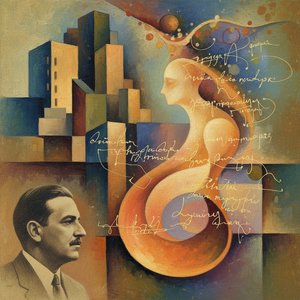
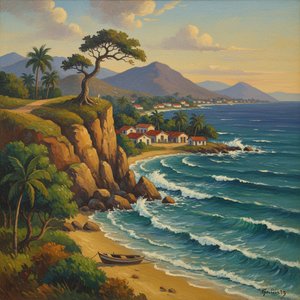
Aldemir Martins de Oliveira, born in Ico, Ceará, Brazil on November 8, 1922, and passing away in São Paulo on February 6, 2006, was a pivotal figure in 20th-century Brazilian art. More than simply a painter, he became a chronicler of his homeland’s soul – its landscapes, its people, and the enduring spirit of the Northeast. His work, characterized by vibrant colors, bold brushstrokes, and an intimate understanding of texture, transcends mere representation; it evokes a powerful sense of place and memory. Martins' artistic journey was one of profound personal connection interwoven with a growing national identity, culminating in a body of art that continues to resonate deeply within Brazil and beyond.
Early Life and Artistic Beginnings
Martins’s early life shaped his artistic vision profoundly. He began drawing at the Military College in 1934, an experience that ignited a lifelong passion for visual expression. Self-taught and largely independent, he immersed himself in the burgeoning art scene of Fortaleza, contributing significantly to its cultural development by co-founding the Cultural Center for Fine Arts in 1941, later renamed the Ceará Society of Fine Arts – SCAP. This period saw him experimenting with various mediums, including illustration for regional newspapers and magazines, a crucial step in honing his observational skills and developing his distinctive style. His early work reflected the realities of Northeastern Brazil—the stark beauty of its arid landscapes, the dignity of its people, and the rhythms of rural life – themes that would dominate much of his oeuvre.
A Distinctive Artistic Style: Color, Texture, and Narrative
Martins’s artistic style is immediately recognizable for its bold use of color and dynamic brushwork. He eschewed academic precision in favor of a more expressive approach, layering pigments to create rich textures that mimic the rough surfaces of his subjects – weathered wood, sun-baked earth, and the flowing garments of his figures. His palette is intensely vibrant, often employing saturated hues to capture the intensity of the Brazilian sun. However, it’s not merely color; Martins masterfully employed texture to convey depth and emotion. He frequently incorporated elements of *textura*, a technique popular in Brazil during this period, adding a tactile quality to his paintings that invites viewers to almost reach out and touch the scene. Crucially, his work is narrative—each painting tells a story, often imbued with symbolism and reflecting the cultural traditions of the Northeast.
Notable Works and Recognition
Several works stand as testaments to Martins’s artistic prowess and enduring legacy. “Bird” (1957), now held by the Museum of Modern Art in New York, is arguably his most celebrated piece – a dynamic composition capturing the essence of avian flight against a dramatic sky. “Rendeira” (1955), depicting a woman weaving on a traditional loom, exemplifies his ability to imbue everyday scenes with profound meaning and emotional resonance. His illustrations for various publications further showcased his versatility and artistic vision. In 1956, he received international recognition at the Venice Biennale, awarded “best international designer,” solidifying his position as a significant voice in contemporary art. The Prêmio Jabuti, bestowed upon him in 1959, acknowledged his contributions to Brazilian literature and arts, recognizing his broader cultural impact.
Legacy and Influence
Aldemir Martins de Oliveira’s influence extends far beyond the canvases he created. He served as a mentor to younger artists and played a vital role in promoting Brazilian art on an international stage. His work continues to inspire generations of artists, not only for its technical brilliance but also for its honest portrayal of Brazilian culture and identity. His dedication to capturing the essence of the Northeast—its landscapes, its people, and its traditions—has cemented his place as one of Brazil’s most important 20th-century artists. His legacy lives on through his captivating paintings, drawings, and illustrations, offering a timeless window into the heart of Brazil.